Artwork
The Apotheosis of the Arts
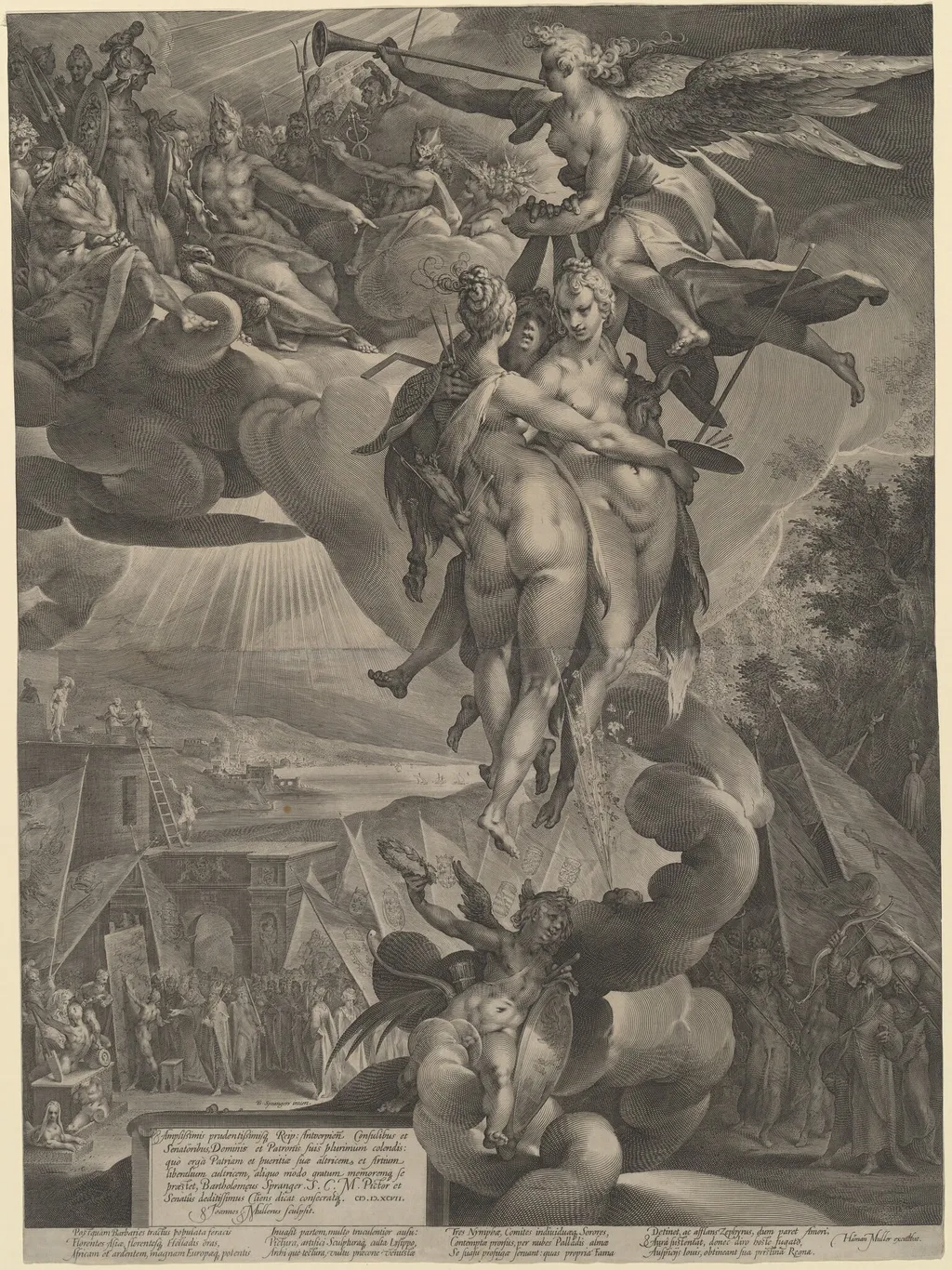
The Apotheosis of the Arts is an ink print by the Renaissance artist Jan Muller. It dates from 1597 and is held in the collection of the National Gallery of Art. Jan Harmensz.
- Inscription
- Inscribed:in image, at lower left: B. Sprangers inuen.; in image, at bottom left: Amplissimis prudentissimisque Reip: Antverpien Consulibus et / Senatoribus, Dominis et Patronis suis plurimùm colendis: / quò ergà Patriam et pueritiae suae altricem, et Artium / liberalium cultricem, aliquo modo gratum memoremque se / praestet, Bartholomaeus Spranger S. C. M. Pictor et . / Senatûs deditissimus Cliens dicat consecratque. DDDXCVII. / Joannes Mullerus Sculpsit.; below image: Postquám Barbaries tractus populata feracis / Florentes Asiae florentesque Helladis oras, / Africam et ardentem, magnam Europaeque potentis / Inuasit partem, multo truculentior ausu: / Pictura, artifici Sculpturaque, culta Lysippo, / Archi-què-tectura, vultu praecone venustae / Tres Nymphae, Comites indiuiduaeque sorores, / Contemptae prorsùs, per nubes Palladis almae / Se suasu profugae seruant: quas propria Fama / Detinet, ac afflans Zephyrus, dum paret Amori, / Aurâ sustentat, donec diro hoste fugato, / Auspicijs Iouis, obtineant sua pristina Regna.
About this work
Overview
The composition is densely populated with figures, clouds, and a miniature cityscape, all rendered in black‑and‑white line work.
Jan Harmensz. Muller’s 1597 print, The Apotheosis of the Arts, is an intricate engraving executed on laid paper. The composition is densely populated with figures, clouds, and a miniature cityscape, all rendered in black‑and‑white line work.
Central to the scene is a muscular, torch‑bearing woman ascending amid a swirl of winged and tool‑holding figures, suggesting a celebratory elevation of artistic practice.
Subject & Meaning
The central female figure, often interpreted as a personification of the Arts, rises upward while a torch illuminates the surrounding crowd of allegorical characters. Winged beings and artisans holding their implements surround her, indicating the various disciplines that together constitute the creative realm. The tiny urban landscape below reinforces the notion that artistic achievement transcends ordinary civic life.
Technique & Style
Muller employed the traditional copper engraving method, incising fine lines into a metal plate that were then transferred to laid paper. The dense cross‑hatching creates subtle tonal variations, modeling forms and suggesting atmospheric depth without the use of color. The composition reflects a late‑Renaissance penchant for complex allegory and a meticulous, almost narrative, visual language.
History & Provenance
Born in Amsterdam in 1571 to a family of engravers and publishers, Muller received his training within the family workshop before traveling to Italy, where he encountered broader European artistic currents. The print was produced upon his return, embodying both his Dutch training and the influences absorbed during his Italian sojourn.
Context
The work belongs to a period when Dutch printmakers were integrating Italianate allegorical themes into Northern visual traditions. Engravings served both as decorative objects and as means of disseminating artistic ideas across borders, allowing Muller’s synthesis of local and continental motifs to reach a wider audience.
Legacy
The Apotheosis of the Arts exemplifies the technical virtuosity and allegorical ambition of late sixteenth‑century Dutch engraving. It remains a reference point for scholars studying the transmission of Italian Renaissance iconography into Northern Europe and the role of print media in shaping artistic discourse.
Own this work as a print
Artist & collection

Artist
Jan Harmensz. Muller (1571–1628) was a Dutch engraver and painter. Muller was born in Amsterdam. His father was a book printer, engraver and publisher. He learned the engraving trade while working in the family…

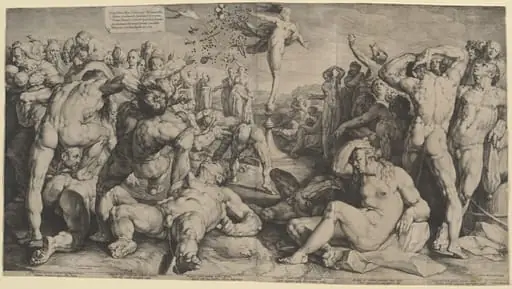
- Painting, Sculpture, and Architecture, Banned by the Turks, Withdrawn to Olympus
 The Wedding of Cupid and Psyche
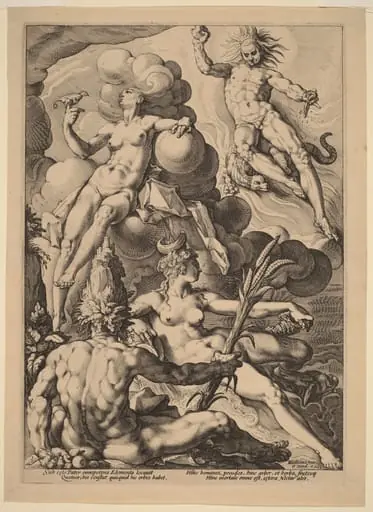
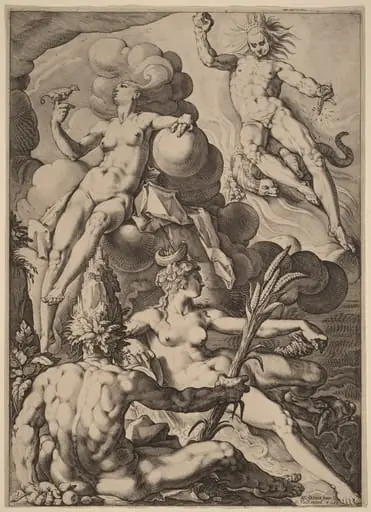 The Four Elements
 The Fall of the Rebel Angels
 Ixion Deceived by Juno
 The Four Elements
 The Cult of Venus
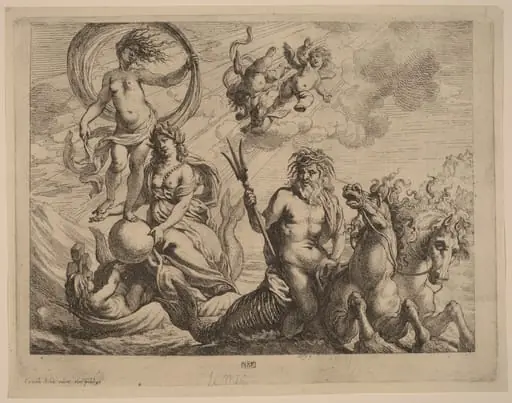 Neptune with Two Horses on the Sea
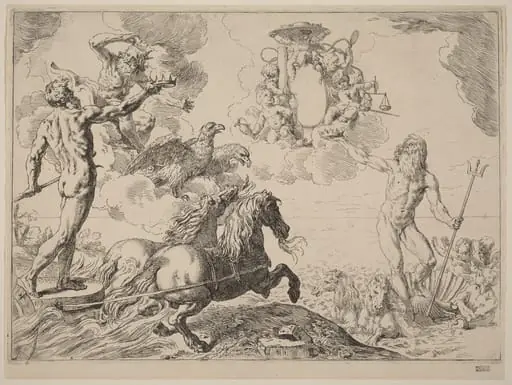 Jupiter, Neptune and Pluto
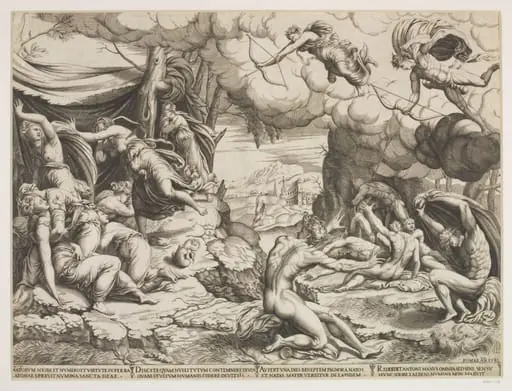 The Daughters of Niobe
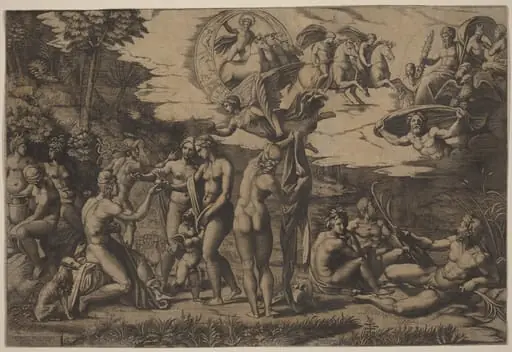 The Judgment of Paris