Artwork
The Wedding of Cupid and Psyche
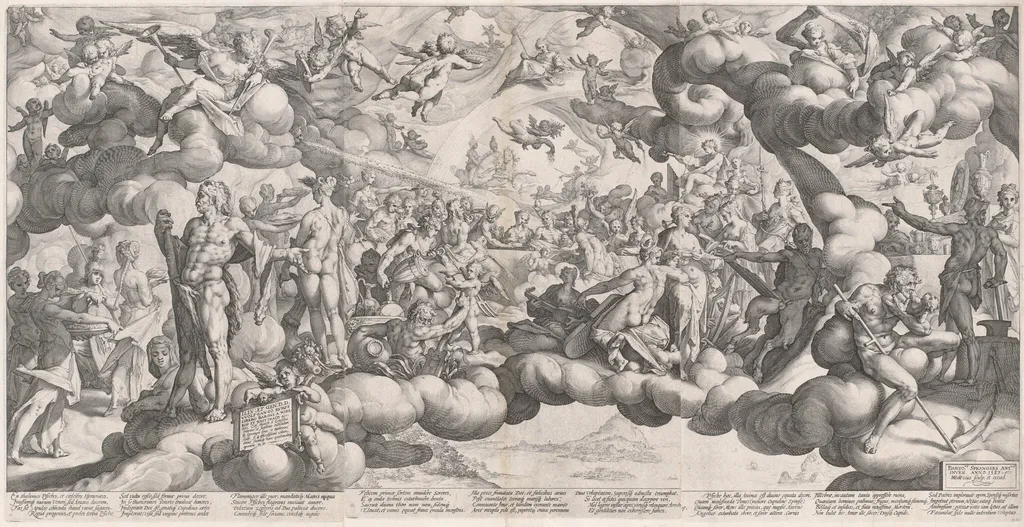
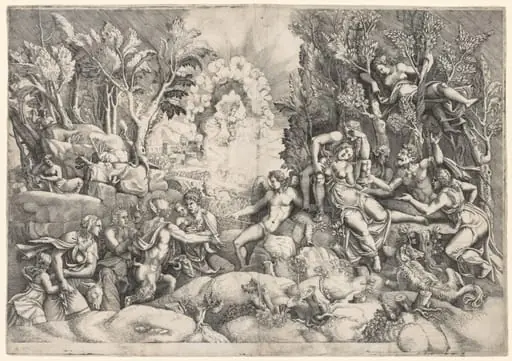
The Wedding of Cupid and Psyche is an ink print by the Renaissance artist Hendrick Goltzius. It dates from 1587 and is held in the collection of the National Gallery of Art.
- Inscription
- Inscribed:inscribed on tablet, lower left in plate: Illustri et Genuo D.D. / Wolfgango Rumpf, / libero Baroni a Wiel- / ros et Weittrach etc. / Sacrae Caesarae Maiestatis a Consiliis / intimo et supremo cubiculari / B. Spranger inventor et H. Goltzius / sculptor se quam officiosissime commen- / dant suamque qualemcumque / operam dono dant. (The inventor Bartholomeus Spranger and the engraver Hendrik Goltzius commend themselves most humbly to the illustrious and eminent lord Wolfgang Rumpf, Baron of Wielre and Weittrach, counsellor and chancellor of His Imperial Majesty, and present to him their work, trifling as it may be.) .; inscribed on plaque, lower right in plate: BARTO.vs SPRANGERS ANT.vs / INVEN. ANNO.1587. / H Goltzius Sculp. et excud.; across bottom in plate: En thalamos Pysches, et caelestes Hymenaeos, / Invisamque nurum Veneri, sed Amoris Amorem, / (Fas sit) Apuleii commenta haud vana sagacis, / Regis progenies, et proles tertia Psyche, / Sed vultu roseo, sed formae prima decore, / In se thuricremos Veneris traduxit honores. / Indignata Dea est, gnatique Cupidinis artes / Implorat, visa sed virgine protinus ardet / Flammiger ille puer, mandataque Matris iniqua / Sincero Psyches flagrans mutavit amore, / Dilectam zephyris ad Dia palacia ducens / Connubiique fide socians, vincloque iugali. / Felicem primae sortem invidere Sorores / Eque aula technis exturbavere beata. / Sacrati divina thori nam iura fidemque / Elevat, et vanis aequat fraus aemula monstris. / Illa proco fraudata Deo, et foelicibus arvis / Post exantlatos terraeque marisque labores, / Connivente Iove, et tandem exorante marito / Arce recepta poli est, peperitque enixa perennem / Diva voluptatem, Superisque admixta triumphat. / Si licet ex fictis quicquam decerpere veri, / Mel legere instar apis, virusque relinquere Arachnae, / Et gentilitios non exhorrecere fumos: / Psyche haec, illa Anima est divino aequata decori, / Quam malesuada Venus (meliore Cupidine Sponso) / Quamque soror Mens illa procax, quae nupsit Averno / Angelico exturbata choro, et soror altera, Carnis / Illecebrae, incautam tanta oppressere ruina, / Quantam homines patimur; frigus, morbumque, famemque, / Bellaque, et insidias, et fata novissima Mortem. / Non tulit hoc Amor ille sacer, Diusque Cupido, / Sed Patris imploravit opem, sponsaeque misertus / Impetrat aeternum Nectar, vitaeque beatae / Ambrosiam; potitur votis iam laetus, at illam / Foecundat saeclo nullo interitura Voluptas. (See here the wedding, the heavenly marriage of Psyche, the girl who ws hated by Venus, but was Amor's love, at least if the account of the erudite author Apuleius does not lie. Psyche, a princess, the third daughter but the first beacuse of her rosy face and beauty, drew to herself the tributes of incense for Venus. The Goddess was outraged, and called on the assistance of the skills of her son Cupid; but as soon as the torch-bearing lad saw the girl he was aflame, and burning with true love for Psyche, he changed the unjust instructions of his mother, took his love on the west wind to a divine palace and had congress with her in conjugal fidelity and the bonds of matrimony. Her sisters were the first to be made jealous by her good fortune, and they drove her from the divine court by trickery. For deceit that is born of jealousy violate divine rights and the fidelity of the divine marriage and makes unreliable monsters of them. bereft of her divine lover and the blessed fields and after undergoing much misery on land and at sea, she was at last through Jupiter's accession to the entreaties of her husband, admitted to the heavenly dwelling, where she bore children and as a Goddess gave birth to eternal Happiness, and, accepted among the gods, she celebrated triumphs there. If one may derive truths from fictitiouis stories, may gather honey like a bee and leave poison to the spiders, and if one has no fear of heathen fabrications, then here Psyche is the soul who rose to divine rank and who, because of Venus and her evil plans (her husband Amor was better) and because of her sister Lucifer, the shameless Spirit who married the Underworld after she was banned from the angelis host, and because of her second sister, the Temptations of the Flesh, was unexpectedly plunged into as much misery as we humans have to endure: cold, disease, hunger, wars, evil tricks and, as the ultimate disaster, death. The holy Amor, the divine Cupid, did not tolerate this, but called on his Father for help, and received through compassion eternal Nectar for his bride and the Ambrosia of the blessed life; Overjoyed, he saw his wishes granted and they were abundantly blessed with a daughter: eternal Happiness. [Latin translations from Leeflang, Huigen, and Ger Luijten. _Hendrick Goltzius (1558-1617): Drawings, Prints and Paintings._ Amsterdam: Rijksmuseum, 2003, p. 87.]
- Markings
- Marked:Wm
About this work
Overview
The Wedding of Cupid and Psyche is a 1587 engraving by Hendrick Goltzius, printed on three attached sheets of laid paper. It exemplifies the artist's technical prowess and intricate compositional style, characteristic of Northern Mannerism.
Subject & Meaning
The engraving illustrates the mythological union of Cupid and Psyche, drawn from classical tradition. At its center, the naked couple stands beneath a tree, surrounded by a tumultuous assembly of gods, humans, creatures, cherubs, and warriors.
Technique & Style
Goltzius employed fine lines to achieve depth, with foreground figures rendered sharply and background elements fading into the distance. This technique compensated for the lack of color, creating a sense of spatial hierarchy.
History & Provenance
Created in 1587, the work showcases Goltzius's mastery as the leading Dutch engraver of the early Baroque period. The engraving's provenance is not detailed here, focusing instead on its creation and artistic context.
Context
The piece reflects the Northern Mannerist style, emphasizing complex composition and detailed execution. Its mythological theme was popular among artists of the time, who drew inspiration from classical sources.
Legacy
As a seminal work by Goltzius, The Wedding of Cupid and Psyche influences subsequent generations of printmakers and artists, particularly in the development of Northern European Baroque printmaking.
Artist & collection
Artist
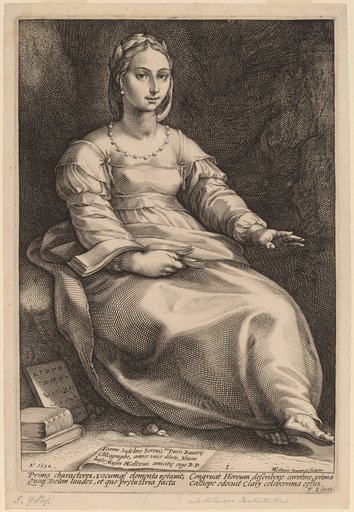
Hendrick Goltzius (German: , Dutch: ; né Goltz; January or February 1558 – 1 January 1617) was a German-born Dutch printmaker, draftsman, and painter.

- Allegory of Love
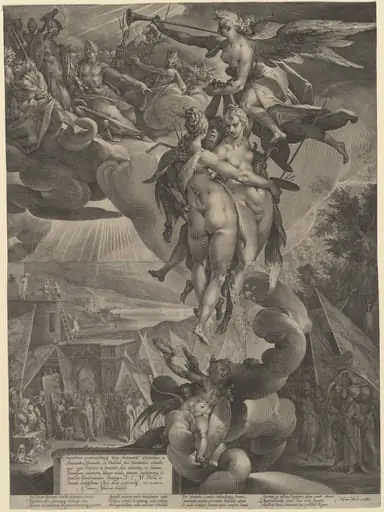 The Apotheosis of the Arts
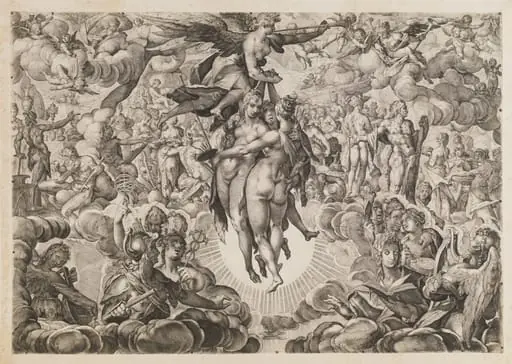 Painting, Sculpture, and Architecture, Banned by the Turks, Withdrawn to Olympus
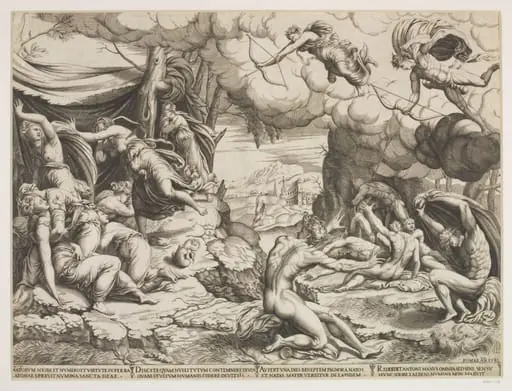 The Daughters of Niobe
 The Golden Age
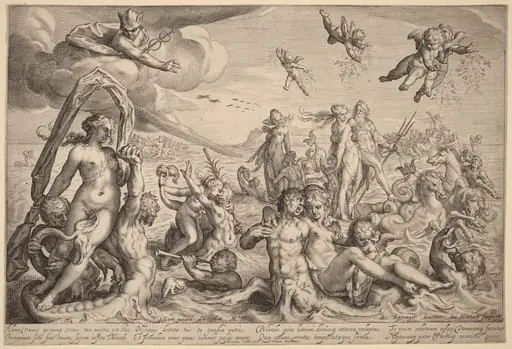 The Triumph of Neptune and Thetis
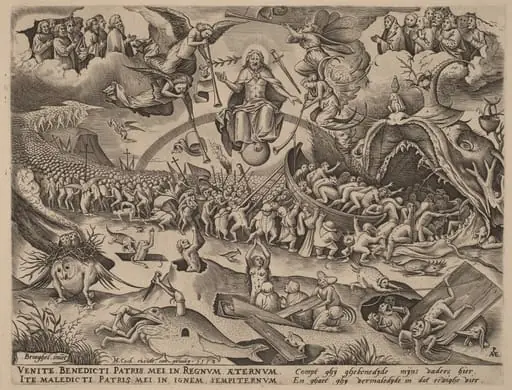 The Last Judgment
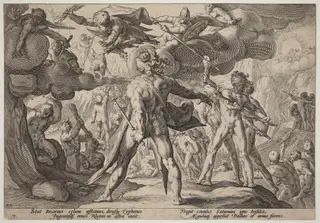 The Giants Climbing the Heavens
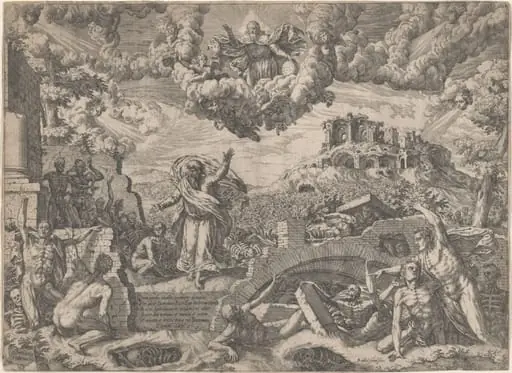 The Vision of Ezekiel
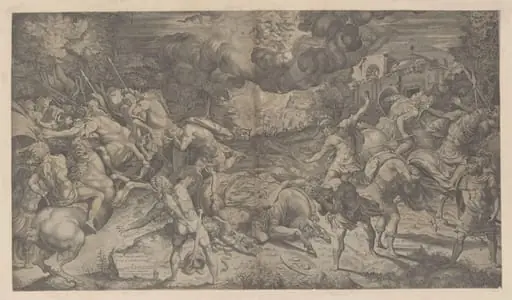 Conversion of Saul
 The Death of Procris
 Love in the Elysian Fields