Artwork
Alexander Condemning False Praise
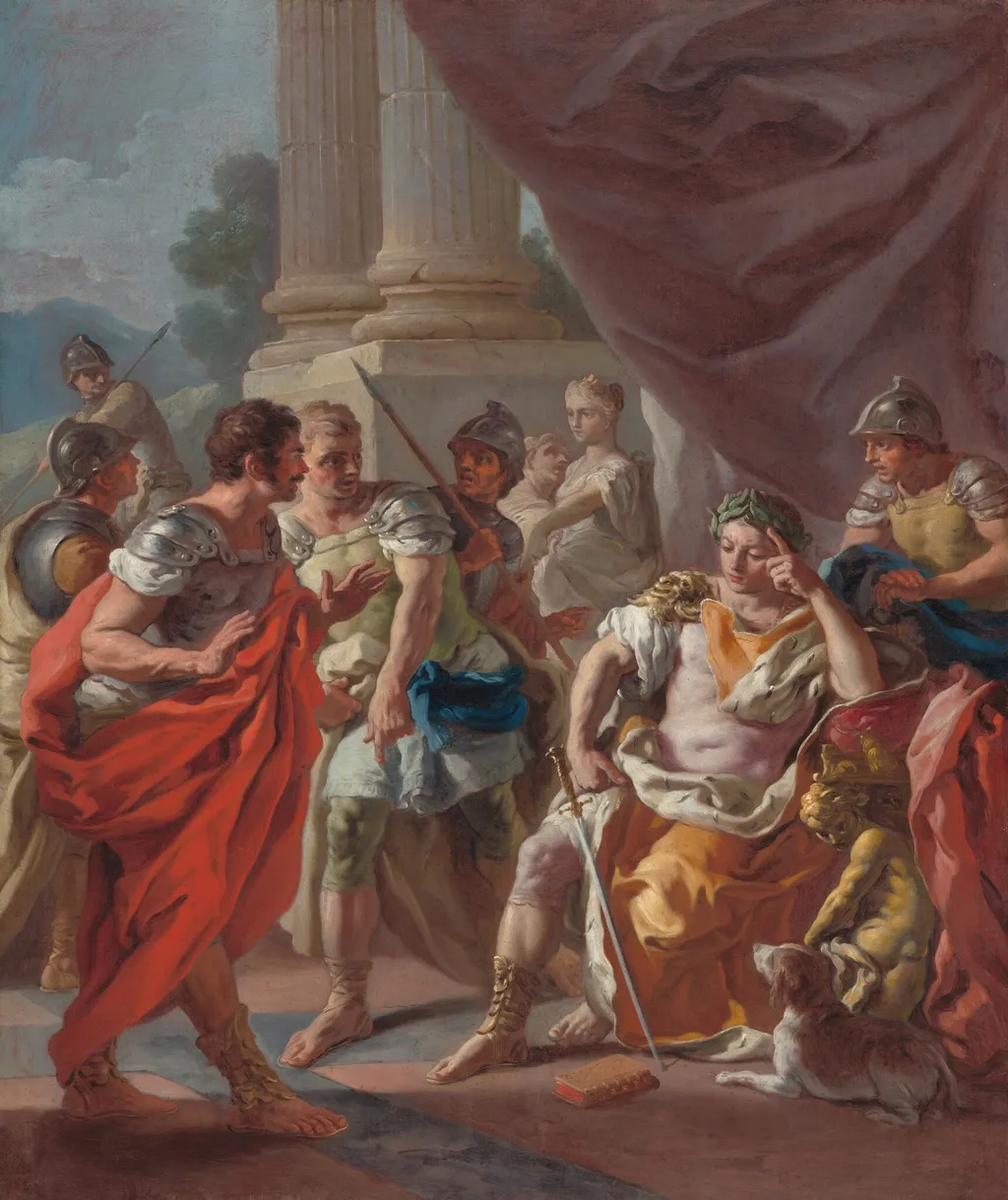
Alexander Condemning False Praise is an oil painting by the Rococo painting artist Francesco de Mura. It dates from 1764 and is held in the collection of the National Gallery of Art.
About this work
Technique & Style
4 cm in width, a format suited to a cabinet-sized history composition rather than a large altarpiece or wall decoration.
Alexander Condemning False Praise is an oil painting executed on canvas, a medium consistent with Francesco de Mura's standard practice for history paintings of the period. The work is relatively modest in scale, measuring 76 cm in height by 63.4 cm in width, a format suited to a cabinet-sized history composition rather than a large altarpiece or wall decoration.
The painting belongs to the genre of history painting, a category that demanded from Mura careful handling of narrative, figural arrangement, and classical references. As a Neapolitan Settecento work, it reflects the artist's mature handling of paint and composition developed within the tradition stretching from late Baroque toward Rococo sensibilities.
History & Provenance
Francesco de Mura executed Alexander Condemning False Praise in 1760. The oil on canvas work was recorded with Hazlitt, Gooden & Fox in London by 1962, appearing in an exhibition at the Hazlitt Gallery that May. It was subsequently acquired by the collector Joseph F. McCrindle.
Following McCrindle's death in 2008, the painting entered the collection of the National Gallery of Art in Washington, D.C., as part of his bequest.
Alexander Condemning False Praise is held in the collection of the National Gallery of Art in Washington, D.C. The work entered the museum's holdings as a bequest from Joseph F. McCrindle (1923–2008), having been previously purchased by him. Prior to its acquisition by McCrindle, the painting was associated with the Hazlitt, Gooden & Fox gallery in London by 1962. That year, it was included in an exhibition at the Hazlitt Gallery in May 1962.
Overview
Francesco de Mura, an Italian painter active in the late‑Baroque era, produced the oil on canvas work Alexander Condemning False Praise around 1764. The composition belongs to the Rococo period, yet its treatment of the narrative anticipates later neoclassical tendencies. The painting presents a single, decisive moment from the life of Alexander the Great.
Subject & Meaning
The scene captures Alexander the Great as he rebuffs insincere compliments from a surrounding group of courtiers. By emphasizing the king’s refusal of flattery, the work underscores themes of moral integrity and self‑control, reflecting contemporary ideals of virtuous leadership. The figure’s posture and expression convey a resolute character that resists superficial praise.
Own this work as a print
Artist & collection

Artist
Francesco de Mura (21 April 1696 – 19 August 1782) was an Italian painter of the late-Baroque period, active mainly in Naples and Turin. His late work reflects the style of neoclassicism.

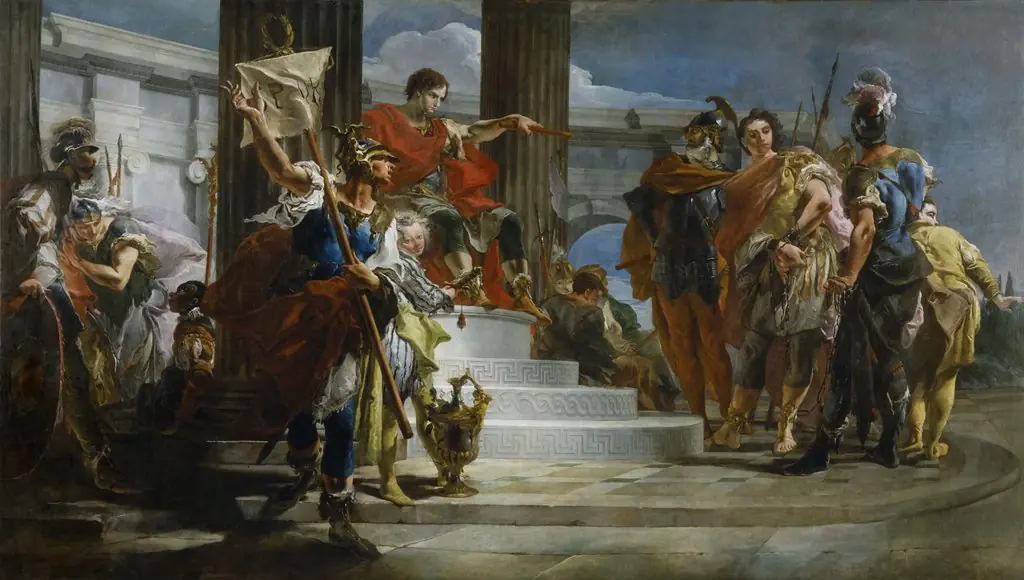
- Scipio Africanus Freeing Massiva
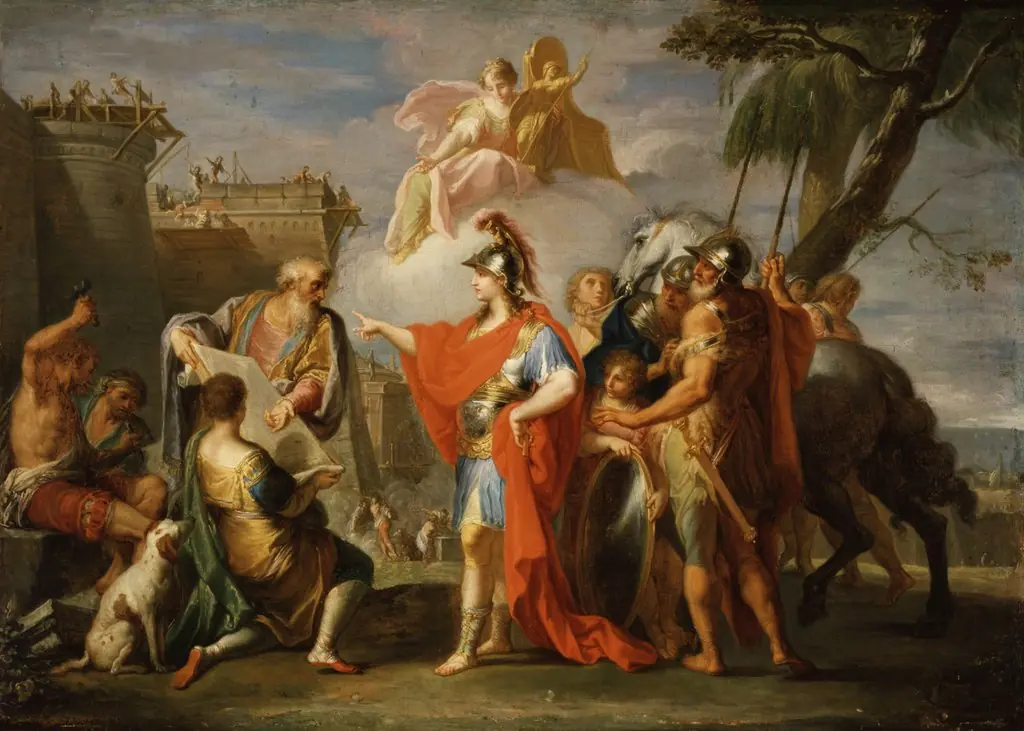 Alexander the Great Founding Alexandria
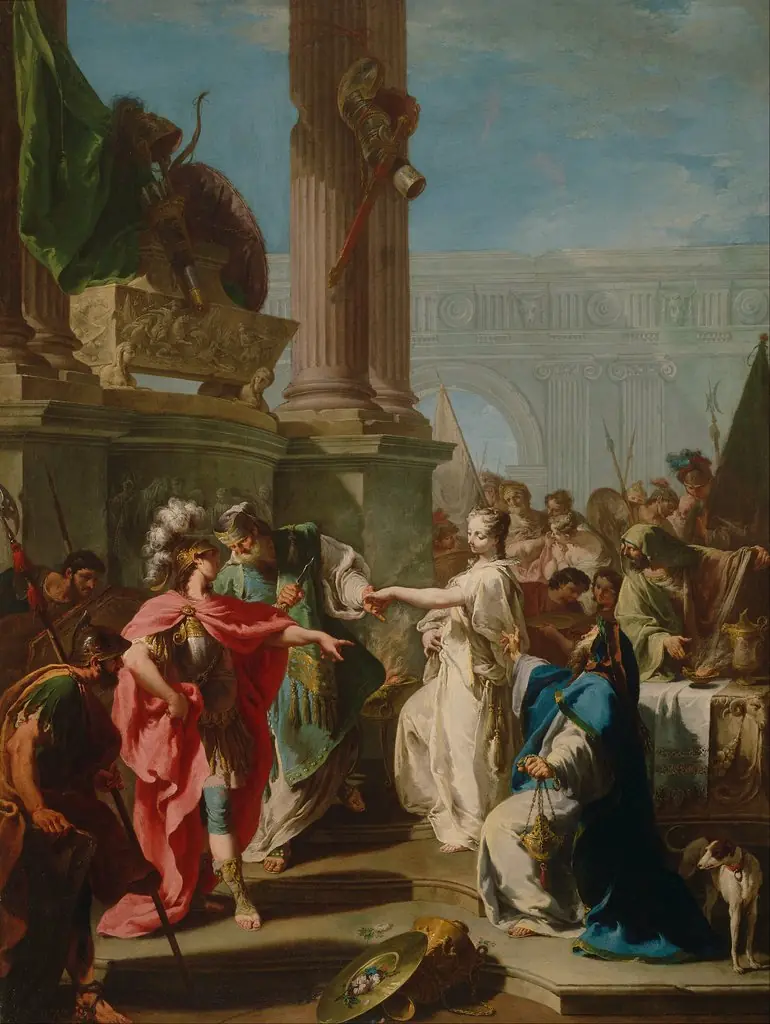 The Sacrifice of Polyxena in Malibu
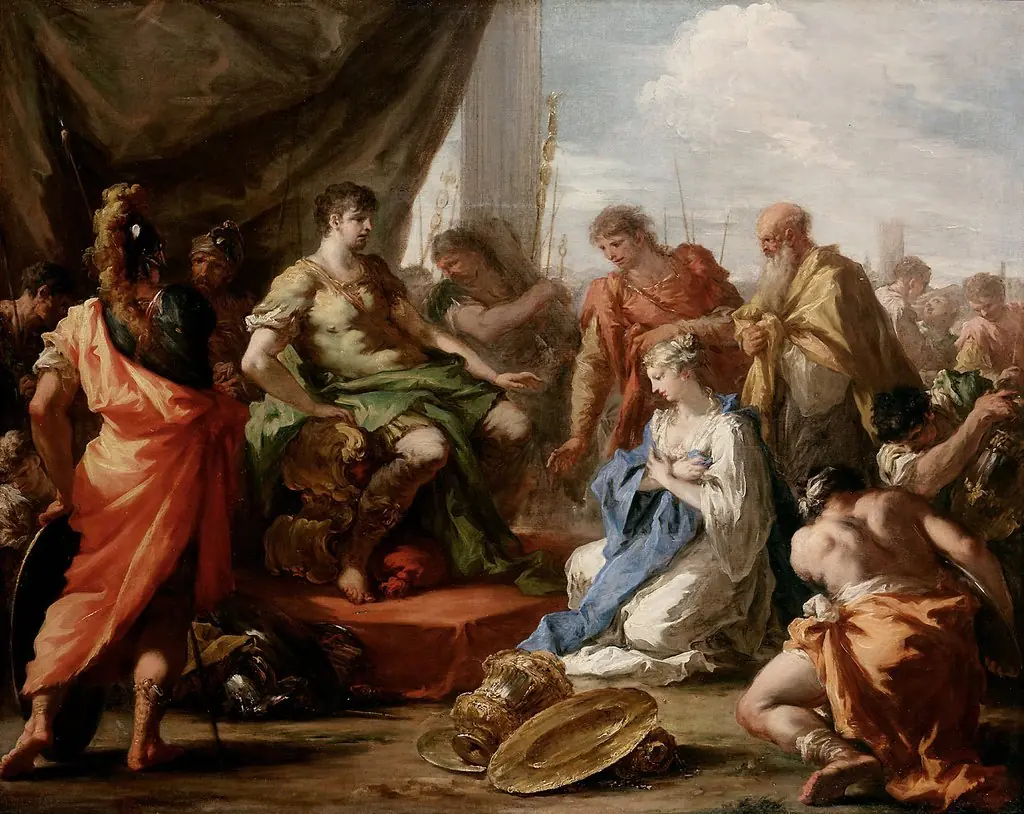 Enthaltsamkeit des Scipio
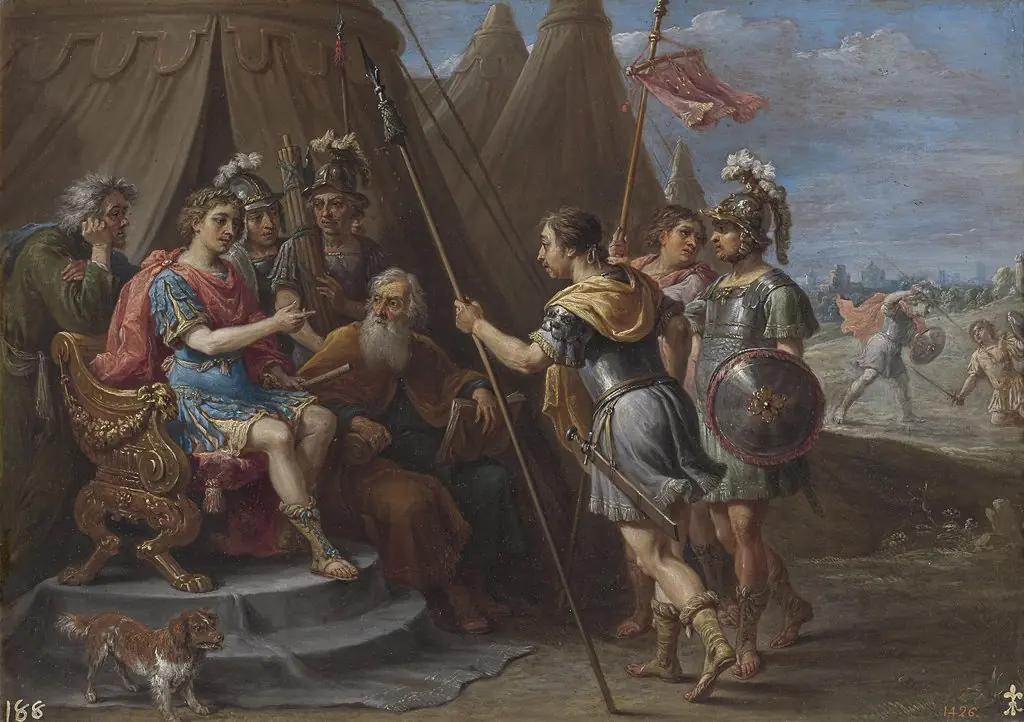 Godofredo y el Consejo escuchan la demanda de Armida
 The Continence of Scipio
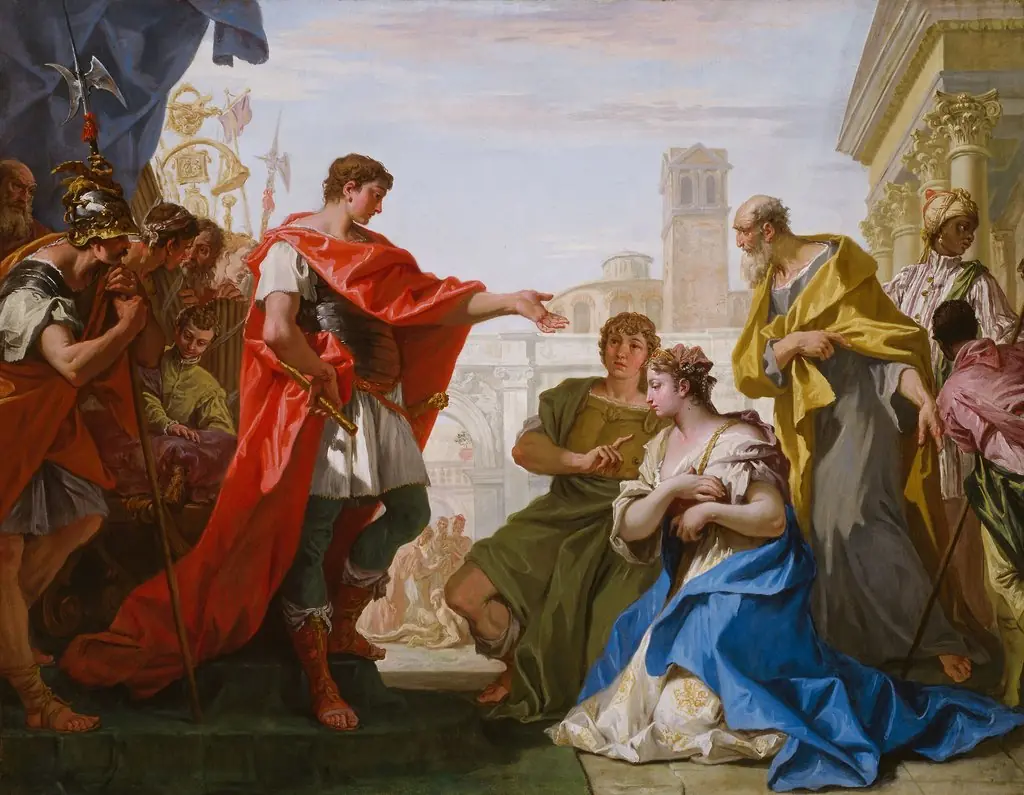 The Continence of Scipio
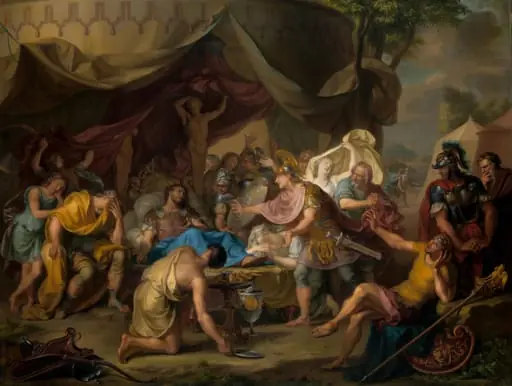 Het sterfbed van Epaminondas
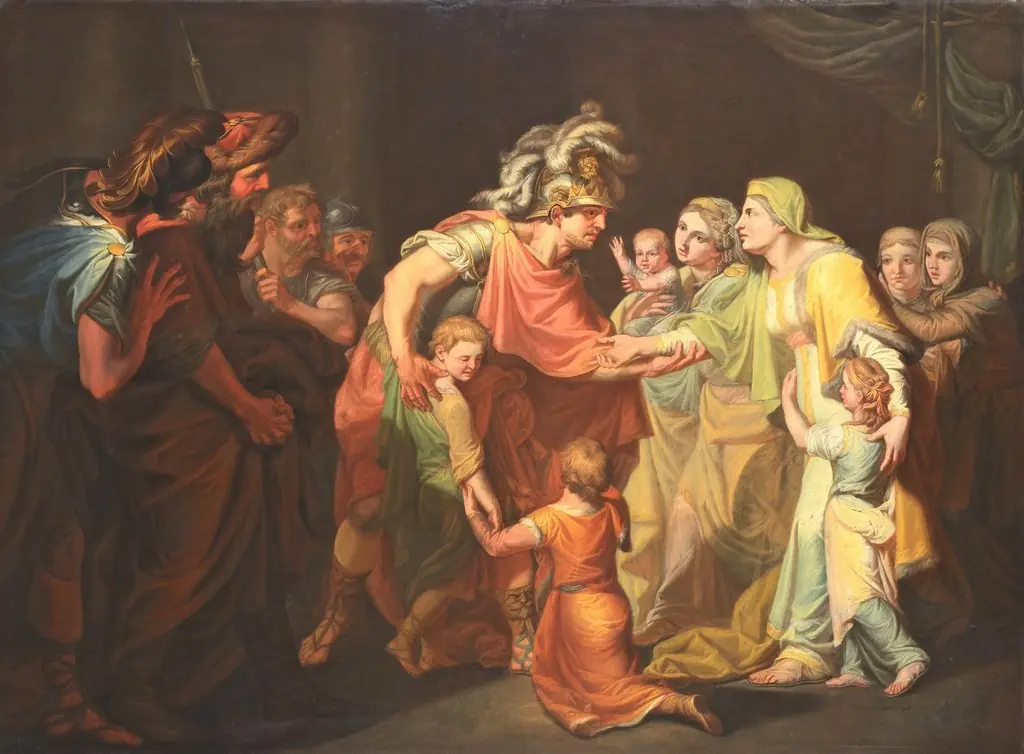 Svyatoslav's return from the Danube to his family in Kiev
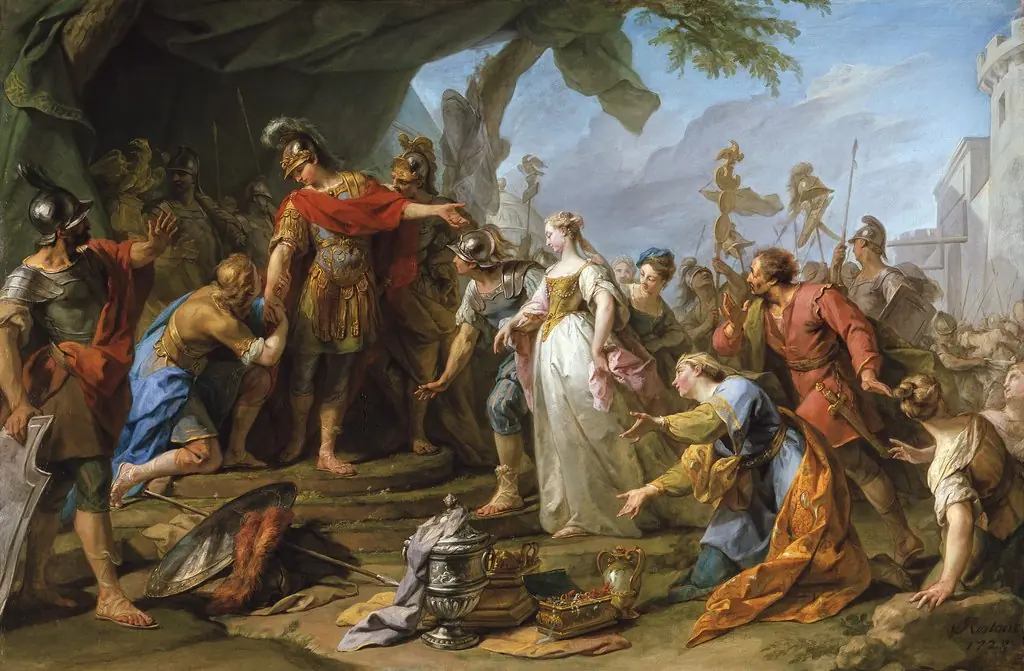 The Generosity of Scipio
 Queen Zenobia Addressing Her Soldiers
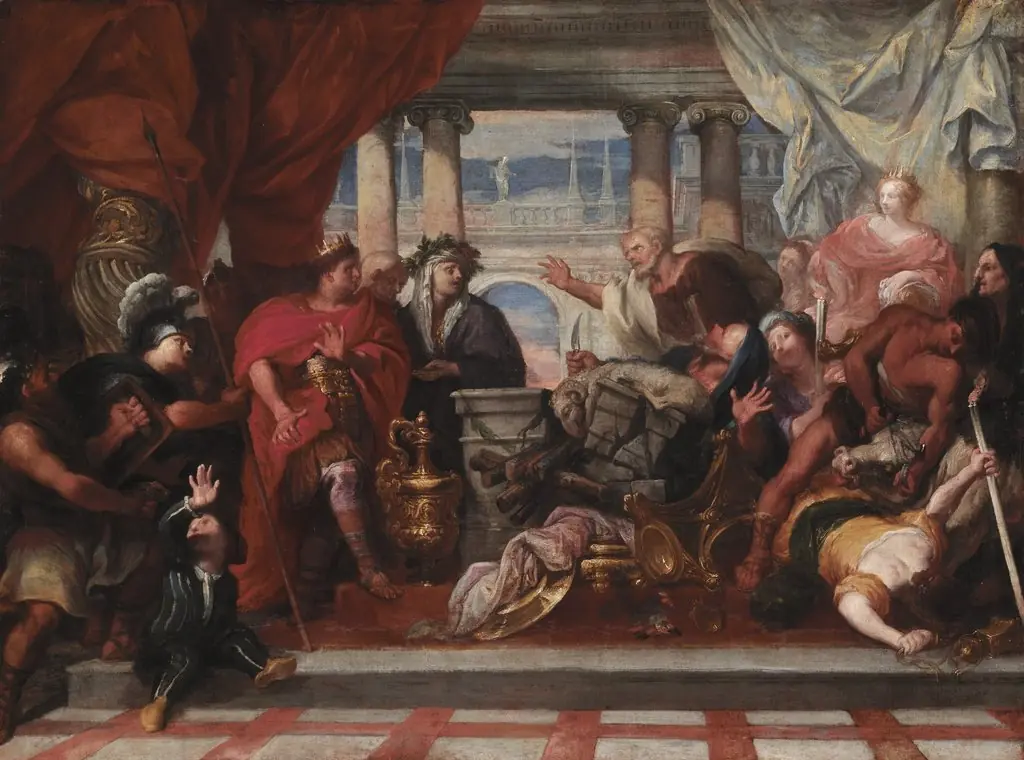 Scene of Sacrifice