Artwork
Queen Zenobia Addressing Her Soldiers
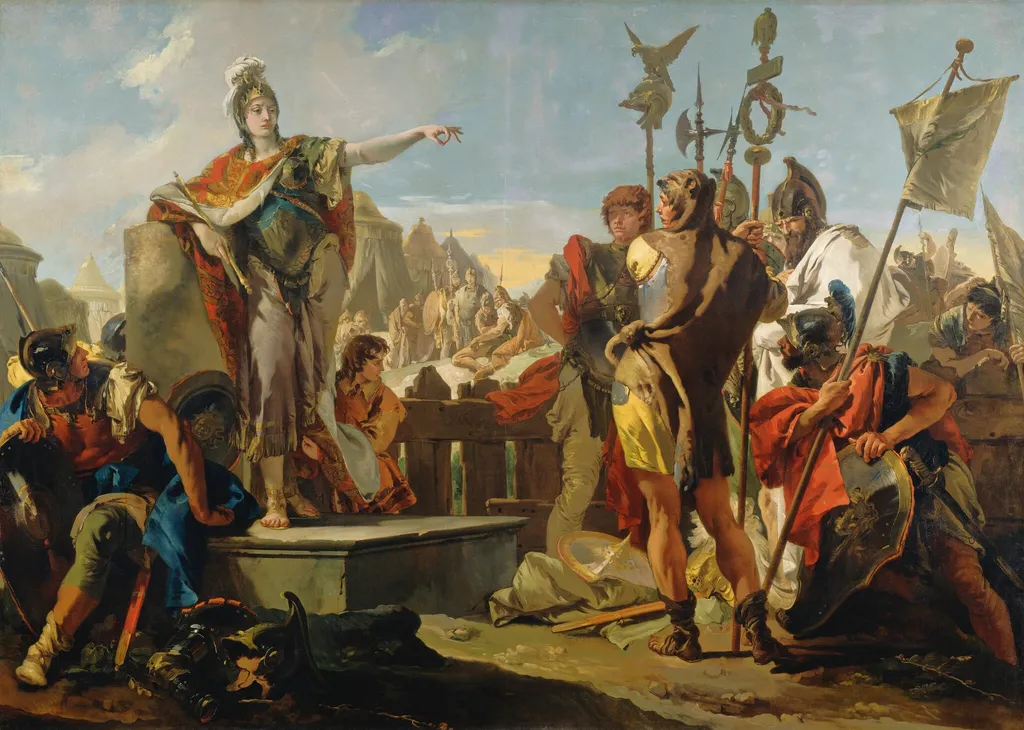
Queen Zenobia Addressing Her Soldiers is an oil painting by the Baroque artist Giovanni Battista Tiepolo. It dates from 1728 and is held in the collection of the National Gallery of Art.
About this work
Subject & Meaning
As a history painting, the work utilizes the grand scale and dramatic composition typical of the Rococo movement to elevate a moment of military leadership.
The painting depicts the Palmyrene queen Zenobia delivering an address to her troops, a scene drawn from classical history. As a history painting, the work utilizes the grand scale and dramatic composition typical of the Rococo movement to elevate a moment of military leadership. The subject matter focuses on Zenobia's role as a commander, presenting her in a stance of authority before her soldiers.
While the specific iconographic details of the soldiers' reactions are not elaborated in the provided sources, the composition serves to represent the queen's historical defiance and martial prowess. The work was created as part of an early commission for the Zenobio family in Venice, linking the depicted historical figure to the patron's own name and lineage.
Technique & Style
Executed in 1727, this history painting is rendered in oil on canvas. The work exemplifies the Rococo movement through its dynamic composition and theatrical presentation of the historical subject. The large-scale support measures 261.4 cm in height and 365.8 cm in width, creating an expansive field for the artist's brushwork.
While specific details regarding the current physical condition or conservation history are not provided in the available records, the piece remains a significant example of Tiepolo's early commissioned works. The medium allows for the fluid application of paint characteristic of the artist's style during this period.
History & Provenance
Giovanni Battista Tiepolo completed Queen Zenobia Addressing Her Soldiers in 1727 as an early commission for the Zenobio family in Venice. Scholarly analysis connects this work and its pendants to a 1732 record by Vincenzo da Canal regarding Tiepolo's teacher, Gregorio Lazzarini. By 1732, the painting was likely housed in Ca' Zenobio, where it remained until at least 1817 or 1844.
Following the death of the last male Zenobio, Alvise, in 1817, the work passed to his sister Alba and subsequently left the palace during renovations in 1844. The painting later entered the Villa Grimani-Vendramin Calergi in Noventa Padovana, remaining there until 1905 or 1909. It was then acquired by C. Ledyard Blair of Peapack-Gladstone, New Jersey, before passing through the collection of Maisie Dreicer Whyte de Kerchove.
The work was sold to French and Co. in 1948, purchased by the Samuel H. Kress Foundation in 1949, and finally gifted to the National Gallery of Art in 1961.
The painting is held by the National Gallery of Art, Washington, D.C., as part of the Samuel H. Kress Collection, accessioned in 1961.
Its exhibition history includes display at the National Gallery of Art following its 1961 gift by the Samuel H. Kress Foundation.
Context
The painting entered the National Gallery of Art through the Samuel H. Kress Foundation in 1961, having been sold by French and Co. in 1949 after its appearance in the collection of Maisie Dreicer Whyte de Kerchove. Its provenance traces back to possible ownership by the Zenobio family in Venice by 1732, with documented holdings in the Villa Grimani-Vendramin Calergi until 1905, and subsequent ownership by Count Dino Barozzi before its acquisition by Blair in 1909. Scholarship identifies it as an early 1732 commission for the Zenobio family, linked to related works in Milan and Turin, and recognized as part of Tiepolo's development within the Rococo movement, with the composition reflecting his engagement with historical subjects and aristocratic patronage.
The work remains a key example of his contribution to the history painting genre and his influence on later European art.
Overview
Created in 1728, Queen Zenobia Addressing Her Soldiers is an oil on canvas work by Giovanni Battista Tiepolo. Executed in the Rococo idiom, the painting presents a vivid historical scene in which the Syrian queen stands atop a platform, gesturing toward a distant conflict while her armed followers listen attentively.
Own this work as a print
Artist & collection

Artist
Giovanni Battista Tiepolo, also known as Giambattista Tiepolo, was an Italian painter and printmaker from the Republic of Venice who painted in the Rococo style, considered an important member of the 18th-century Venetian school.

 The Generosity of Scipio
 Scipio Africanus Freeing Massiva
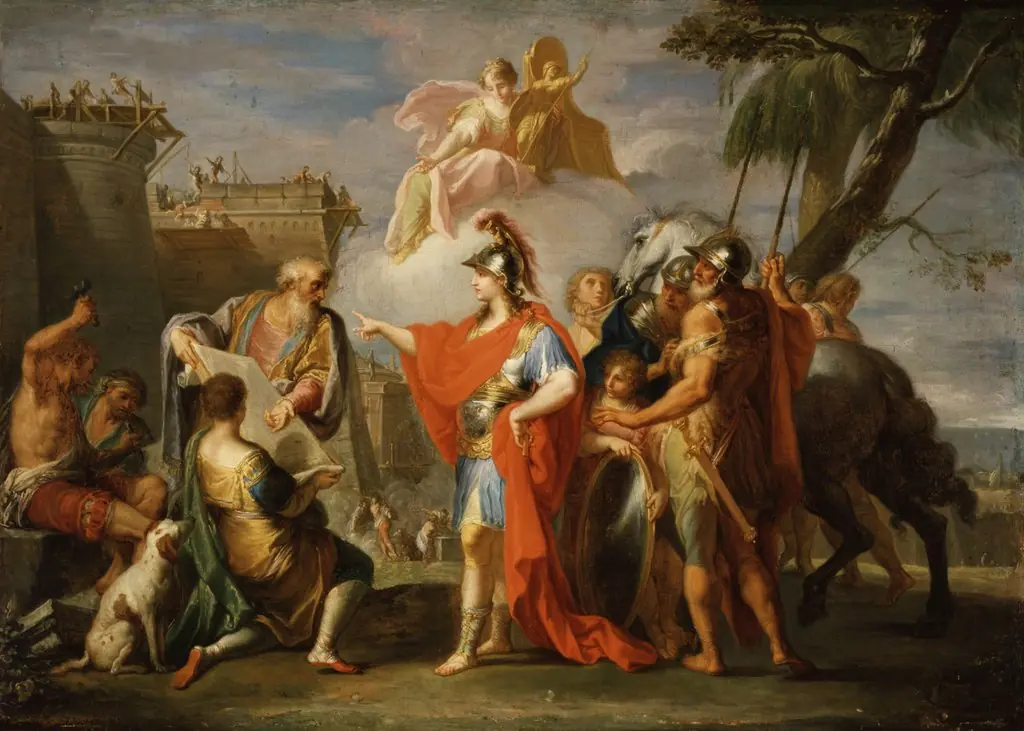 Alexander the Great Founding Alexandria
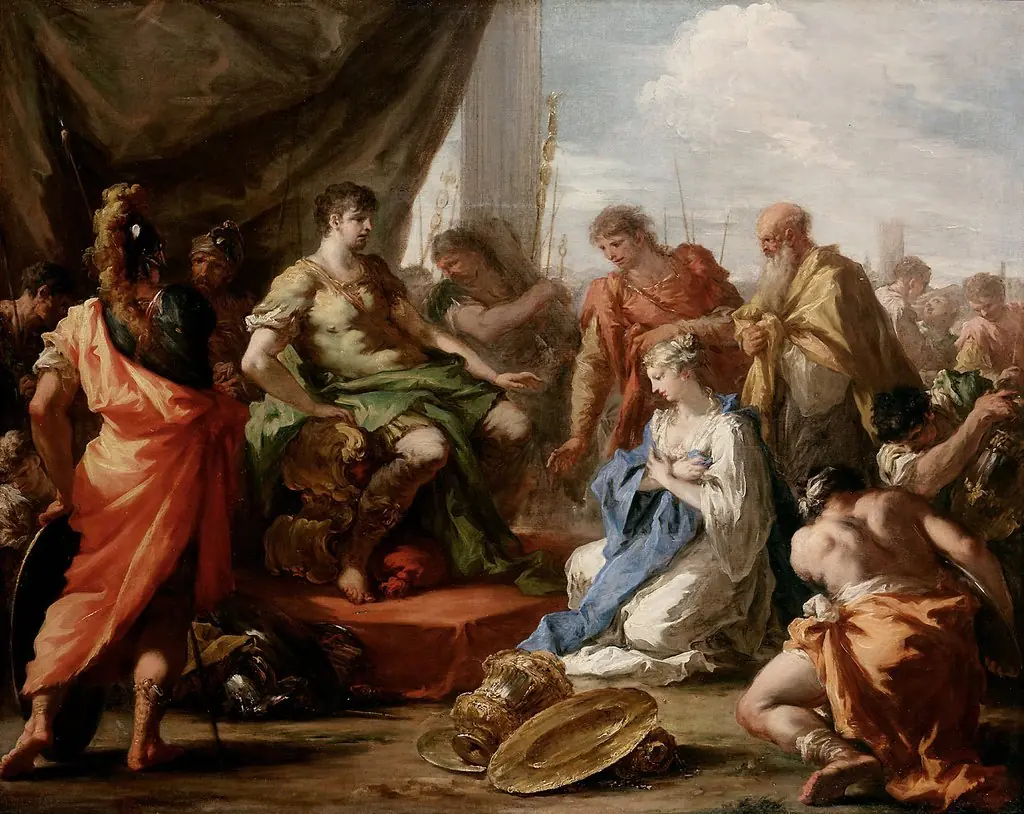 Enthaltsamkeit des Scipio
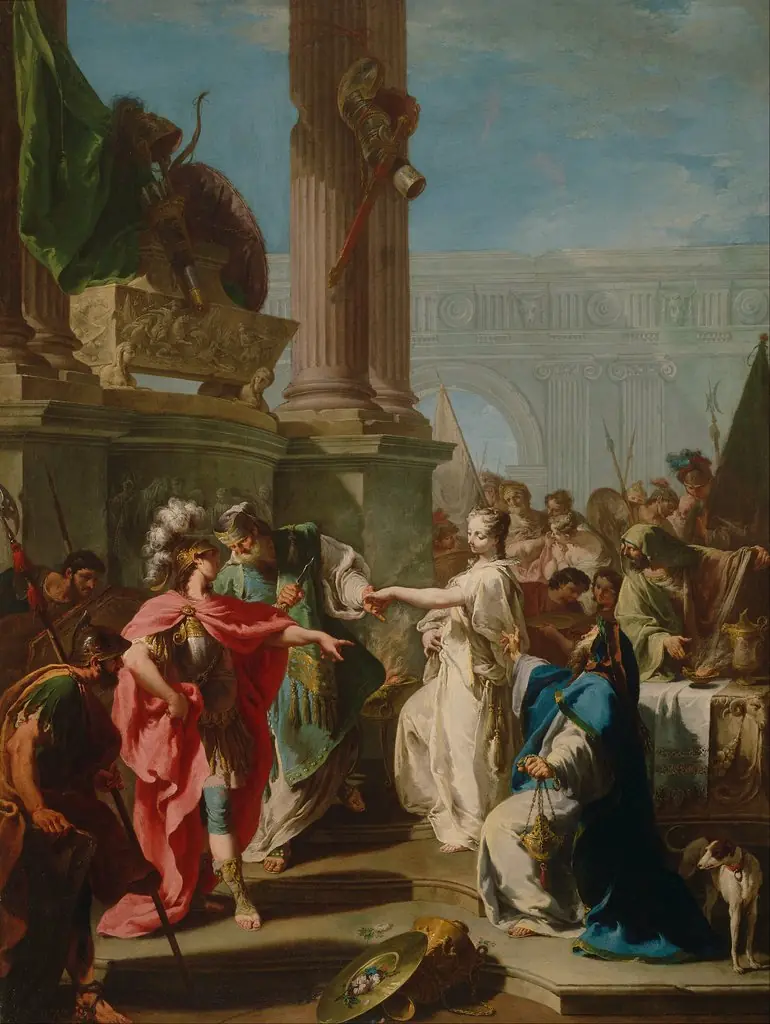 The Sacrifice of Polyxena in Malibu
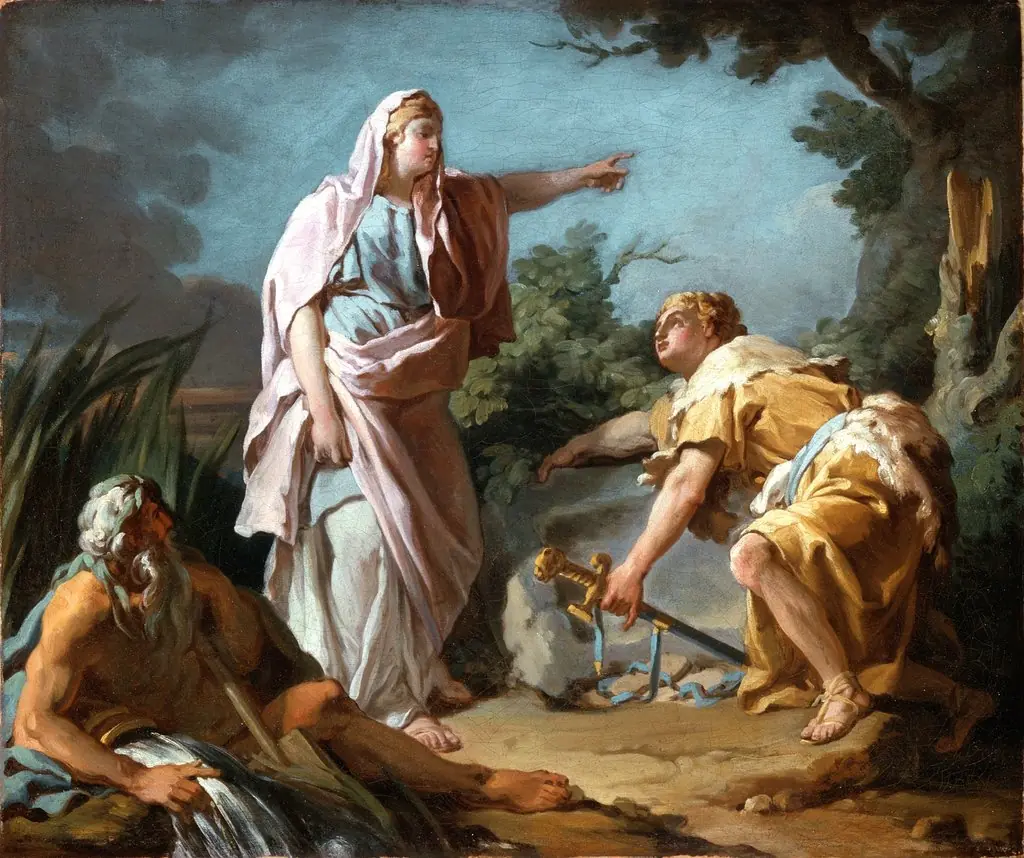 Aethra Showing her Son Theseus the Place Where his Father had Hidden his Arms
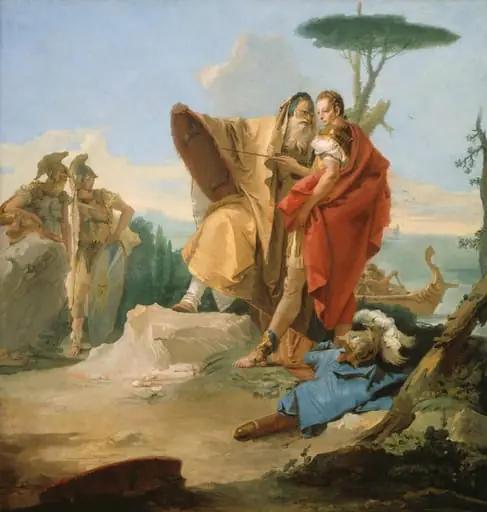 Rinaldo and the Magus of Ascalon
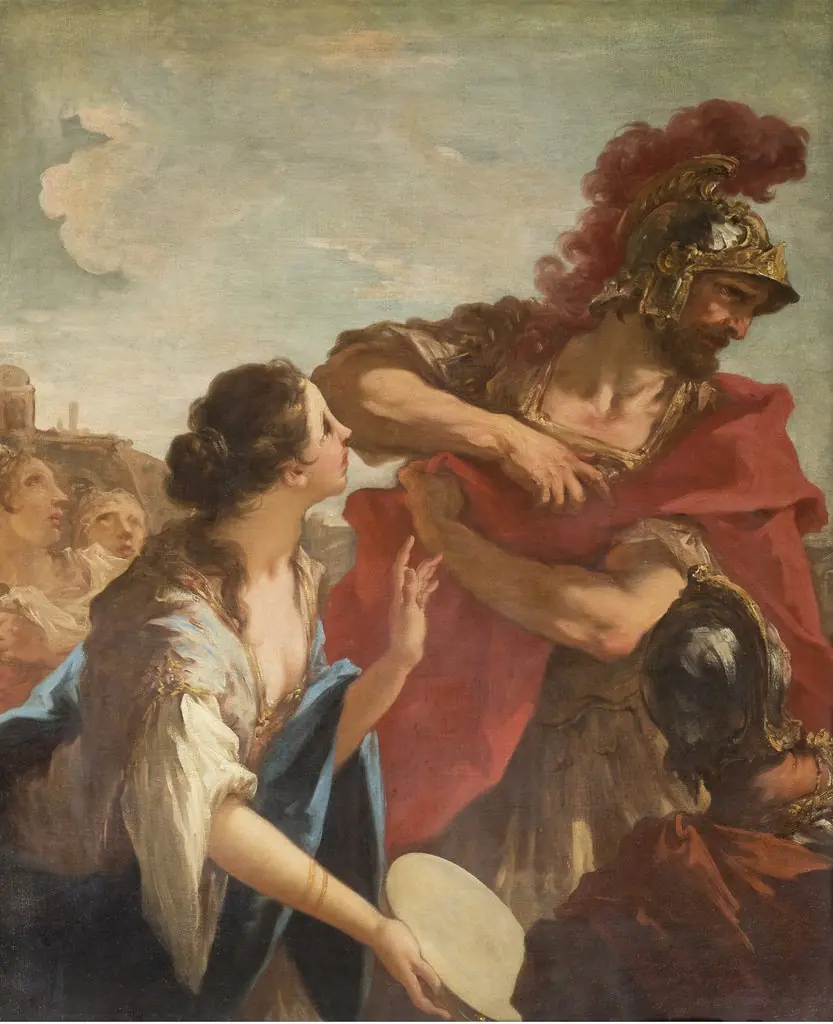 Jephthah returning from Battle is greeted by his Daughter
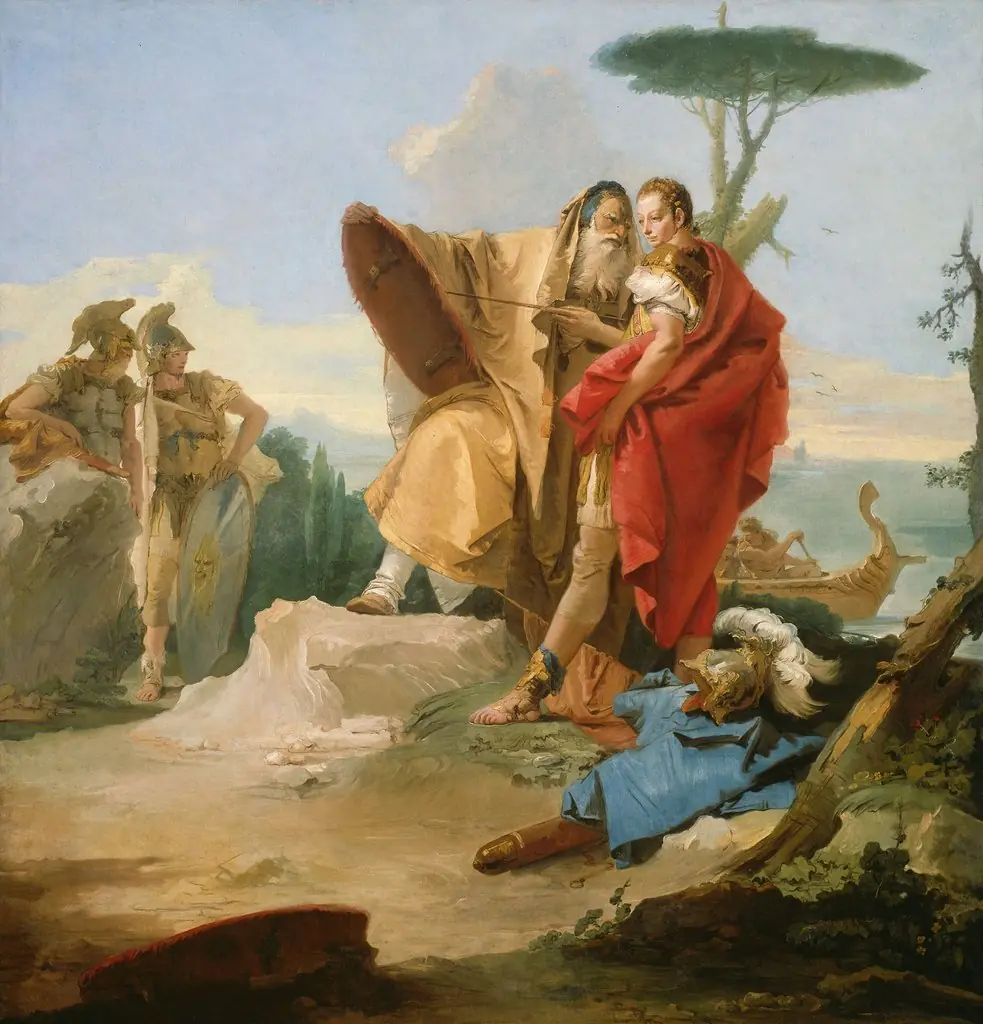 Rinaldo and the Magus of Ascalon
 The Death of Regulus
 Godofredo y el Consejo escuchan la demanda de Armida
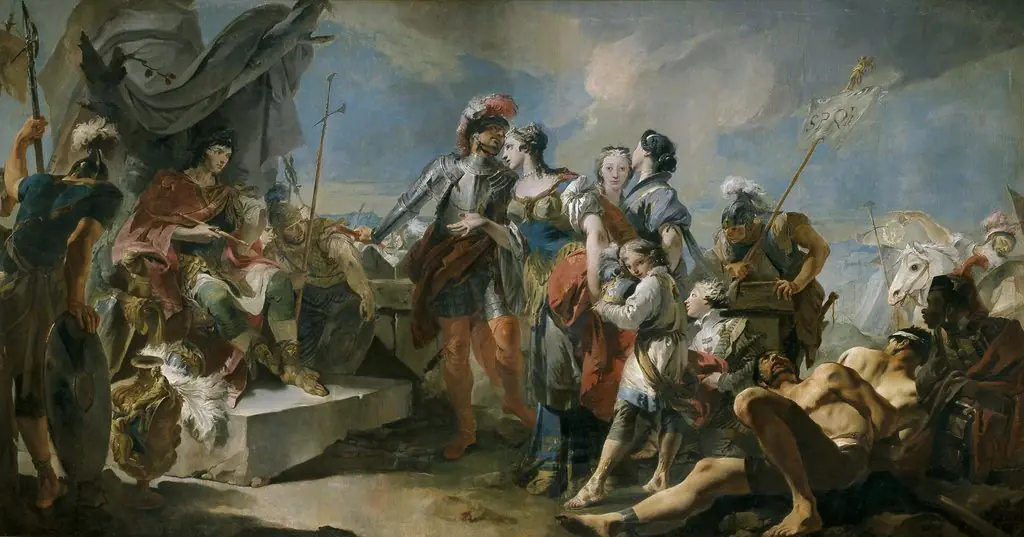
- Queen Zenobia before the Emperor Aurelian