Artwork
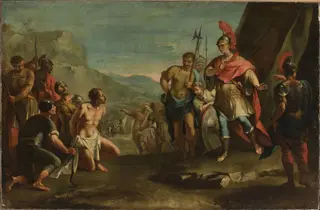
Godofredo y el Consejo escuchan la demanda de Armida
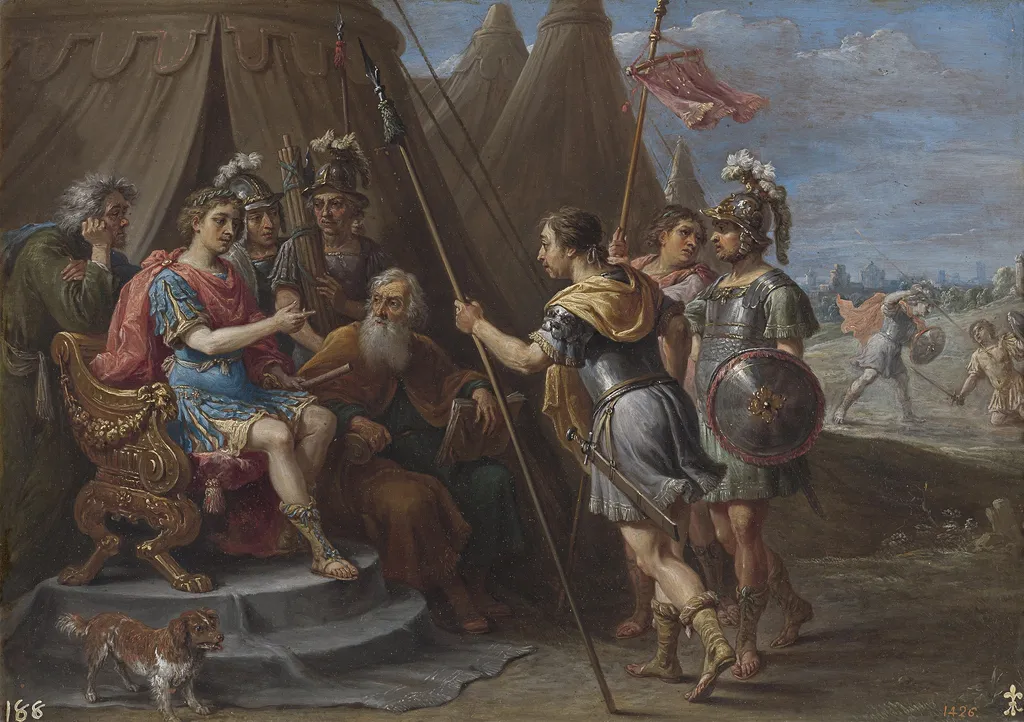
Godofredo y el Consejo escuchan la demanda de Armida is an oil painting by the Flemish Baroque painting artist David Teniers the Younger. It dates from 1628 and is held in the collection of the Museo del Prado.
About this work
Subject & Meaning
The painting portrays Godfrey of Bouillon, the first ruler of the Kingdom of Jerusalem, seated on a throne and receiving counsel from his court as he listens to the demands of the enchantress Armida. Iconographically, the work combines martial symbols, combat helmet, sword, spear, with the regal setting of a throne, underscoring both Godfrey’s leadership and the tension between Christian authority and the seductive influence of the Saracen sorceress. Symbolically, the juxtaposition of armor and courtly deliberation highlights the intersection of warfare and diplomacy in the crusading narrative, while the opulent materials such as copper leaf accentuate the ceremonial grandeur.
The scene reflects the broader theme of the struggle between desire and duty that permeates Torquato Tasso’s epic Jerusalem Delivered, from which the subject derives its story.
Technique & Style
The handling of the oil paint on the rigid copper surface allows for fine detail in the armor, weaponry, and architectural elements visible within the scene.
Created by David Teniers the Younger, this work is an oil painting executed on a copper support. The medium incorporates copper leaf, a material choice that complements the metal base and contributes to the piece's luminous quality. Measuring 27 cm in height and 39 cm in width, the small-scale format is characteristic of Teniers' cabinet paintings from the late 1620s.
The composition depicts figures from Torquato Tasso's Jerusalem Delivered, specifically Godfrey of Bouillon and his council listening to Armida. The handling of the oil paint on the rigid copper surface allows for fine detail in the armor, weaponry, and architectural elements visible within the scene.
History & Provenance
Painted by David Teniers the Younger, this work dates to 1628, with some records indicating an inception range beginning in that year. The composition illustrates a scene from Torquato Tasso's Jerusalem Delivered, depicting Godfrey of Bouillon and his council receiving Armida's petition. Executed in oil on a copper support, the small-scale panel measures 27 by 39 centimeters.
The painting entered the Spanish royal collection, where it was successively owned by monarchs Philip V, Elisabeth Farnese, Charles III, and Ferdinand VII. Historically, the work was located in several royal sites, including the Royal Palace of Aranjuez and the Royal Palace of La Granja de San Ildefonso, before becoming part of the holdings at the Museo del Prado.
The painting is held in the Museo del Prado, Madrid, with inventory number P001312.
It was exhibited at the Real Sitio de San Lorenzo de El Escorial in 1983 as part of the "Exposición de Pintura Flamenca en las Colecciones del Museo del Prado" (cat. no. 131).
Overview
Created in 1628, this oil on canvas by David Teniers the Younger portrays a ceremonial gathering of medieval figures around a throne. The central seated figure, clad in a blue tunic beneath a red cloak, is flanked by armored nobles, one brandishing a spear and another a sword. A distant cityscape under a cloud‑streaked sky frames the scene, lending it a sense of staged grandeur.
Context
Executed during the early Baroque period, the work aligns with contemporary interests in historical and literary subjects, particularly those drawn from crusader legends. Teniers, known for genre scenes and courtly commissions, adapts his detailed observation of costume and setting to a more elevated, narrative genre.
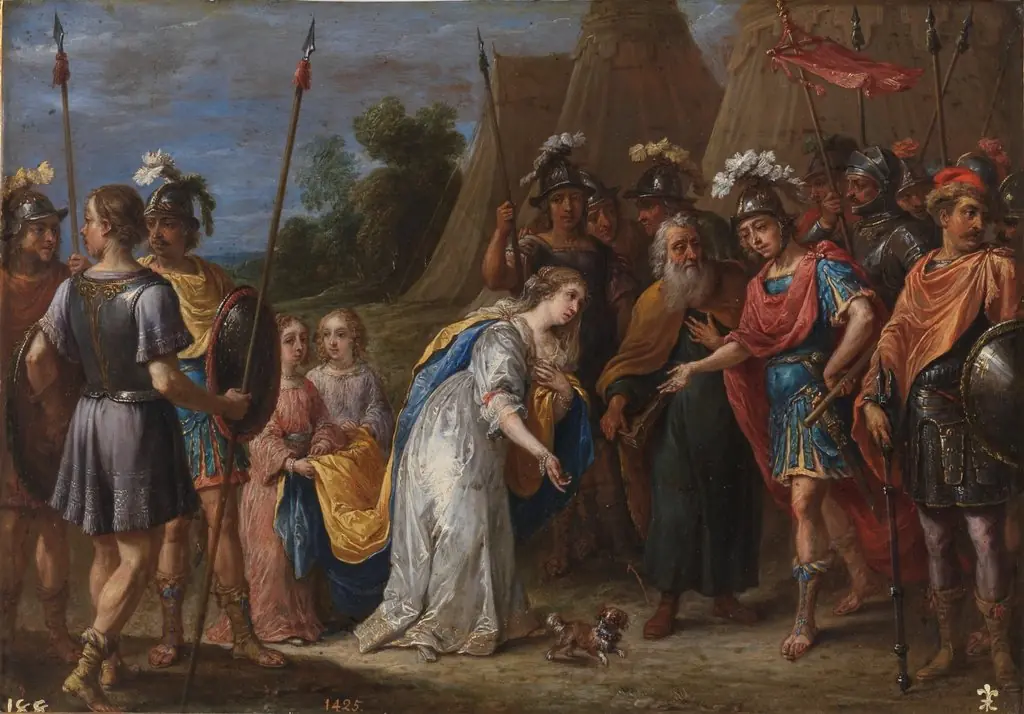
Own this work as a print
Artist & collection
Artist
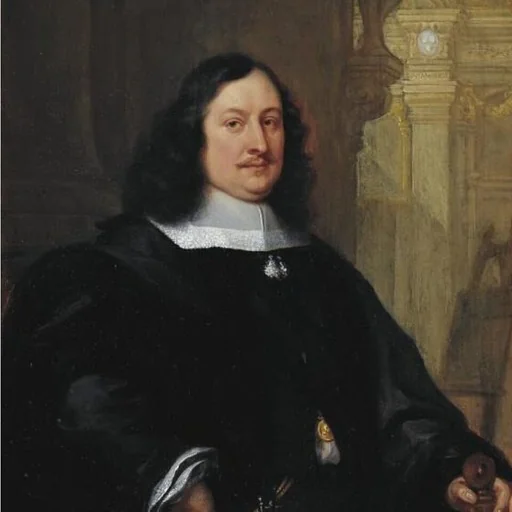
David Teniers the Younger or David Teniers II was a Flemish Baroque painter, printmaker, and artist.

 Alexander the Great Founding Alexandria
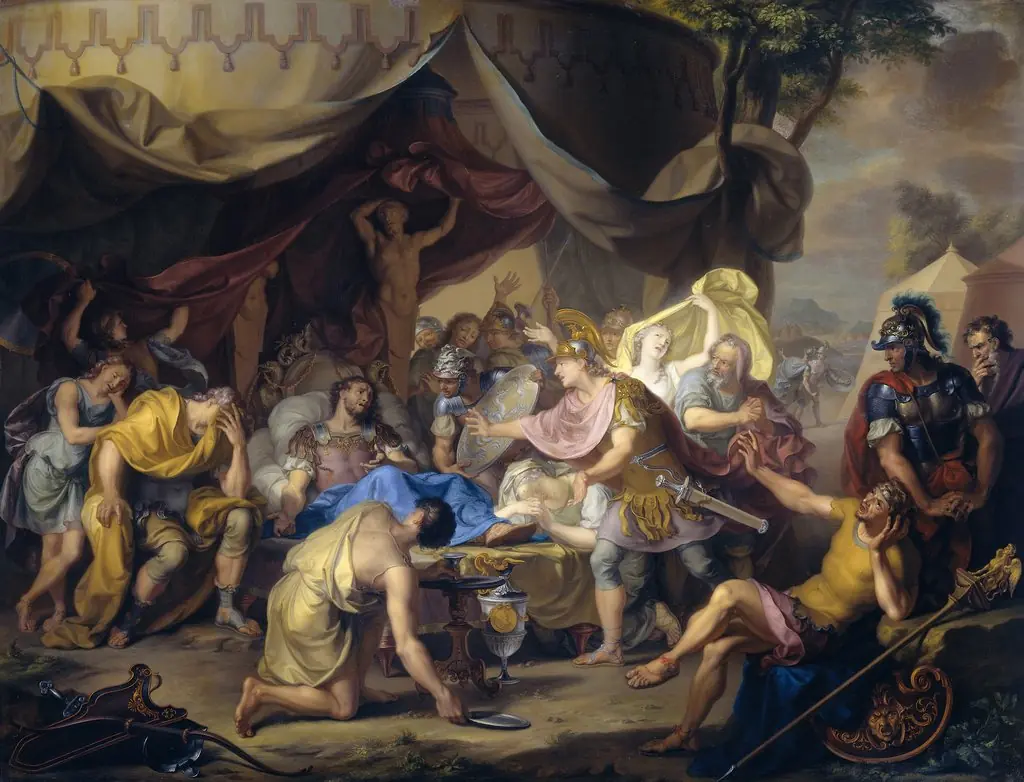 The Death of Epaminondas
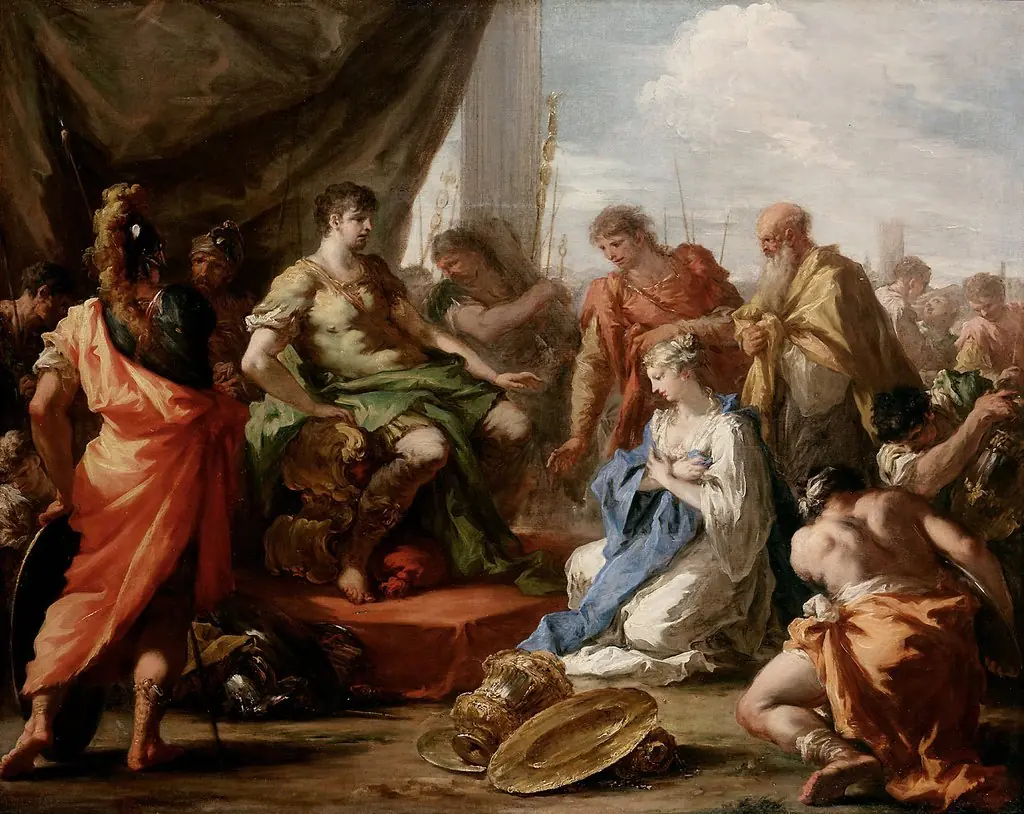 Enthaltsamkeit des Scipio
 Het sterfbed van Epaminondas
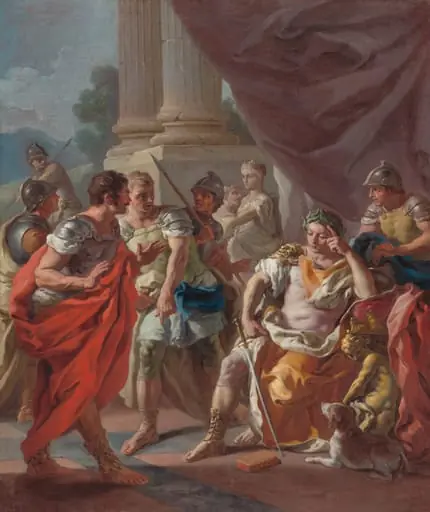 Alexander Condemning False Praise
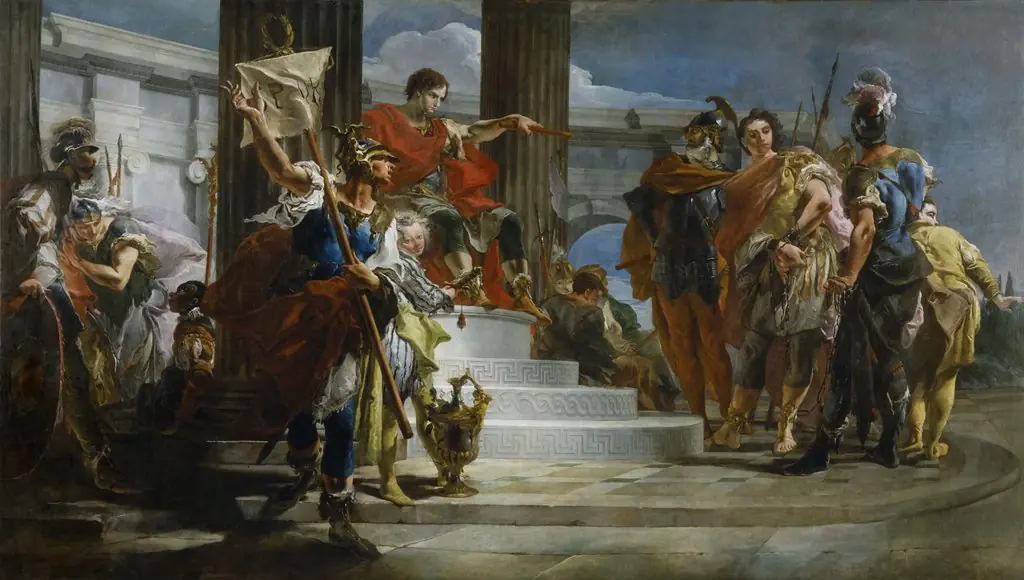 Scipio Africanus Freeing Massiva
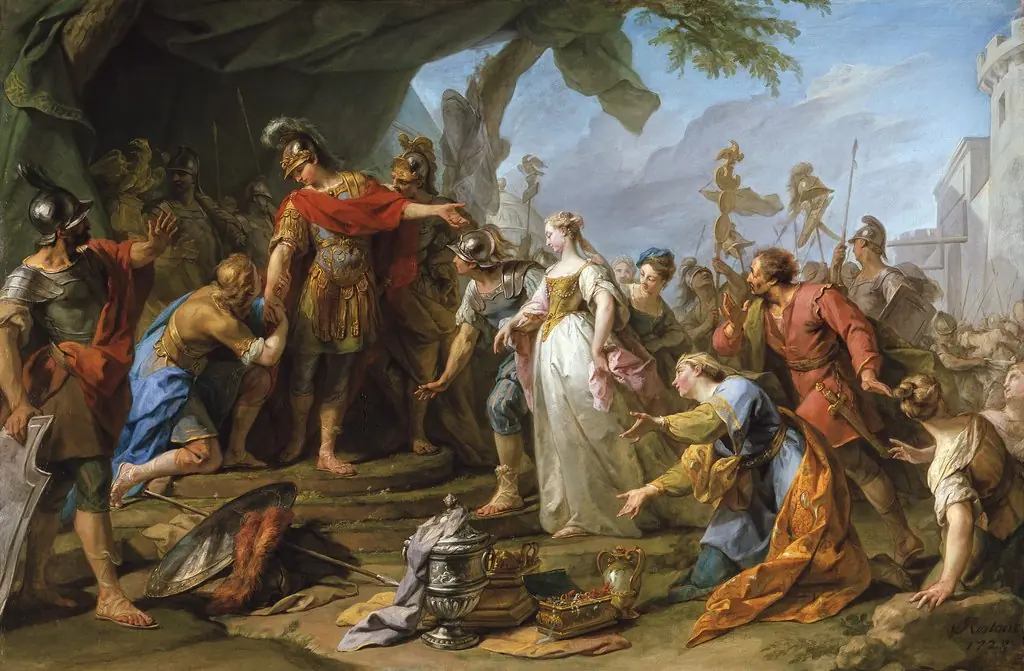 The Generosity of Scipio
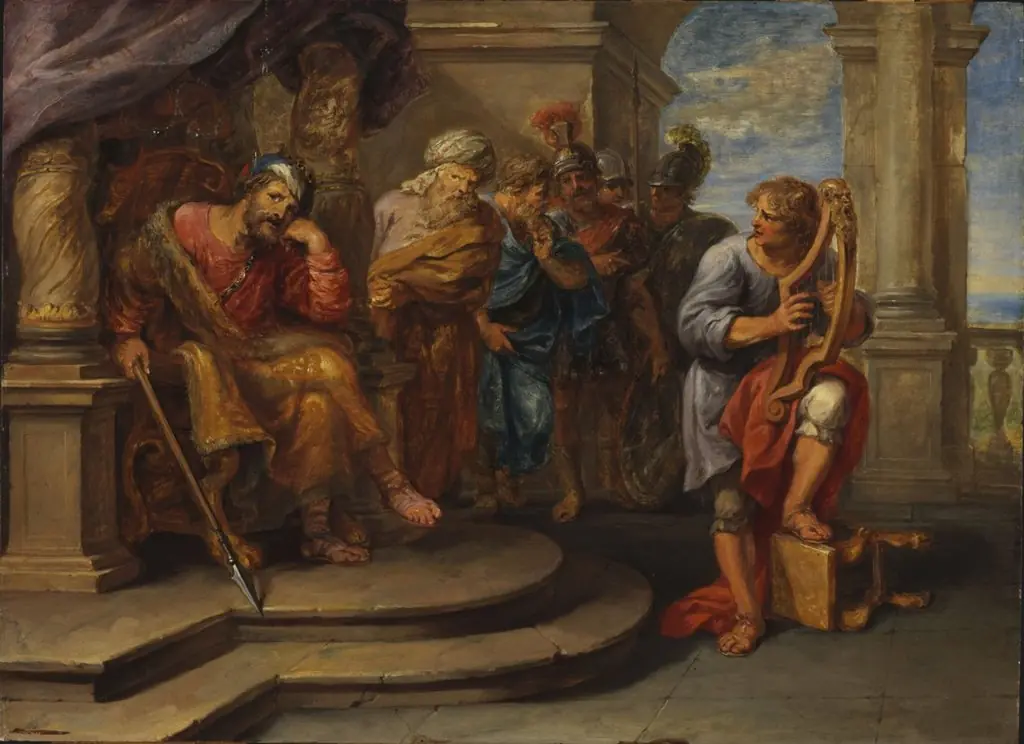 David Playing the Harp for King Saul
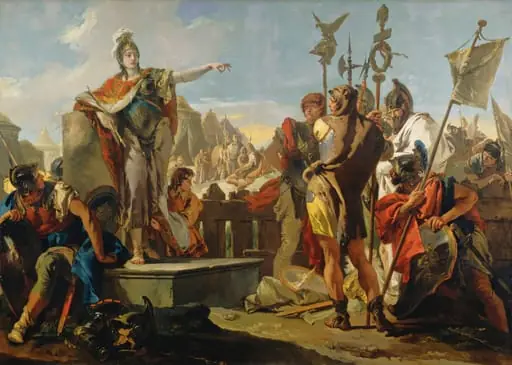 Queen Zenobia Addressing Her Soldiers
 Killer of Darius before Alexander (King Porus and Alexander the Great)