Artwork
Zulaykha in her palace and as an elderly woman with Joseph (recto), from a Panj Ganj (Five Treasures) of Abd al- Rahman Jami (Persian, 1414–1492)
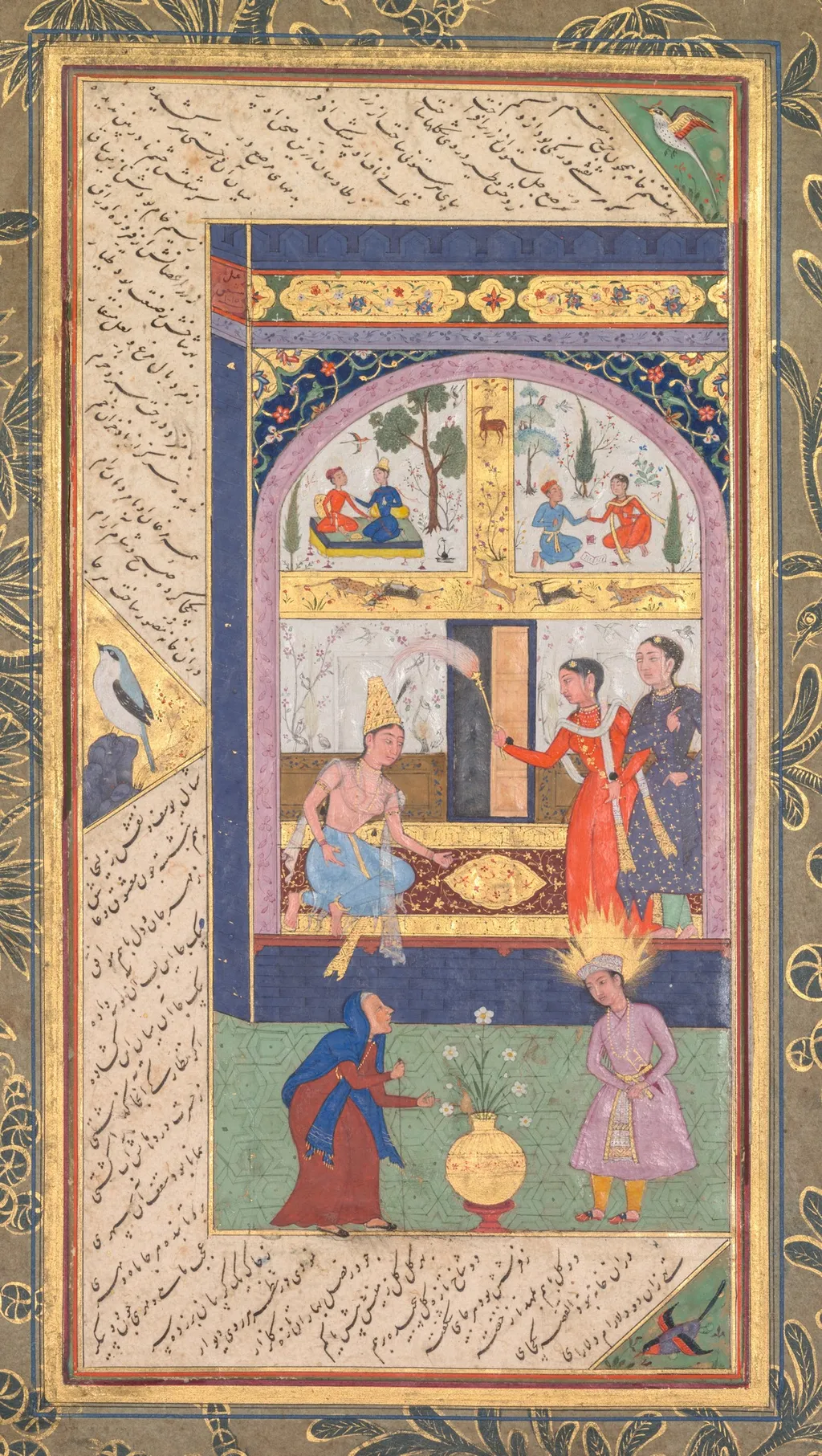
Zulaykha in her palace and as an elderly woman with Joseph (recto), from a Panj Ganj (Five Treasures) of Abd al- Rahman Jami (Persian, 1414–1492) is an unspecified painting by the Persian Miniature artist Mushfiq. It dates from 1605 and is held in the collection of the Cleveland Museum of Art.
About this work
History & Provenance
Exhibition history includes "India: Art and Culture 1500-1900" (Museum of Fine Arts, Boston, 1999-2000; traveled to Cleveland Museum of Art, 2000).
The miniature was created in 1605 in India by Mushfiq, depicting the figure of Zulaykha in her palace and as an elderly woman with Joseph. It forms part of a Persian-language manuscript of Panj Ganj by the 15th-century poet Abd al-Rahman Jami, compiled as one of five treasures. The work entered the collection of the Cleveland Museum of Art, where it has been housed since its acquisition.
The painting is held in the collection of the Cleveland Museum of Art in Cleveland, Ohio. It has the accession or inventory number 2013.315.1.a. The work was included in the exhibition "India: Art and Culture 1500-1900," which was shown at the Museum of Fine Arts, Boston, from October 1999 through January 2000.
The piece was created in 1605 by the artist Mushfiq as part of a manuscript of the Panj Ganj (Five Treasures) of Abd al-Rahman Jami. It is cataloged under the accession number 2013.315.1.a within the Cleveland Museum of Art's collection. The painting was part of the traveling exhibition "India: Art and Culture 1500-1900," which later traveled to the Cleveland Museum of Art in 2000.
Exhibition history includes "India: Art and Culture 1500-1900" (Museum of Fine Arts, Boston, 1999-2000; traveled to Cleveland Museum of Art, 2000).
Overview
Created in 1605 by the Mughal court painter Mushfiq, this Persian miniature forms part of a illuminated manuscript of the Panj Ganj by the 15th‑century poet Abd al‑Rahman Jami. Executed while Mushfiq worked in the workshop of the Mughal commander‑in‑chief Abd‑ur‑Rahim Khan‑i‑Khanan, the painting illustrates a scene from the biblical tale of Joseph and Zulaykha.
Subject & Meaning
The image presents two moments from the story of Zulaykha’s persistent advances toward Joseph. In the upper register, a palace interior is shown through two small windows, while the lower register depicts Zulaykha as an elderly woman, still confronting Joseph, emphasizing the theme of unrequited desire and moral steadfastness.
Technique & Style
Rendered in the miniature tradition, the work employs vivid pigments, deep reds, ultramarine blues, and gilt accents, applied with fine brushwork to delineate intricate architectural details and sumptuous textiles. Gold leaf outlines the composition’s borders, and the figures are arranged in a crowded yet balanced spatial scheme typical of early‑17th‑century Mughal painting.
Context
The Panj Ganj compiled five of Jami’s poetic works, and its illustrated copies served both devotional and aesthetic purposes in the Mughal court. The inclusion of a biblical narrative reflects the syncretic literary interests of the era, while the lavish visual treatment aligns with the empire’s patronage of Persian artistic conventions.
Artist & collection
Artist
Mushfiq was a sub-imperial Mughal painter who worked in the atelier of Abd-ur-Rahim Khan-i-Khanan (also called Abdul Rahim Khan-I-Khana), commander-in-chief of the Mughal army in the late 16th/early 17th century.

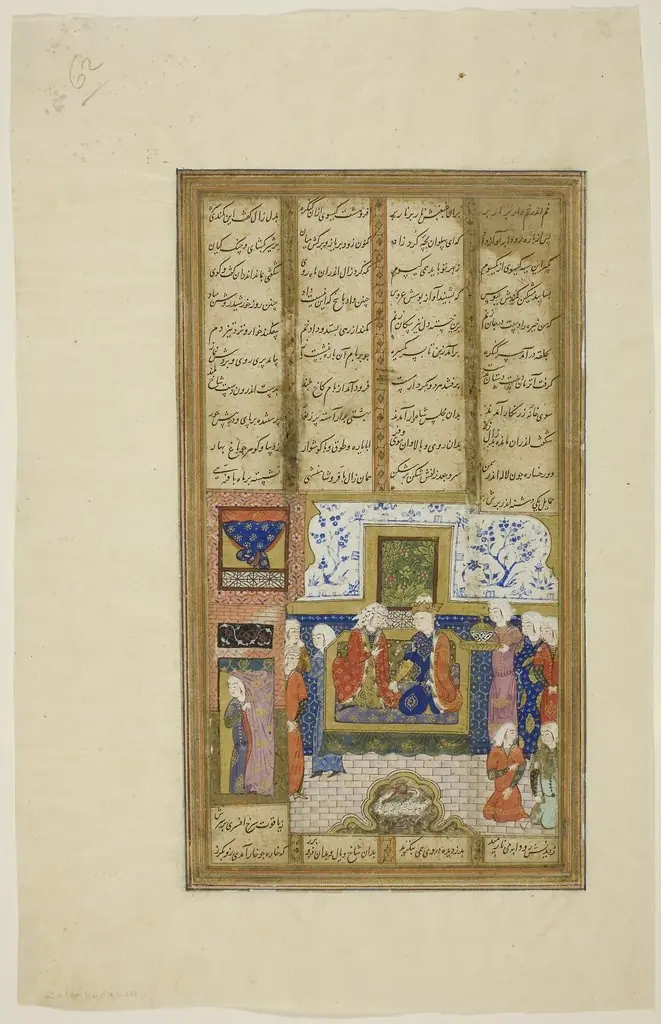 Zal and Rudaba in a Palace, page from a copy of the Shahnama of Firdausi
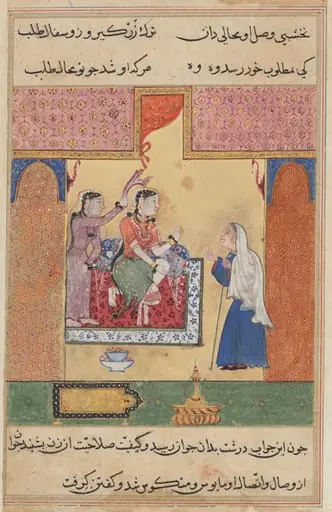 The old procuress conveys the young man’s message of love to Mansur’s wife, from a Tuti-nama (Tales of a Parrot: Seventeenth Night
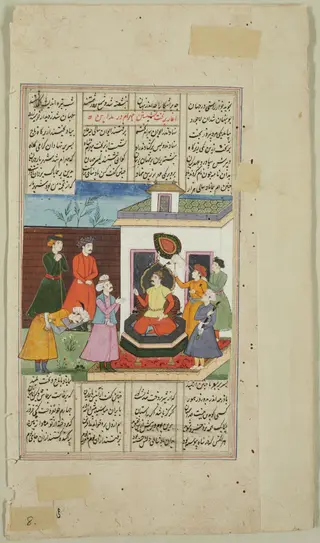 King Enthroned Outside and Standing Retainers
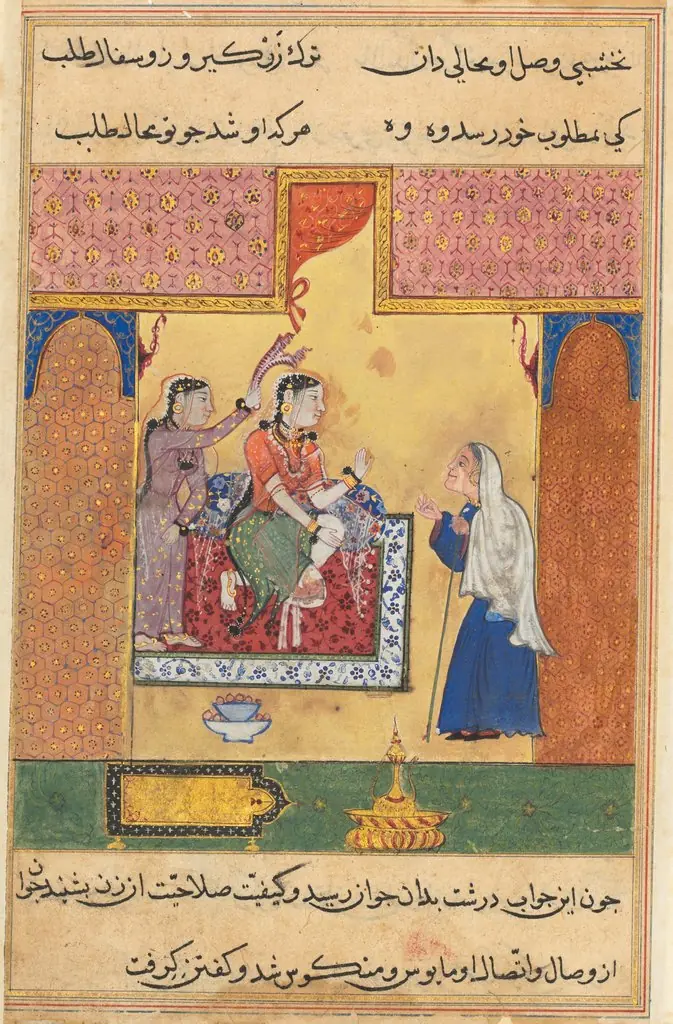 The old procuress conveys the young man’s message of love to Mansur’s wife, from a Tuti-nama (Tales of a Parrot: Seventeenth Night
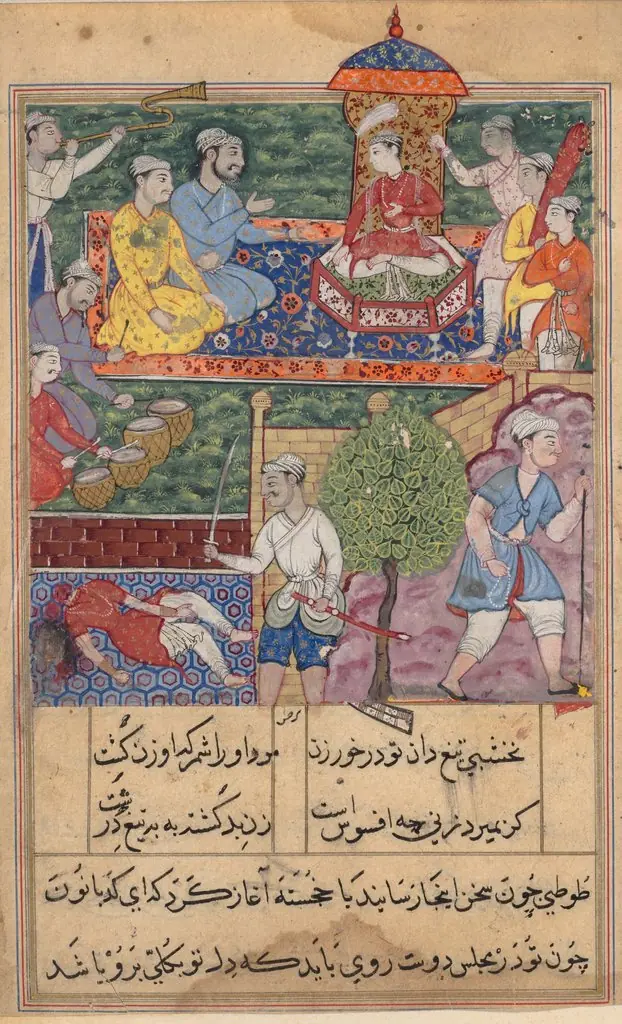 Page from Tales of a Parrot (Tuti-nama): text page
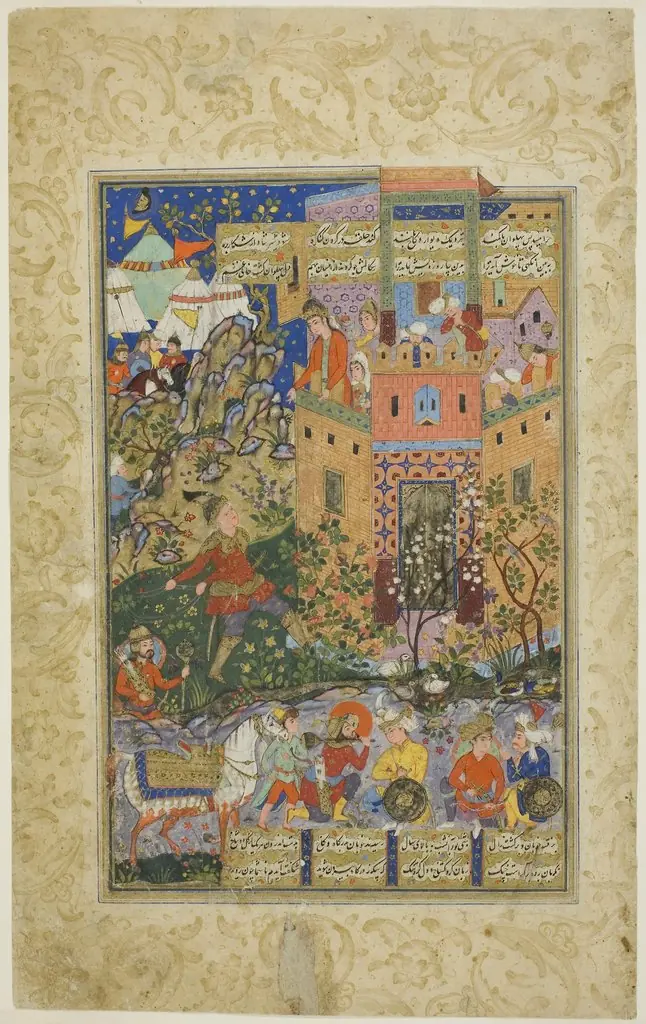 Zal Climbing to Rudaba, page from a copy of the Shahnama of Firdausi
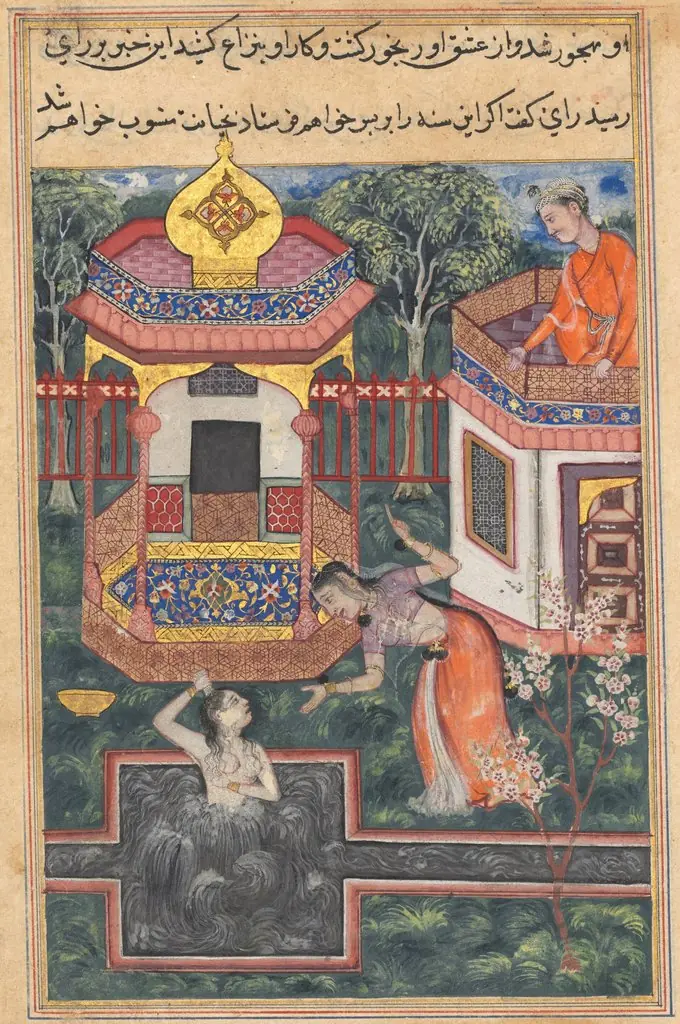 The son of the king of Babylon sees the Brahman transformed into a woman bathing and falls in love with her, from a Tuti-nama (Tales of a Parrot): Thirty-fifth Night
- Zulaykha in her palace and as an elderly woman with Joseph (recto), from a Panj Ganj (Five Treasures) of Abd al- Rahman Jami (Persian, 1414–1492)
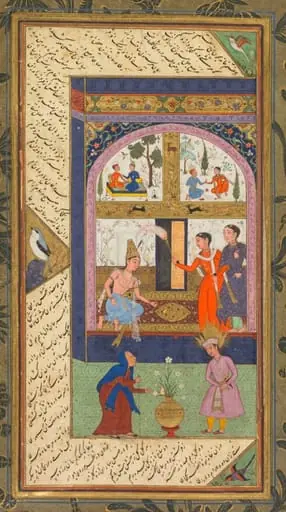 Zulaykha in her palace and as an old woman with Joseph, from a Panj Ganj (Five Treasures) of Abd al-Rahman Jami (Persian, 1414–1492); verso from a Panj Ganj of Abd al-Rahman Jami (Persian, 1414–1492), with two masnavis: Yusuf va Zulaykha (Joseph and Zulaykha) and Khirad-nama-i Iskandari (Alexander’s Book of Wisdom)
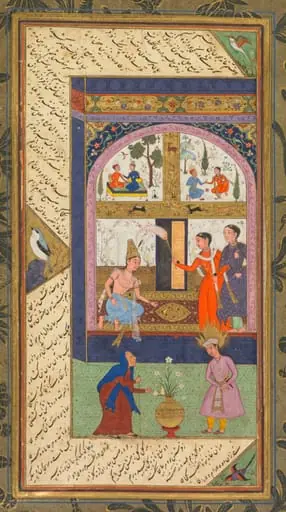 Folios A and B from the "Five Treasures" (Panj Ganj) of Jami
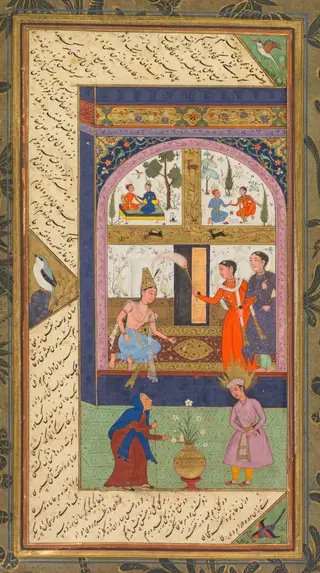 Folios A and B from the "Five Treasures" (Panj Ganj) of Jami
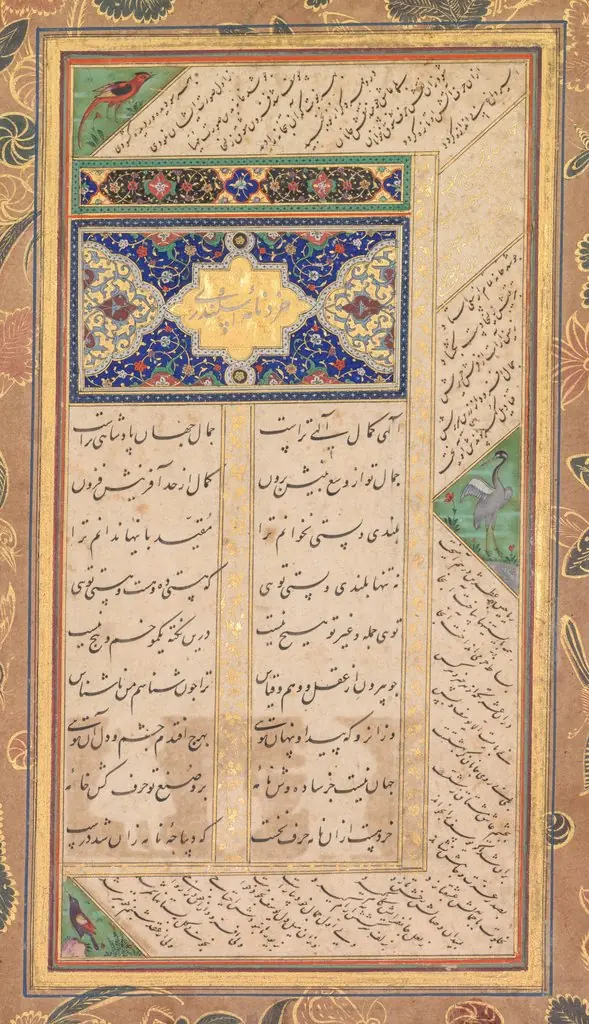 Illuminated page (verso), from a Panj Ganj (Five Treasures) of Abd al- Rahman Jami (Persian, 1414–1492) with two Persian masnavis: Yusuf va Zulaykha (Joseph and Zulaykha) and Khirad-nama-i Iskandari (Alexander’s Book of Wisdom)