Artwork
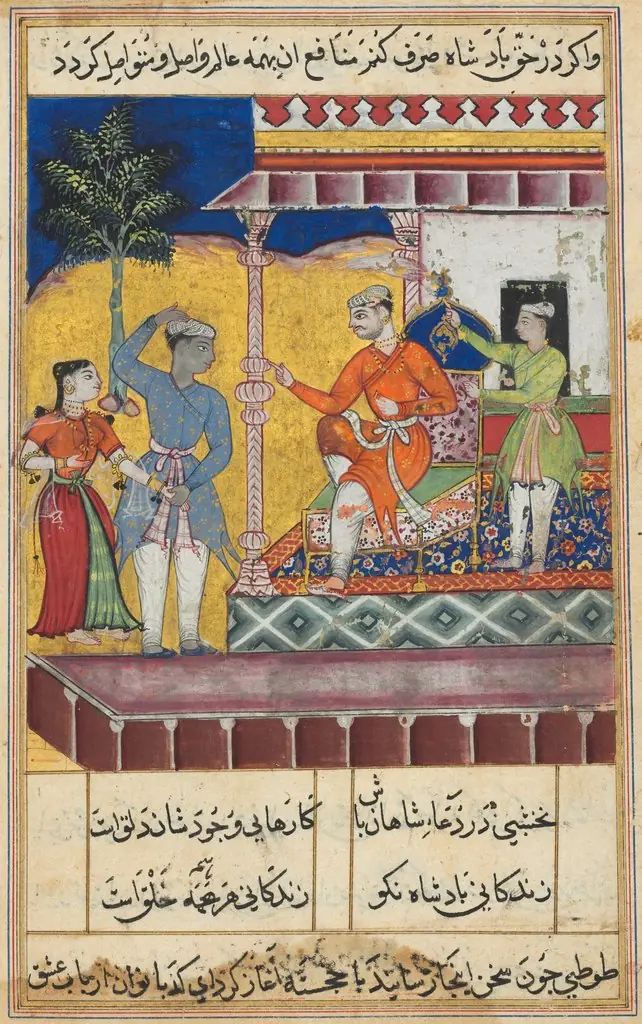
The old procuress conveys the young man’s message of love to Mansur’s wife, from a Tuti-nama (Tales of a Parrot: Seventeenth Night
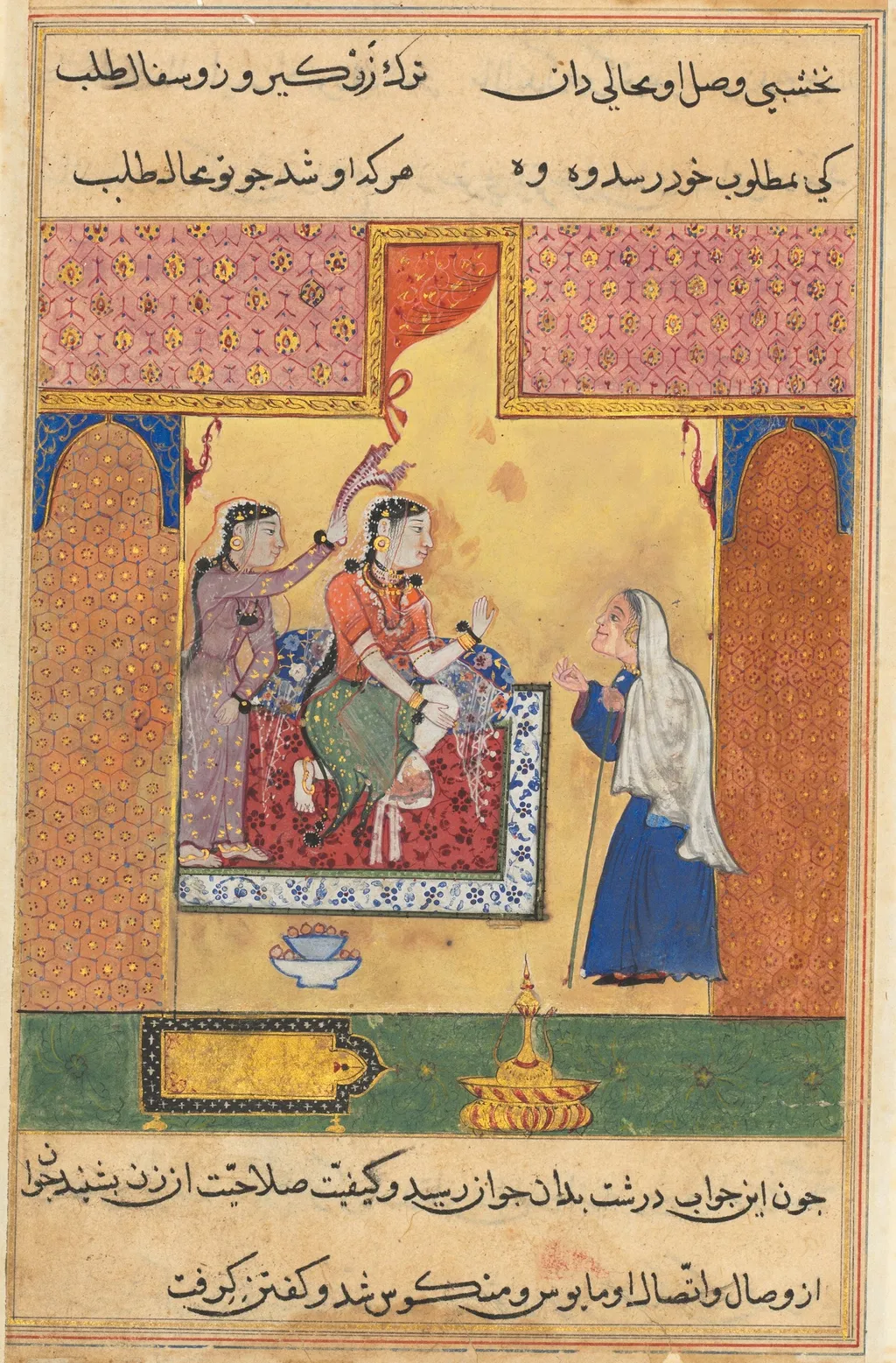
The old procuress conveys the young man’s message of love to Mansur’s wife, from a Tuti-nama (Tales of a Parrot: Seventeenth Night is an unspecified painting. It dates from 1560 and is held in the collection of the Cleveland Museum of Art. The work portrays an interior scene in which three women occupy a richly colored space.
About this work
Subject & Meaning
The scene captures the moment an elderly procuress acts as a messenger, conveying a declaration of love from a young man to the wife of Mansur.
The painting illustrates a specific narrative episode from the Tuti-nama, or Tales of a Parrot, depicting the seventeenth night of the story. The scene captures the moment an elderly procuress acts as a messenger, conveying a declaration of love from a young man to the wife of Mansur. Created within the Mughal Empire in 1560, the work serves as an illustration of this moral and romantic fable.
The iconography focuses on the interaction between the three characters, visualizing the themes of courtship and the role of intermediaries found in the original Persian manuscript tradition.
History & Provenance
The painting is a folio from the Seventeenth Night of the Tuti‑nama (Tales of a Parrot) and dates to 1560. It was produced in the Mughal Empire by an unknown artist. The work entered the Cleveland Museum of Art’s collection, where it is recorded as accession number 1962.279.127.a.
Earlier ownership, commission, or subsequent provenance details are not documented in the sources. It continues to be held by the Cleveland Museum of Art.
The painting titled The old procuress conveys the young man's message of love to Mansur's wife, from a Tuti-nama (Tales of a Parrot: Seventeenth Night) is held in the collection of the Cleveland Museum of Art in Cleveland. This work, created around 1560 in the Mughal Empire by an unknown artist, is cataloged under the accession number 1962.279.127.a. The provided sources do not contain information regarding specific exhibitions where this piece has been displayed.
Overview
The work portrays an interior scene in which three women occupy a richly colored space. A figure in a purple garment holds a feathered object on the left, a centrally seated woman in orange and green rests on a red couch, and a standing figure in blue with a white head covering stands to the right. The walls are painted yellow, the floor green, and a low table holds a bowl and a golden item.
Technique & Style
Executed with meticulous attention to surface detail, the painting employs a vibrant palette and intricate patterning to render textiles, furnishings, and decorative objects. Fine brushwork delineates the folds of clothing and the textures of the feathered implement, while the use of contrasting hues, purples, oranges, blues, and greens, creates a lively visual rhythm across the interior setting.
Context
Narrative scenes such as this one were commonly adapted from literary sources for decorative panels, reflecting the cultural practice of visualizing popular stories. The Tuti‑nama, a collection of moral and romantic tales, was widely illustrated in the Persianate world, and this painting continues that tradition by translating a textual episode into a vivid pictorial format.
Artist & collection

- The old procuress conveys the young man’s message of love to Mansur’s wife, from a Tuti-nama (Tales of a Parrot: Seventeenth Night
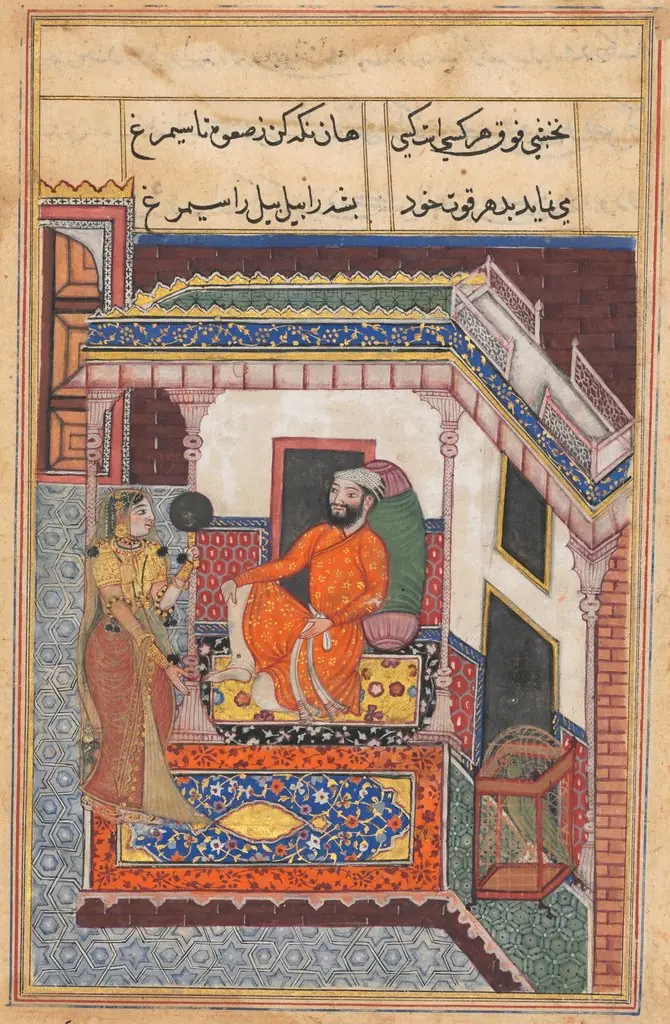 The parrot laughs on hearing the Raja of Ujjain’s wife admire her beauty in a mirror, from a Tuti-nama (Tales of a Parrot: Forty-sixth Night
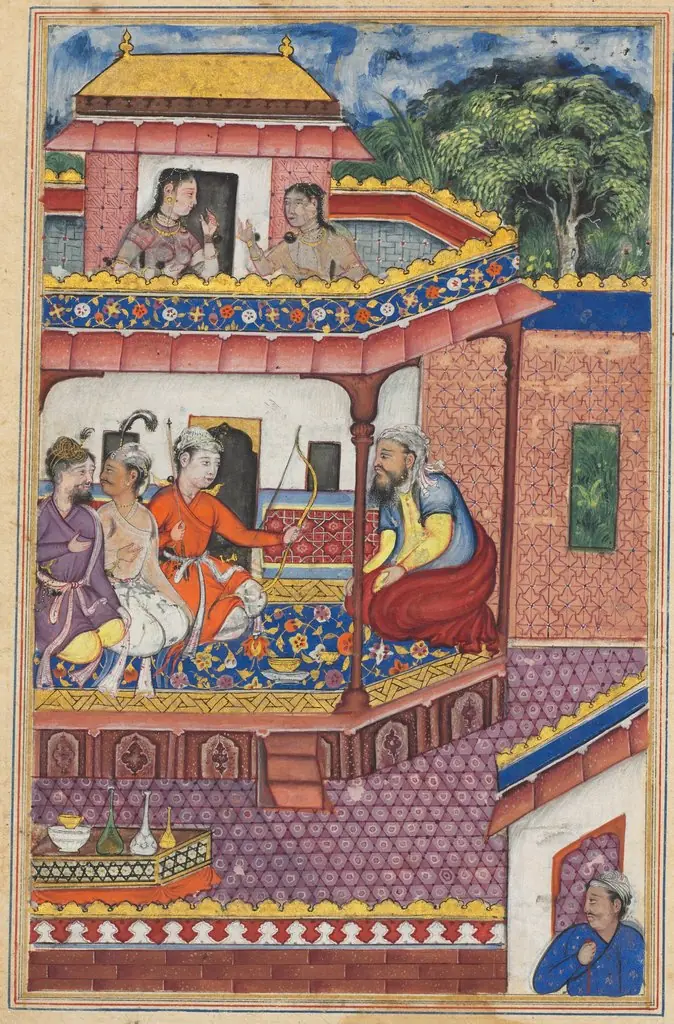 The three young men present themselves as suitors for the hand of Zuhra, the daughter of the merchant of Kabul, from a Tuti-nama (Tales of a Parrot): Thirty-fourth Night
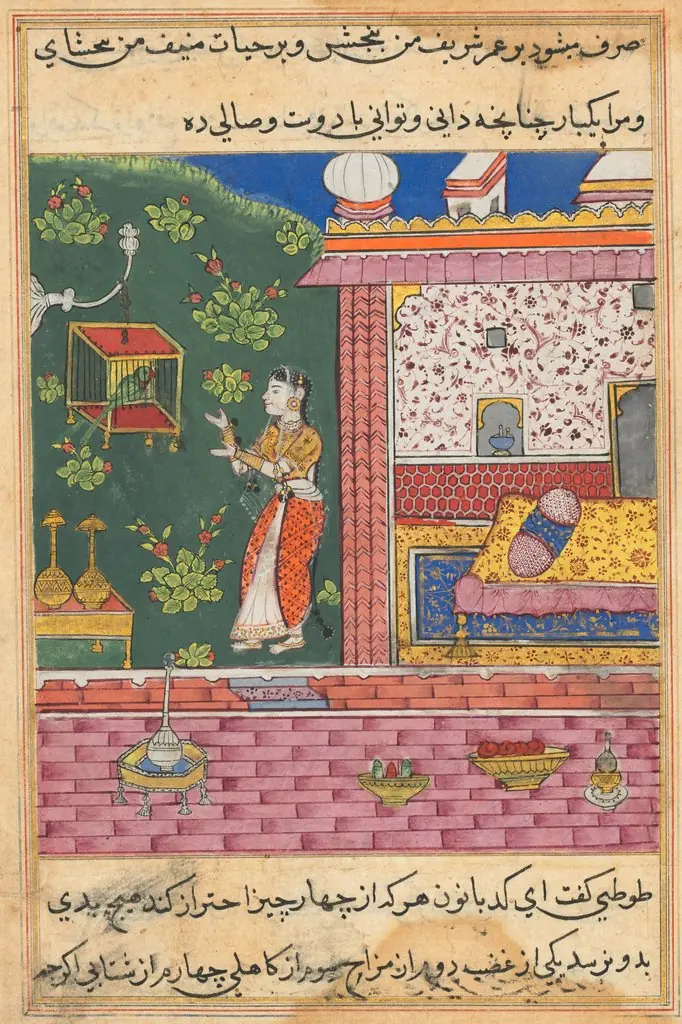 The Parrot Addresses Khujasta at the Beginning of the Thirtieth Night, from a Tuti-nama (Tales of a Parrot)
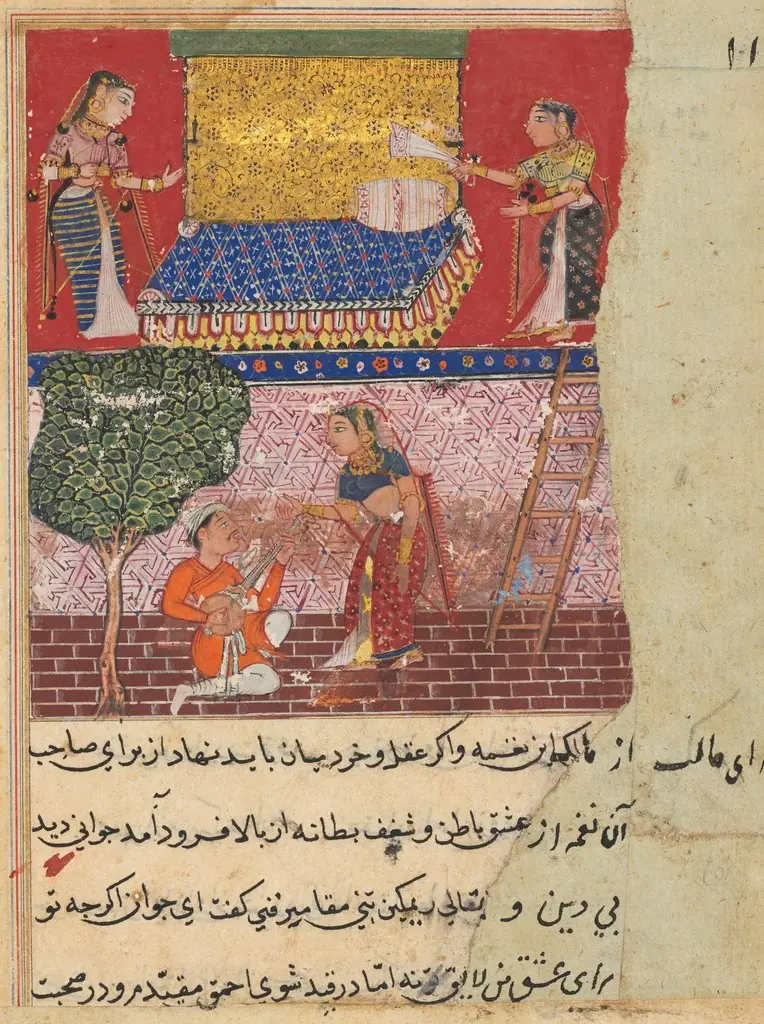 The daughter-in-law of the king of Banaras, charmed by the music of a vagabond, comes down to meet him, from a Tuti-nama (Tales of a Parrot): Sixteenth Night
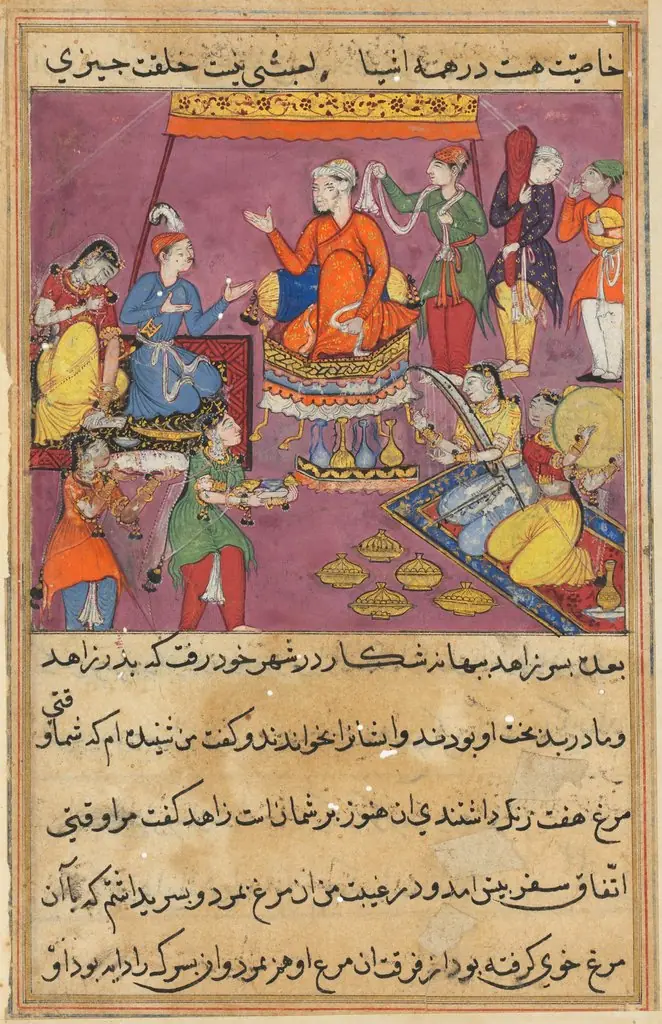 The king gives his daughter in marriage to the pious man’s son, from a Tuti-nama (Tales of a Parrot): Fifty-second Night
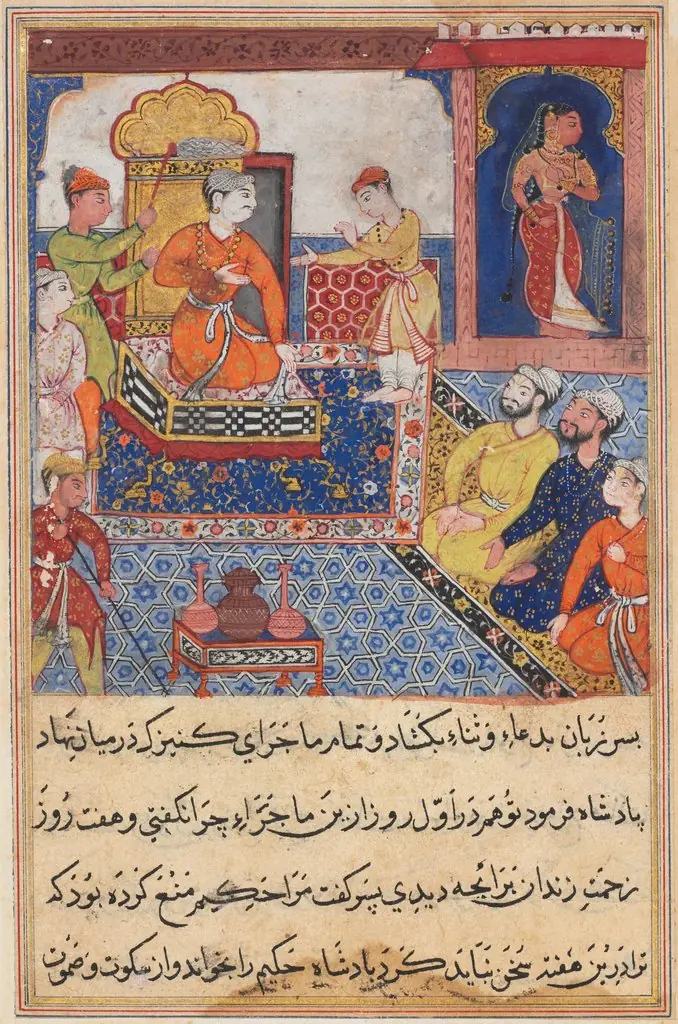 The young prince recounts his experiences to his father, the king, from a Tuti-nama (Tales of a Parrot): Eighth Night
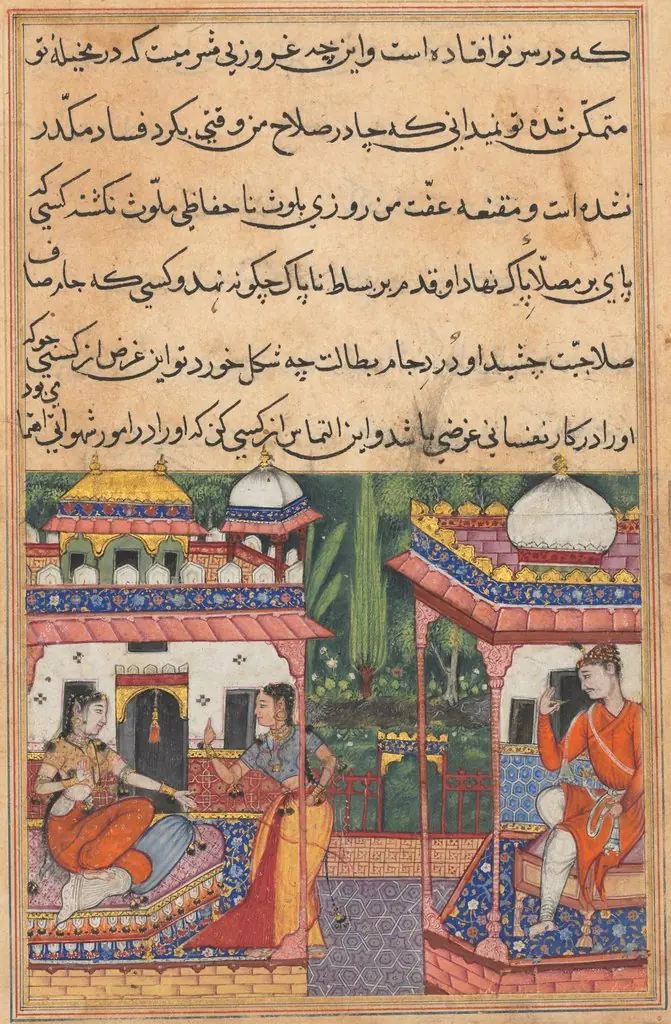 Kaiwan sends a message of love to Khurshid, wife of his brother Utarid who is away on a journey, from a Tuti-nama (Tales of a Parrot): Thirty-second Night
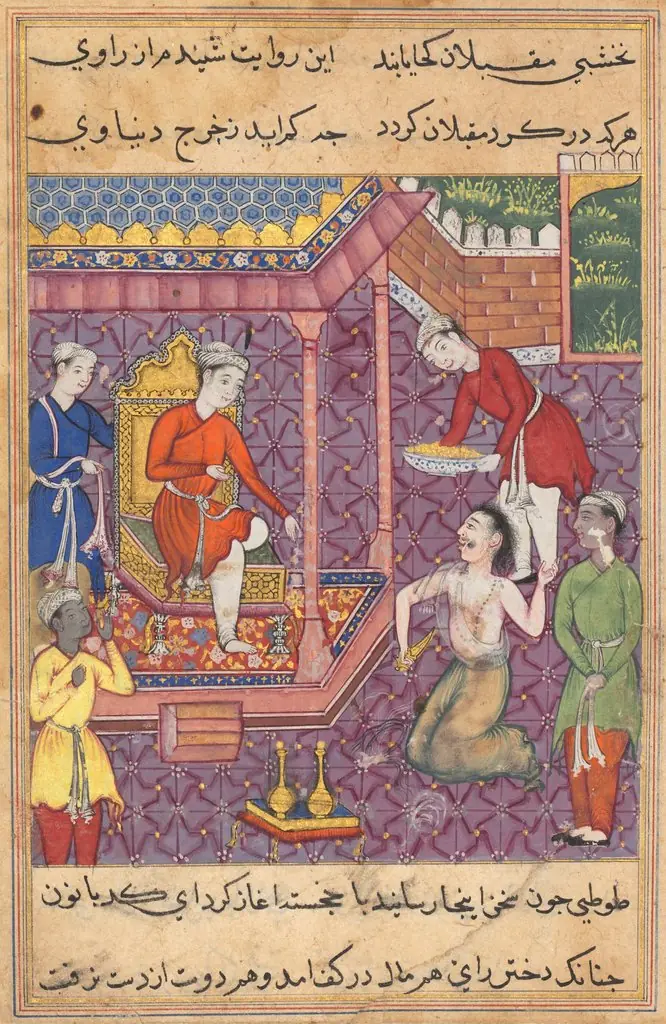 The magician disguised as a Brahman returns to claim his “daughter-in-law,” from a Tuti-nama (Tales of a Parrot): Thirty-fifth Night
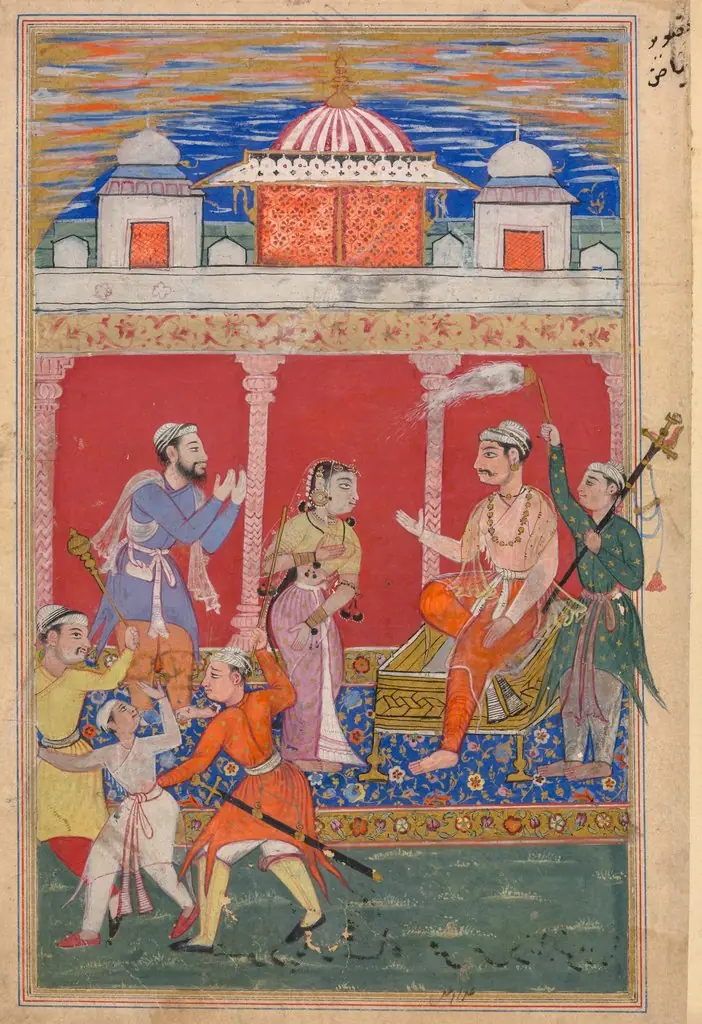 Page from Tales of a Parrot (Tuti-nama): text page
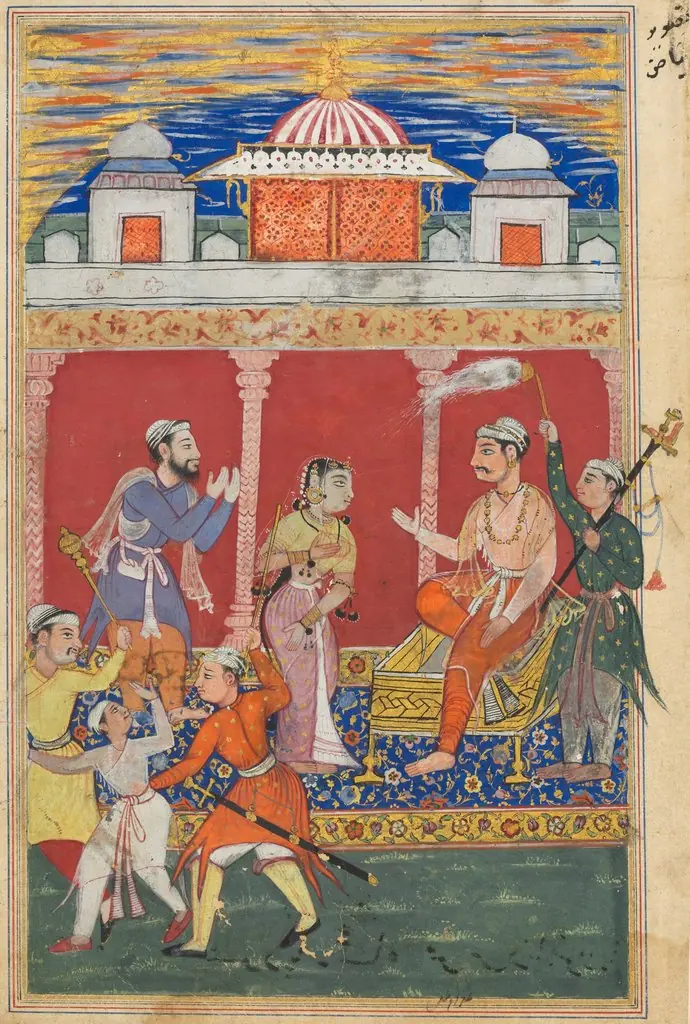 The prince’s ordeal continues, he is ordered away to be executed for the fifth time, from a Tuti-nama (Tales of a Parrot): Eighth Night
 The rejuvenated old man and the daughter of the king of the jinns take leave of the King of Kings, from a Tuti-nama (Tales of a Parrot): Seventh Night