Artwork
Saint John the Evangelist [right panel]
![Saint John the Evangelist [right panel], by Nardo di Cione, tempera, 1360](https://artifactworldgallery.com/img/nardo-di-cione--saint-john-the-evangelist-right-panel--fdd92c8ff7afceaf-w1024.webp)
Saint John the Evangelist [right panel] is a tempera painting by the Byzantine icon painting artist Nardo di Cione. It dates from 1360 and is held in the collection of the National Gallery of Art.
About this work
Nardo di Cione painted Saint John the Evangelist around 1360 in simple robes, holding a book. Warm tempera colors and the traditional style place it in an age when painting carried stories from the Bible to those who saw it.
Subject & Meaning
The depiction situates John within a sacred narrative, emphasizing his role as a witness to divine truth and the author of the Gospel and Revelation.
The right panel of the triptych presents Saint John the Evangelist, a biblical figure identified in the sources as the subject of the work. As a religious painting, the composition aligns with traditional iconography of the evangelist, who is associated with the spread of Christian testimony and revelation. The depiction situates John within a sacred narrative, emphasizing his role as a witness to divine truth and the author of the Gospel and Revelation.
This representation reflects the theological emphasis on testimony and prophetic insight that characterized 14th-century devotional art, offering viewers a visual meditation on the evangelist's spiritual mission.
Technique & Style
Executed in 1360 by Nardo di Cione, this work is a religious painting created using tempera applied to a wooden panel support. As the right panel of a larger ensemble, it depicts John the Evangelist, adhering to the formal conventions of fourteenth-century Florentine devotional art. The classification as a tempera on panel piece aligns with standard materials for Italian trecento altarpieces.
The work's integration into a triptych structure suggests a unified stylistic approach across its original components, characterized by the linear precision and spiritual gravity typical of the period.
History & Provenance
Created in 1360 by Nardo di Cione, this tempera-on-panel work depicts Saint John the Evangelist. The painting entered the modern collecting sphere when Gustav Adolf Wilhelm von Ingenheim acquired it in Italy, likely between 1820 and 1840, possibly receiving some works as gifts from the King of Prussia. It subsequently remained with the Ingenheim family at Schloss Reisewitz in Silesia until 1922, when it was sold to A.S. Drey in Munich.
The piece passed to New York collector Henry Goldman in 1923. In January 1937, it was sold to Duveen Brothers, who transferred it later that year to the Samuel H. Kress Foundation in New York. The foundation ultimately gifted the panel to the National Gallery of Art in Washington, D.C., in 1939, where it remains part of the Kress Collection.
Context
Nardo di Cione, a prolific Florentine painter of the mid-14th century, is best known for his narrative altarpieces that extend the decorative tradition of the Orcagna circle. The right panel of a triptych depicting Saint John the Evangelist, executed in tempera on wood and dated 1360, exemplifies this style through its rich gold background, elongated figures, and emphasis on textual inscription. Scholars such as Richard Offner have linked the work to a documented collection formed by Count von Ingenheim in Italy, later passing through the art market to Duveen and the Samuel H. Kress Foundation before its donation to the National Gallery of Art in 1939. The panel's iconography and technique continue to inform studies of Gothic panel painting in Italy.
Overview
This painting, Saint John the Evangelist [right panel], was created by Nardo di Cione around 1360. Executed in tempera on panel, it portrays Saint John the Evangelist, a significant figure in Christian theology. The work exemplifies religious art from the mid-14th century, reflecting the artistic conventions and devotional practices prevalent during that era. It likely formed part of a larger altarpiece or polyptych, serving a didactic and spiritual purpose.
![Saint Peter [left panel]](https://artifactworldgallery.com/img/nardo-di-cione--saint-peter-left-panel--df6a39da35a16159-w320.webp)
Own this work as a print
Artist & collection


- Saint Peter [left panel]
![Madonna and Child, with the Man of Sorrows [middle panel], by Nardo di Cione](https://artifactworldgallery.com/img/nardo-di-cione--madonna-and-child-with-the-man-of-sorrows-middle-panel--5ab4de48523071e4-w320.webp) Madonna and Child, with the Man of Sorrows [middle panel]
Madonna and Child, with the Man of Sorrows [middle panel]![Madonna and Child, with Saints Peter and John the Evangelist, and Man of Sorrows [entire triptych], by Nardo di Cione](https://artifactworldgallery.com/img/nardo-di-cione--madonna-and-child-with-saints-peter-and-john-the-evangelist--a57f261be4c5dd48-w320.webp) Madonna and Child, with Saints Peter and John the Evangelist, and Man of Sorrows [entire triptych]
Madonna and Child, with Saints Peter and John the Evangelist, and Man of Sorrows [entire triptych]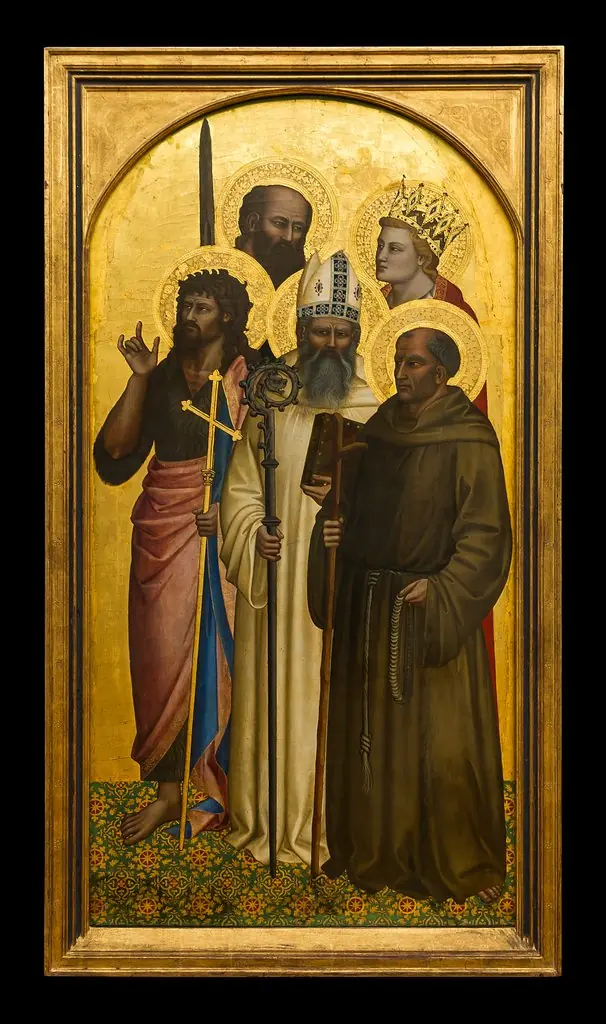 the Saints John the Baptist, Egidius, Gerard of Villamagna, Paul and Catherine (or Miniato)
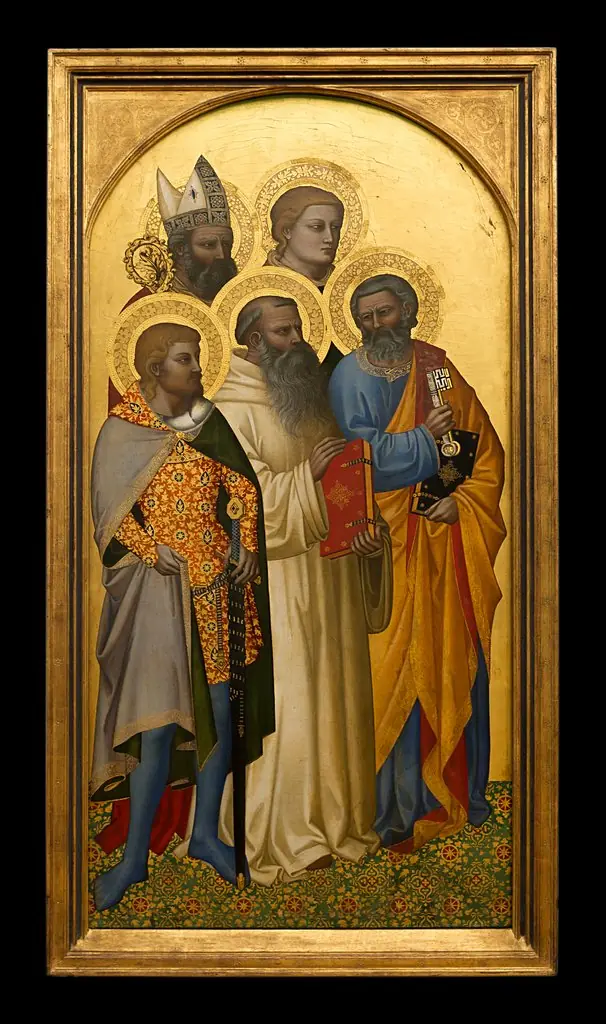 the Saints Peter, Benedict, Julian (?), Stephan (?), and a holy bishop (Nicholas of Bari?)
![Saint Anthony Abbot [left panel], by Puccio di Simone](https://artifactworldgallery.com/img/puccio-di-simone--saint-anthony-abbot-left-panel--b93626e2d00b6158-w320.webp) Saint Anthony Abbot [left panel]
Saint Anthony Abbot [left panel]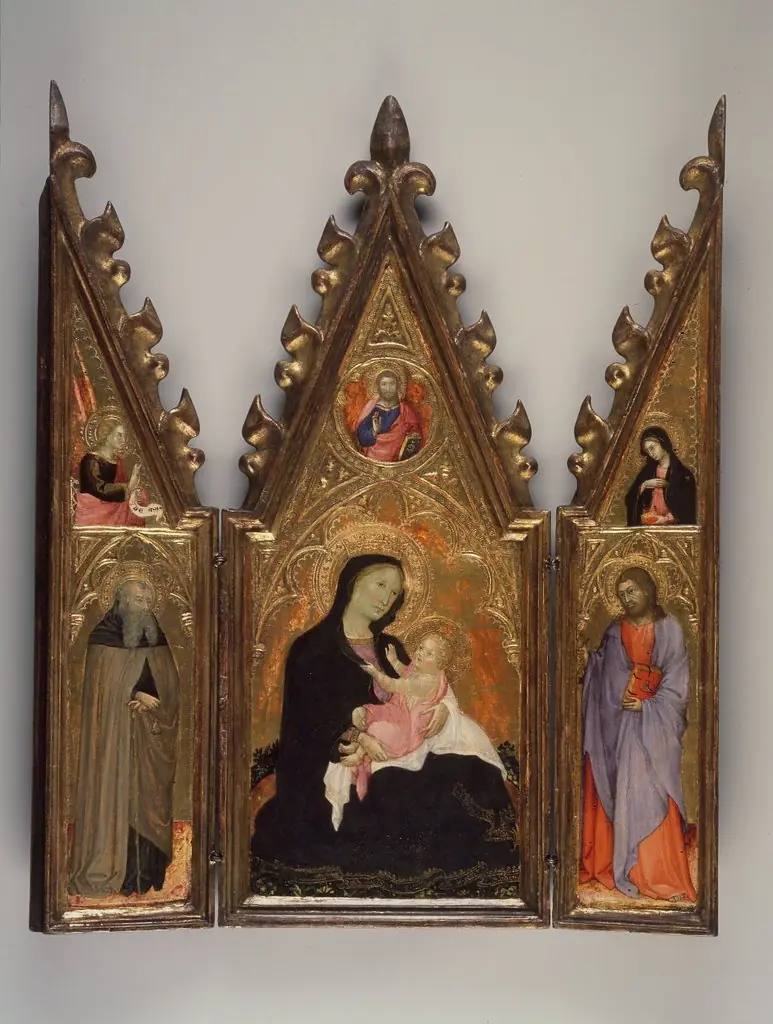 Madonna of Humility, portable altarpiece
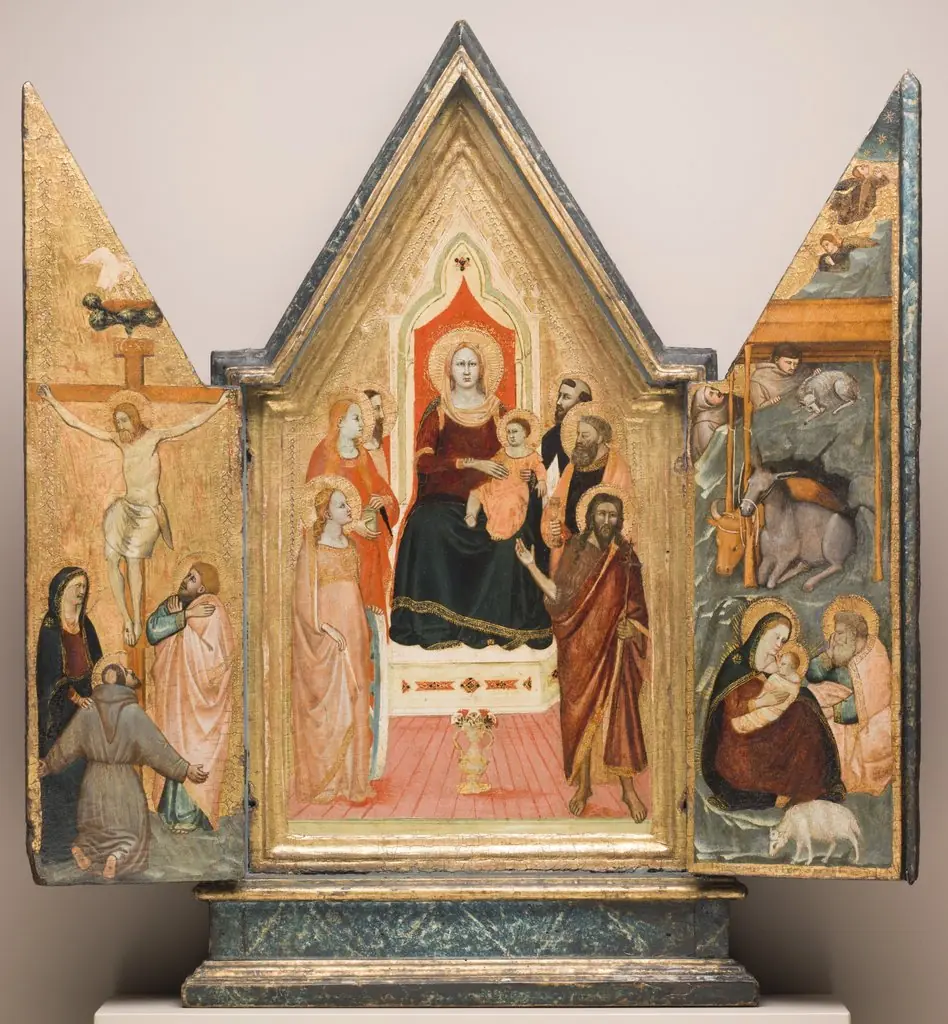 Virgin Enthroned with Saints, Nativity and Crucifixion
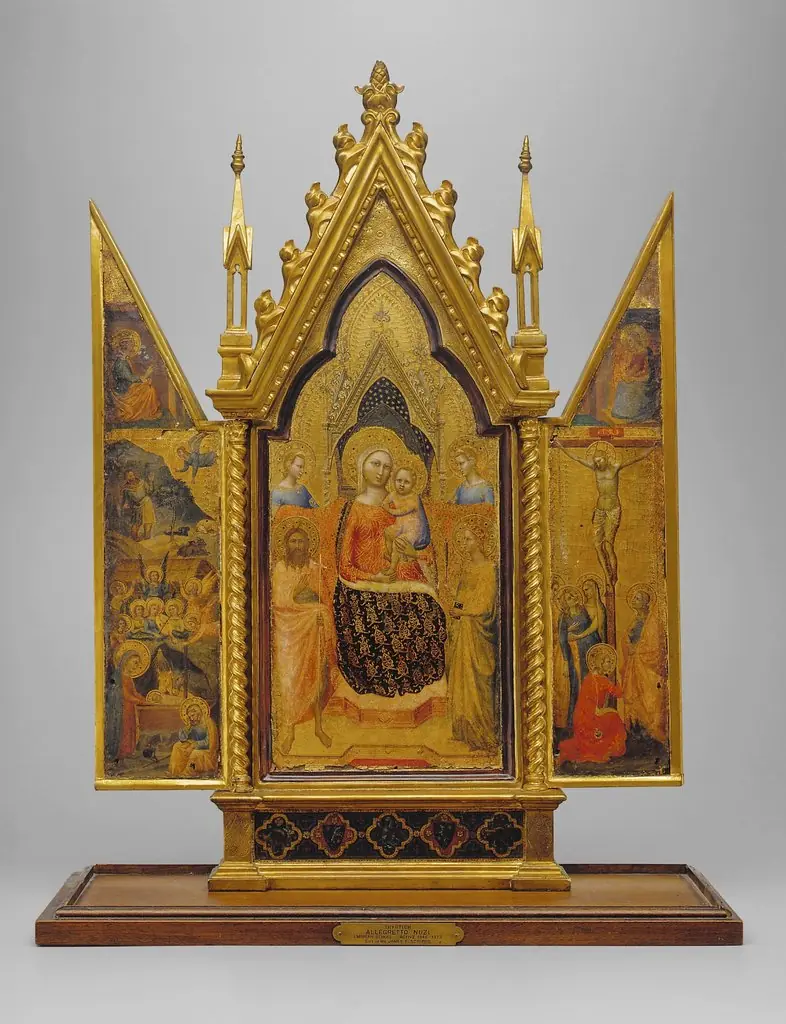 Madonna and Child with Saints, Crucifixion and Nativity
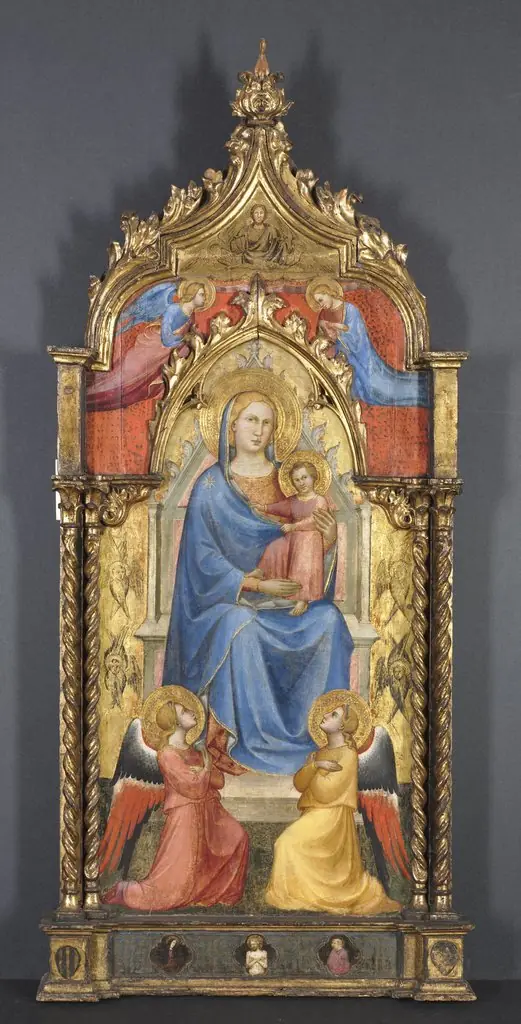 Virgin and Child with Angels
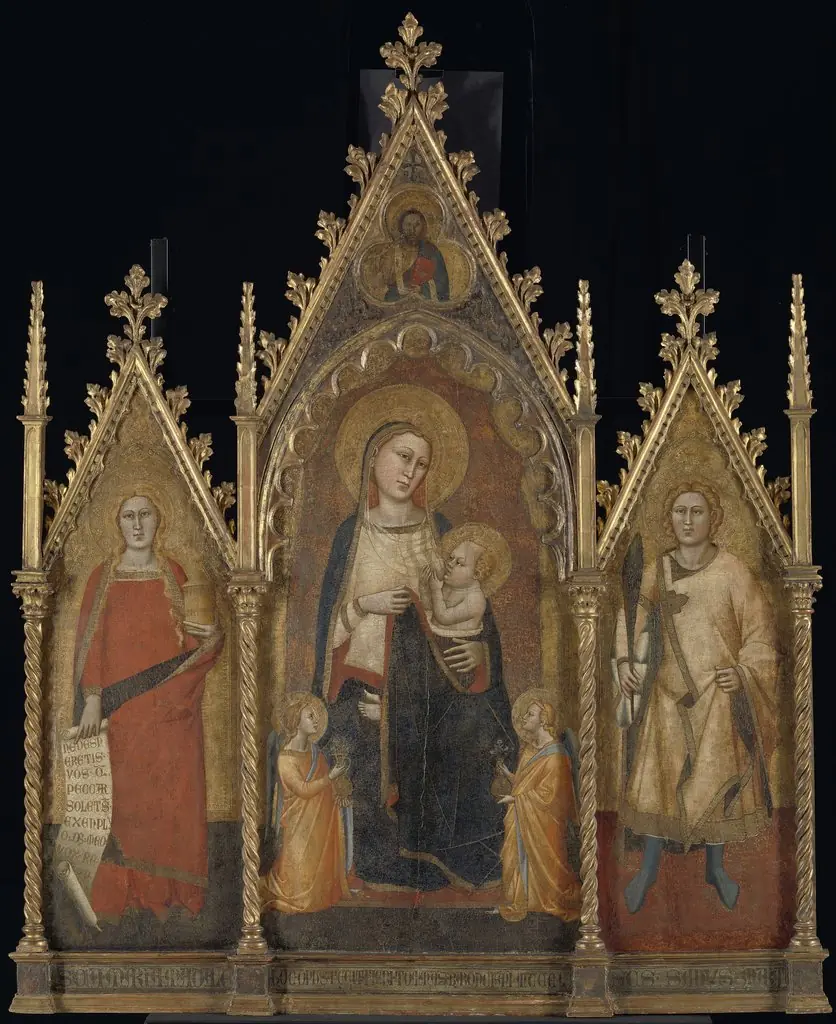 Triptych with the Virgin and Child, and Saints Mary Magdalene and Ansanus
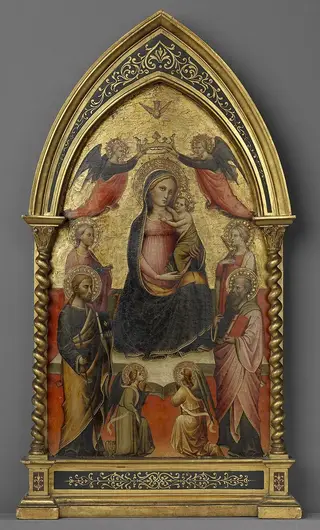 Madonna mit vier Heiligen und Engeln (?)
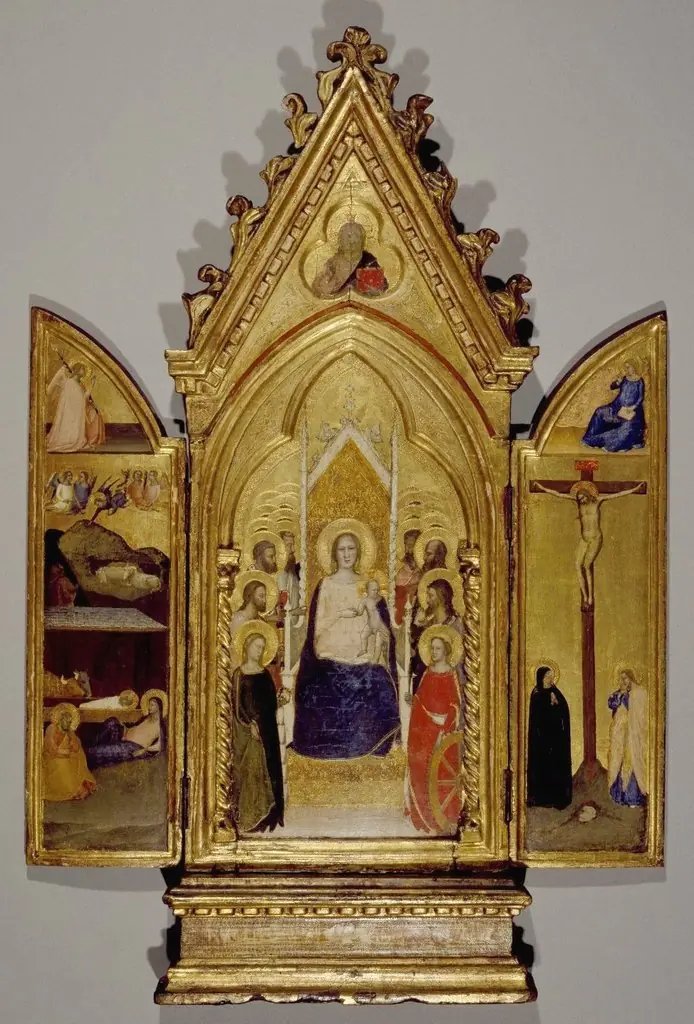 Triptych: Madonna with Saints and Christ Blessing (Center); The Nativity and the Annunciate Angel (Left Wing); Crucifixion and the Virgin Annunciate (Right Wing)
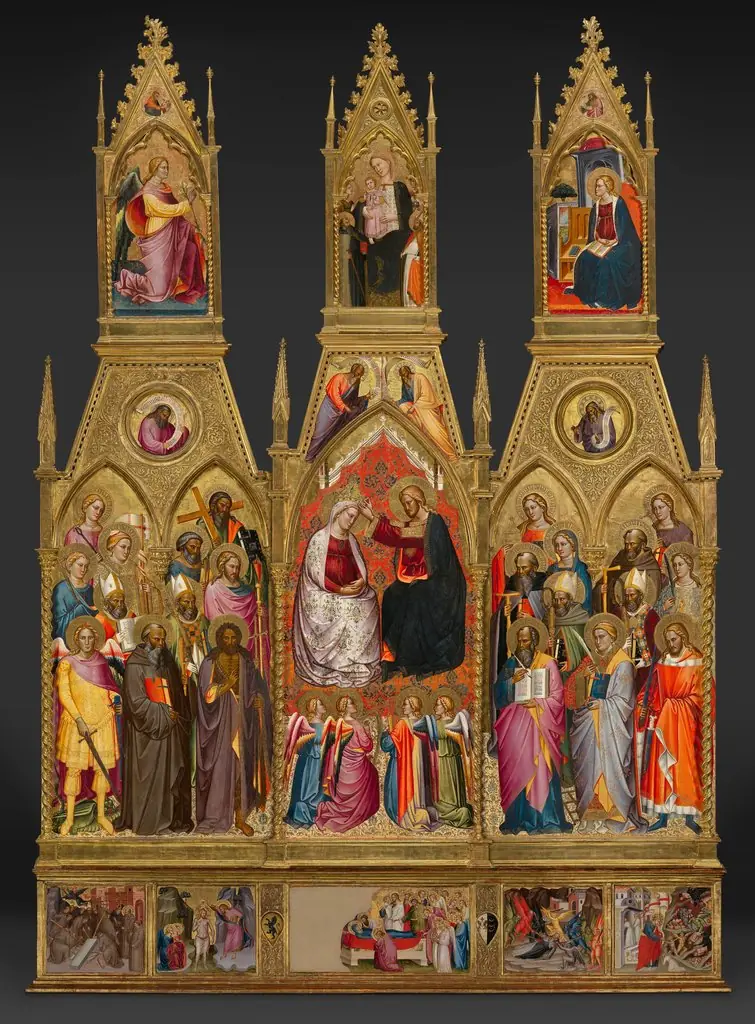 Polyptych with Coronation of the Virgin and Saints