Artwork
Madonna and Child, with the Man of Sorrows [middle panel]
![Madonna and Child, with the Man of Sorrows [middle panel], by Nardo di Cione, tempera, 1360](https://artifactworldgallery.com/img/nardo-di-cione--madonna-and-child-with-the-man-of-sorrows-middle-panel--5ab4de48523071e4-w1024.webp)
Madonna and Child, with the Man of Sorrows [middle panel] is a tempera painting by the Byzantine icon painting artist Nardo di Cione. It dates from 1360 and is held in the collection of the National Gallery of Art.
- Inscription
- Inscribed:on base of the frame: AVE.GRATIA.PLENA.DO[MINUS TECUM] (Hail, full of grace, the Lord is with thee; from Luke 1:28)
About this work
Technique & Style
As the central component of a larger triptych, the piece demonstrates the specific material conventions of fourteenth-century Florentine painting.
Executed in 1360, this religious work by Nardo di Cione utilizes tempera paint applied to a wooden panel support. As the central component of a larger triptych, the piece demonstrates the specific material conventions of fourteenth-century Florentine painting. The classification as a panel painting distinguishes its physical construction from fresco or canvas works of the era.
While the medium and support are clearly defined, the provided records do not elaborate on the artist's specific brushwork, the current state of conservation, or detailed stylistic attributes beyond its genre and date.
History & Provenance
The painting titled Madonna and Child, with the Man of Sorrows [middle panel] was created by Nardo di Cione around 1360 as a tempera work on panel, serving as the central panel of a triptych. Its early ownership is linked to collector Gustav Adolf Wilhelm von Ingenheim, who acquired it during his Italian stay (1820–1840) and kept it at Schloss Reisewitz in Silesia; the work was sold in 1922 to A. S. Drey in Munich and in 1923 entered Henry Goldman’s collection in New York. It later passed to Duveen Brothers in 1937, was acquired by the Samuel H. Kress Foundation later that year, and was gifted to the National Gallery of Art in 1939.
The work is held by the National Gallery of Art, Washington, D.C., as part of the Samuel H. Kress Collection, with accession number 1939.1.151.
It was exhibited at the Royal Academy of Arts, London, in 1939 as part of the Italian Art, 1200–1900 exhibition (cat. no. 108).
Overview
Nardo di Cione’s "Madonna and Child, with the Man of Sorrows" is a devotional painting executed in tempera on panel, dating to approximately 1360. While the title specifically references the central element, the work is presented as a triptych, a three-part altarpiece. This piece reflects the characteristic religious art of Florence during the mid-14th century, emphasizing spiritual themes and traditional artistic methods.
Subject & Meaning
The central panel prominently features the Madonna, cloaked in blue, cradling the Christ Child. This depiction of maternal tenderness and divine infancy is set against a brilliant gold ground, symbolizing sacred space. The two side panels present male figures, each with distinct attire and expressions, likely representing saints or other significant religious personages, who contribute to the broader devotional narrative of the triptych.
![Saint John the Evangelist [right panel]](https://artifactworldgallery.com/img/nardo-di-cione--saint-john-the-evangelist-right-panel--fdd92c8ff7afceaf-w320.webp)
Own this work as a print
Artist & collection


- Saint John the Evangelist [right panel]
![Saint Peter [left panel], by Nardo di Cione](https://artifactworldgallery.com/img/nardo-di-cione--saint-peter-left-panel--df6a39da35a16159-w320.webp) Saint Peter [left panel]
Saint Peter [left panel]![Madonna and Child, with Saints Peter and John the Evangelist, and Man of Sorrows [entire triptych], by Nardo di Cione](https://artifactworldgallery.com/img/nardo-di-cione--madonna-and-child-with-saints-peter-and-john-the-evangelist--a57f261be4c5dd48-w320.webp) Madonna and Child, with Saints Peter and John the Evangelist, and Man of Sorrows [entire triptych]
Madonna and Child, with Saints Peter and John the Evangelist, and Man of Sorrows [entire triptych]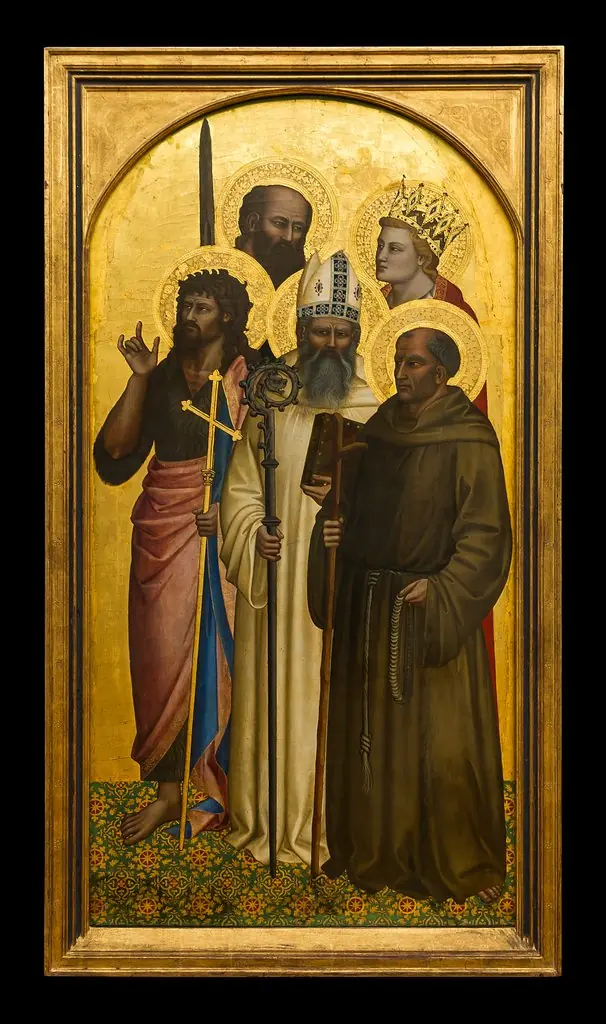 the Saints John the Baptist, Egidius, Gerard of Villamagna, Paul and Catherine (or Miniato)
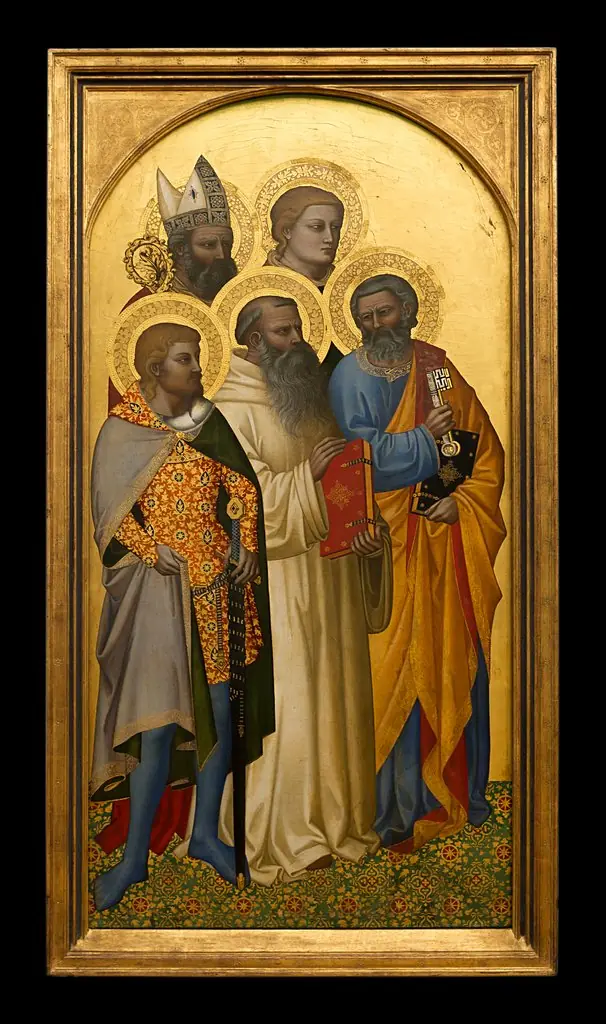 the Saints Peter, Benedict, Julian (?), Stephan (?), and a holy bishop (Nicholas of Bari?)
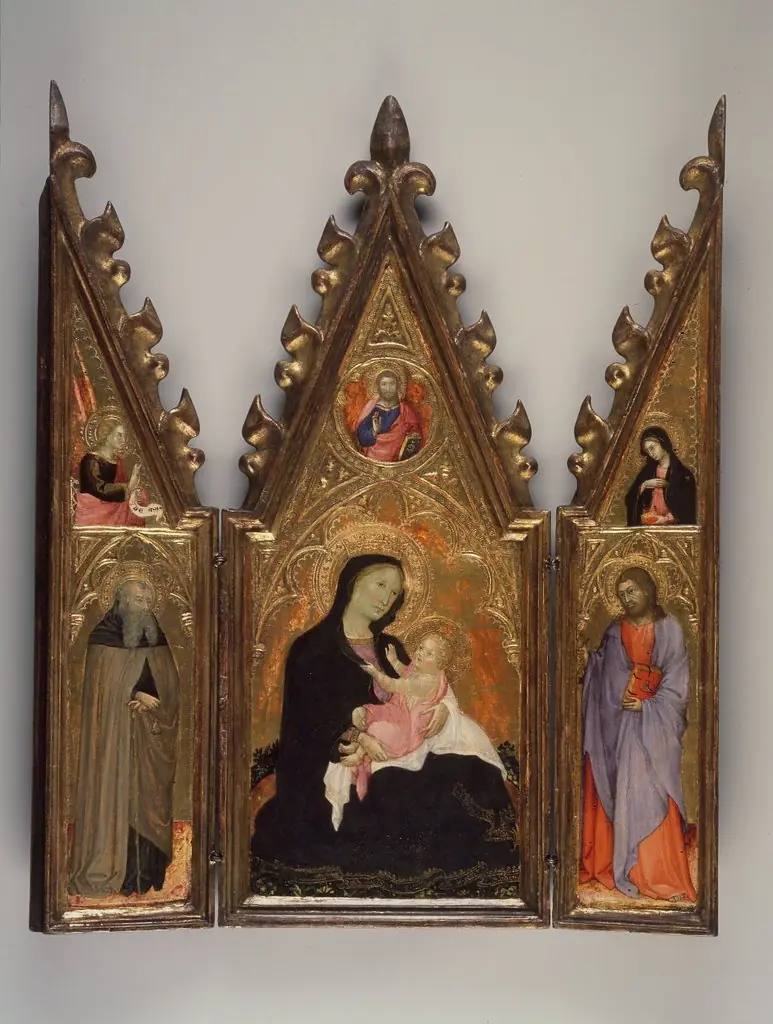 Madonna of Humility, portable altarpiece
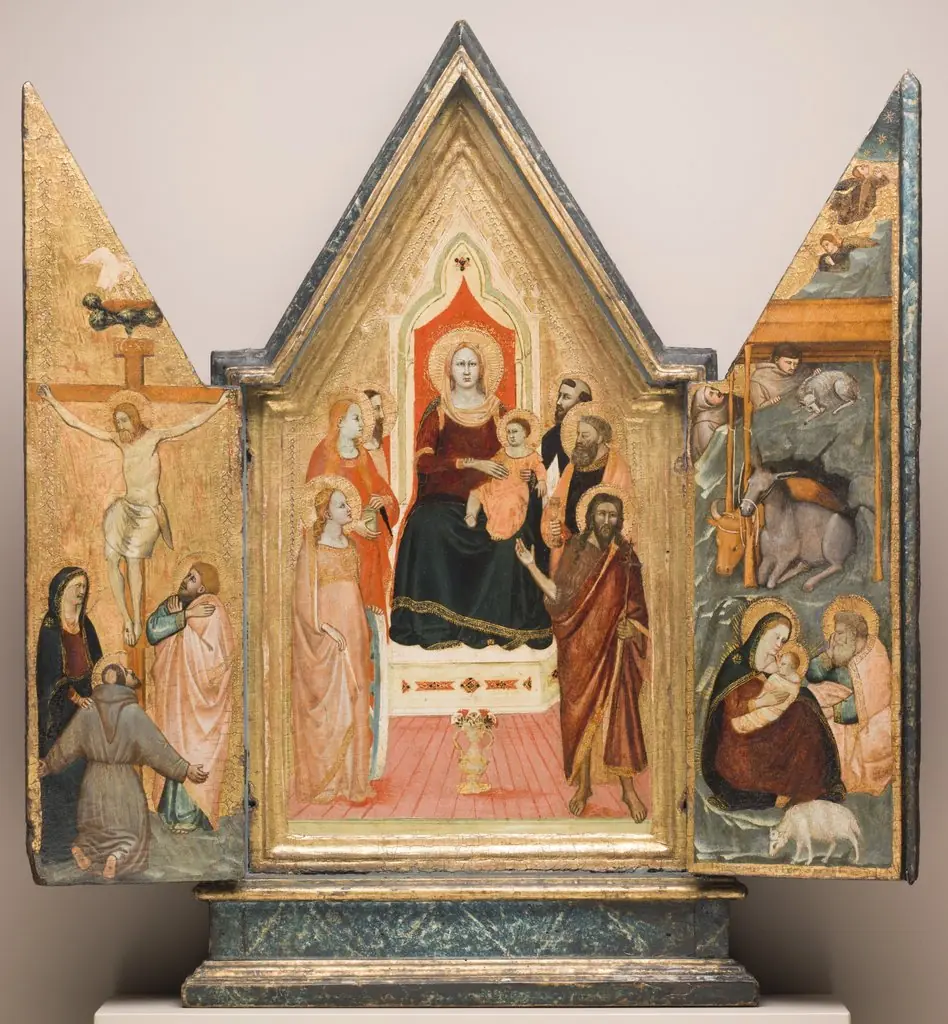 Virgin Enthroned with Saints, Nativity and Crucifixion
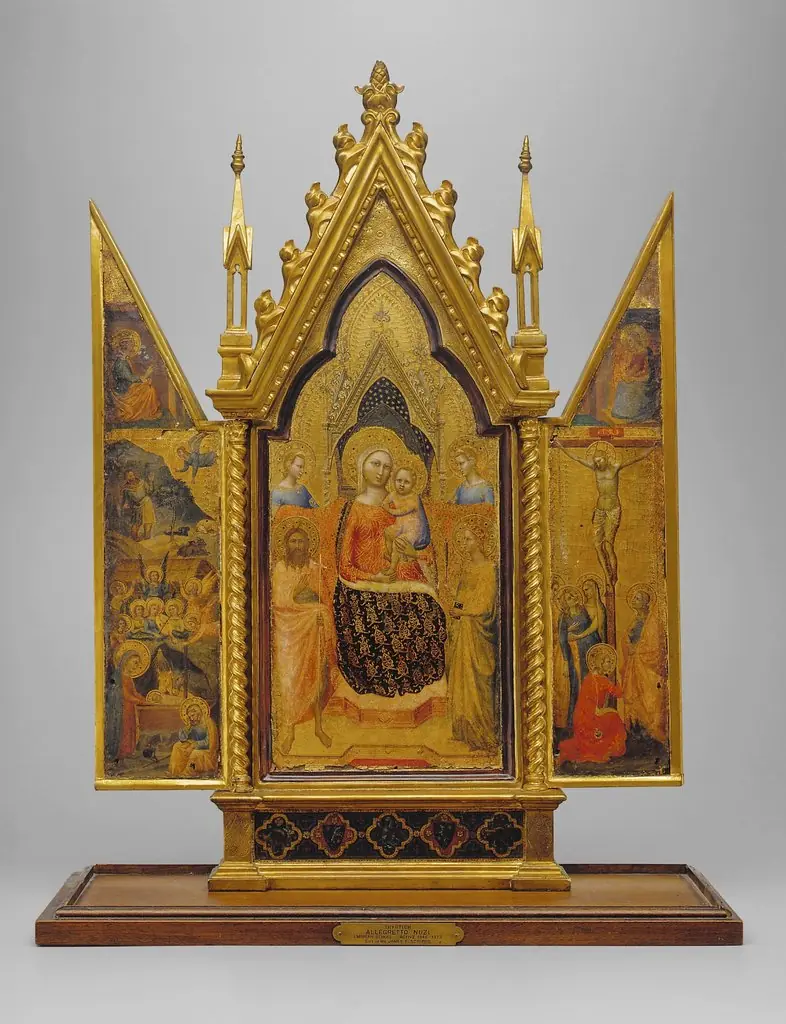 Madonna and Child with Saints, Crucifixion and Nativity
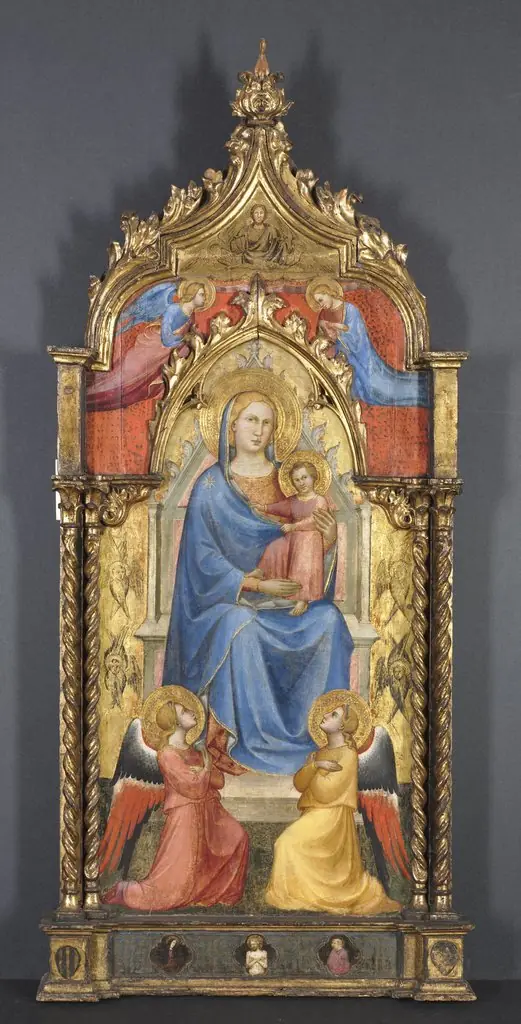 Virgin and Child with Angels
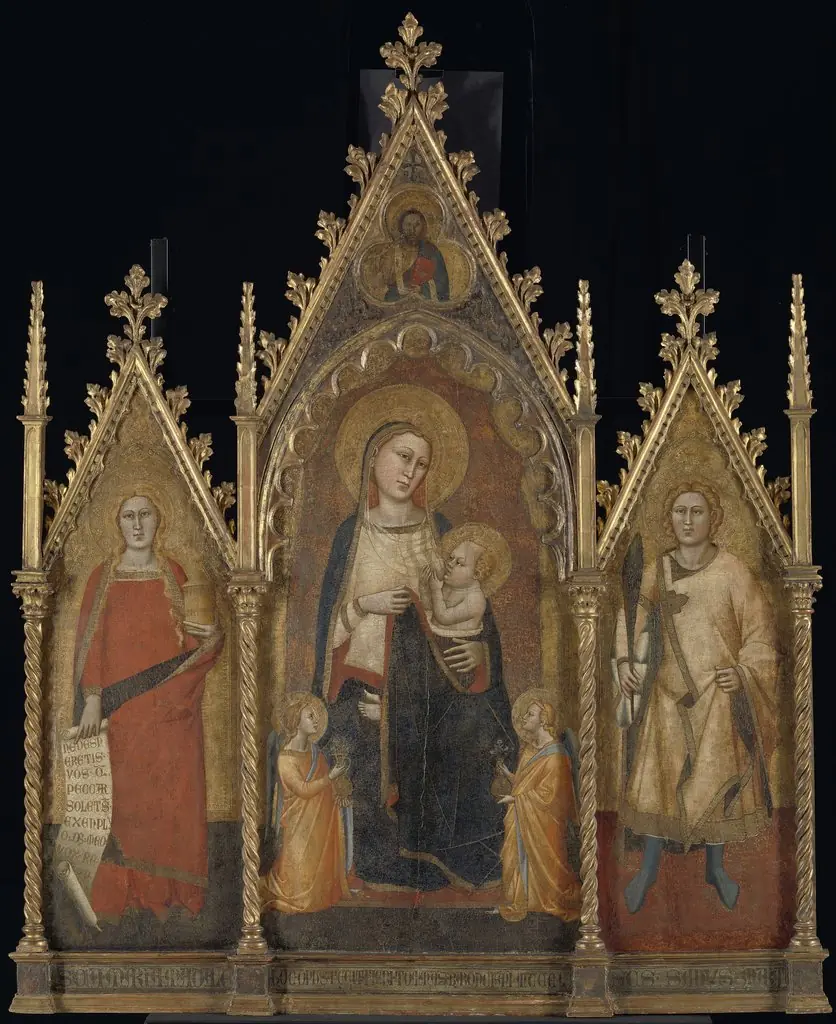 Triptych with the Virgin and Child, and Saints Mary Magdalene and Ansanus
 Madonna mit vier Heiligen und Engeln (?)
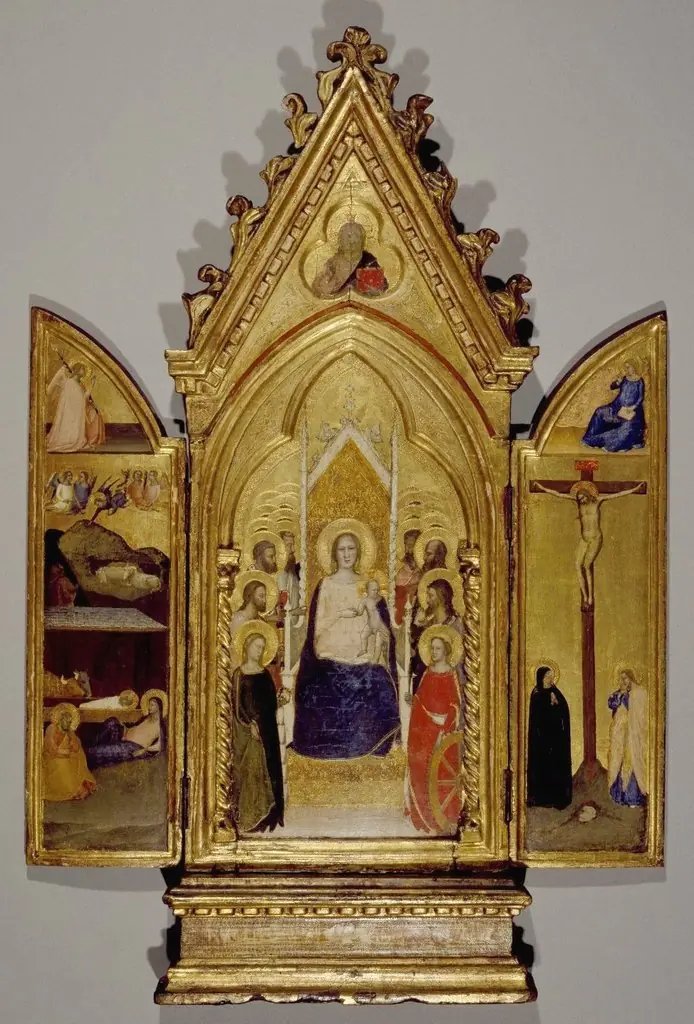 Triptych: Madonna with Saints and Christ Blessing (Center); The Nativity and the Annunciate Angel (Left Wing); Crucifixion and the Virgin Annunciate (Right Wing)
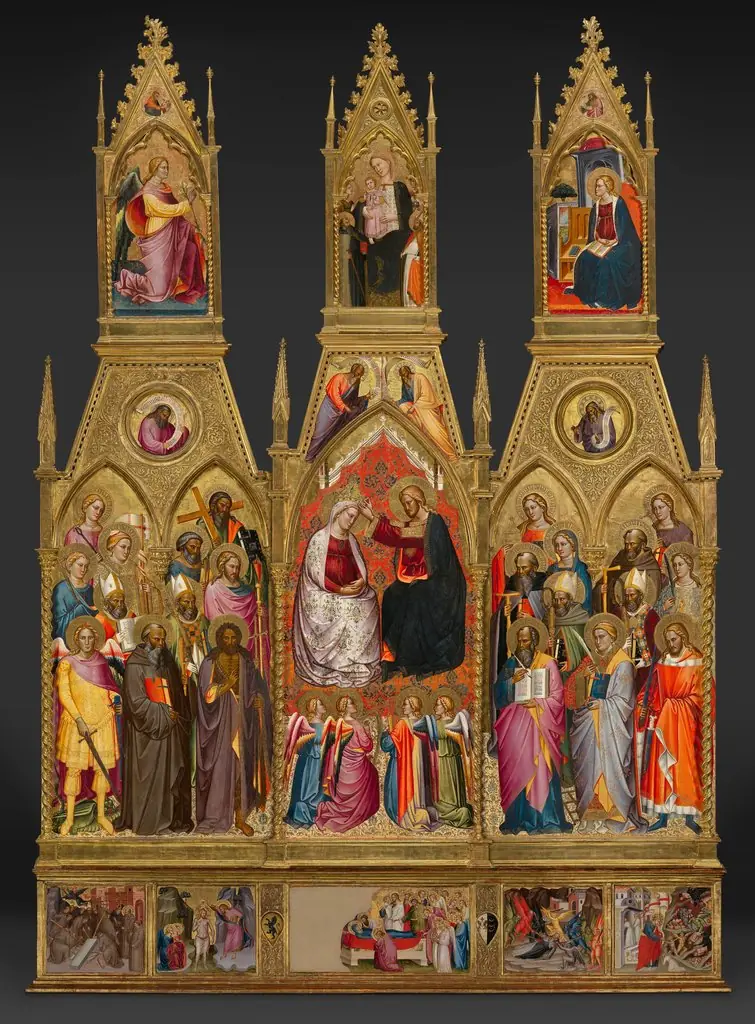 Polyptych with Coronation of the Virgin and Saints
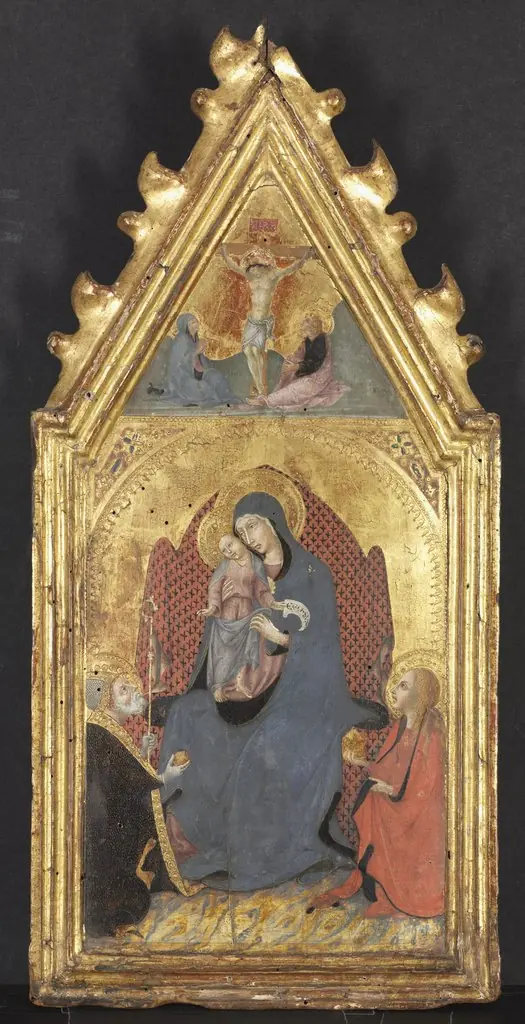 Virgin and Child Adored by Saints Mary Magdalene and Nicolas of Bari; Christ Crucified with the Virgin and Saint John the Evangelist