Artwork
Untitled
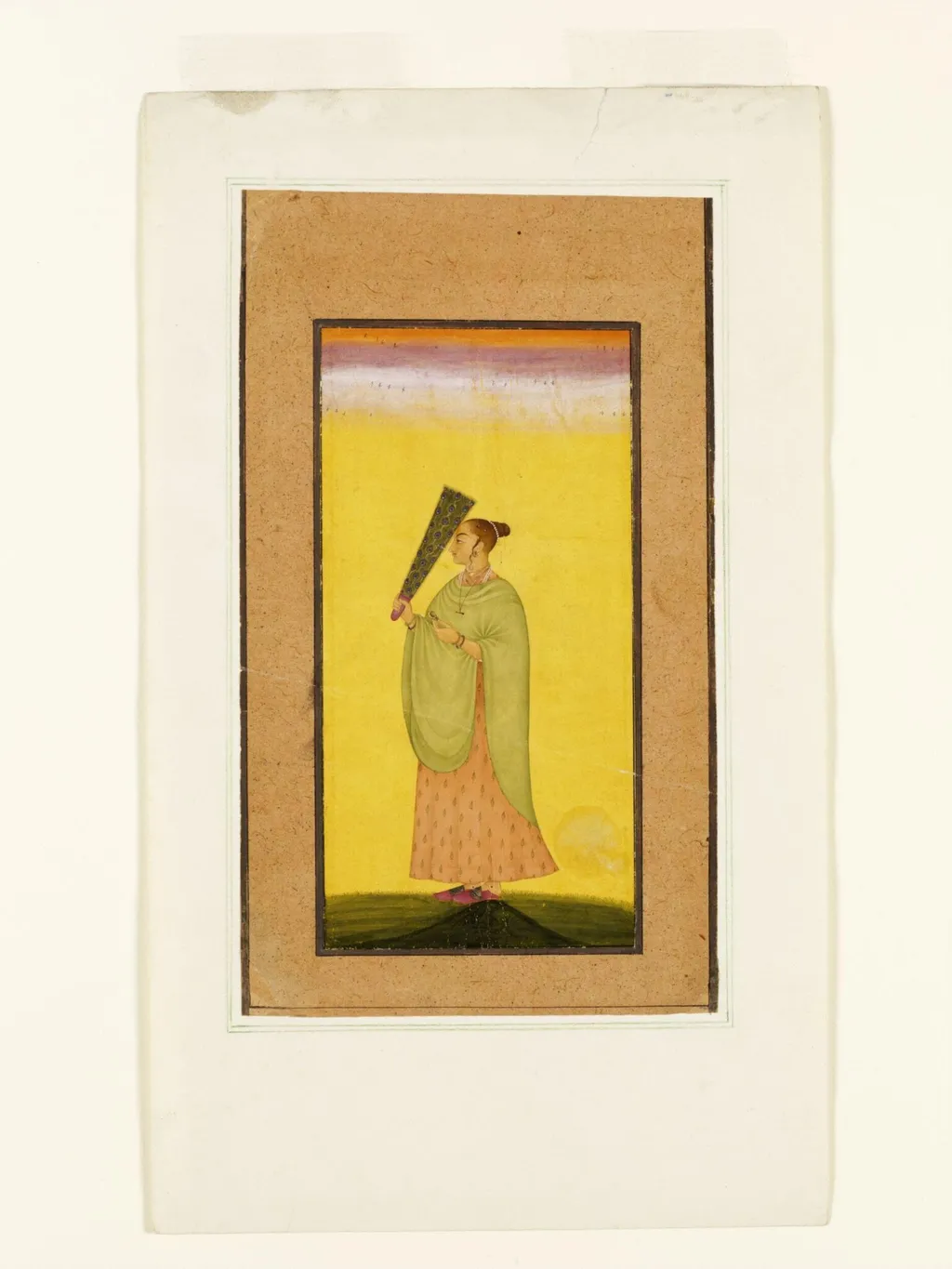
Untitled is a paint painting by the Barbizon school artist Nathu. It dates from 1687 and is held in the collection of the Victoria and Albert Museum.
About this work
The use of bright colors and the depiction of a single figure in a landscape are also characteristic of paintings from this time period.
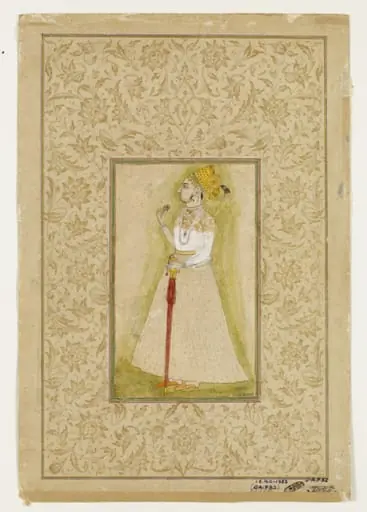
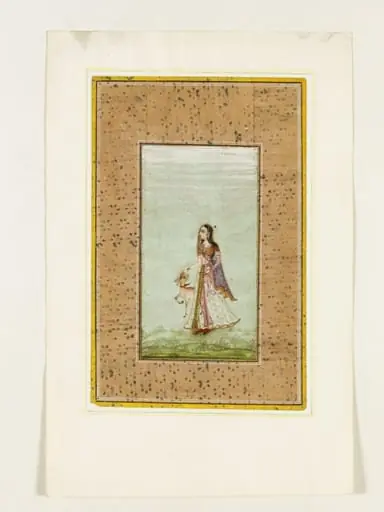
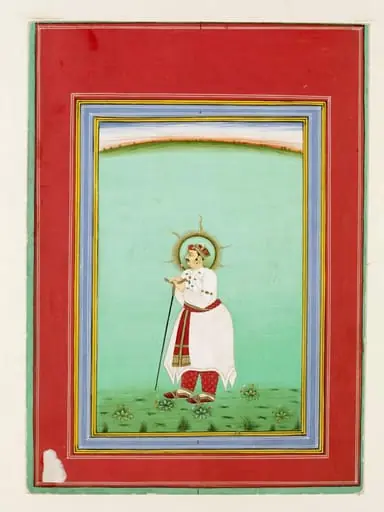
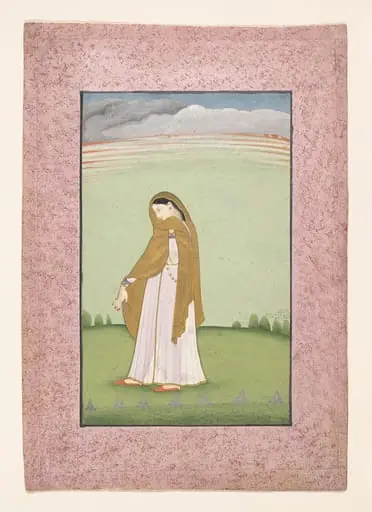
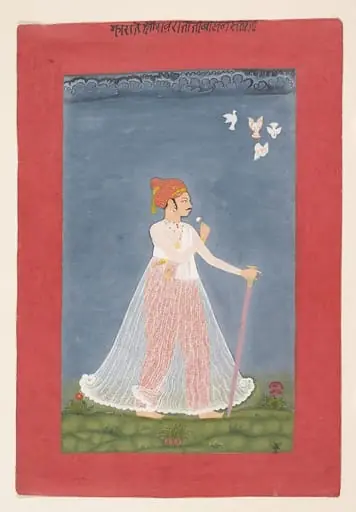
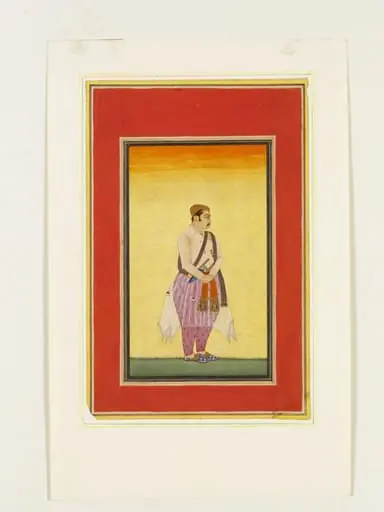
The painting depicts a woman standing on a grassy hill, facing left. She is dressed in a long skirt and a green shawl, and holds a fan in her right hand. The background of the painting is a bright yellow, with a purple and orange sky at the top.
The woman's attire and the style of the painting suggest that it may be from the 17th century. The use of bright colors and the depiction of a single figure in a landscape are also characteristic of paintings from this time period.
This painting is reminiscent of the works of Nathu, an artist known for his contributions to the Baroque movement.
Overview
This 1687 painting, attributed to Nathu, is an opaque watercolour on paper depicting a Vaishnavite female ascetic. Executed in the Rajasthani tradition, it reflects devotional themes common in early modern Indian court art. The figure stands alone on a gently sloping hill, framed by a luminous, gradient sky.
The composition emphasizes stillness and spiritual focus, typical of regional styles that blended miniature techniques with symbolic color use.
Subject & Meaning
The figure represents a yogini, a female ascetic devoted to Vaishnavism, symbolizing renunciation and divine connection. Her attire, shell-pink robe, green cloak, pearl-adorned top-knot, and red forehead mark, signals her spiritual status. The conch shell and peacock feather fan are ritual objects associated with Vishnu worship and celestial harmony. Her solitary stance suggests meditative withdrawal from worldly life, aligning with ascetic ideals in Hindu devotional practice.
Technique & Style
The work employs opaque watercolour with gold leaf detailing, characteristic of Rajasthani miniature painting. Fine brushwork defines the texture of fabric and the delicate patterns on the robe. The background shifts subtly from saffron to mauve and orange, creating atmospheric depth without perspective.
Birds in flight add motion to an otherwise static scene. The flat, decorative ground and stylized landscape reflect a preference for symbolic space over naturalism.
History & Provenance
Attributed to Nathu, an artist active in the late 17th century, the painting likely originated in a Rajput court workshop, possibly in Marwar or Mewar. Such works were often commissioned for private devotion or royal collections. While its early ownership is undocumented, its style and materials align with surviving works from the period. It entered institutional collections in the 20th century, preserved as an example of regional devotional art.
Context
Created during a period of flourishing Rajput painting, this piece reflects the fusion of Vaishnavite theology with courtly aesthetics. While European Baroque influences reached India through trade, this work remains rooted in indigenous traditions. Similar depictions of ascetics appear in illustrated manuscripts and devotional albums, serving both spiritual and aesthetic functions within elite circles that patronized religious imagery.
Legacy
The painting contributes to the understanding of female spiritual representation in pre-colonial Indian art. Its preservation highlights the role of women as subjects of devotion, not merely muses. Though Nathu’s oeuvre is limited, this work exemplifies the technical refinement and symbolic richness of 17th-century Rajasthani miniatures, influencing later scholarly interest in regional devotional art beyond Mughal-centric narratives.
Own this work as a print
Artist & collection
Artist