Artwork
Officers and Other Civic Guardsmen of the IVth District of Amsterdam, under the Command of Captain Jan Claesz van Vlooswijck and Lieutenant Gerrit Hudde
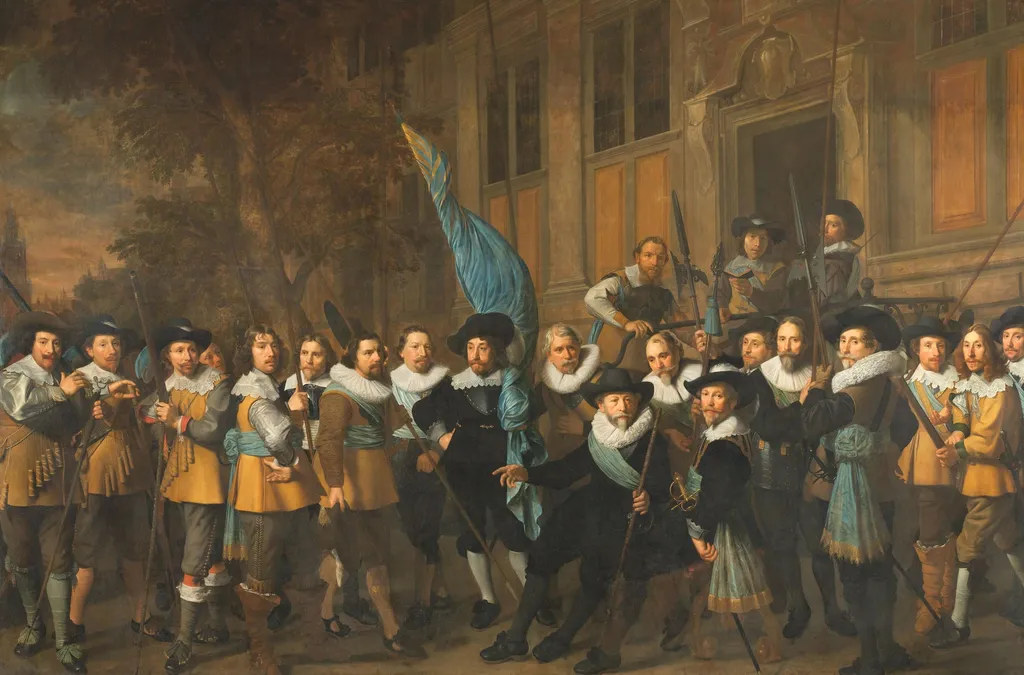
Officers and Other Civic Guardsmen of the IVth District of Amsterdam, under the Command of Captain Jan Claesz van Vlooswijck and Lieutenant Gerrit Hudde is an unspecified painting by the Dutch Golden Age artist Nicolaes Eliaszoon Pickenoy. It dates from 1642 and is held in the collection of the Rijksmuseum.
About this work
Technique & Style
These formal choices contribute to the striking immediacy seen in his militia and regent portraits, as documented in museum holdings.
Pickenoy worked primarily in oil, applying the pigment to wooden panels for most portraits and to canvas for larger group scenes such as the 1642 militia portrait. His support was typically a tightly stretched panel that allowed fine detail, and he used brushwork that emphasized crisp, directional lighting to separate heads from dark backgrounds. Characteristic gestures are deliberately exaggerated, while shadows take on a greenish‑brown tone and the eyes often appear slightly elongated, giving the figures a vivid, almost sculptural presence.
These formal choices contribute to the striking immediacy seen in his militia and regent portraits, as documented in museum holdings.
History & Provenance
The painting Officers and Other Civic Guardsmen of the IVth District of Amsterdam was created in 1642 by Nicolaes Eliasz. Pickenoy. It depicts the company commanded by Captain Jan Claesz van Vlooswijck and Lieutenant Gerrit Hudde.
The work is a large-scale group portrait executed in oil on canvas, measuring 340 × 527 cm. While the specific commissioning details are not explicitly recorded in the available sources, the piece belongs to Pickenoy's later period of prestigious group commissions following a decline in output after 1637. The painting is currently held by the Rijksmuseum in Amsterdam, which possesses several of the artist's most significant militia pieces.
Context
Painted in 1642, Officers and Other Civic Guardsmen of the IVth District represents a late-career commission for Nicolaes Eliasz Pickenoy, following his artistic heyday of 1630–1637. The work exemplifies the Dutch schutterstuk tradition, a genre in which Pickenoy specialized alongside group portraits of orphanage regents. Art historical analysis notes that Pickenoy's style is often difficult to distinguish from contemporaries, characterized by sharply invading light, exaggerated gestures, and distinct greenish-brown shadows.
The painting's creation coincides with Pickenoy's residency in a fashionable Amsterdam district that also housed Rembrandt van Rijn, highlighting the artist's integration into a dense network of portraiture and commerce. Modern scholarship, including studies by David Burmeister Kaaring, situates this 1642 militia piece within Pickenoy's continued production of prestigious group portraits after his most prolific period had waned.
Overview
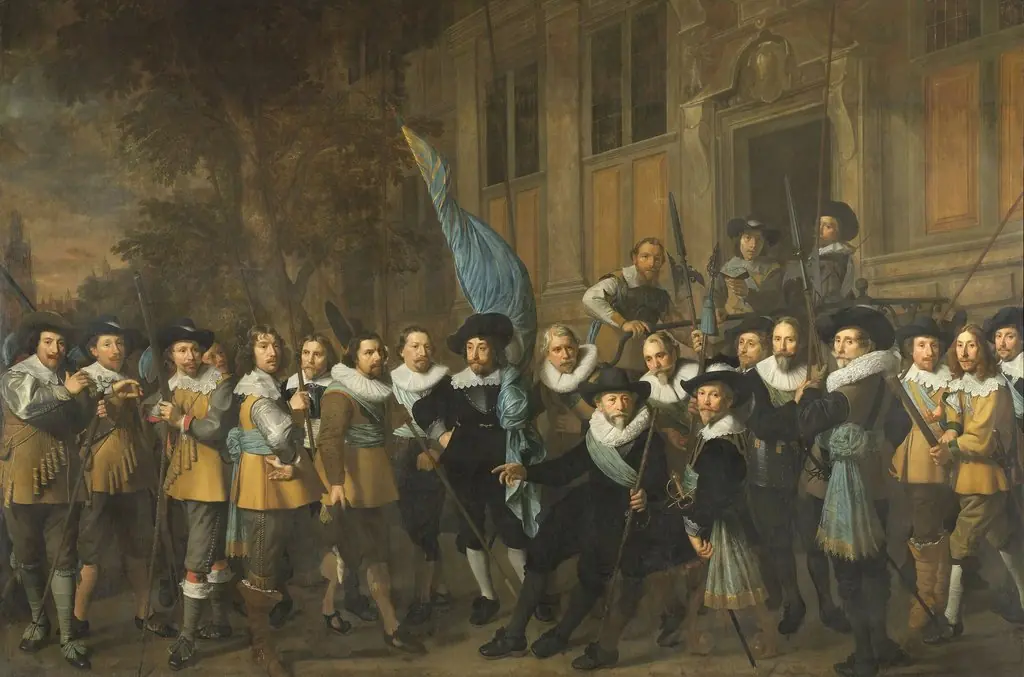
The canvas records a 1642 militia portrait from Amsterdam’s Fourth District, depicting the officers and rank‑and‑file of the civic guard under Captain Jan Claesz van Vlooswijck and Lieutenant Gerrit Hudde. Central figures sit at a long table, flanked by a flag‑bearer, while the surrounding guards stand with their weapons, suggesting a communal gathering perhaps in front of the brewery known as De Zwaan.
Subject & Meaning
The work presents the hierarchical structure of the schutterij: the captain and lieutenant occupy the seated central positions, emphasizing their command, while the flag‑bearer stands between them as a visual link. The other members, named in the inscription, are shown with pikes, halberds, lances or muskets, underscoring their role as citizen‑soldiers responsible for urban security.
Own this work as a print
Artist & collection
Artist
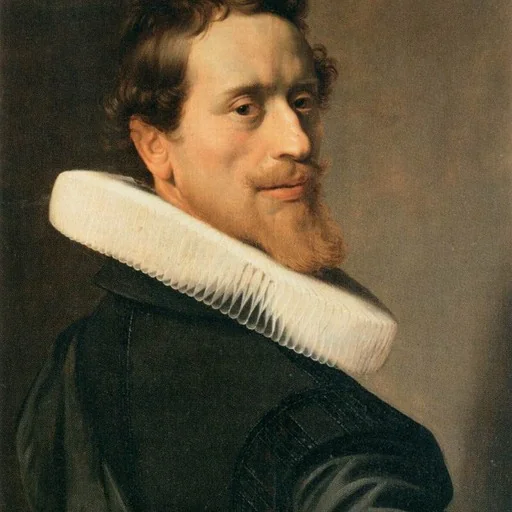
Nicolaes Eliaszoon Pickenoy (10 January 1588 – 1653/1656) was a Dutch painter of Flemish origin. Pickenoy was possibly a pupil of Cornelis van der Voort and presumably Bartholomeus van der Helst was his own pupil.

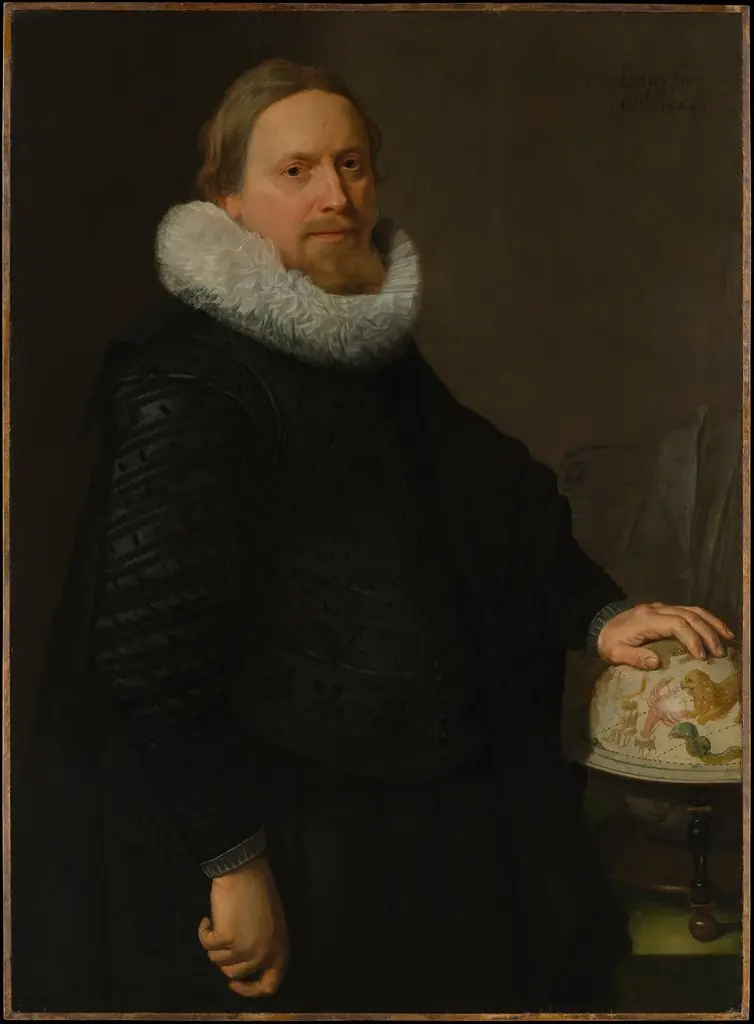 Man with a Celestial Globe
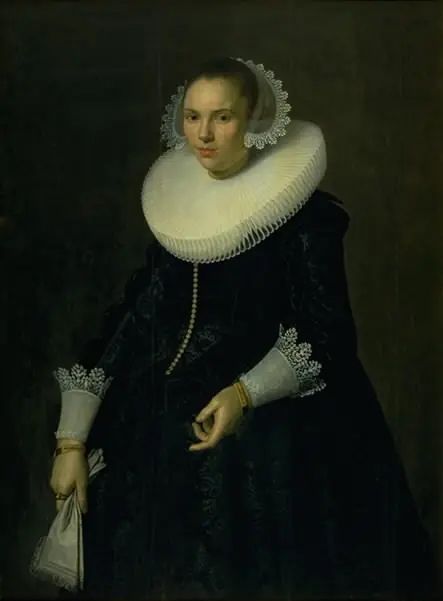 Portrait of a Lady
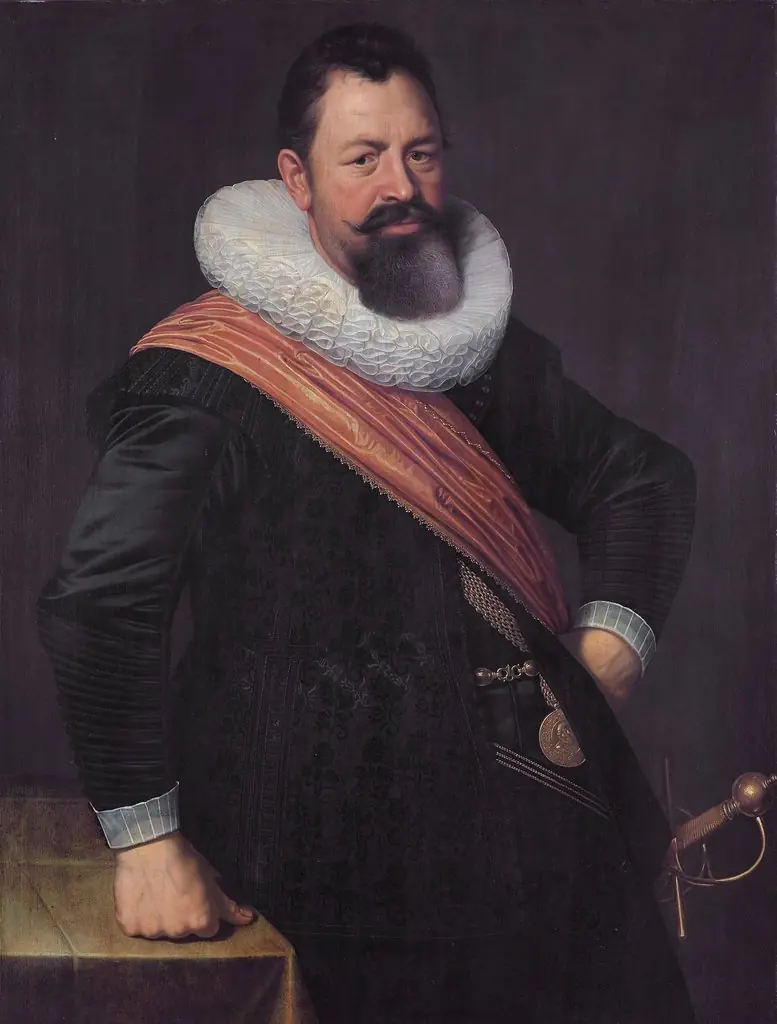 Portrait of Jochem Hendricksz Swartenhont (1566-1627)
- Officers and other civic guardsmen of the IVth District of Amsterdam, under the command of Captain Jan Claesz van Vlooswijck and Lieutenant Gerrit Hudde
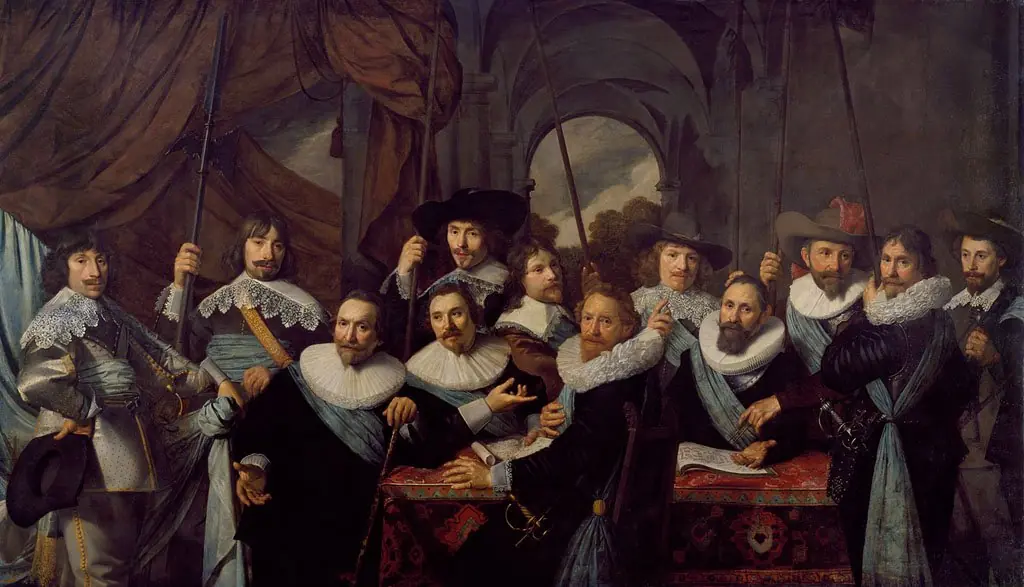 Members of the civic guard company of Captain Dirck Tholinx and Lieutenant Pieter Adriaenszn Raep
 The Night Watch
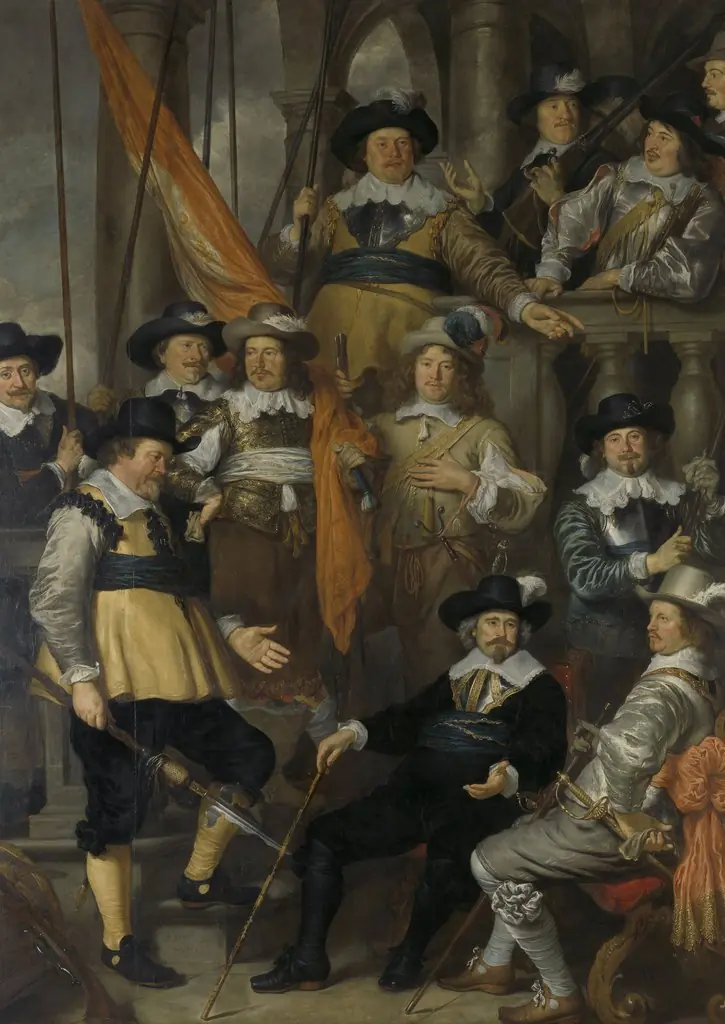 The Company of Captain Albert Bas and Lieutenant Lucas Conijn
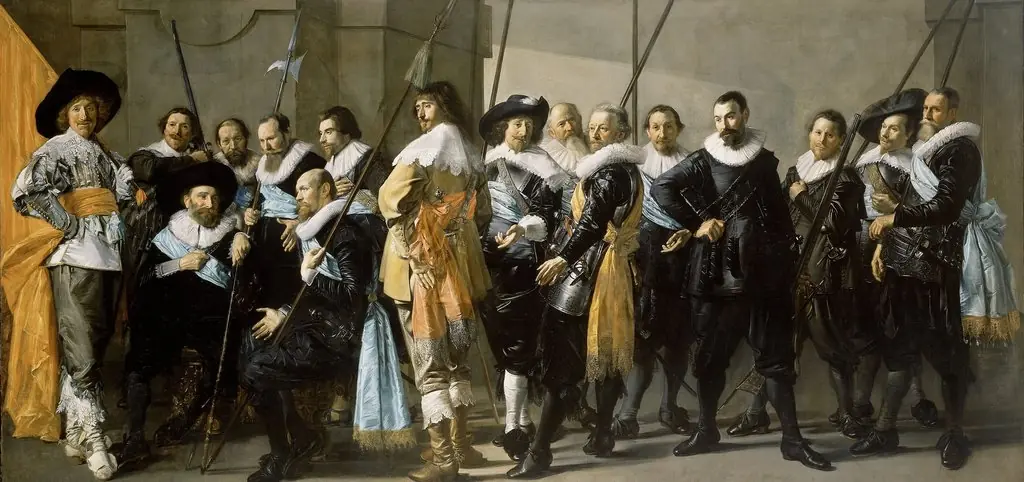 Militia Company of District XI under the Command of Captain Reynier Reael
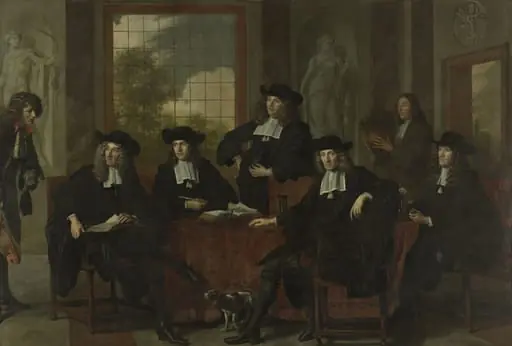 The Superintendents of the Collegium Medicum in Amsterdam, 1683
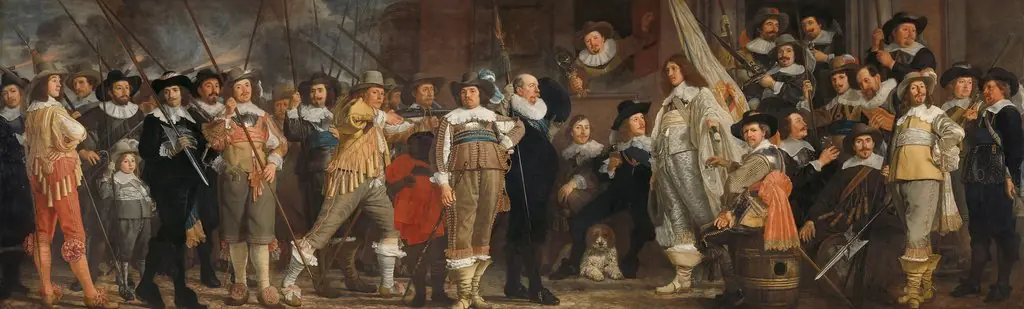 Militia Company of District VIII under the Command of Captain Roelof Bicker
 Copy of The Night Watch
 Banquet at the Crossbowmen’s Guild in Celebration of the Treaty of Münster