Artwork
Banquet at the Crossbowmen’s Guild in Celebration of the Treaty of Münster
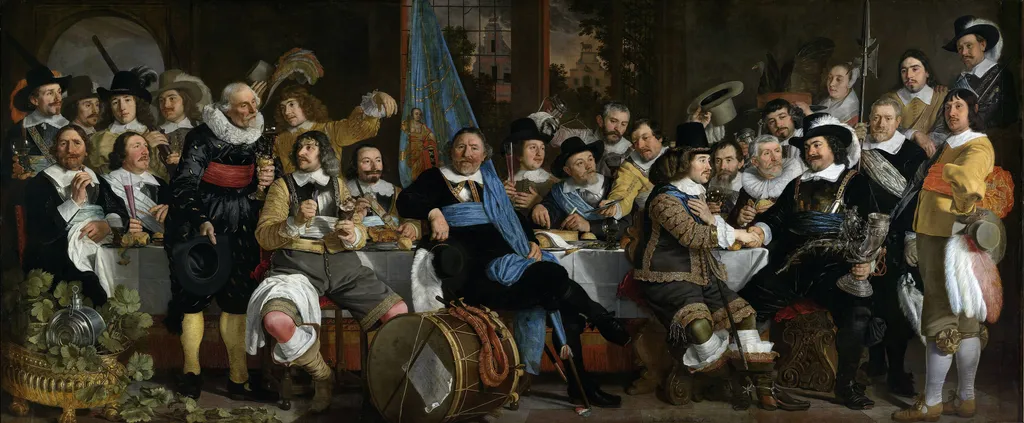
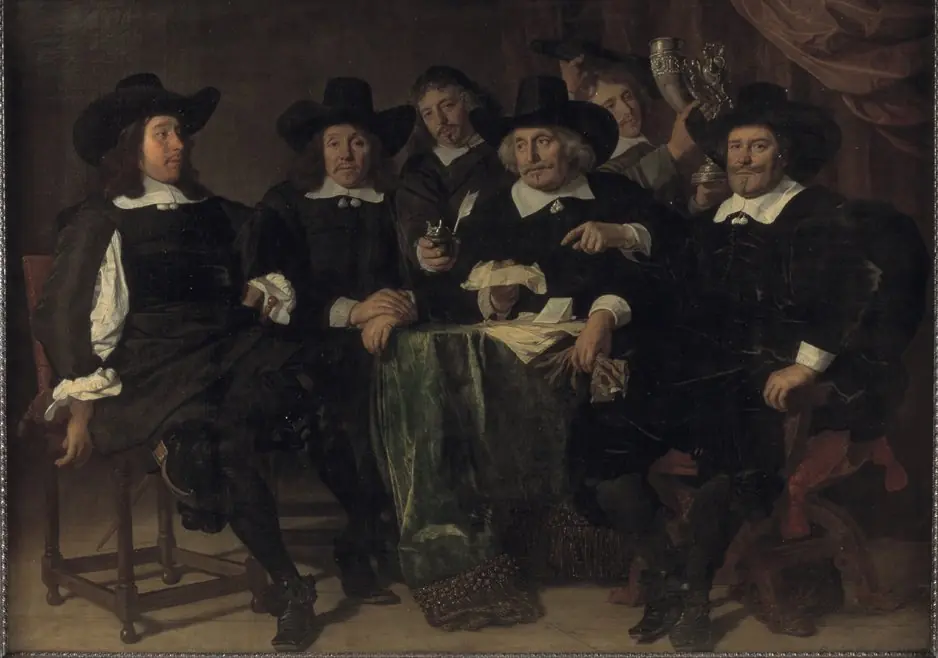
Banquet at the Crossbowmen’s Guild in Celebration of the Treaty of Münster is an oil painting by the Dutch Golden Age artist Bartholomeus van der Helst. It dates from 1648 and is held in the collection of the Rijksmuseum.
About this work
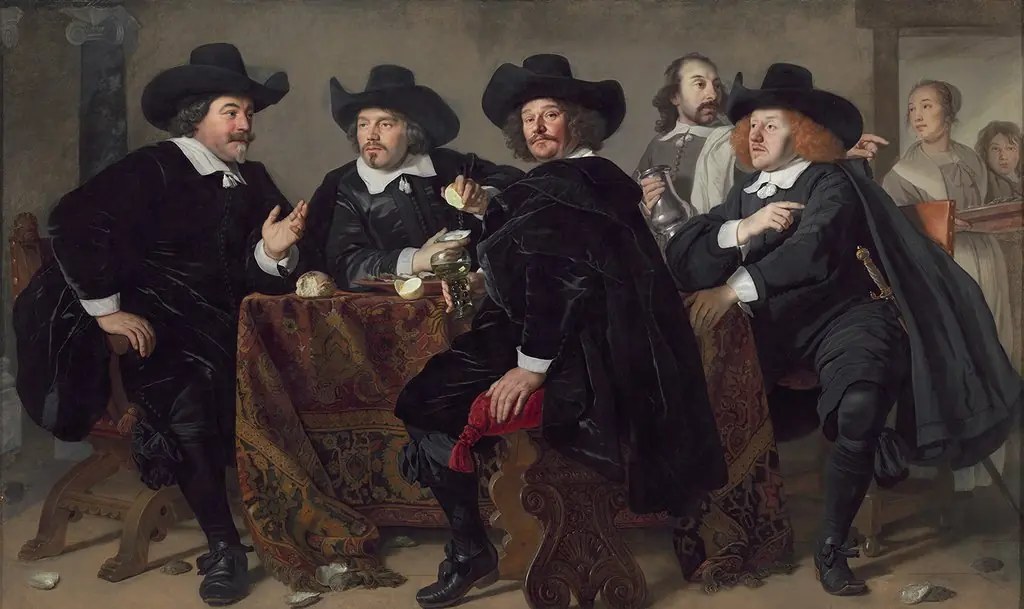
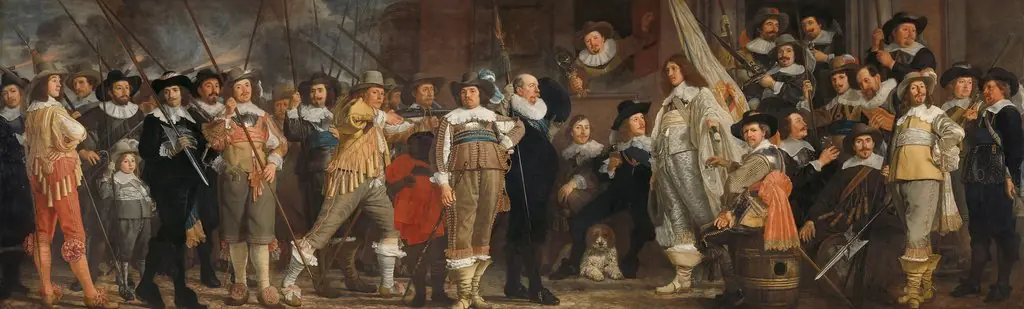
This painting shows Amsterdam’s civic guards toasting the Peace of Münster in 1648. Bartholomeus van der Helst put everyone in fancy clothes at a big feast.
It’s one of the biggest group portraits from the Dutch Golden Age, and it never left the city until it went to the Rijksmuseum.
Want more big group feasts? Look up the Amsterdam Museum.
Subject & Meaning
The work shows a banquet of the Amsterdam civic guard in the Crossbowmen's Guild hall, marking the 1648 Peace of Münster.
The work shows a banquet of the Amsterdam civic guard in the Crossbowmen's Guild hall, marking the 1648 Peace of Münster. It portrays captain Cornelis Jan Witsen and lieutenant Johan van Waveren among the sitters.
Van der Helst includes symbols of the guilds, a silver drinking horn, weapons, and a drum bearing a poem about an 'eternal bond', to stress unity and the move from warfare to celebration. The arrangement of figures around a long table reinforces communal harmony.
Together these elements convey the political meaning of the painting: a commemoration of peace, a display of Amsterdam's civic pride, and the transition from active duty to a peaceful, reconciled society.
Technique & Style
Created in 1648, this large-scale group portrait is executed in oil paint on canvas, measuring 232 by 547 centimetres. Van der Helst employs a vibrant palette to underscore the festive atmosphere while rendering the figures with extraordinary liveliness and naturalism, avoiding the stiff poses common in contemporary civic guard portraits. He demonstrates exceptional skill in depicting varied textures, from the coarse hand of Cornelis Jan Witsen to the finer skin of Johan van Waveren.
Light enters from the right, a choice calculated for the painting's original location in the "Oude Sael" of the Voetboogdoelen, illuminating the detailed objects on the table. A name board listing the sitters was added in 1680, and evidence suggests the canvas may have been trimmed, as later copies reveal a higher ceiling and window.
History & Provenance
The work was commissioned by the Amsterdam Crossbowmen's Guild (Voetboogdoelen) to mark the 1648 Treaty of Münster, and was painted by Bartholomeus van der Helst for the Oude Sael of the guild's hall. The art historian J.J. de Gelder noted that its execution likely continued at least a year beyond the inscribed date, a practice common for civic group portraits. The canvas, measuring roughly 232 × 547 cm, portrays Captain Cornelis Jan Witsen and other identifiable militia members; a name board with the sitters' names was added in 1680.
The painting has been part of the Rijksmuseum's display since 1808, on loan from the municipality of Amsterdam, and has regularly featured in the museum's Dutch Golden Age galleries.
Context
Bartholomeus van der Helst's Banquet at the Crossbowmen's Guild in Celebration of the Treaty of Münster (1648) is regarded as a masterpiece of Dutch Golden Age portraiture, praised for its technical brilliance and compositional innovation. Scholars such as J.J. de Gelder and Judith van Gent highlight its departure from static civic guard portraits, noting the dynamic poses, naturalistic interactions, and luminous palette that convey both individuality and collective harmony. Van Gent's 2011 study links the work's emphasis on reconciliation, central to Amsterdam's political climate, to the Treaty of Münster's economic and diplomatic significance.
The painting's meticulous rendering of textures, from silverware to fabrics, and its strategic lighting, aligned with its intended display in the Voetboogdoelen, demonstrate Van der Helst's mastery. Unlike contemporaries such as Rembrandt, whose civic guard pieces often prioritized dramatic chiaroscuro, Van der Helst favored clarity and elegance, reflecting the bourgeois values of Amsterdam's elite. The inclusion of a poem by Jan Vos and the handshake motif further elevate the work beyond documentation, embedding it within the era's civic and artistic traditions.
Legacy
The painting is celebrated as a highlight of Dutch Golden Age portraiture and is regularly displayed at the Rijksmuseum, reinforcing Bartholomeus van der Helst's enduring reputation. It ranks among the largest civic guard group portraits, with most sitters identifiable and many associated objects surviving.
Commentary including J.J. de Gelder's observation on its probable later completion and Judith van Gent's note on the 1680 name board has shaped its historical assessment. Since 1808 the work has been part of the Rijksmuseum collection on loan from the Amsterdam municipality.
Overview
This expansive oil painting, titled "Banquet at the Crossbowmen’s Guild in Celebration of the Treaty of Münster," was created by Bartholomeus van der Helst. It stands as a prominent example of Dutch Golden Age portraiture, depicting a large assembly of figures. The work is considered a significant piece within its genre, reflecting the artistic trends and social structures of 17th-century Amsterdam.
Artist & collection
Artist
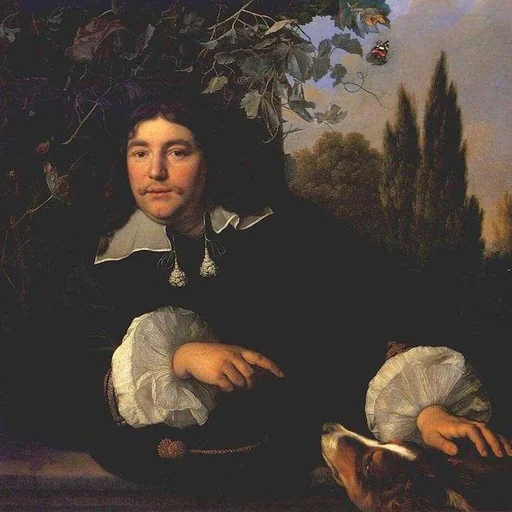
Bartholomeus van der Helst (1613 – buried 16 December 1670) was a Dutch painter. Considered to be one of the leading portrait painters of the Dutch Golden Age, his elegant portraits gained him the patronage of…