Artwork
An Old Woman Dozing
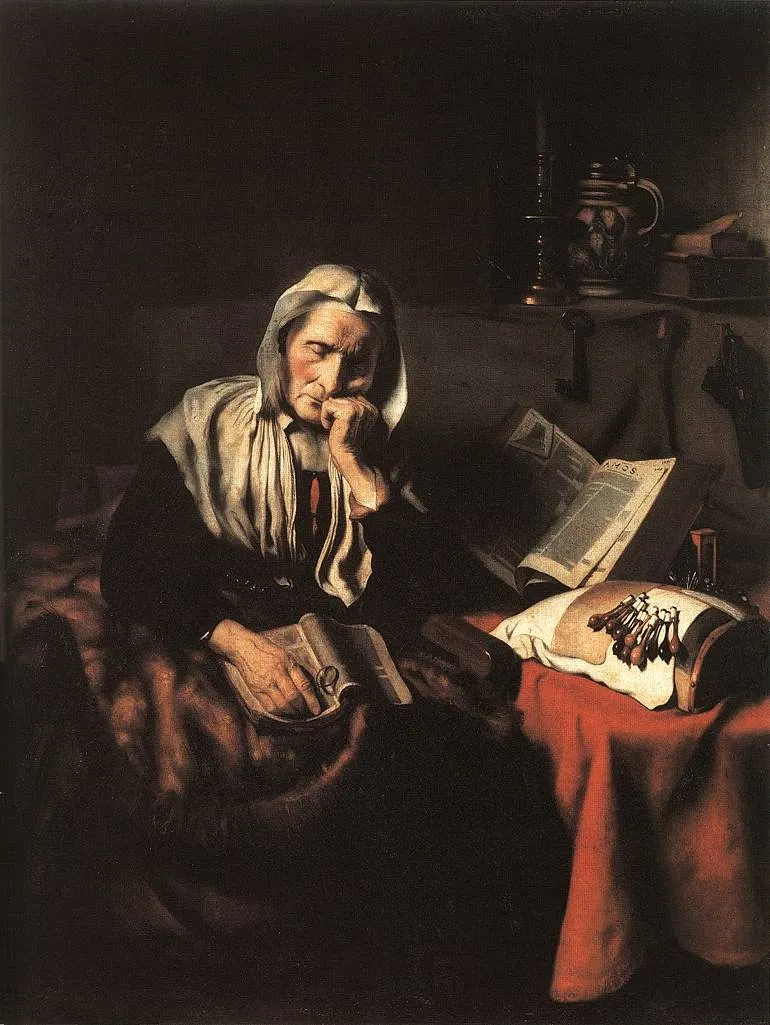
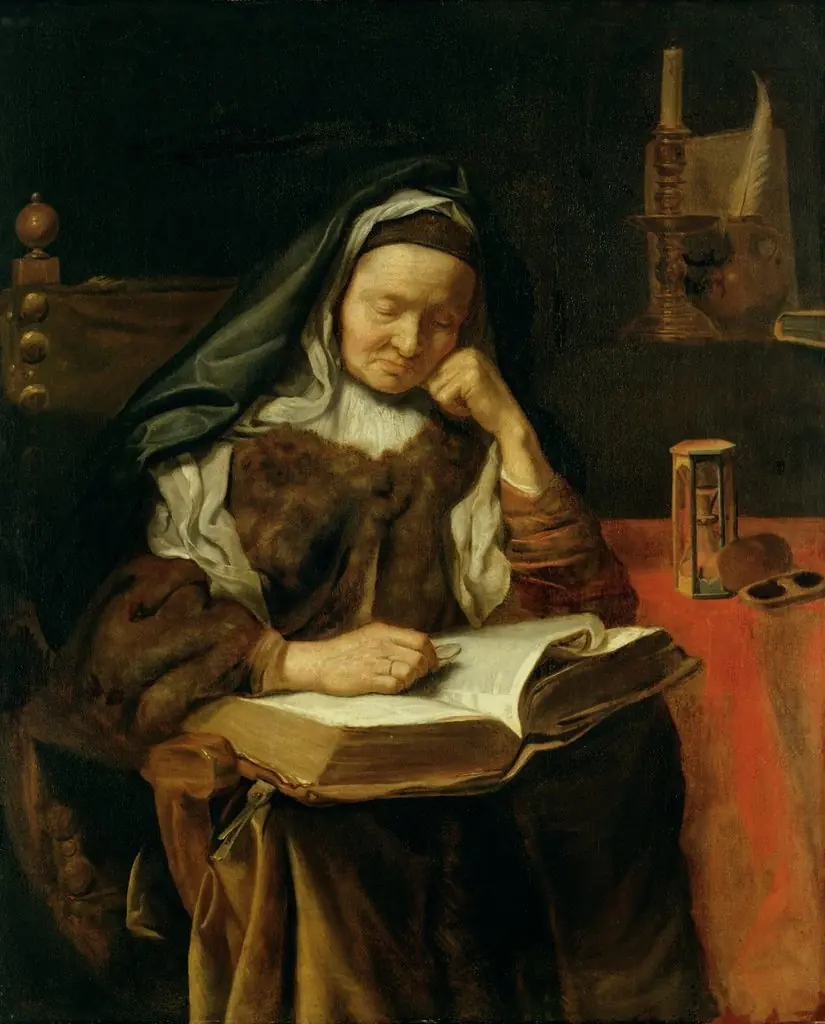
An Old Woman Dozing is an oil painting by the Dutch Golden Age artist Nicolaes Maes. It dates from 1656 and is held in the collection of the Royal Museums of Fine Arts of Belgium.
About this work
Overview
The painting is held in the collection of the Royal Museums of Fine Arts of Belgium in Brussels, where it is displayed in the Oldmasters Museum.
An Old Woman Dozing is an oil on canvas painting by the Dutch Golden Age artist Nicolaes Maes, dated circa 1656. Measuring 135 by 105 cm, the work depicts an elderly woman who has fallen asleep while reading, surrounded by objects that carry moral and domestic significance. The painting is held in the collection of the Royal Museums of Fine Arts of Belgium in Brussels, where it is displayed in the Oldmasters Museum. As a prime example of Maes's genre scenes from his Dordrecht period, the painting exemplifies the moralizing interior scenes that characterized much of Dutch Golden Age painting, combining careful observation of everyday life with symbolic content.
Subject & Meaning
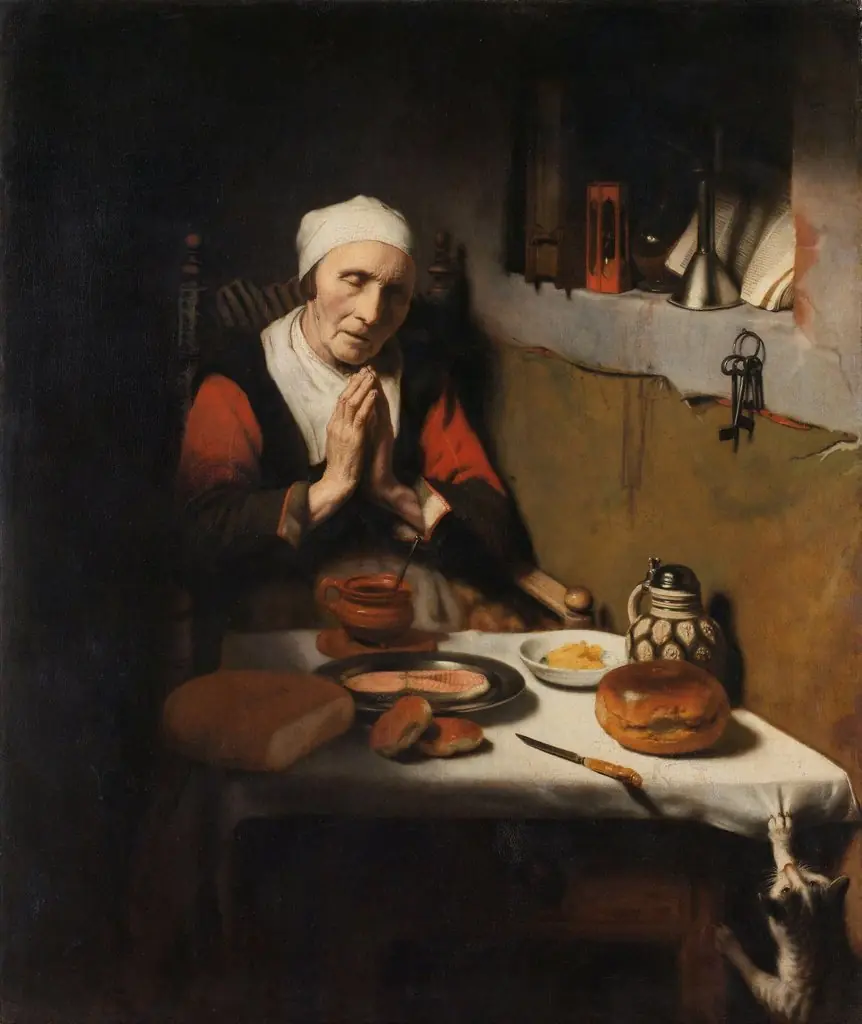
The central figure is an elderly woman seated in a dim interior, her head propped on her left hand in a gesture of sleep. She wears a white head covering and dark garments with a fur-lined sleeve visible on her right arm. In her right hand she holds a small book or pamphlet, while a larger open book rests on a table beside her. The table, draped with a vivid red cloth, also holds a lace pillow for bobbin lace, a cluster of keys on a white cloth, and a small hourglass. Behind her, a shelf displays a stoneware tankard, a candlestick, and stacked books. The iconography carries strong moral overtones: the open Bible at the book of Amos suggests spiritual negligence, while the hourglass underscores the inexorable passage of time. The lace pillow and keys indicate abandoned domestic duties. Together these elements form a warning against spiritual and worldly sloth, a common theme in Dutch genre painting where everyday scenes carried didactic messages about the fragility of life and the need for vigilance.
Technique & Style
The painting is executed in oil on canvas with a smooth and controlled brushwork that shows particular attention to textural variation. The artist renders the surfaces of fabric, fur, and aged skin with precision, while the composition centers on the woman with the table and objects forming a diagonal arrangement to her right. Strong chiaroscuro dominates the pictorial structure: light illuminates the figure and tabletop while the background recedes into darkness. The palette is built on deep browns and blacks, with the vivid red cloth and white headscarf providing strategic points of contrast. This dramatic lighting and the intimate domestic setting reflect the influence of Rembrandt, under whom Maes had studied, though the moralizing clarity of the composition and the polished finish are characteristic of Maes's own development as a genre painter.
History & Provenance
The painting was documented by the art historian Cornelis Hofstede de Groot in 1914, who recorded its acquisition from the dealer Gauchez in Paris in 1885 for 66,000 francs on behalf of the museum. It was listed in the Brussels Museum 1908 catalogue as number 279. The work is now held by the Royal Museums of Fine Arts of Belgium in Brussels, specifically in the Oldmasters Museum. The painting has been cited in scholarly literature including Patrick de Rynck's discussion in Cómo leer la pintura (2005), and is recorded in the RKD Netherlands Institute for Art History database.
Context
Nicolaes Maes painted An Old Woman Dozing during his Dordrecht period, when he established himself as a leading practitioner of Dutch genre painting after training with Rembrandt in Amsterdam. The work belongs to a broader tradition of Dutch Golden Age painting that transformed humble domestic interiors into vehicles for moral reflection. Maes developed a particular specialty in scenes featuring lace pillows, which he painted repeatedly with their owners, using these objects as anchors for compositions that explored female virtue, industry, and its opposite. The moralizing tone of the painting aligns it with contemporaneous Dutch literature and sermons that warned against the sin of sloth, one of the seven deadly sins. Critical reception has emphasized Maes's skill in merging Rembrandtesque chiaroscuro with a narrative clarity that made his moral messages accessible to a broad audience. The choice of the book of Amos for the Bible is significant: this prophetic text contains warnings against complacency and calls for social justice, reinforcing the painting's didactic purpose.
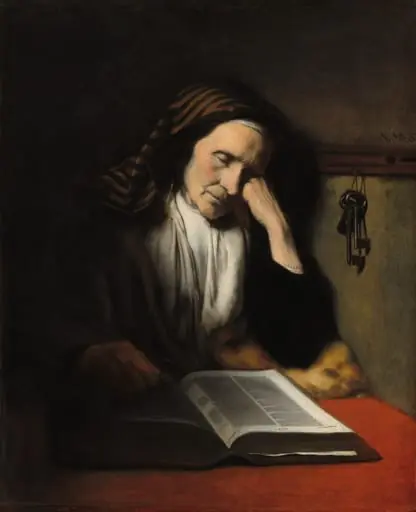
Artist & collection
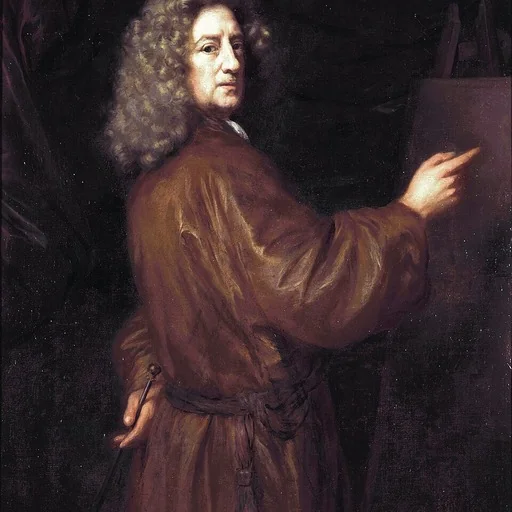
Artist
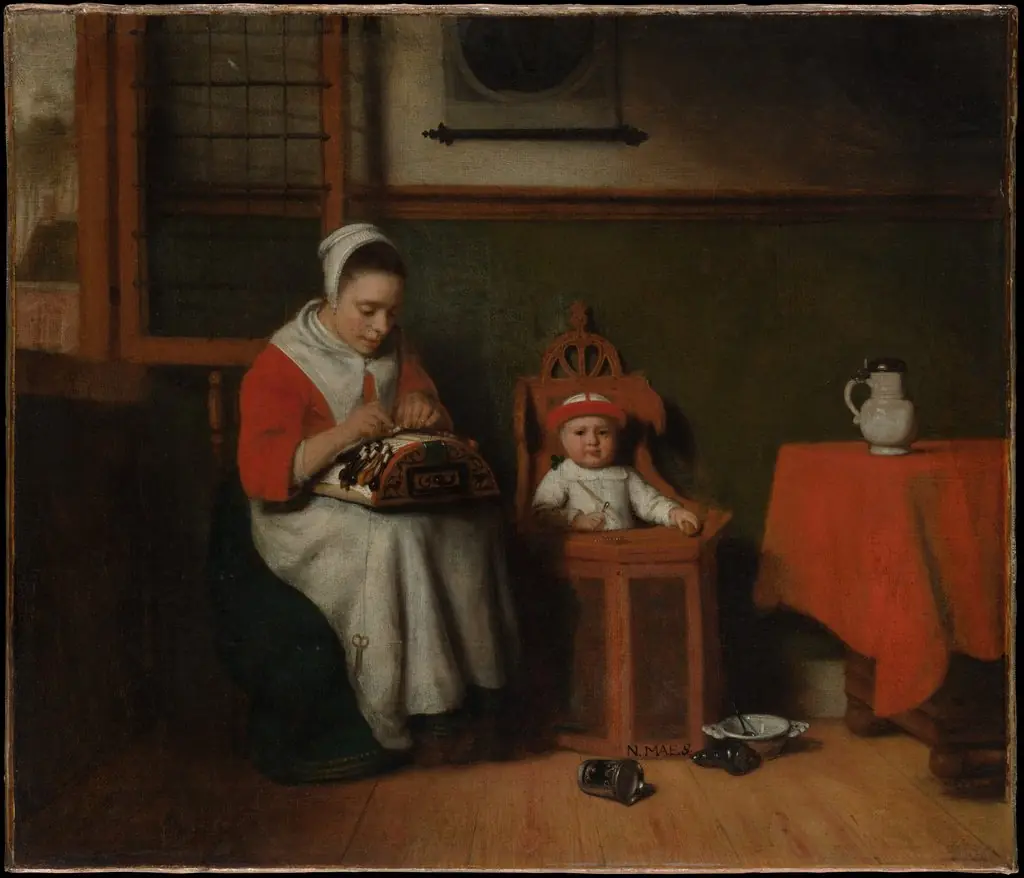
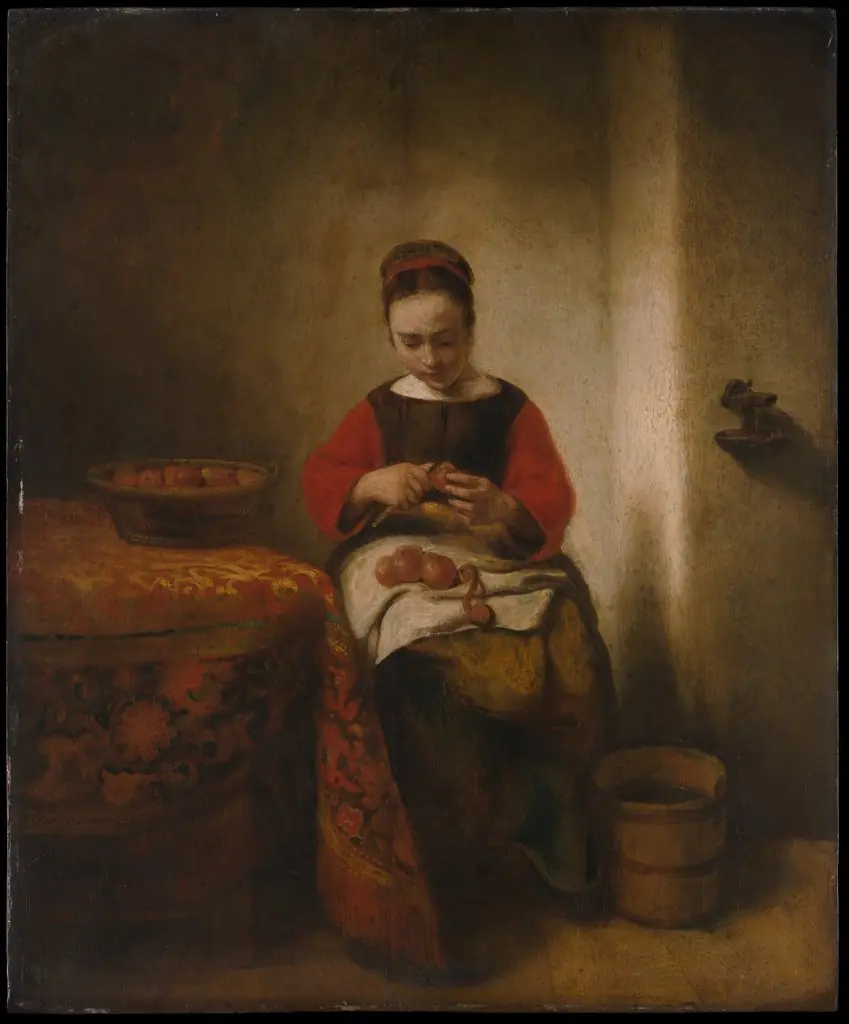
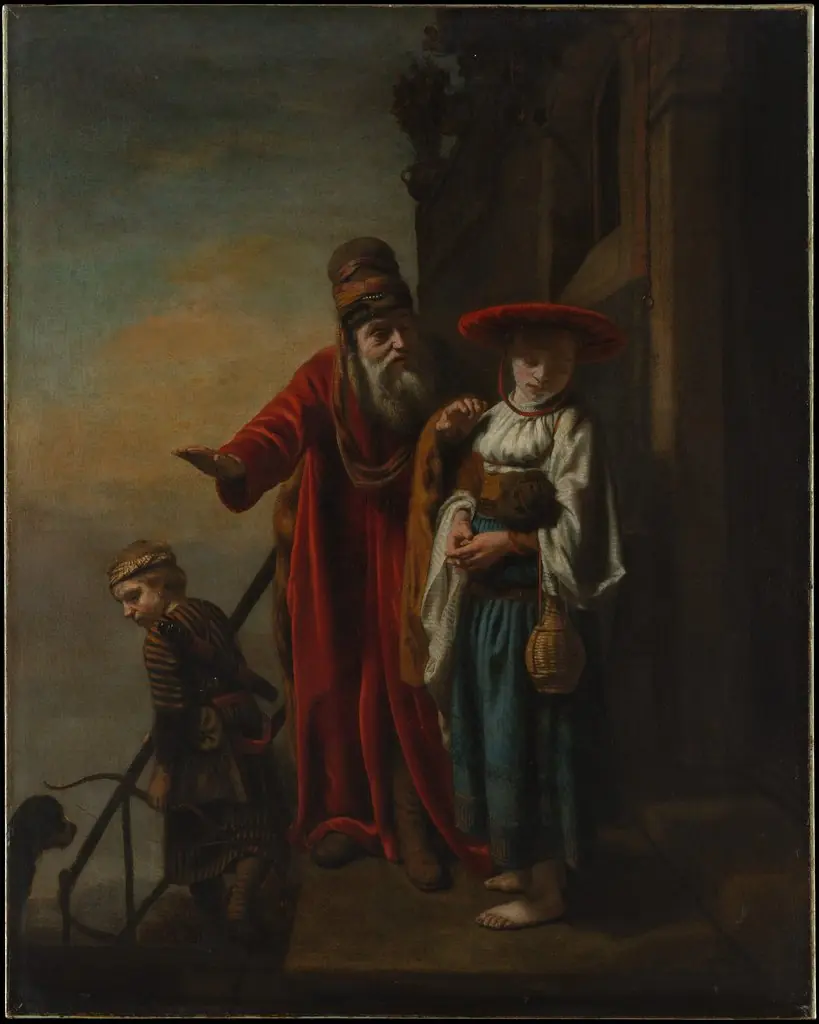
Nicolaes Maes (January 1634 – December 1693; buried 24 December 1693) was a Dutch painter known for his genre scenes, portraits, religious compositions and the occasional still life.

Museum
Royal Museums of Fine Arts of Belgium
Continue through works from the same source collection.