Artwork
Old Woman Saying Grace, Known as ‘The Prayer without End’
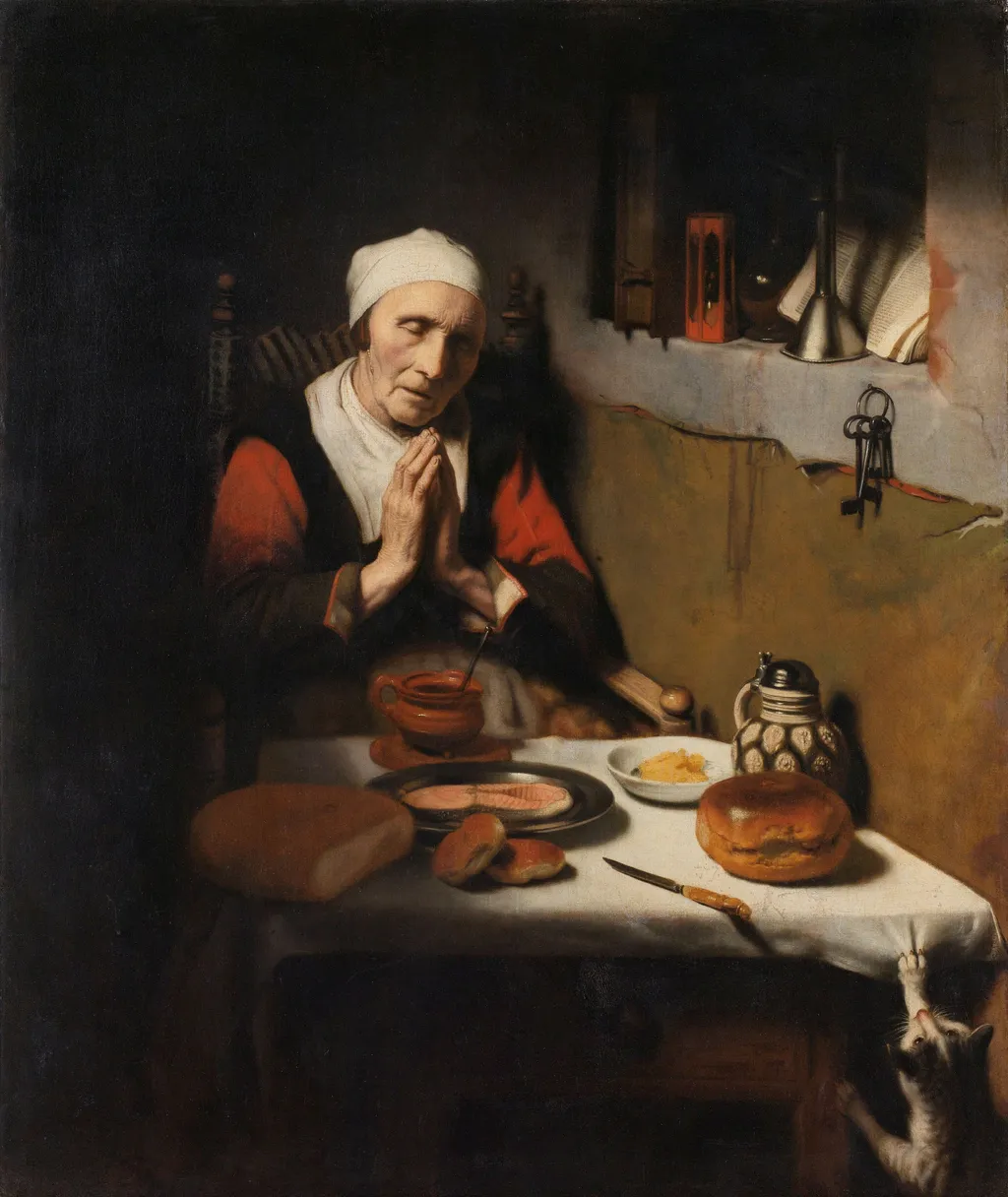
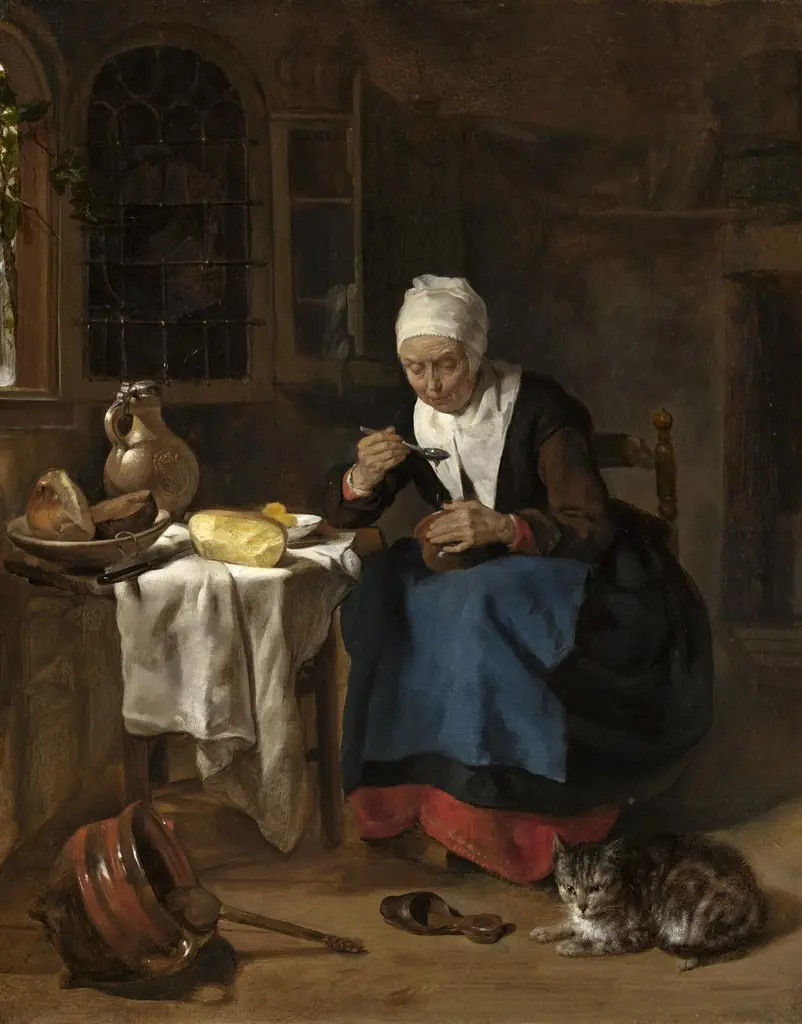
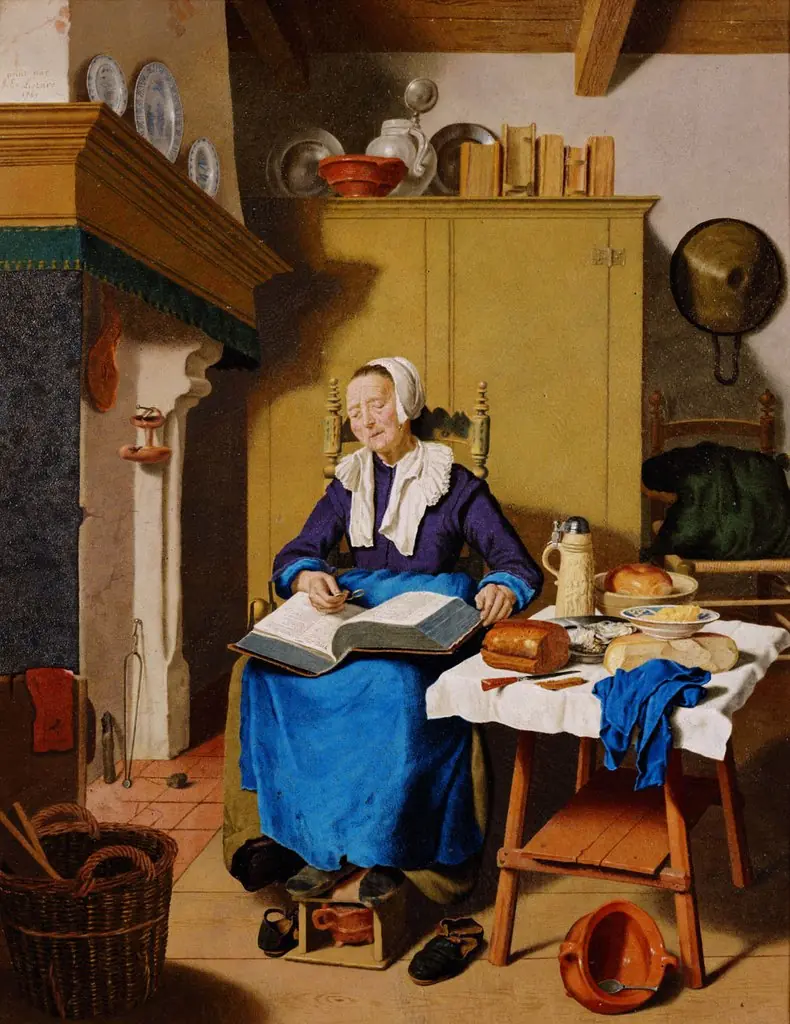
Old Woman Saying Grace, Known as ‘The Prayer without End’ is an oil painting by the Dutch Golden Age artist Nicolaes Maes. It dates from 1656 and is held in the collection of the Amsterdam Museum.
About this work
Subject & Meaning
A cat stealthily reaches for a scrap of food, introducing a subtle tension that underscores the precariousness of the moment.
The work, titled Old Woman Saying Grace, also known as 'The Prayer without End', shows an elderly woman seated at a modest table, eyes closed and hands clasped in silent prayer over bread and a simple meal. Maes includes a key, an open Bible, a candleholder, and an hourglass on a nearby shelf, each standing for access to divine grace, scriptural devotion, the light of faith, and the fleeting nature of life. A cat stealthily reaches for a scrap of food, introducing a subtle tension that underscores the precariousness of the moment. Together these elements convey a quiet meditation on gratitude, piety, and the transitory nature of earthly existence.
Technique & Style
Old Woman Saying Grace, also called 'The Prayer without End', is an oil on canvas painted by Nicolaes Maes in 1656. The work measures approximately 134 × 113 cm and depicts an elderly woman seated at a modest table, her hands clasped in silent prayer while a cat prowls the edge of the cloth. Maes employs warm tonalities, precise chiaroscuro, and a diagonal beam of light that illuminates the table and the figure, creating depth and focus.
Symbolic objects, a Bible, candlestick, keys, and an hourglass, appear on a nearby shelf, while everyday food items rest on the surface. The composition balances quiet serenity with the subtle tension introduced by the animal's movement.
History & Provenance
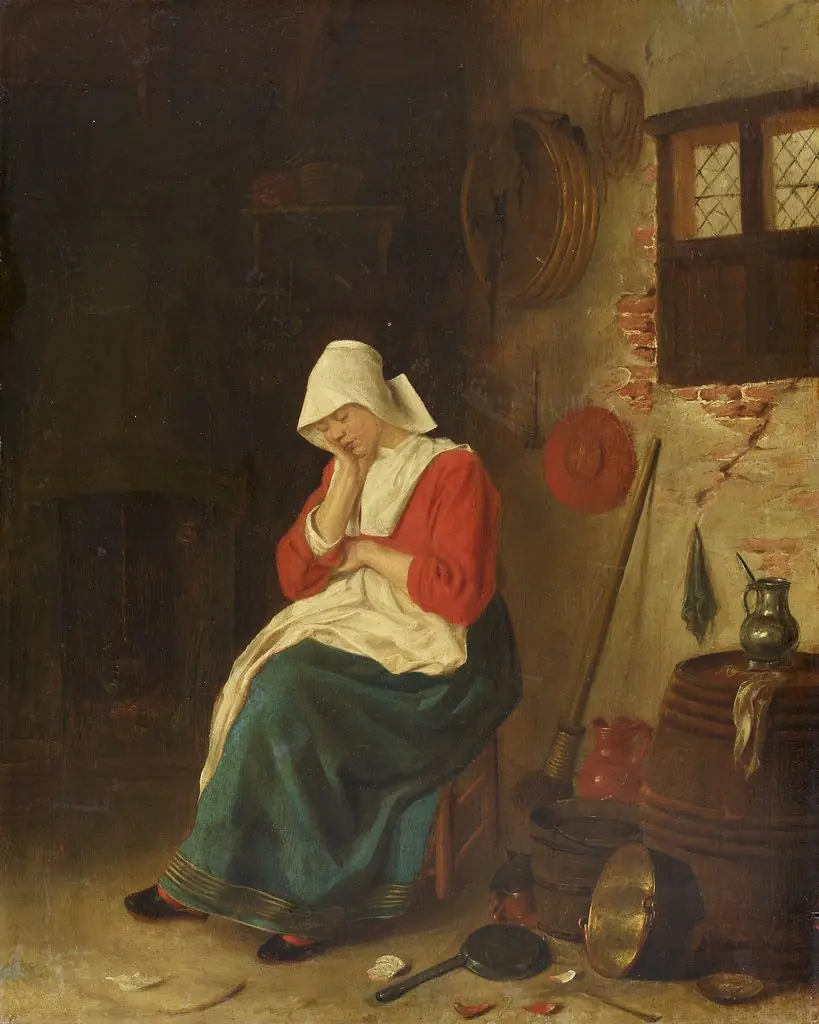
Old Woman Saying Grace, Known as 'The Prayer without End', is an oil-on-canvas work by Nicolaes Maes dated to 1656. The painting depicts a woman at a table in prayer over bread, alongside a key, a book, and a cat. A Spanish-language reference notes that the scene is compositionally close to Maes's Old Woman Dozing of the same year, sharing motifs such as keys and a beer jug. The work is held by the Rijksmuseum in Amsterdam, with placement noted in the Gallery of Honour, and is associated with collections linked to the Amsterdam Museum. Adriaan Lacoste is listed among former owners in the structured data.
Context
Old Woman Saying Grace, Known as 'The Prayer without End' is an oil painting from 1656 by Nicolaes Maes, classified as a genre scene. It depicts an elderly woman at prayer beside a table laden with food and symbolic objects such as a Bible, candlestick, keys, and an hourglass, while a cat creates narrative tension. The work is held in the Rijksmuseum and was once owned by Adriaan Lacoste.
Scholarship regards it as one of Maes's best-known paintings and highlights his standing as a leading pupil of Rembrandt, noting the master's influence in its meticulous detail, warm colour palette, and dramatic chiaroscuro. As a Dutch Golden Age genre piece, it exemplifies the era's focus on domestic realism infused with moral symbolism.
Overview
Nicolaes Maes completed Old Woman Saying Grace, Known as ‘The Prayer without End’ in 1656. This oil painting exemplifies the Dutch Golden Age tradition of genre scenes, focusing on everyday life. It portrays an elderly woman engaged in a moment of quiet devotion, a common theme in Maes’s early career. The work is a significant example of his contribution to this popular artistic movement.
Own this work as a print
Artist & collection
Artist
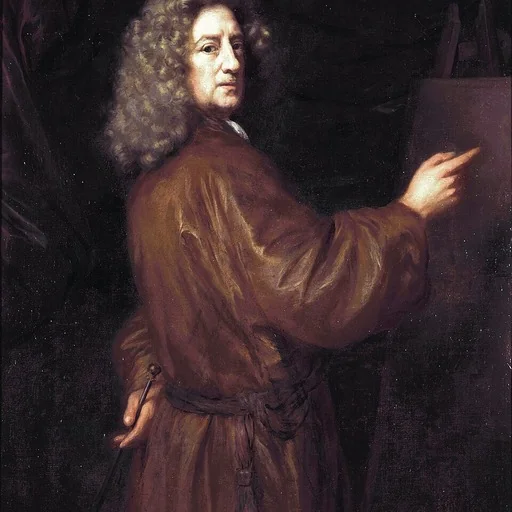
Nicolaes Maes (January 1634 – December 1693; buried 24 December 1693) was a Dutch painter known for his genre scenes, portraits, religious compositions and the occasional still life.