Artwork
Abraham Dismissing Hagar and Ishmael
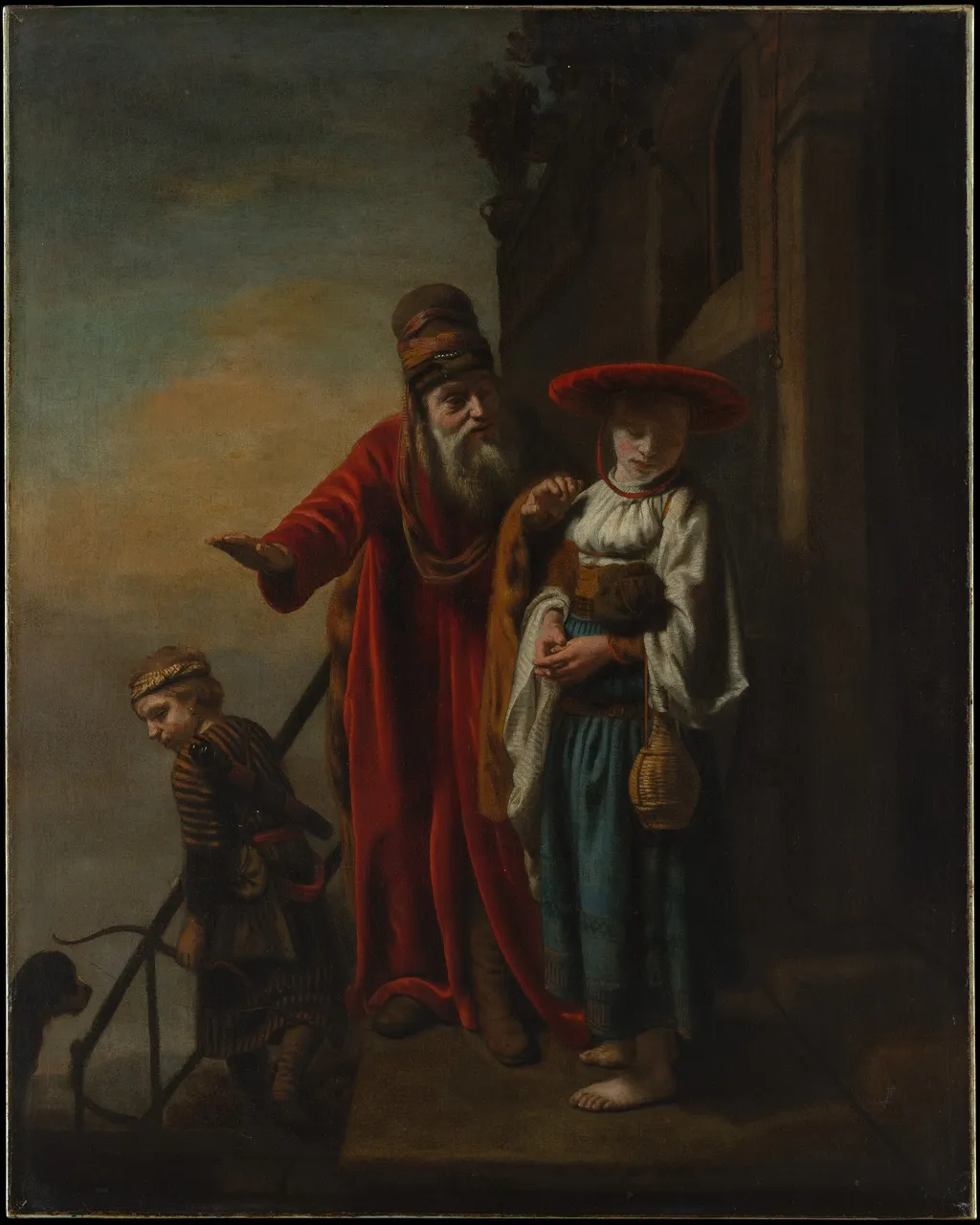
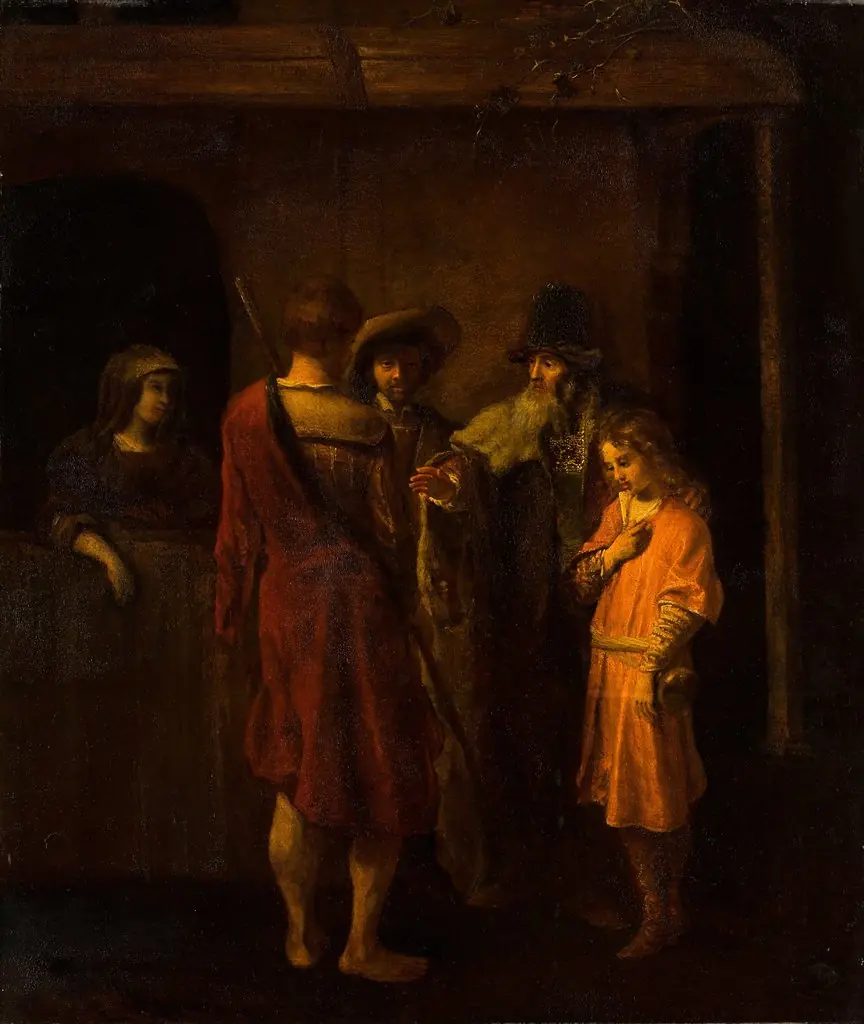
Abraham Dismissing Hagar and Ishmael is an oil painting by the Dutch Golden Age artist Nicolaes Maes. It dates from 1653 and is held in the collection of the Metropolitan Museum of Art.
About this work
Subject & Meaning
The painting portrays the biblical episode of the banishment of Hagar and Ishmael, showing Abraham alongside Hagar and her young son. As a religious work, it visualizes a moment of testing and exile, using the figures of Abraham, Hagar, and Ishmael to convey themes of faith, obedience, and hardship inherent in the scriptural narrative.
Technique & Style
According to the sources, Maes created the work in 1653, using oil paint as the medium and a canvas support, with dimensions of about 87.
The painting Abraham Dismissing Hagar and Ishmael is executed in oil on canvas. According to the sources, Maes created the work in 1653, using oil paint as the medium and a canvas support, with dimensions of about 87.6 cm in height and 69.9 cm in width. The composition portrays the biblical moment of Abraham sending away Hagar and Ishmael, rendered with the naturalistic detail and chiaroscuro characteristic of Dutch Golden Age painting. The work belongs to the religious genre and is housed in the Metropolitan Museum of Art.
History & Provenance
Abraham Dismissing Hagar and Ishmael was painted in 1653 by Nicolaes Maes in oil on canvas, measuring 87.6 cm in height by 69.9 cm in width. It depicts the biblical banishment of Hagar and Ishmael and is part of the collection of the Metropolitan Museum of Art in New York, where it is classified as a religious painting. The available sources do not specify a unique accession number, nor do they record a specific exhibition history or past display locations for the work.
Overview
Nicolaes Maes's Abraham Dismissing Hagar and Ishmael, executed in 1653, illustrates the biblical narrative from Genesis 21 where Abraham sends away his concubine Hagar and their son Ishmael at Sarah's request. The composition centers on the emotional tension of the separation: Abraham, clad in a red robe, stands with his right arm extended and palm open, a gesture of reluctant dismissal. Opposite him, Hagar appears in white and blue garments, standing protectively beside Ishmael.
The young boy is depicted wearing a striped shirt and holding a bow and arrow, foreshadowing his future as a hunter. Maes, a student of Rembrandt, employs the dramatic chiaroscuro and loose brushwork characteristic of his early Amsterdam period. The work reflects the artist's focus on genre-like intimacy within religious subjects, capturing a moment of human drama rather than grandiose spectacle.
Painted when Maes was only nineteen, this piece demonstrates his early mastery of light and psychological depth, establishing the foundation for his subsequent career as a leading Dutch Golden Age painter known for domestic interiors and biblical scenes.
Own this work as a print
Artist & collection
Artist
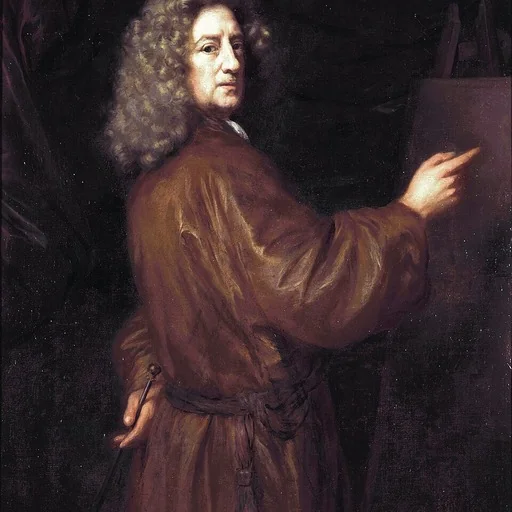
Nicolaes Maes (January 1634 – December 1693; buried 24 December 1693) was a Dutch painter known for his genre scenes, portraits, religious compositions and the occasional still life.