Artwork
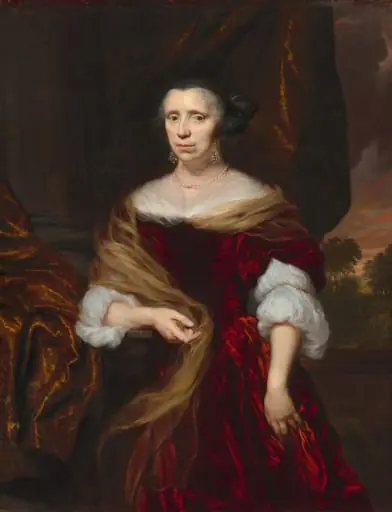
Portrait of Petronella Dunois
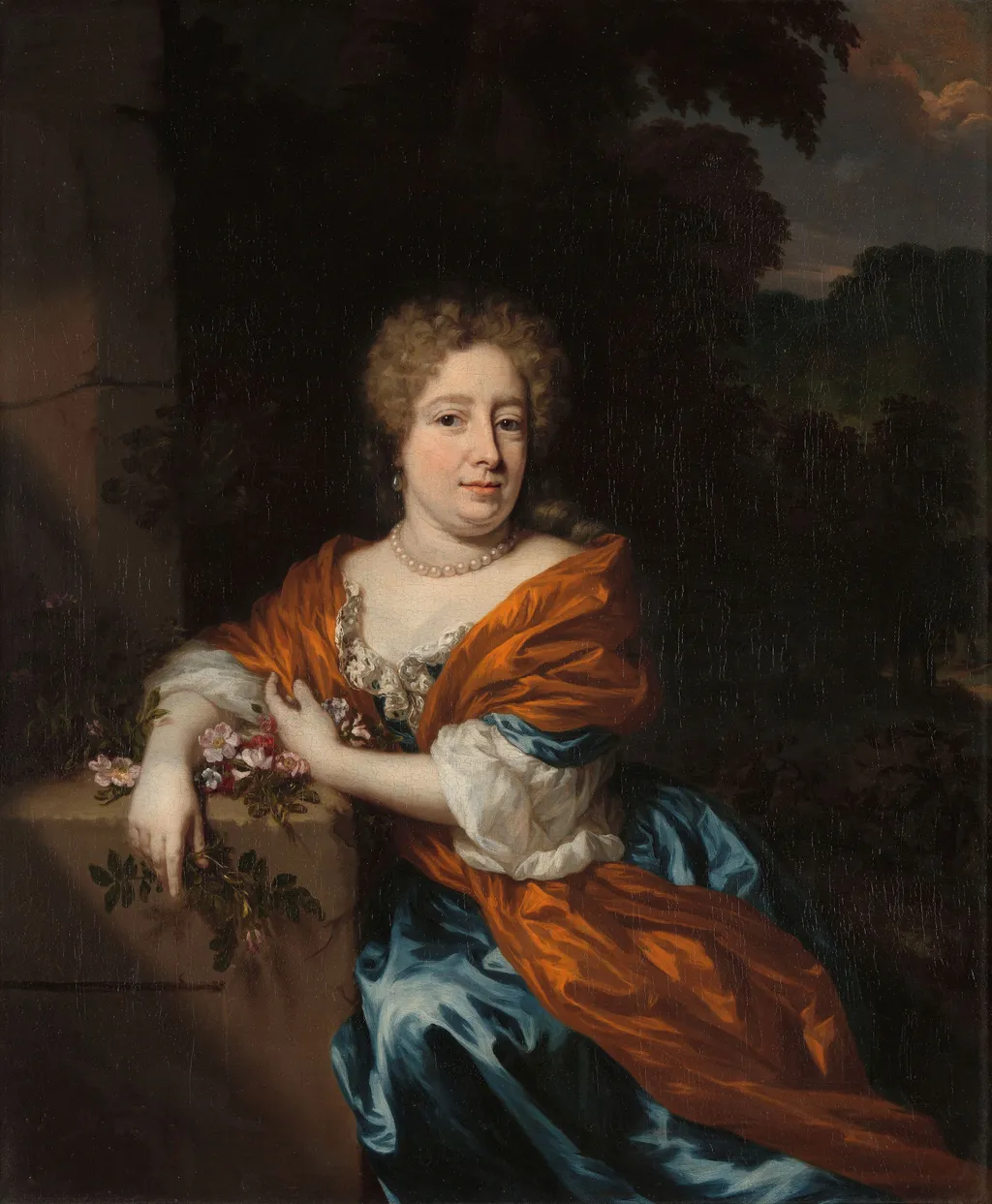
Portrait of Petronella Dunois is an oil painting by the Dutch Golden Age artist Nicolaes Maes. It dates from 1690 and is held in the collection of the Rijksmuseum.
About this work
Technique & Style
The restrained palette and controlled chiaroscuro emphasize quiet elegance over dramatic effect, aligning with late Dutch portrait conventions.
The painting is executed in oil on canvas, with smoothly blended handling typical of Maes’s late style. The 69.2 × 57.8 cm support is prepared in a warm ground, allowing subtle transitions in the sitter’s face and costume. Subtle glazes model the softly lit features, while restrained brushwork preserves the integrity of the black silk dress and lace collar.
The restrained palette and controlled chiaroscuro emphasize quiet elegance over dramatic effect, aligning with late Dutch portrait conventions.
No significant losses or restorations are recorded in the current condition, and the paint layer appears stable under raking light.
History & Provenance
The work was created in 1680 by Nicolaes Maes as an oil on canvas portrait of Petronella Dunois. It entered the collection of the Rijksmuseum, where it remains on view.
The painting was commissioned by the sitter’s family and has been documented in the museum’s catalogue as part of Maes’s late portraiture. Its dimensions are 69.2 cm by 57.8 cm.
The Portrait of Petronella Dunois is housed in the Rijksmuseum collection (inventory number not specified in the sources). It was created in 1680 by Nicolaes Maes. The work has been displayed in exhibitions focused on Dutch Golden Age portraiture, though specific exhibition titles and dates are not documented in the provided sources.
Overview
Nicolaes Maes painted the portrait of Petronella Dunois in 1690, near the end of his artistic career. Executed in oil on canvas, the work belongs to the Dutch Golden Age and is now part of the Rijksmuseum’s collection. It exemplifies Maes’s shift from genre scenes to high‑society portraiture during his later years in Amsterdam.
Subject & Meaning
The sitter, identified as Petronella Dunois, is presented seated with a composed expression. She holds a modest bouquet of flowers, a conventional symbol of femininity and transience. Her attire, a richly draped orange shawl, a blue skirt trimmed in white, and a pearl necklace, signals both personal wealth and the fashion of late‑seventeenth‑century Holland.
Context
By the 1690s Maes had established himself as Amsterdam’s leading portraitist, succeeding his early apprenticeship with Rembrandt. The painting reflects the era’s demand for individualized, status‑affirming images among the mercantile elite, and it illustrates the transition from the more narrative genre scenes of his youth to refined, single‑figure portraiture.
Own this work as a print
Artist & collection
Artist
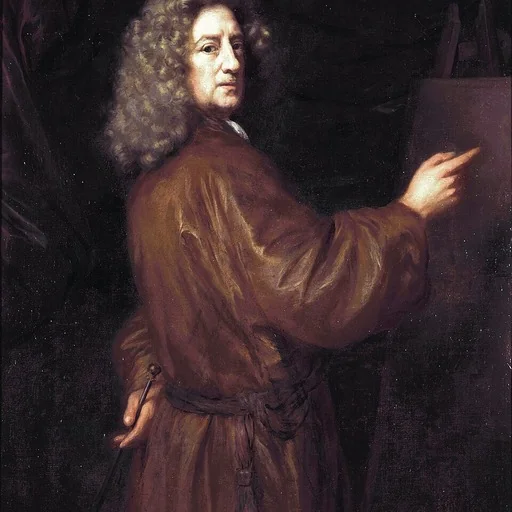
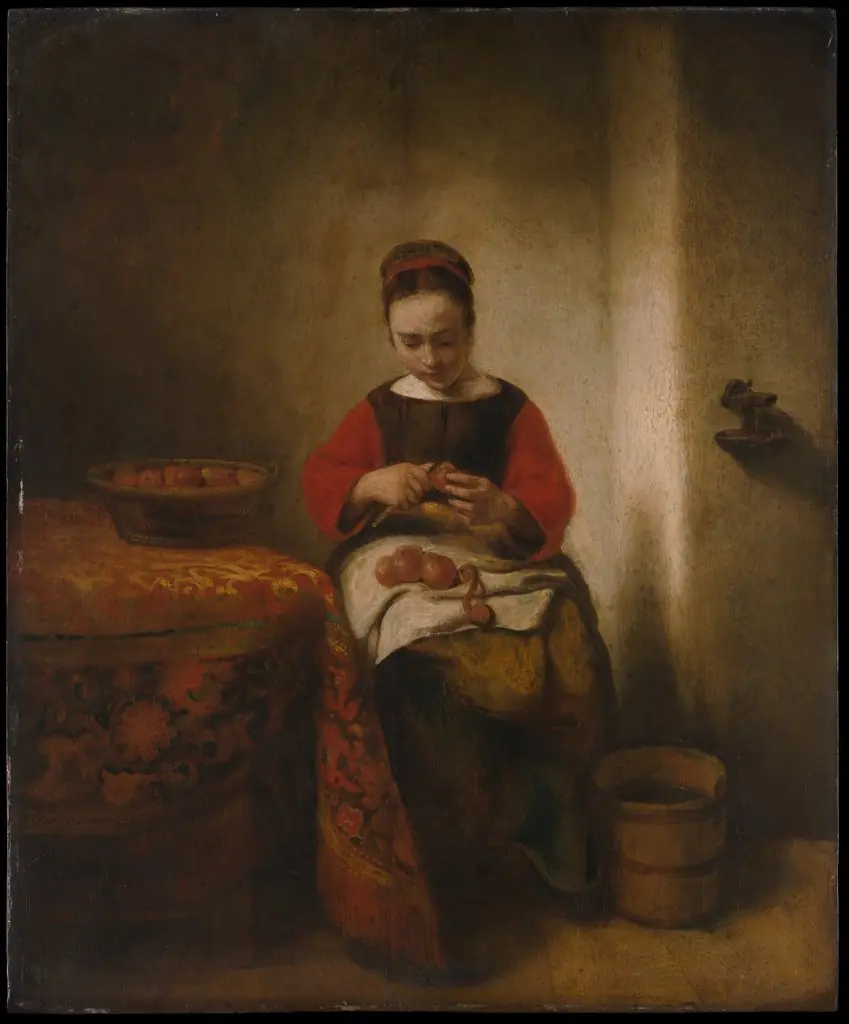
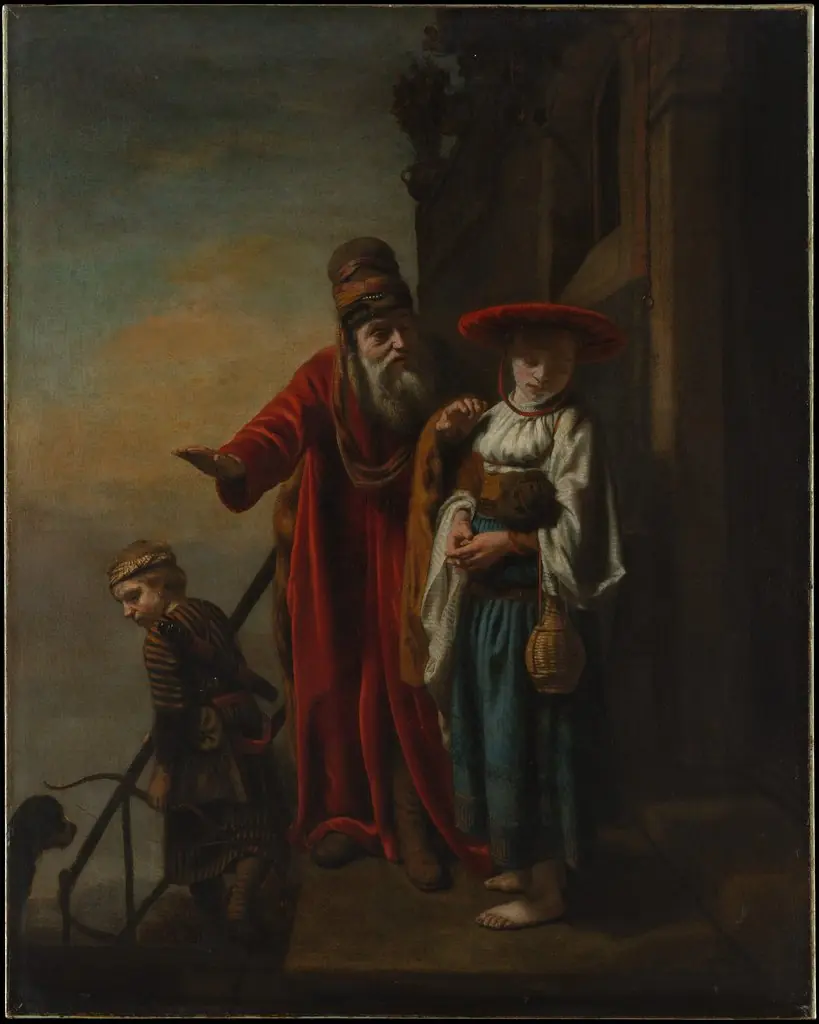
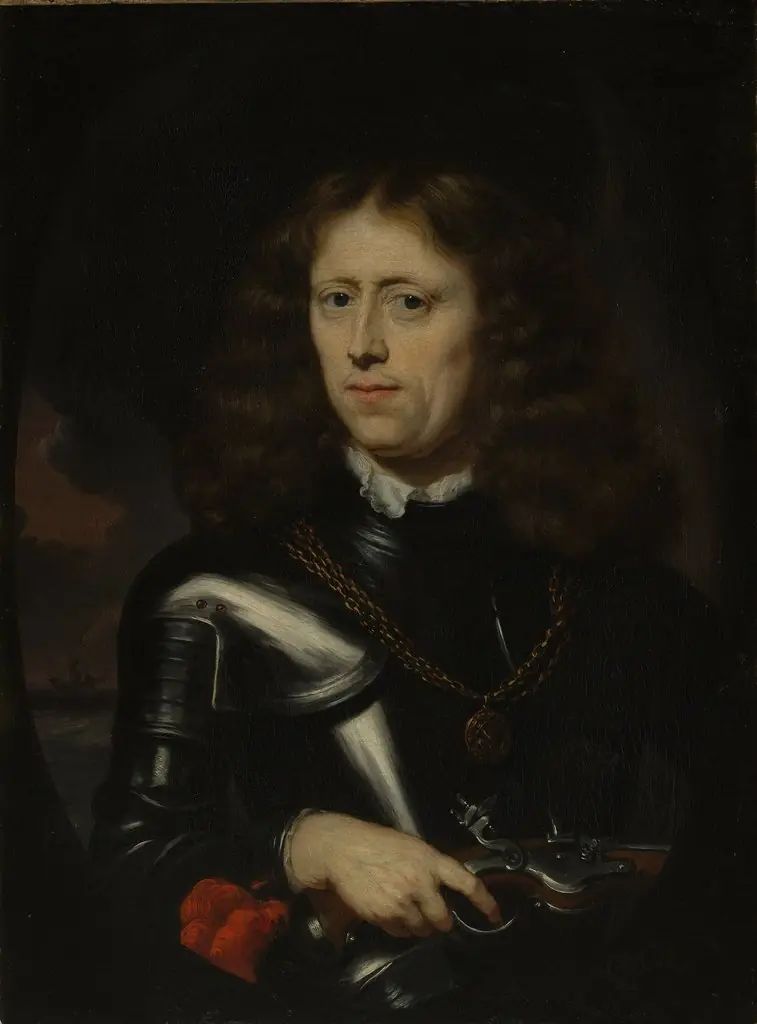
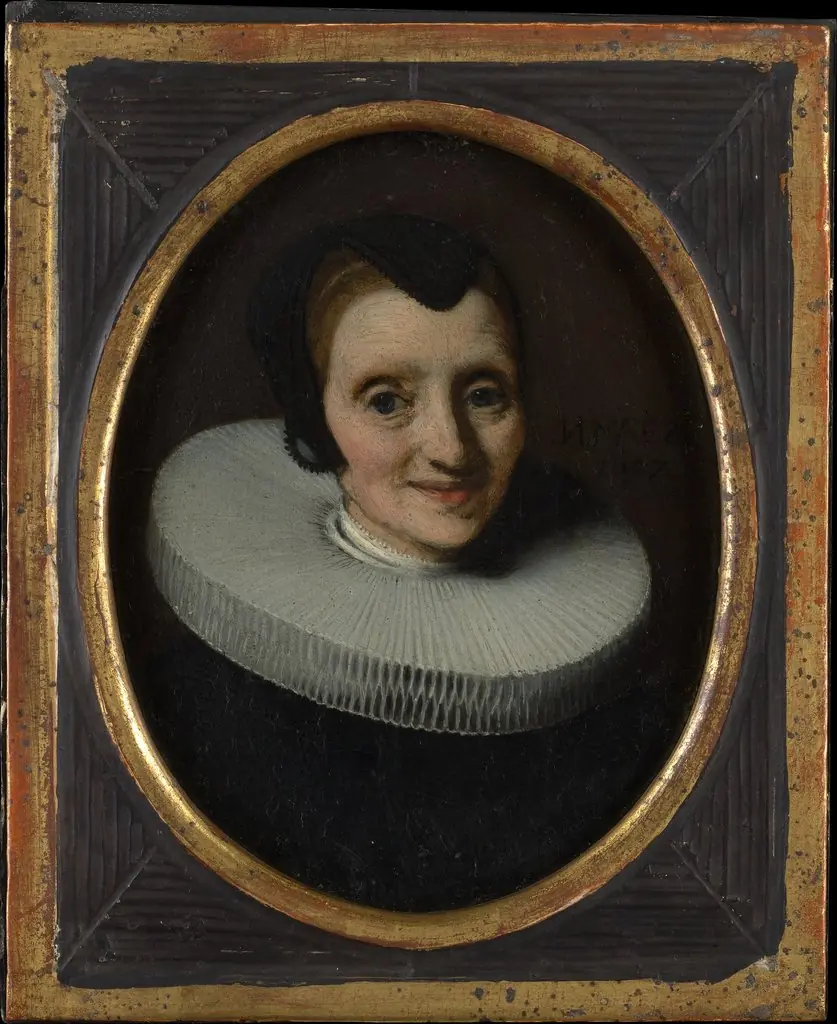
Nicolaes Maes (January 1634 – December 1693; buried 24 December 1693) was a Dutch painter known for his genre scenes, portraits, religious compositions and the occasional still life.

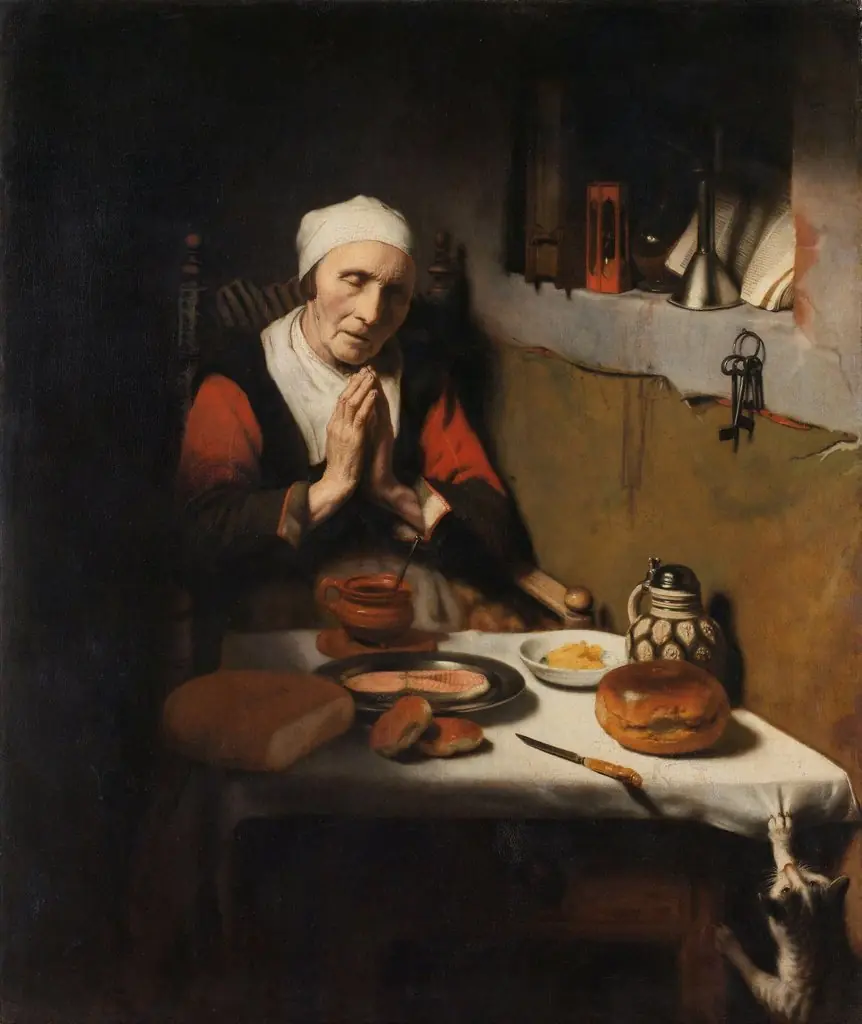
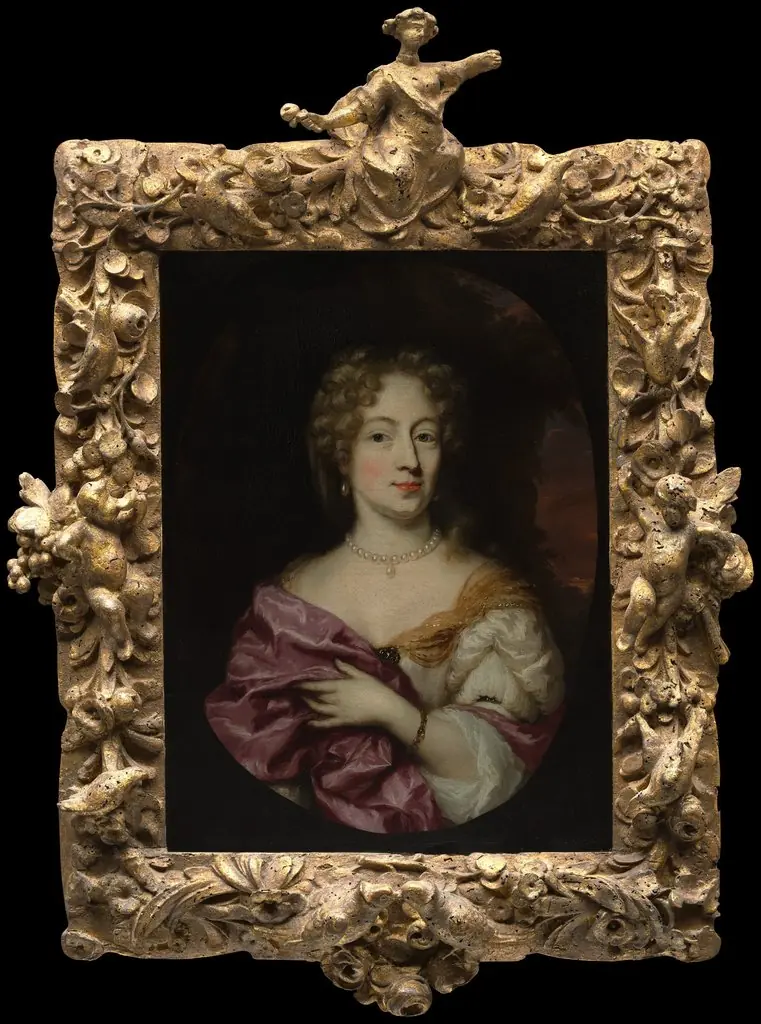
- Portrait of a Bride with Flowers (Charlotte Aglaé d'Orléans, called Mademoiselle de Valois?)
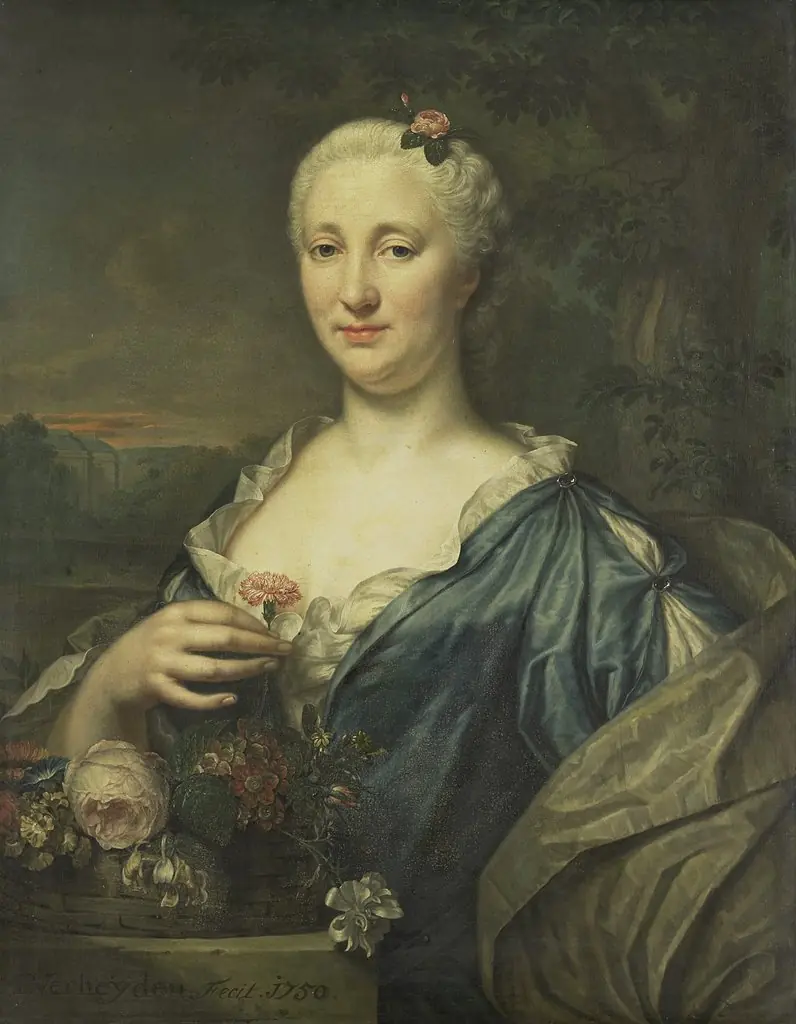 Portrait of Agnes Margaretha Albinus, Wife of Coenraad van Heemskerck
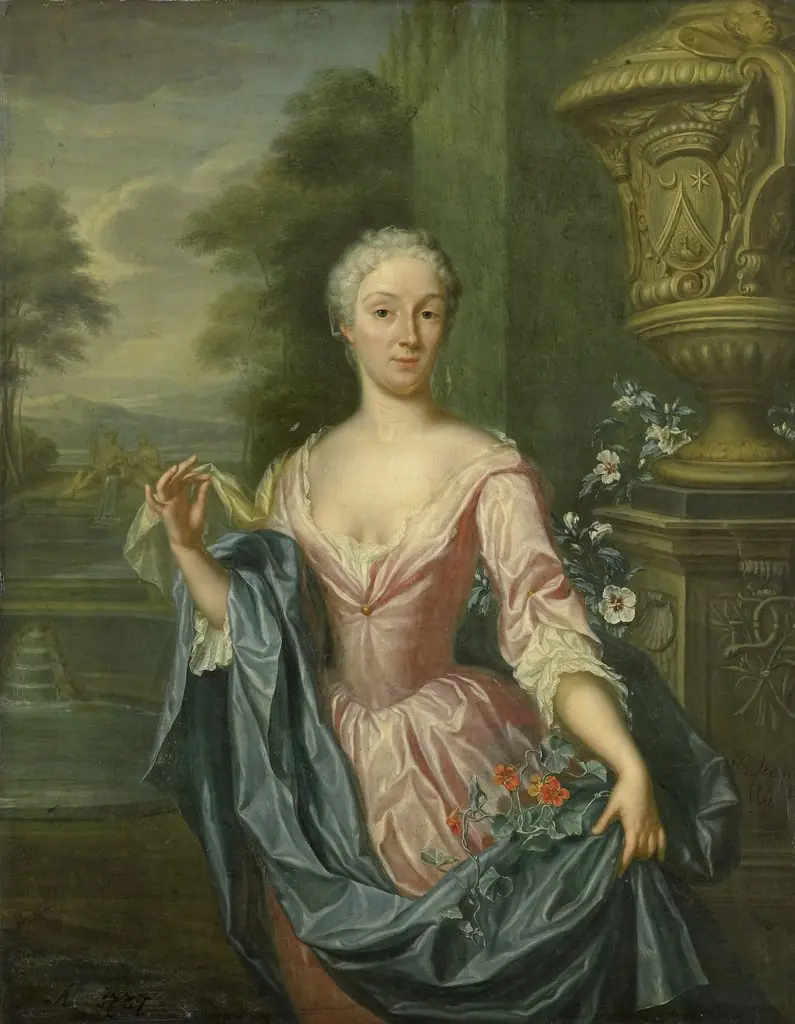 Portrait of Claudine van Royen (born 1712), Wife of Pieter Teding van Berkhout
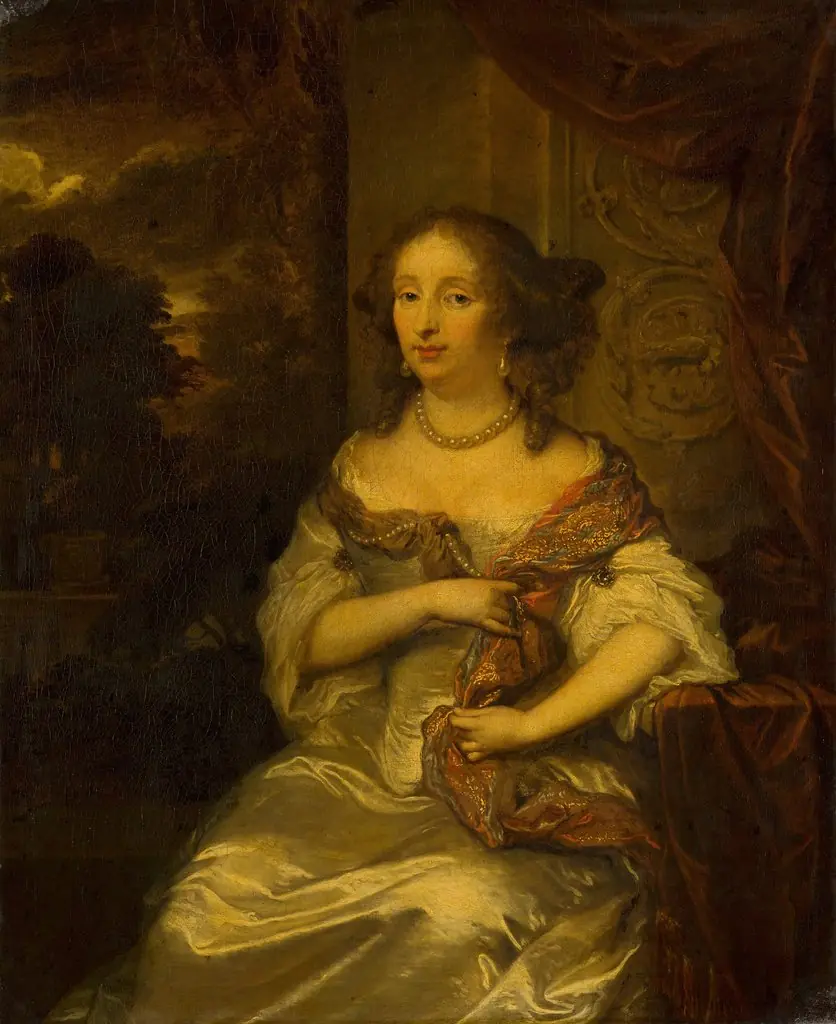 Portrait of Elisabeth van Bebber (1643-1704)
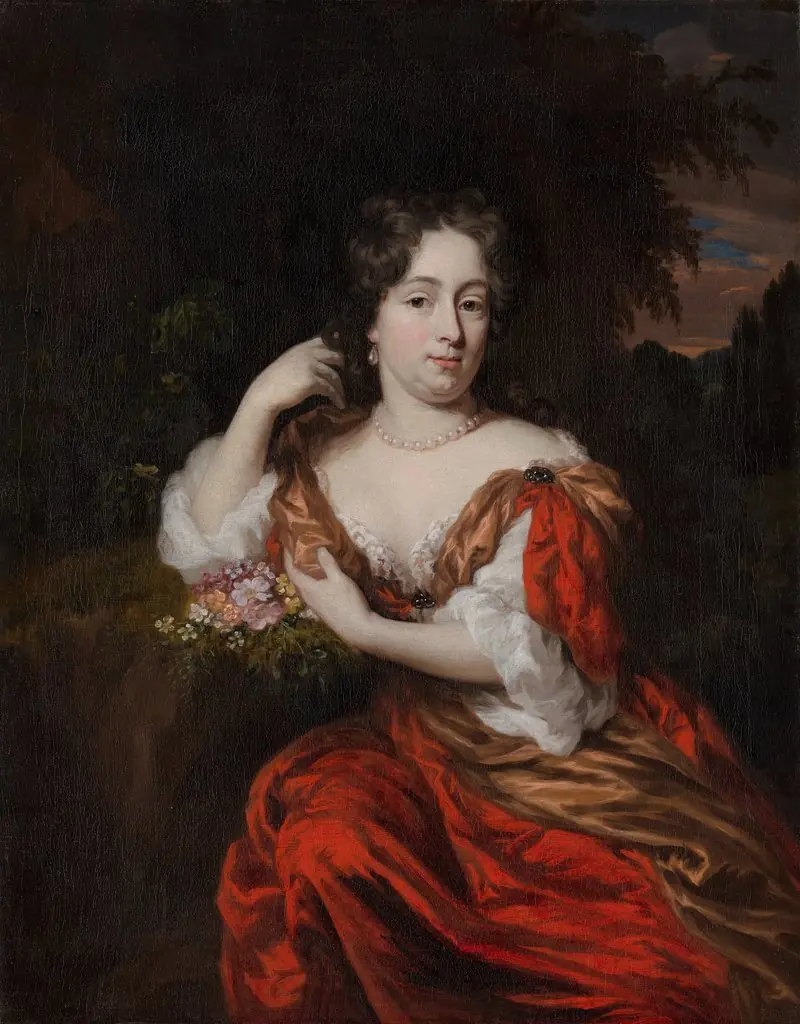 Portrait of Catharina Dierquens
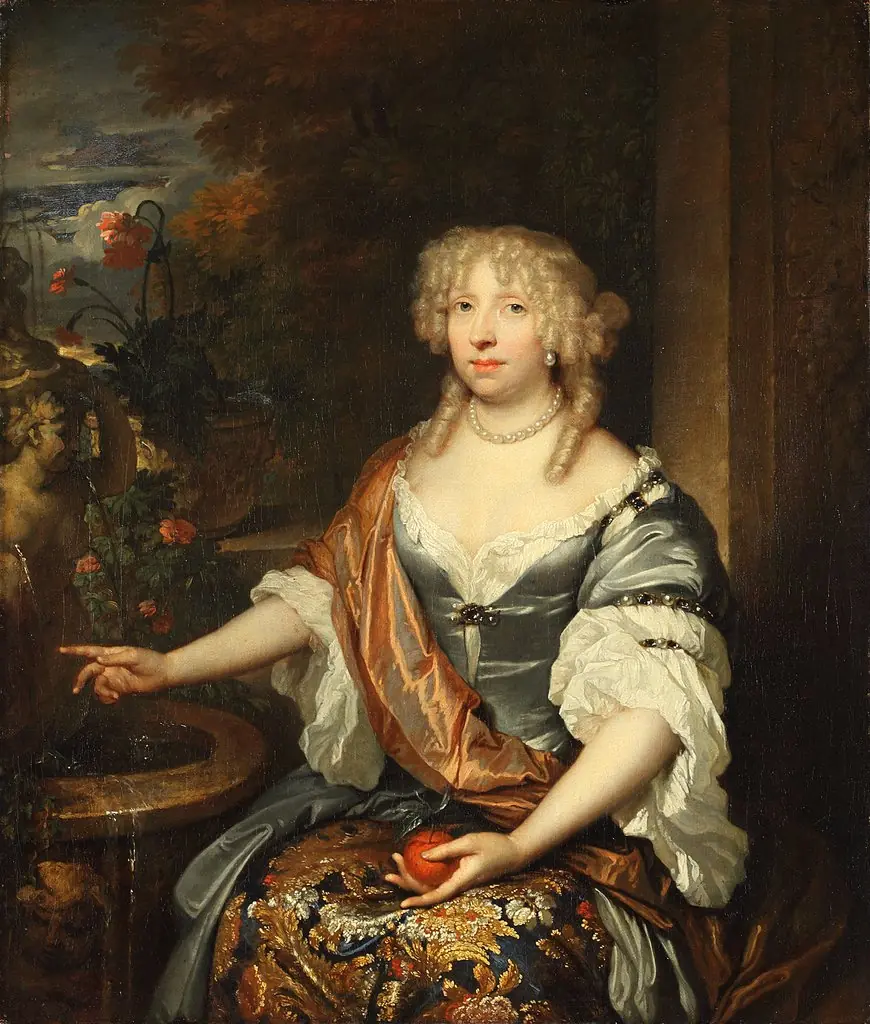 Portrait of a Lady
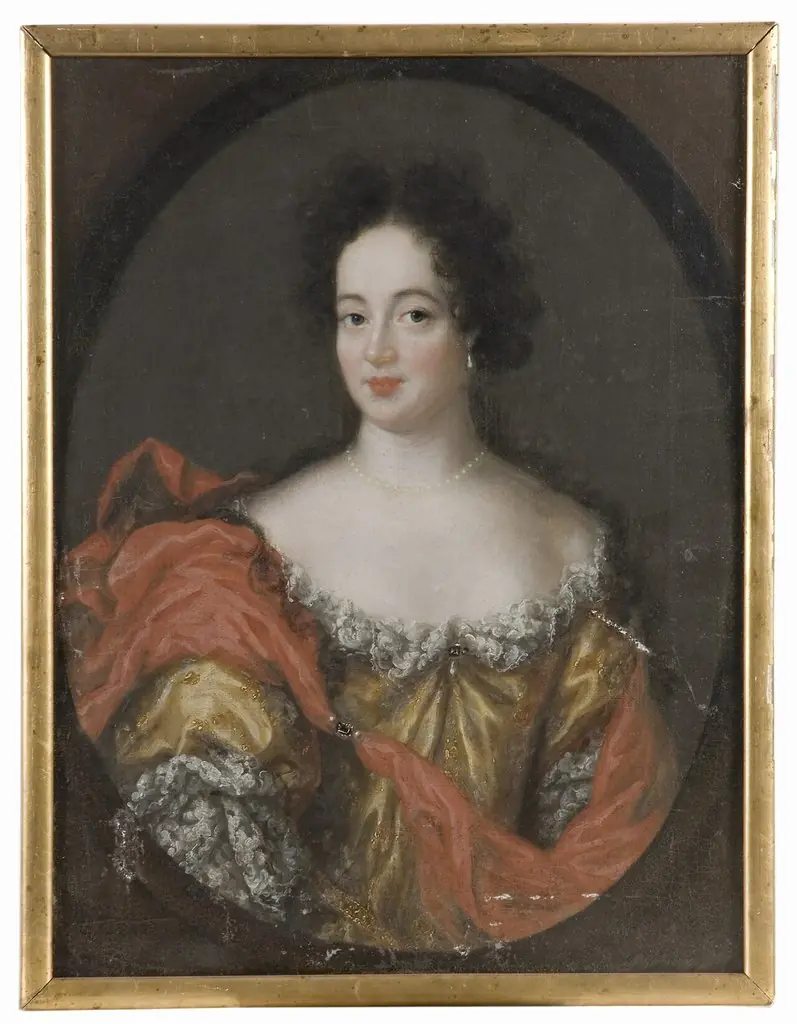 Agnes Wrangel, levnadsdata okända, möjligen hovfröken hos riksänkedrottning Hedvig Eleonora
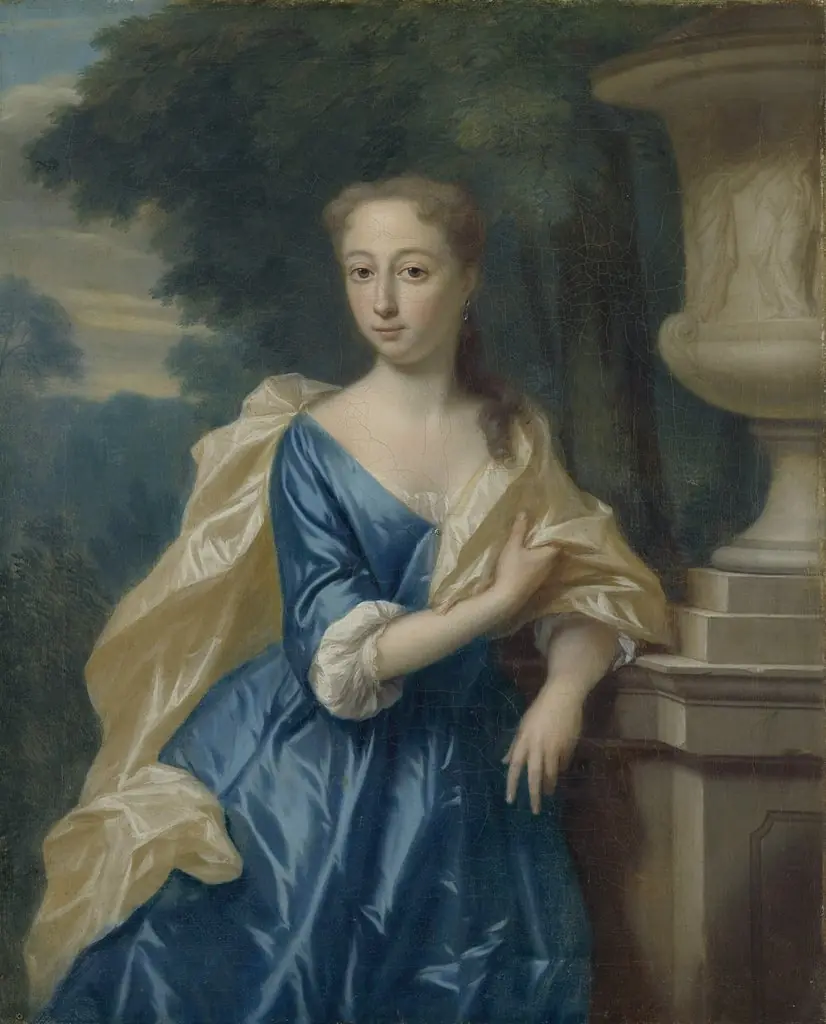 Portrait of Justina Johanna Ramskrammer, Wife of Isaac Parker
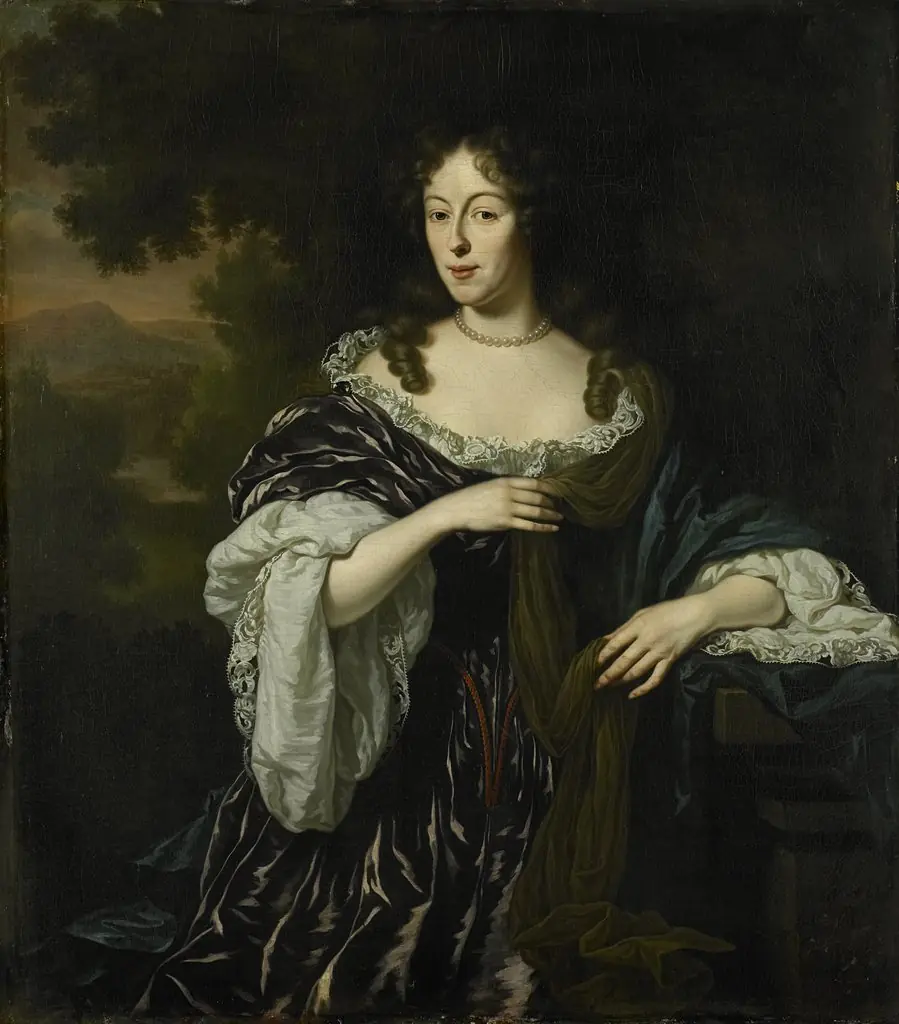 Portrait of Maria Schaep (1658-1725), wife of Hendrick Bicker
 Portrait of a Woman, according to tradition Marie Louise Elisabeth d'Orléans (1695-1719), Duchesse de Berry, as Flora
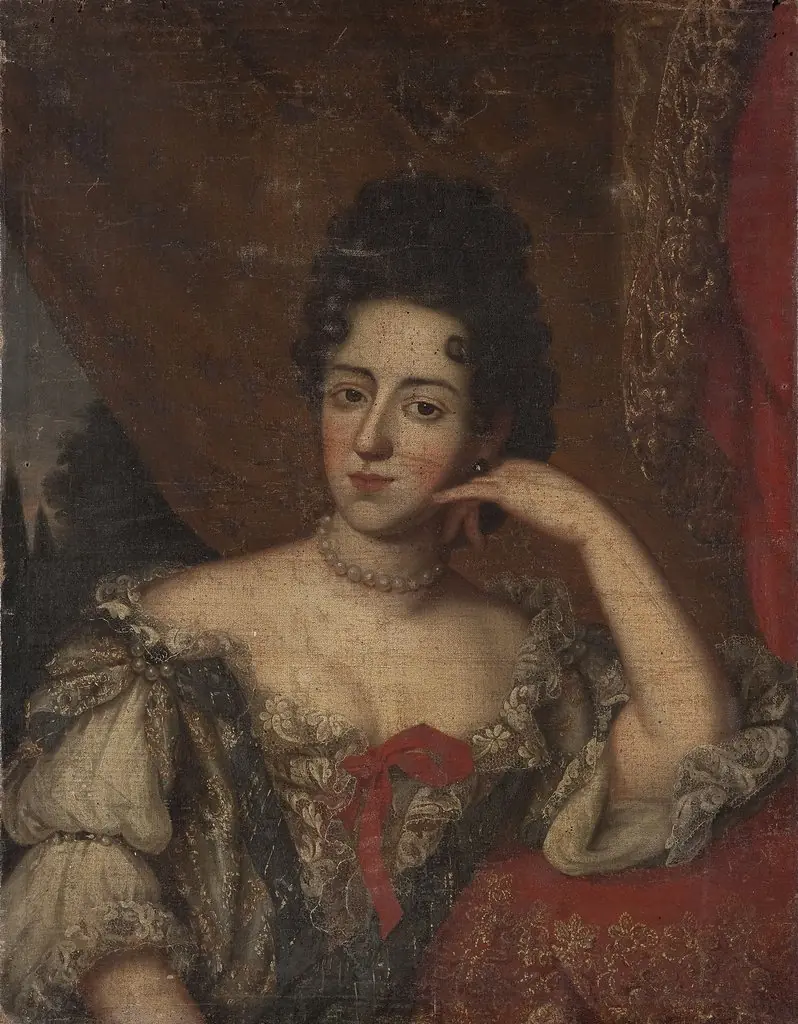 Portrait of Teresa Kunegunda Sobieska (1676–1730) /?/ aka Countes Hedwig of Neuburg
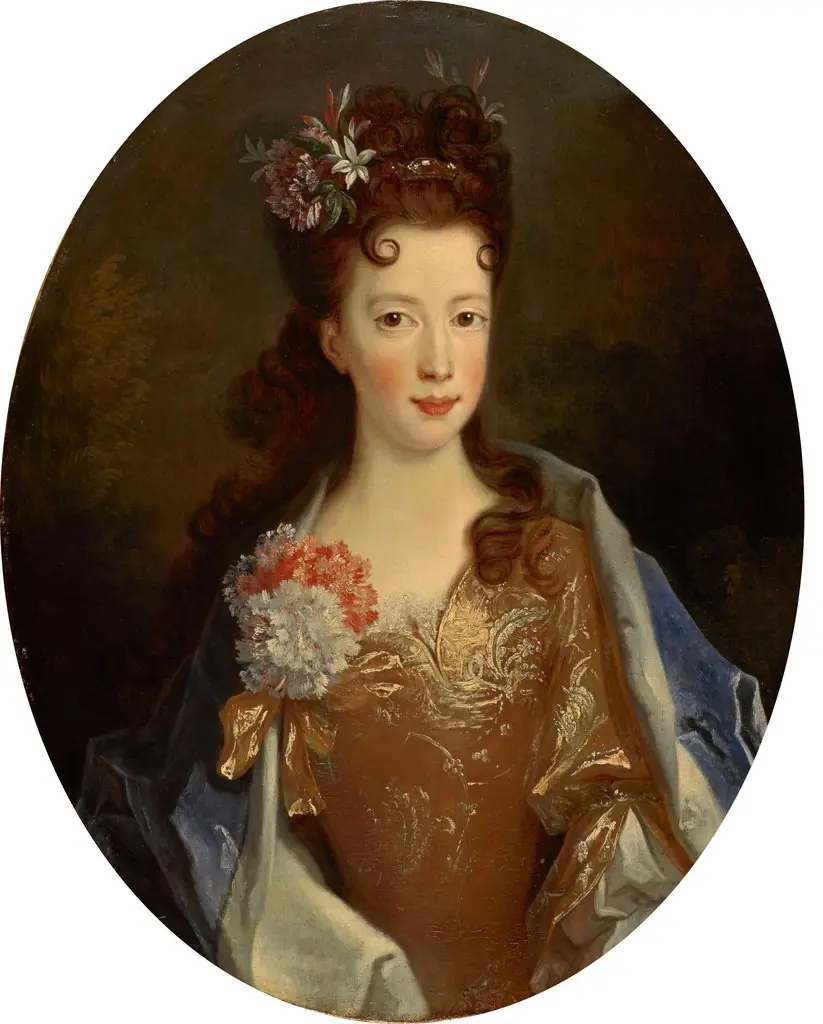 Princess Louisa Maria Teresa Stuart, 1692 - 1712. Daughter of James VII and II