Artwork
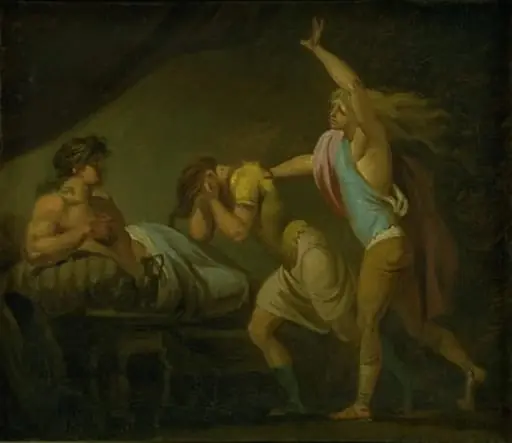
Richard III wakes up from his nightmare in his tent in Bosworth
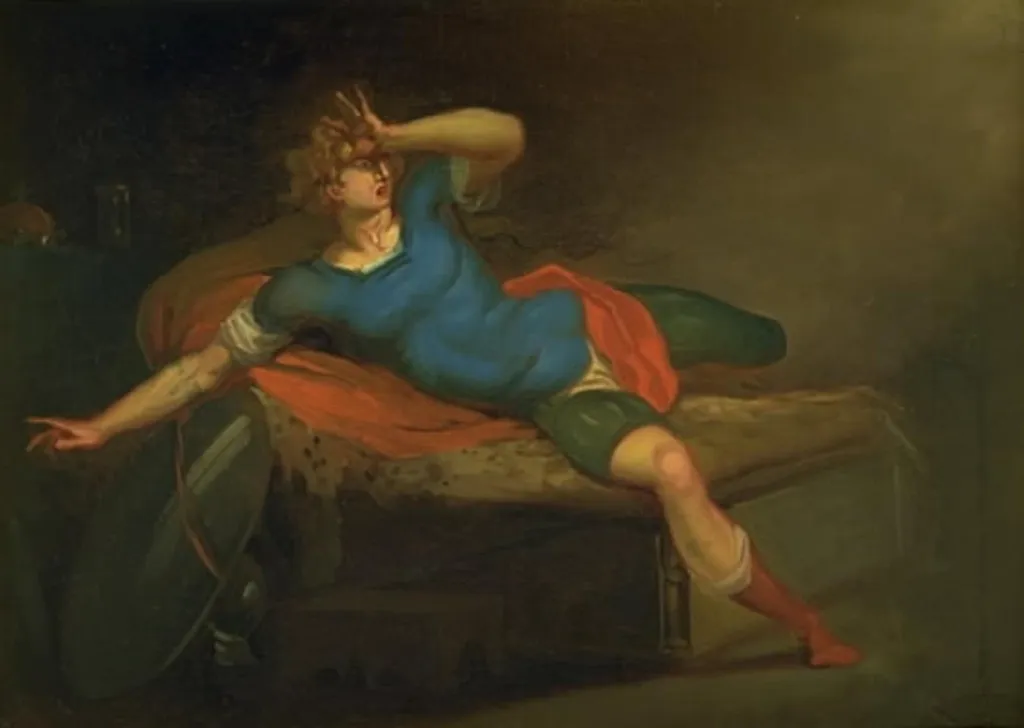
Richard III wakes up from his nightmare in his tent in Bosworth is an oil painting by the Neoclassicist artist Nicolai Abildgaard. It dates from 1793 and is held in the collection of the Statens Museum for Kunst.
About this work
Subject & Meaning
Symbolically, the work reflects Enlightenment-era interest in the inner life of historical figures, particularly the consequences of unchecked ambition.
The painting depicts the aftermath of the Battle of Bosworth, showing Richard III roused from a nightmare in his tent on the night before his death. The scene centers on the king’s anguished awakening, surrounded by the trappings of war and portents of defeat. Abildgaard emphasizes psychological torment rather than historical detail, using chiaroscuro to heighten the king’s tormented state.
Symbolically, the work reflects Enlightenment-era interest in the inner life of historical figures, particularly the consequences of unchecked ambition. The nightmare embodies Richard’s premonition of doom, aligning with the Romantic emphasis on fate and moral reckoning.
Technique & Style
Created in 1785, Nicolai Abildgaard's Richard III wakes up from his nightmare in his tent in Bosworth is a history painting executed in oil paint on a canvas support. The work measures 32 cm in height and 45 cm in width. As a history painting, the piece utilizes the traditional oil medium to render a dramatic narrative scene, a genre convention of the period.
The canvas support and oil application allow for the detailed depiction of the subject's psychological state within the tent setting.
History & Provenance
The work titled Richard III wakes up from his nightmare in his tent in Bosworth was painted by Nicolai Abildgaard in 1785 as an oil on canvas history painting. It entered the collection of the Statens Museum for Kunst, where it remains on display.
The painting was created as part of Abildgaard's exploration of dramatic historical subjects, reflecting the late 18th‑century fascination with Shakespearean themes. Its dimensions are 32 cm in height and 45 cm in width, matching the specifications recorded for the work.
The painting is held by the Statens Museum for Kunst in Denmark, according to the Wikidata record for the work. The same entry identifies it as part of the museum's collection, with no specific inventory or accession number provided in the available sources.
No exhibition history is documented in the materials supplied. The sources confirm only that the work was created in 1785 by Nicolai Abildgaard and that it depicts Richard III of England, without listing any past displays, loans, or curatorial presentations.
Overview
Created in 1793 by Danish painter Nicolai Abildgaard, this oil work belongs to the history genre of the late 18th‑century neoclassical tradition. It is presently part of the Statens Museum for Kunst collection and portrays a dramatic moment drawn from the final days of England’s King Richard III.
Context
The work reflects the neoclassical era’s fascination with dramatic historical narratives, especially those that allowed artists to explore moral and emotional extremes. By focusing on a moment of personal crisis, Abildgaard aligns with the period’s shift toward psychological depth in historical painting.
Artist & collection
Artist
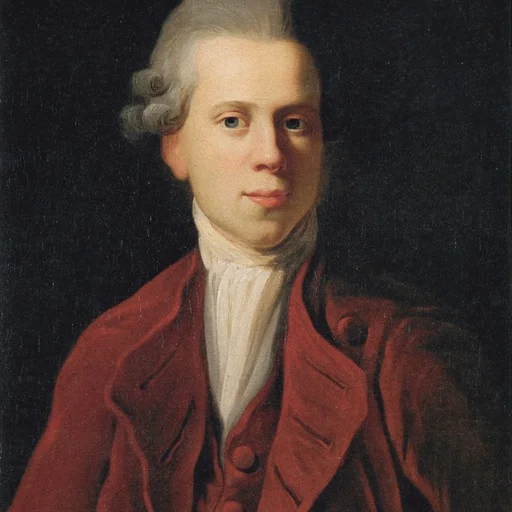
Nicolai Abraham Abildgaard (11 September 1743 – 4 June 1809) was a Danish neoclassical and royal history painter, sculptor, architect, and professor of painting, mythology, and anatomy at the New Royal Danish Academy of Art in Copenhagen…

 The Wounded Philoctetes
 Frederik II Builds Kronborg Castle at Elsinore
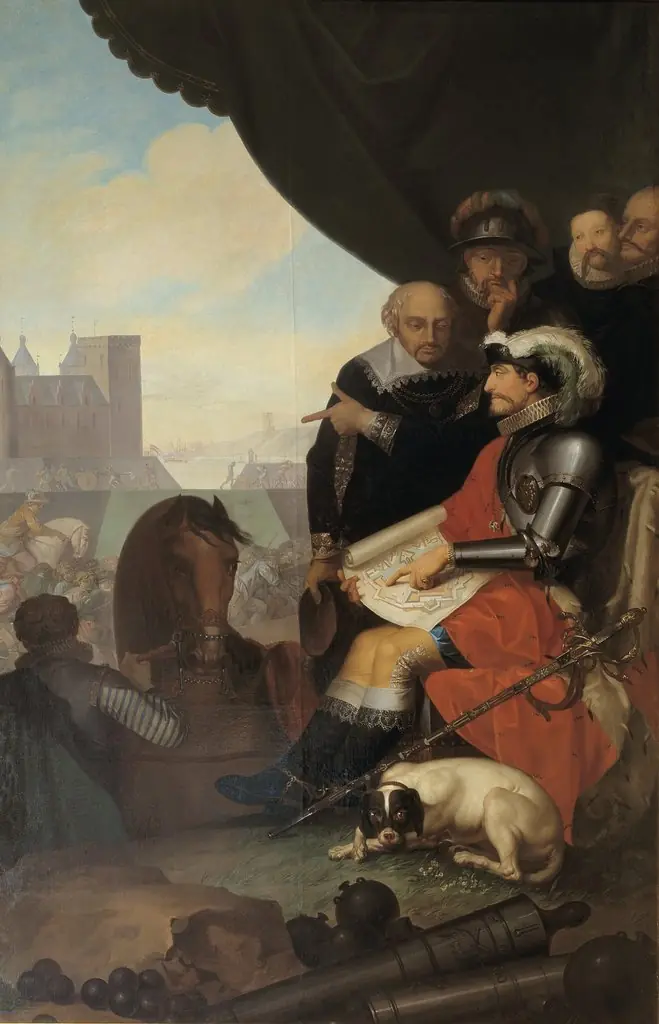
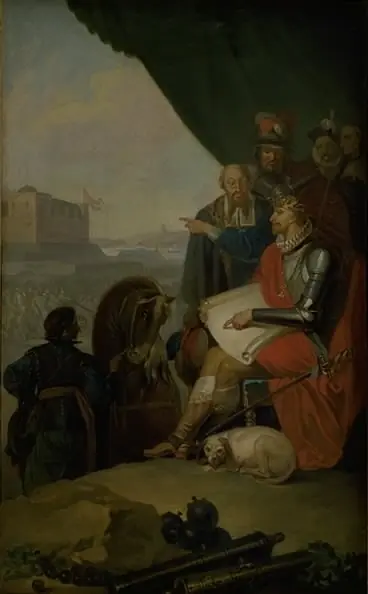 Frederik II Builds Kronborg Castle at Elsinore
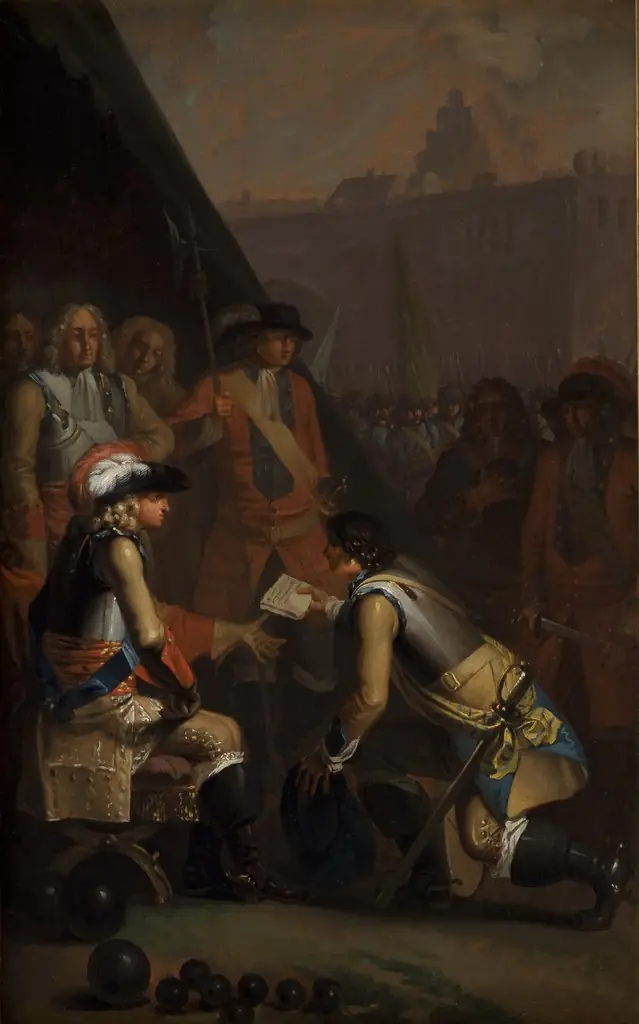 Magnus Stenbock Surrenders the Fortress of Tønningen to Frederik IV in 1714
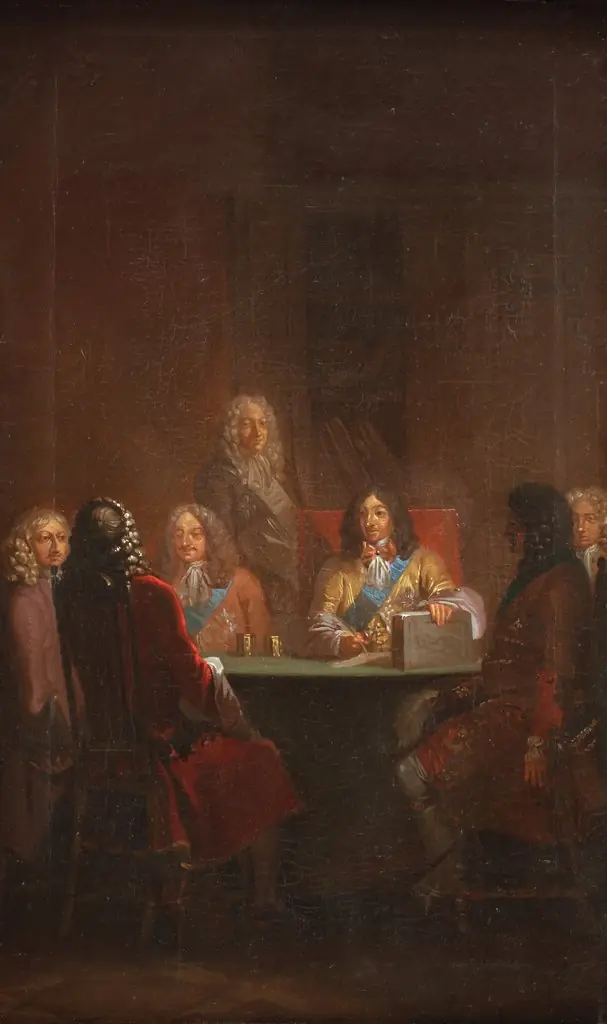 Christian V Presents Danish Law 1683
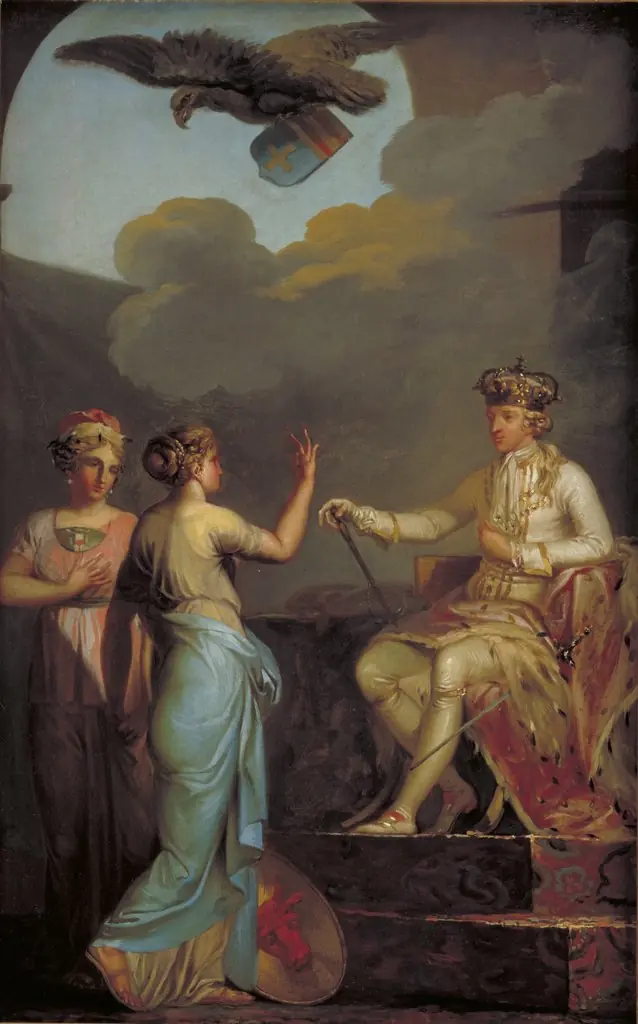 Christian VII Uniting the Ducal with the Royal Part of Holstein in 1767
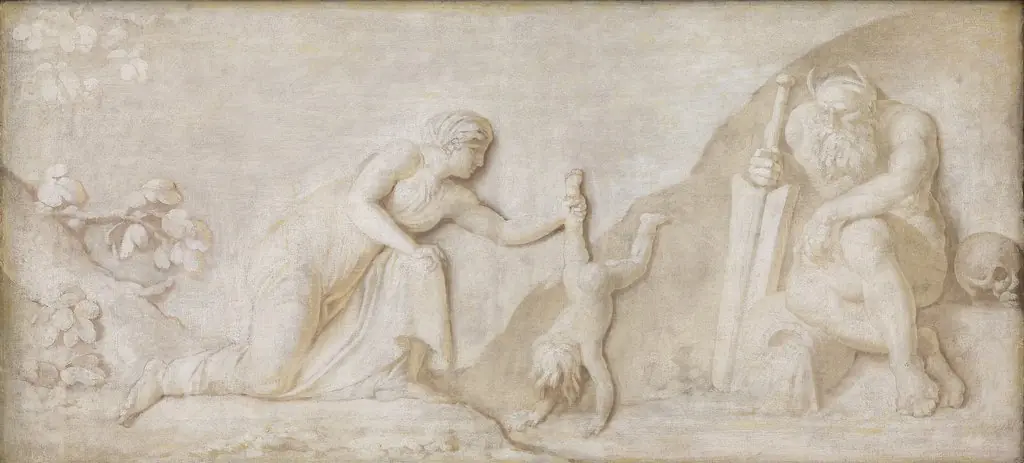 Thetis Immersing her Infant Son Achilles in the River Styx to Make him Invulnerable
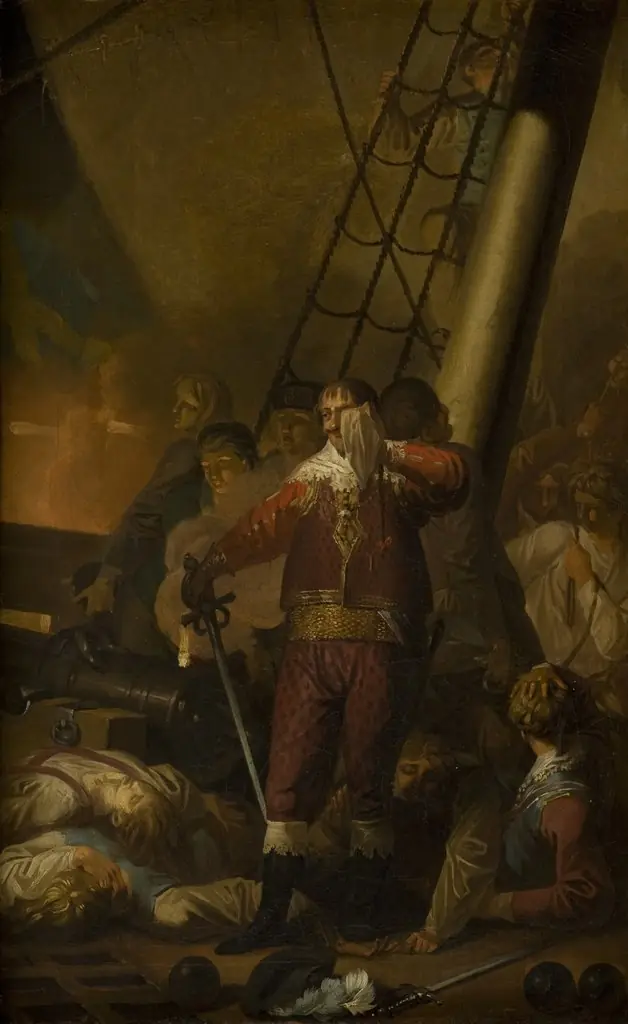 Christian IV Aboard his Flagship "The Trinity"