Artwork
The Rape of Europe
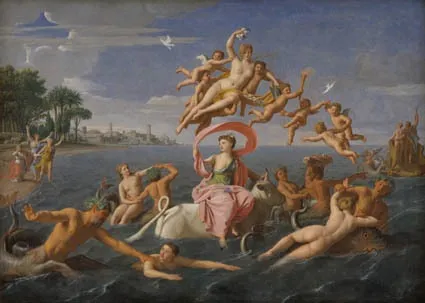
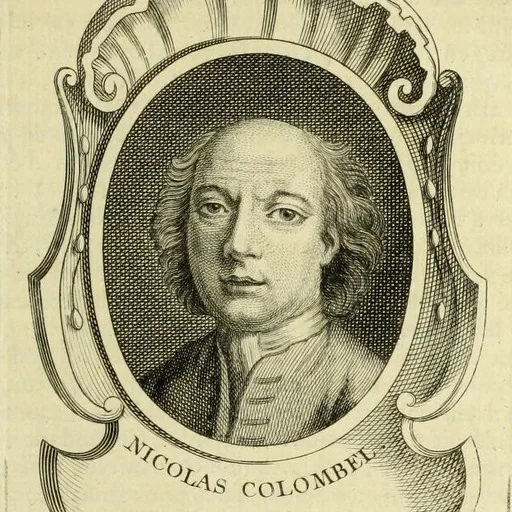
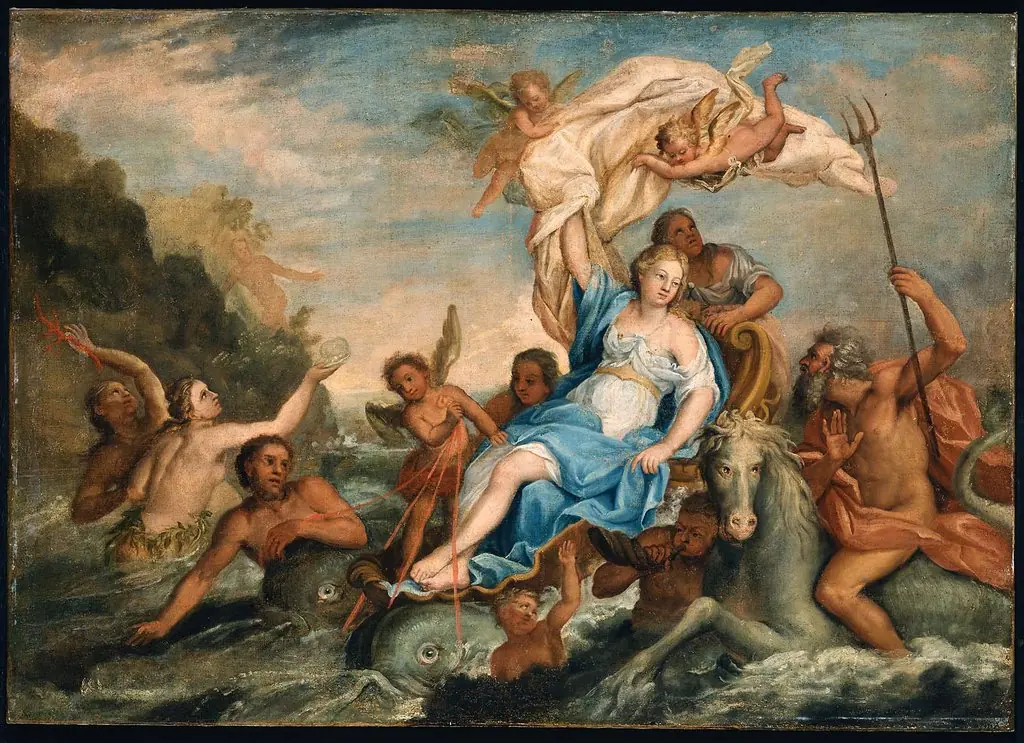
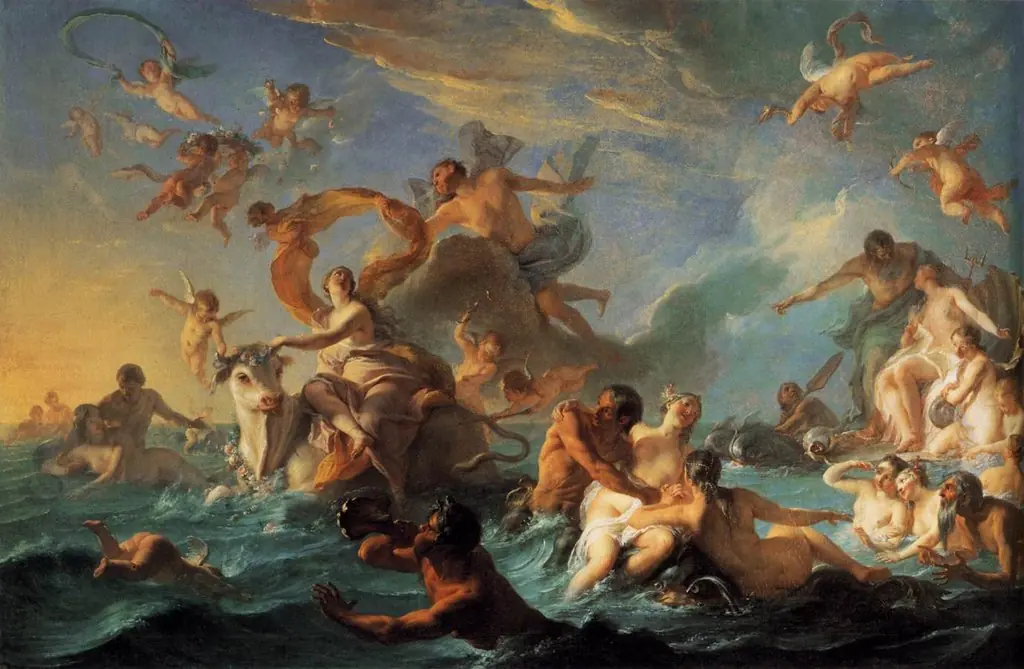
The Rape of Europe is an oil painting by the French Classical Baroque artist Nicolas Colombel. It dates from 1694 and is held in the collection of the Statens Museum for Kunst.
About this work
Subject & Meaning
The maritime setting amplifies the myth’s themes of transformation and journey, linking the abduction to broader symbolic readings of fate and metamorphosis.
The painting depicts the mythological abduction of Europa by Zeus, recounted in Ovid’s Metamorphoses. In the composition, Europa, daughter of the Phoenician king Agenor, appears in a moment of surprise as she is carried across the sea on the back of a white bull, a form assumed by Zeus to entice her. The bull’s motion across the waves underscores the divine transformation and the forcible displacement central to the narrative.
The scene conveys the tension between attraction and coercion inherent in the myth, with Europa’s pose and gaze often interpreted as a blend of curiosity and resistance. The maritime setting amplifies the myth’s themes of transformation and journey, linking the abduction to broader symbolic readings of fate and metamorphosis.
Technique & Style
The painting is executed in oil on canvas, consistent with seventeenth-century French academic practice. The handling shows a smooth, blended application typical of the period, with careful modeling of flesh and drapery to articulate form beneath the mythological narrative. Stylistically, the composition aligns with the restrained classicism favored at the Académie royale de peinture et de sculpture, where Colombel trained; figures are arranged in a shallow, stage-like space that directs attention to the central abduction scene.
The palette is subdued, relying on earth tones and muted highlights to evoke the antique while maintaining legibility. The brushwork remains largely invisible, reinforcing the idealized contours and balanced contrapposto of the figures.
History & Provenance
Nicolas Colombel created the oil-on-canvas painting The Rape of Europe in 1688. The work depicts the mythological abduction of Europa and is classified as a mythological painting. It is currently held in the collection of the Statens Museum for Kunst. The artwork measures 116.5 cm in width.
Nicolas Colombel's 1688 oil painting The Rape of Europe is held in the collection of the Statens Museum for Kunst. The work, which depicts the mythological abduction of Europa, is executed in oil on canvas and measures 116.5 cm in width. While the artwork's current location and basic creation details are documented, the provided records do not contain specific inventory accession numbers or a history of public exhibitions.
Context
Nicolas Colombel's 1688 painting The Rape of Europe, a mythological oil on canvas, reflects the enduring Baroque fascination with classical narratives and divine seduction. The work's depiction of Europa's abduction by Zeus, rendered with dynamic composition and emotive chiaroscuro, aligns with 17th-century French academic approaches to mythological subjects while demonstrating Colombel's adaptation of Italianate influences within the French academic tradition. Its inclusion in the Statens Museum for Kunst collection underscores its historical significance as a representative example of Northern European engagement with grand mythological themes during the late 17th century.
Scholarly discourse has positioned the painting as a key illustration of the period's synthesis of narrative drama and painterly technique, with recent studies emphasizing its role in bridging High Baroque intensity with emerging Neoclassical clarity in Northern European art.
The painting's placement within Colombel's oeuvre is contextualized by its thematic and formal connections to other mythological works, such as his renditions of Diana and Actaeon, which collectively reveal his sustained interest in exploring metamorphic myths through a lens that combines sensuality with anatomical precision.
Overview
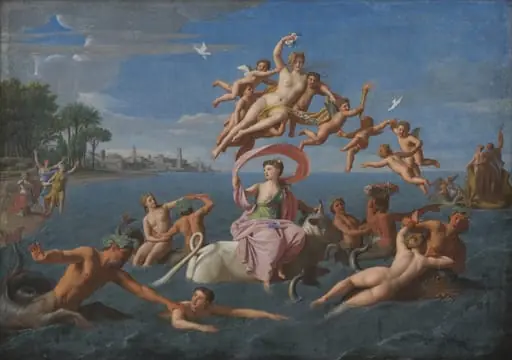
Nicolas Colombel’s oil painting The Rape of Europe, executed in 1694, portrays the mythic abduction of Europa. The work is part of the collection of Denmark’s Statens Museum for Kunst. It presents a tumultuous aquatic scene in which Europa sits serenely upon a bull, while surrounding figures scramble in water and air under a stormy sky.
Artist & collection