Artwork
Birth of Venus
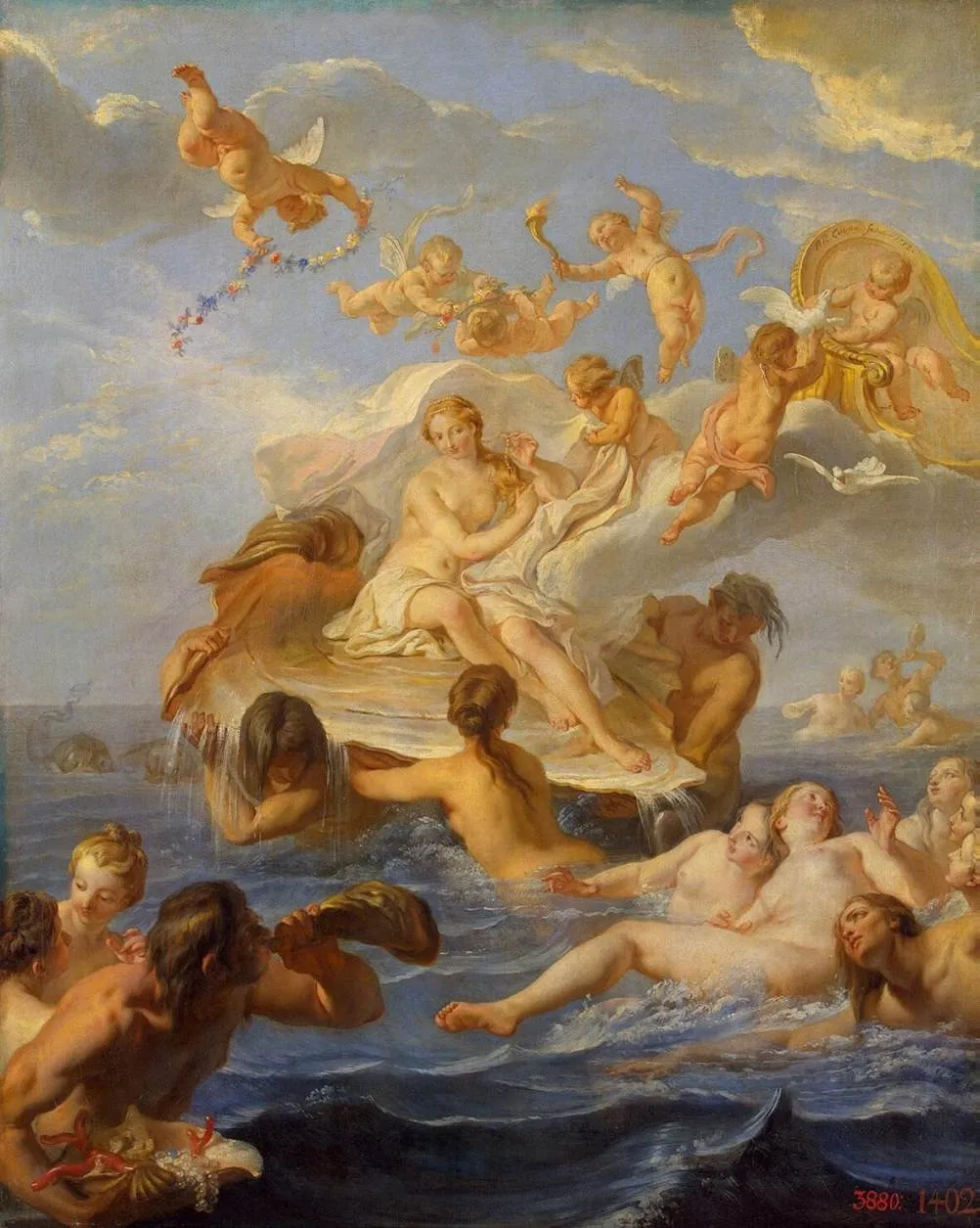
Birth of Venus is an oil painting by the Rococo painting artist Nöel-Nicolas Coypel. It dates from 1732 and is held in the collection of the Hermitage Museum. Nöel‑Nicolas Coypel’s 1732 oil on canvas presents a mythological scene centered on Venus emerging from the sea.
About this work
Overview
Measuring 81 by 65 centimeters, the work depicts the mythological birth of Venus and is held in the collection of the Hermitage Museum in Saint Petersburg.
The Birth of Venus is an oil on canvas painting by the French artist Nöel-Nicolas Coypel, dated 1732. Measuring 81 by 65 centimeters, the work depicts the mythological birth of Venus and is held in the collection of the Hermitage Museum in Saint Petersburg. As a mythological painting executed in the French Rococo style, it exemplifies the elevated status that history and mythology subjects occupied in the academic hierarchy of eighteenth-century French art, where such compositions were considered the supreme test of an artist's mastery, demanding comprehensive knowledge of philosophy, history, and literature.
Subject & Meaning
The painting illustrates the birth of Venus, specifically the Venus Anadyomene motif of the goddess rising from the sea. At the center, Venus sits upon a large shell, her body turned slightly toward the viewer and partially draped in white fabric. She is surrounded by numerous nude and partially draped figures in the surrounding waters, some supporting the shell while others swim or float nearby. Above, multiple winged putti fly through a cloudy sky; one carries a floral garland, another holds a flaming torch, and others attend to a golden chariot at the upper right, accompanied by two white doves. The iconography draws upon Greco-Roman mythology, which held particular significance for eighteenth-century European artists as a means of asserting cultural continuity with classical antiquity. The subject of Venus, associated with femininity and beauty, was especially popular among artists of this period.
Technique & Style
Coypel executed the work in oil on canvas, employing a smooth and blended brushwork technique. The palette consists of creamy flesh tones, pale blues, warm golds, and soft whites. Light falls evenly across the scene with gentle shadows modeling the figures. The artist applied a refined finish to the central figure of Venus, while handling the water and sky with a more fluid touch. The sky occupies the upper half of the composition in soft blues and warm grays, contrasting with the darker blue water with visible waves in the lower portion. A red inventory number appears in the lower right corner. These qualities align with the French Rococo movement, characterized by elegant compositions, delicate color harmonies, and graceful treatment of mythological subjects.
History & Provenance
The painting was created in France in 1732, during a period when history and mythology paintings were held as the highest subject in art, reserved for the greatest masters. The work entered the collection of the Hermitage Museum, where it remains today. Its accession details are not specified in the available sources. The painting has been reproduced and disseminated through digital platforms including the Web Gallery of Art and Wikimedia Commons, where it is documented as a public domain work.
Context
Nöel-Nicolas Coypel worked within the French academic tradition, where the ability to execute a successful history or mythology painting represented the culmination of an artist's training and the definitive proof of their capabilities. Such works required the integration of all other categories of artistic skill and demanded that the artist be well versed in philosophy, history, and literature to accurately convey their chosen narrative. The choice of Greco-Roman mythology reflected broader European cultural preoccupations with classical heritage, though modern scholarship has complicated notions of an unbroken lineage from ancient Greece to modern Europe, recognizing instead the complex cultural exchanges between Greece, the Middle East, and other regions. Coypel's treatment of the Venus birth theme places him within a long tradition of artists who returned to this subject, though his version has not attained the same level of popular recognition as some other depictions.
Legacy
While the Birth of Venus by Coypel does not command the same popular recognition as other treatments of the same subject by more famous artists, it remains a significant example of French Rococo mythological painting. The work's presence in the Hermitage Museum ensures its continued visibility to scholars and the public. Its digitization and distribution through platforms such as the Web Gallery of Art and Wikimedia Commons have facilitated broader access, allowing the painting to contribute to ongoing discussions of eighteenth-century French academic art, the Rococo style, and the persistent appeal of Venus as a subject across art history. The enduring fascination with Venus as a symbol of beauty and femininity suggests that, as one commentator noted, as long as these qualities remain muses, artists will continue to revisit her miraculous birth from the sea.
Artist & collection