Artwork
Rape of Europa
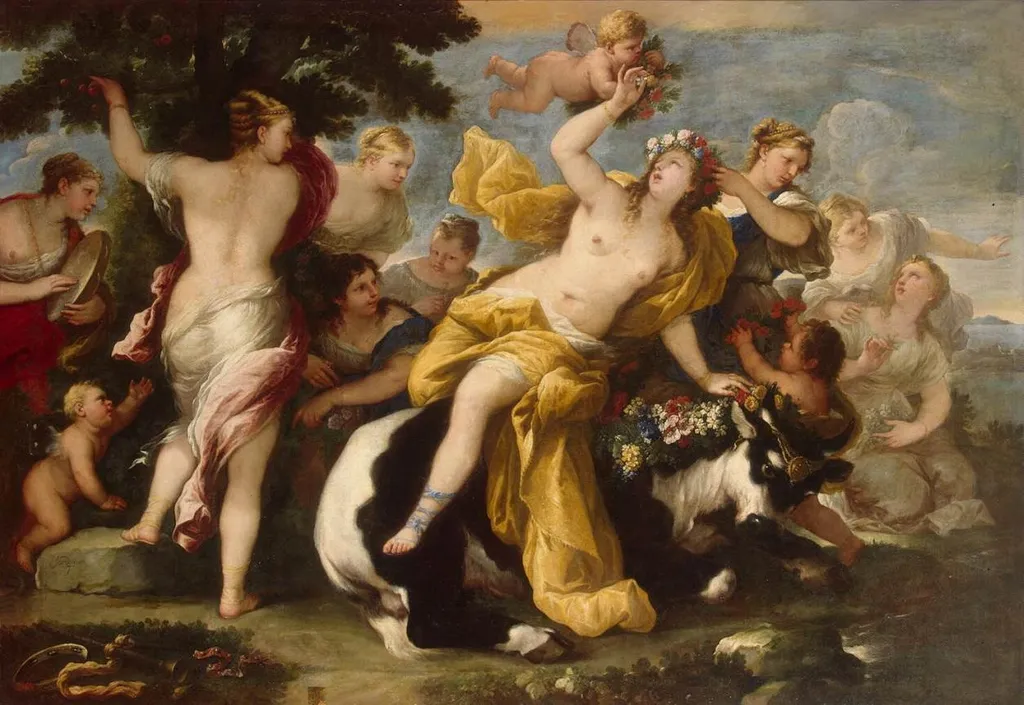
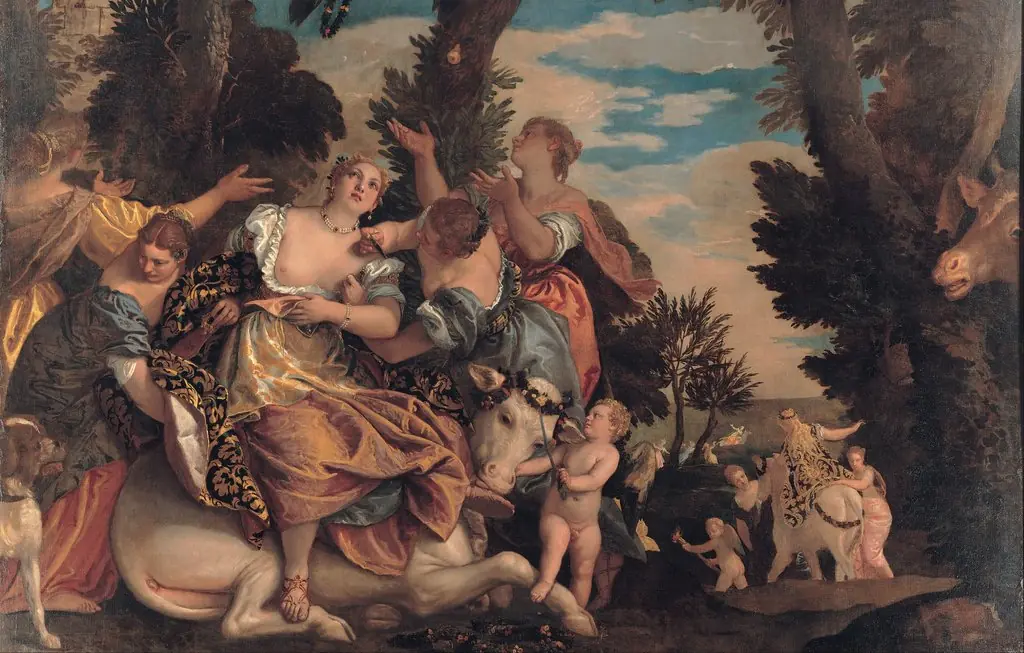
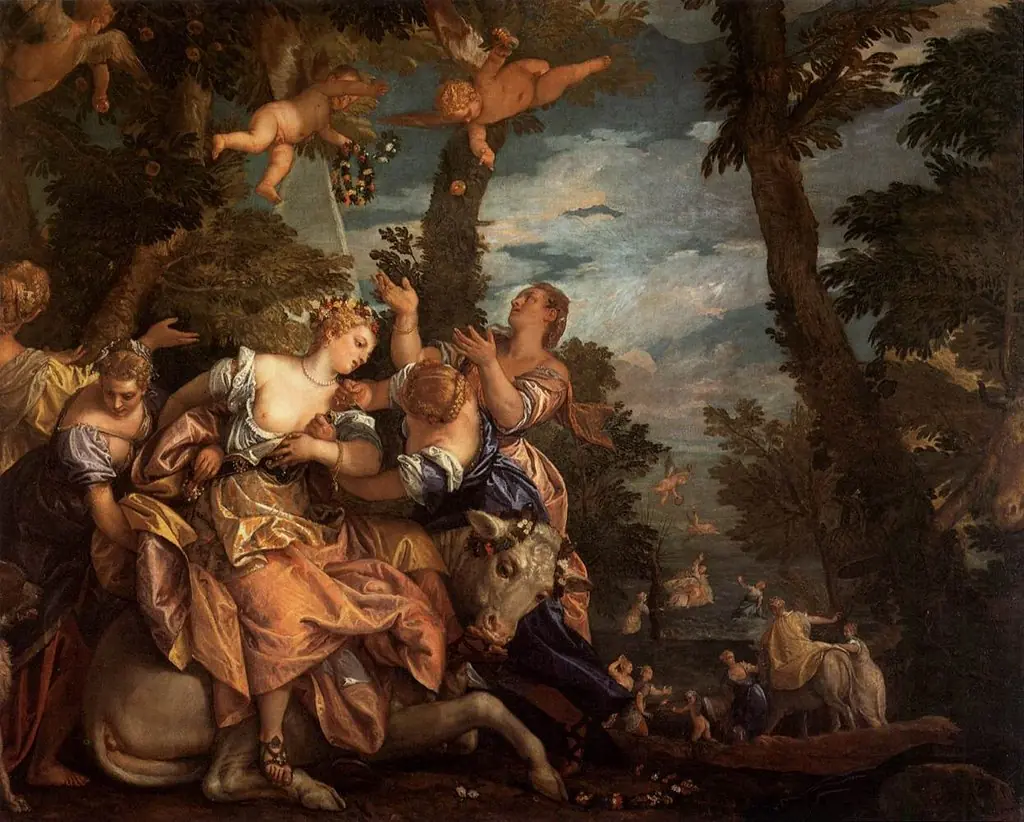
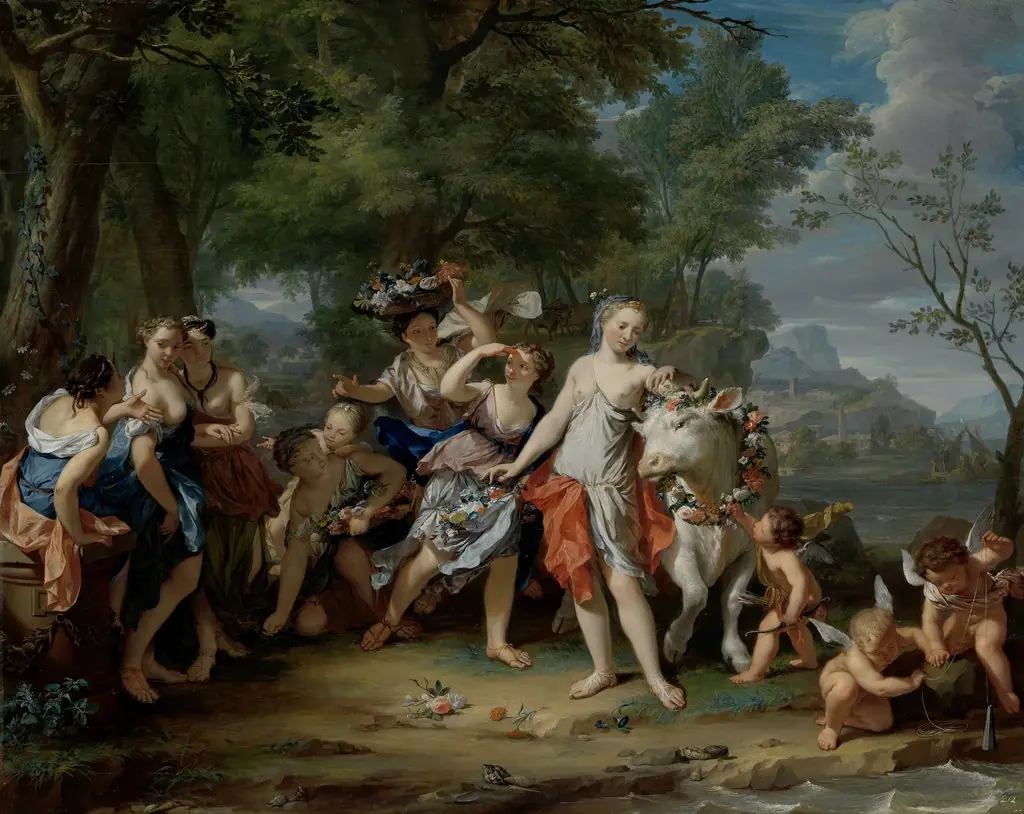
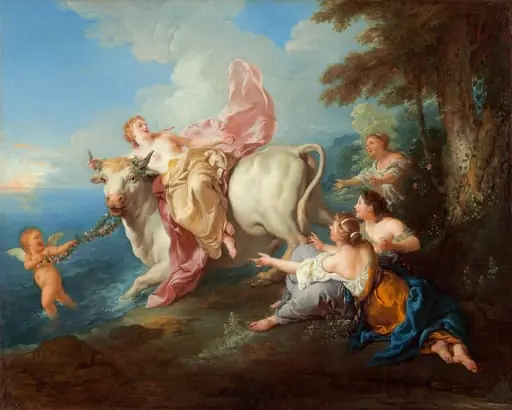
Rape of Europa is an oil painting by the Early Baroque Italian artist Luca Giordano. It dates from 1675 and is held in the collection of the Hermitage Museum.
About this work
Subject & Meaning
Giordano’s composition centers on Europa’s startled figure astride the white bull, her drapery billowing as she turns back toward her companions on the shore.
The painting depicts the classical myth in which Europa, a Phoenician princess, is carried off by Zeus transformed into a bull. Giordano’s composition centers on Europa’s startled figure astride the white bull, her drapery billowing as she turns back toward her companions on the shore. The bull’s calm demeanor contrasts with Europa’s alarm, underscoring the moment of abduction rather than overt violence.
The scene draws on Ovid’s Metamorphoses, where Jupiter assumes the bull’s form to approach Europa. The shimmering water and distant retinue evoke the seashore setting of the myth, while the bull’s placement in the water signals the transition from land to sea. The episode functions as an emblem of fateful encounter and transformation, aligning with Baroque tastes for dynamic narrative and psychological tension.
Technique & Style
Executed in 1675, this mythological work by Luca Giordano is an oil painting on canvas. The piece measures 206 cm in height and 300 cm in width, reflecting the large scale often associated with the artist's decorative commissions. Created in Italy, the composition depicts the abduction of Europa by a bull, a narrative drawn from classical mythology.
The use of oil paint on a woven support allowed for the fluid brushwork characteristic of Giordano's style during this period.
History & Provenance
Luca Giordano’s Rape of Europa was executed in 1675 in Italy as an oil painting on canvas measuring approximately 206 cm in height and 300 cm in width. The work depicts the mythological scene of Europa abducted by a bull and is classified as a mythological painting. According to the sources, the painting is presently held in the Hermitage Museum, where it forms part of the institution’s collection of mythological works.
No earlier provenance or commission details are provided in the available references, so the documented history of the artwork begins with its creation in 1675 and its current residence in the Hermitage.
The painting is housed in the Hermitage Museum in Saint Petersburg. Its accession number is not specified in the available documentation. The work has been part of the museum's collection since at least 1675, as indicated by its creation date.
It was included in the Hermitage's exhibition spaces, contributing to displays of mythological paintings. The artwork was featured in the museum's exhibition of European Baroque art, highlighting its significance within the collection's narrative of mythological subjects.
Overview
Luca Giordano’s 1675 oil canvas, titled Rape of Europa, presents the classical myth of Europa’s abduction by Zeus in the form of a bull. The composition centers on a woman astride the animal, surrounded by a dynamic crowd of figures and cherubic infants, set against a landscape of sea, trees, and clouds. The work is part of the State Hermitage Museum’s collection in St. Petersburg.
Artist & collection

Artist
Luca Giordano was an Italian late-Baroque painter and printmaker in etching. Giordano was one of the most celebrated artists of the Neapolitan Baroque, whose vast output included altarpieces, mythological paintings and…