Artwork
The Haringpakkers Tower in Amsterdam
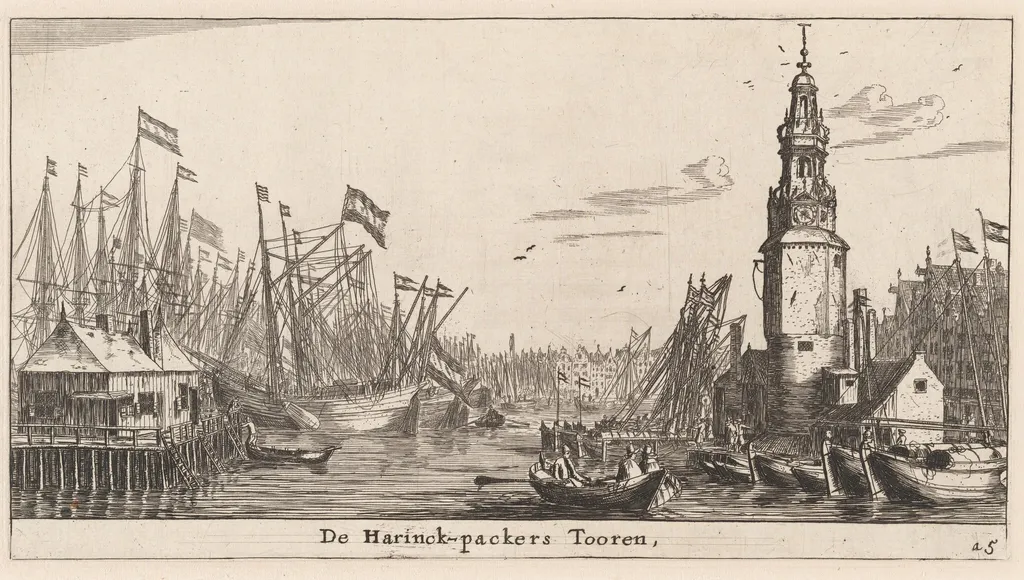
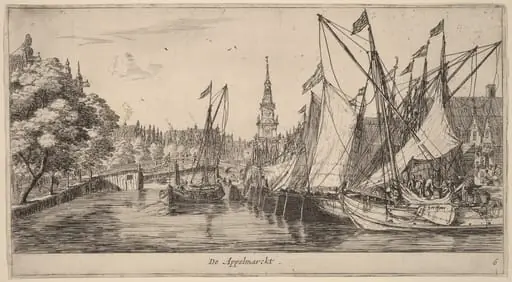
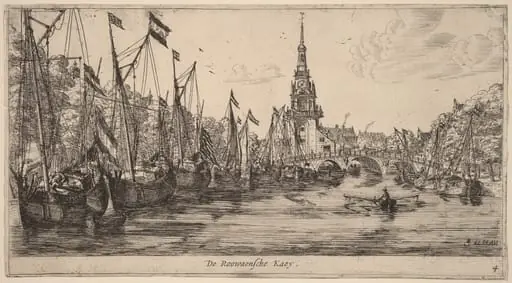
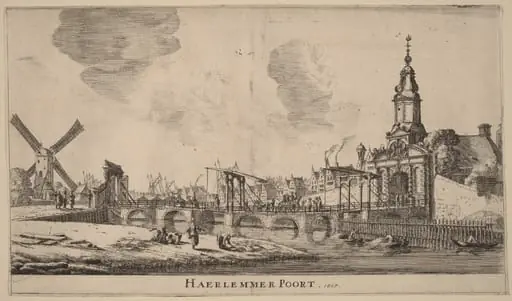
The Haringpakkers Tower in Amsterdam is an ink print by the Baroque artist Nooms, called Zeeman, Reinier. It dates from 1653 and is held in the collection of the National Gallery of Art. Reinier Nooms, known as Zeeman, created this etching with drypoint around 1653, capturing a specific Amsterdam landmark.
- Inscription
- Inscribed:across bottom of plate: De Harinck-packers Tooren, / a5
About this work
Overview
Reinier Nooms, known as Zeeman, created this etching with drypoint around 1653, capturing a specific Amsterdam landmark.
Reinier Nooms, known as Zeeman, created this etching with drypoint around 1653, capturing a specific Amsterdam landmark. Unlike his earlier maritime scenes, this work reflects his shift toward precise urban topography. The medium, ink on laid paper, allowed for fine, incised lines that convey both structure and atmosphere.
The image is not a broad view but a focused study of architecture and light, characteristic of his mature period.
Subject & Meaning
The Haringpakkers Tower, a former herring-packing facility, stands beside a canal, its function now obsolete. Nooms presents it not as a bustling workplace but as a quiet, enduring structure. The solitary streetlamp and deep shadows suggest evening stillness.
The tower, stripped of human activity, becomes a silent witness to the city’s commercial past, its form rendered with sober dignity.
Technique & Style
Nooms employed etching for controlled lines and drypoint for rich, fuzzy textures, especially in the brickwork and stone surfaces. The sharp contrast between the illuminated wall and the dark sky enhances depth. Drypoint’s burr creates subtle halos around edges, a technique Rembrandt also used.
The precision of the architecture contrasts with the organic grain of the paper, grounding the scene in tactile reality.
History & Provenance
The print was made during a period when Nooms increasingly documented Amsterdam’s urban fabric. Few impressions survive, and those that do are held in major European collections. Its production coincided with rising interest in topographical accuracy among Dutch printmakers, positioning it as a record of the city’s evolving skyline during its Golden Age.
Context
In 1650s Amsterdam, civic pride fueled the documentation of landmarks. The Haringpakkers Tower, once vital to the herring trade, symbolized the city’s maritime economy. Nooms’ focus on such structures, rather than grand palaces or churches, reflects a shift toward everyday architecture as worthy of artistic attention, aligning with broader trends in Dutch visual culture.
Legacy
Nooms’ detailed etchings influenced later topographical artists by demonstrating how precision could convey mood. His use of drypoint to render texture and light became a model for others exploring urban scenes. While not widely celebrated in his lifetime, his works are now valued for their quiet observation and technical discipline, offering insight into 17th-century Amsterdam beyond its celebrated vistas.
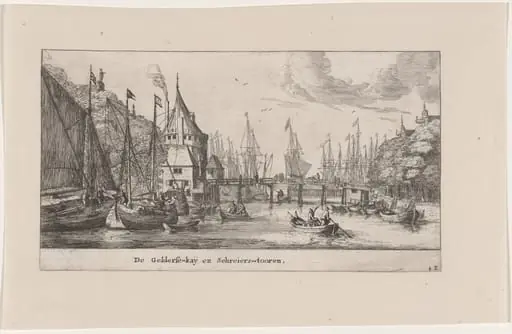
Artist & collection

Artist
Reinier Nooms (c. 1623 – 1664), also known as Zeeman or Seeman (Dutch for "sailor"), was a Dutch maritime painter known for his highly detailed paintings and etchings of ships. From the 1650s, Nooms started producing…