Artwork
Untitled
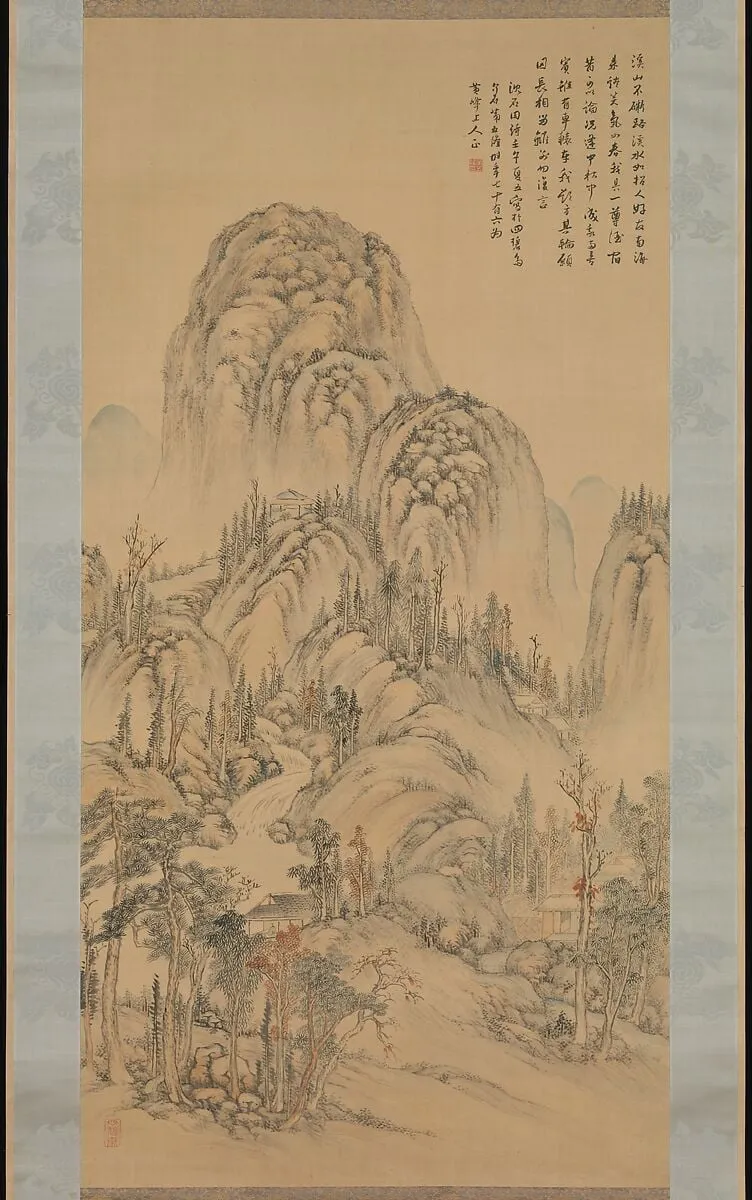
Untitled is an ink painting by the Nihonga artist Noro Kaiseki. It dates from 1822 and is held in the collection of the Metropolitan Museum of Art.
About this work
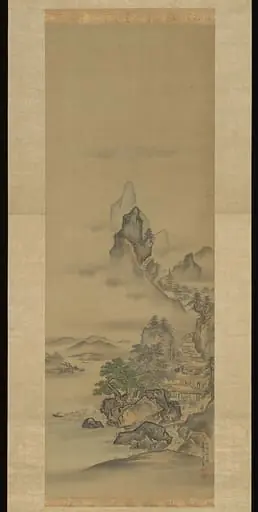
A jagged mountain rises from a sea of mist, its rock almost floating in ink strokes so light they nearly vanish. A tiny temple clings to the slope, its red roof the one splash of color. Noro Kaiseki painted this in 1822, letting the empty space do the work: the mountain feels vast and quiet, the temple just a whisper of human life.
Subject & Meaning
The work is classified as a landscape painting that portrays a mountain, reflecting the traditional Japanese genre of landscape art.
The work is classified as a landscape painting that portrays a mountain, reflecting the traditional Japanese genre of landscape art. Both the internal catalog and the Wikidata entry identify the subject as a mountain within a broader landscape context, situating the piece within the artist’s exploration of natural scenery and the cultural emphasis on mountains as symbolic elements in East Asian visual culture. The depiction aligns with the genre’s conventions, emphasizing harmony between humanity and the natural world.
Technique & Style
The work is executed as a hanging scroll, a traditional Japanese support, using ink and polychrome pigments applied to silk. The medium combines drawing with subtle washes of color to render a mountainous landscape, a genre typical of early‑19th‑century Japanese painting. The scroll’s format suggests it was intended for vertical display, allowing a gradual reveal of the composition.
While specific handling practices are not recorded, the use of silk indicates a delicate support that requires careful mounting and climate control. The painting’s formal qualities include a restrained palette, layered brushwork, and an emphasis on atmospheric perspective, reflecting the aesthetic of landscape painting from 1822 Japan.
History & Provenance
The 1822 hanging scroll titled Untitled by Noro Kaiseki is held in the collection of the Metropolitan Museum of Art in New York. The institution serves as the current location for this ink and color painting on silk, which depicts a mountainous landscape. While the work is confirmed as part of the museum's holdings, the provided records do not specify a particular accession or inventory number, nor do they list any past or present exhibitions where the piece has been displayed.
Context
Noro Kaiseki’s Untitled (1822) exemplifies the Japanese landscape scroll tradition of the early nineteenth century, employing ink and color on silk to render a stylized mountain scene. The work’s classification as a hanging scroll and its inclusion in the Metropolitan Museum of Art’s collection underscore its significance within the corpus of landscape paintings produced in Japan during the Edo‑Meiji transition. As a representative example of the genre, it reflects contemporary artistic conventions that emphasized atmospheric perspective and naturalistic detail, positioning Kaiseki’s output within broader scholarly discussions of landscape painting’s evolution in East Asian art history.
Overview
Noro Kaiseki's Untitled is a hanging scroll created in 1822, executed with ink and color on silk. This painting presents a solitary mountain scene, characteristic of traditional East Asian landscape art. The composition emphasizes natural grandeur through its depiction of a towering peak enveloped by atmospheric elements, offering a contemplative view of the natural world.
Artist & collection


 狩野探水守常筆 蓬莱山・瀟湘八景図|Mount Penglai with Eight Views of Xiao and Xiang
 Untitled
 Untitled
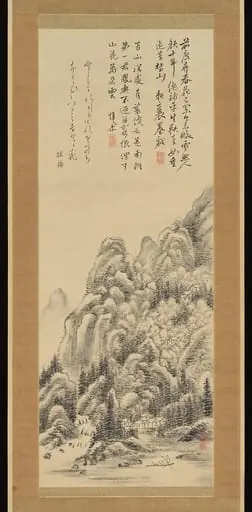 Untitled
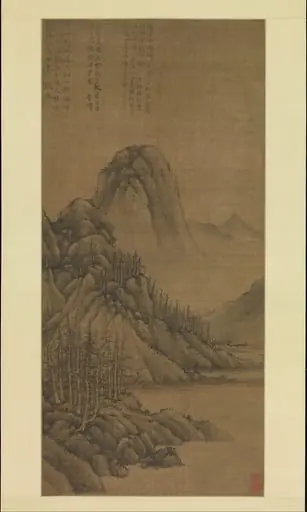 元 張遜 石上松花圖 軸|Rocky Landscape with Pines
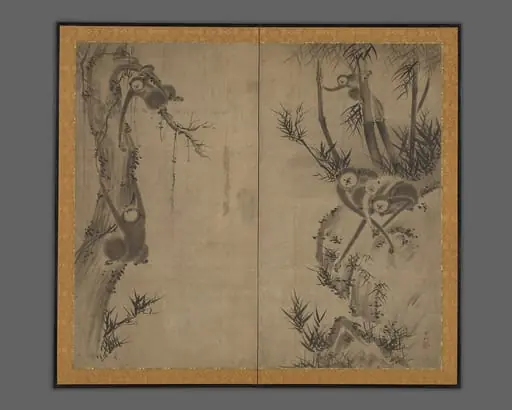 Untitled
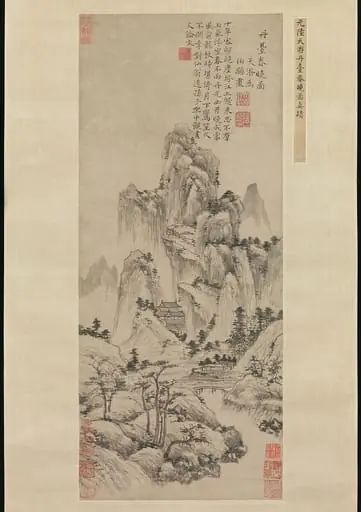 元 陸廣 丹臺春曉圖 軸|Spring Dawn Over the Elixir Terrace
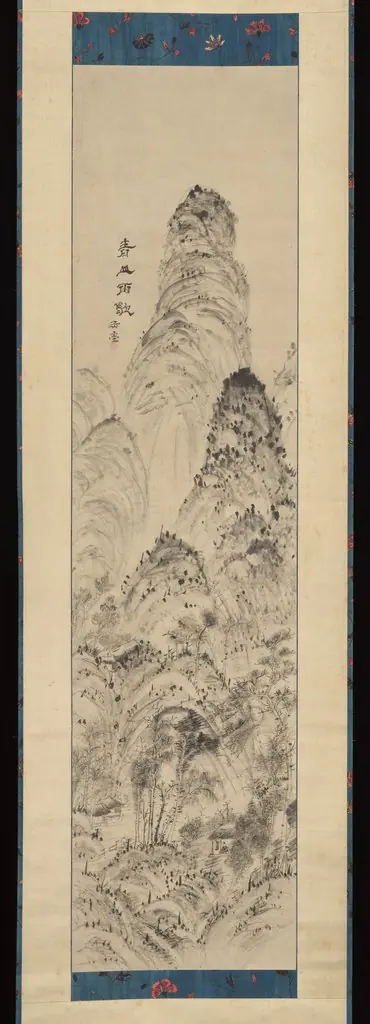 Green Mountains as the Rain Ceases
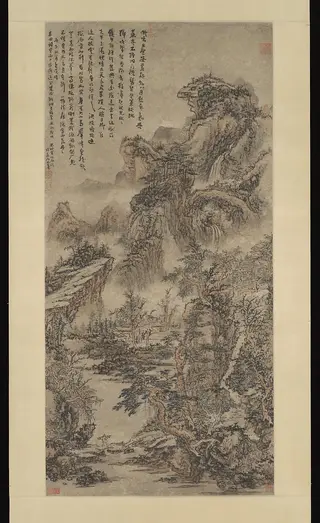 清 倣髡殘 蒸嵐昏巒圖 軸|Wooded Mountains at Dusk
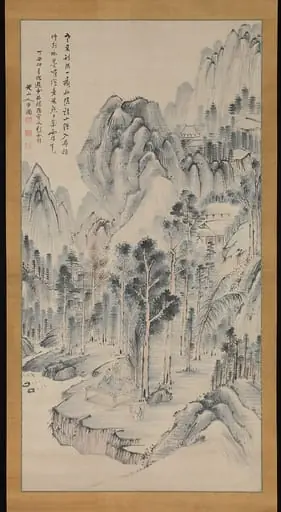 Untitled
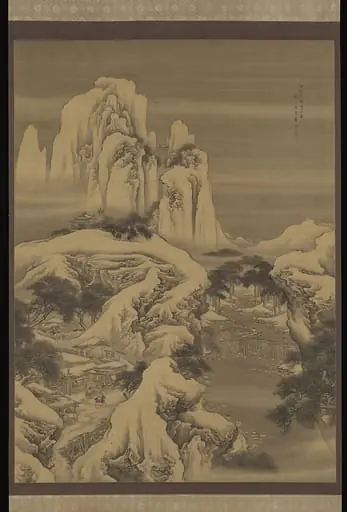 清 袁耀 雪棧行旅圖 軸|Inn and Travelers in Snowy Mountains
- 狩野探水守常筆 蓬莱山・瀟湘八景図|Mount Penglai with Eight Views of Xiao and Xiang