Artwork
元 陸廣 丹臺春曉圖 軸|Spring Dawn Over the Elixir Terrace
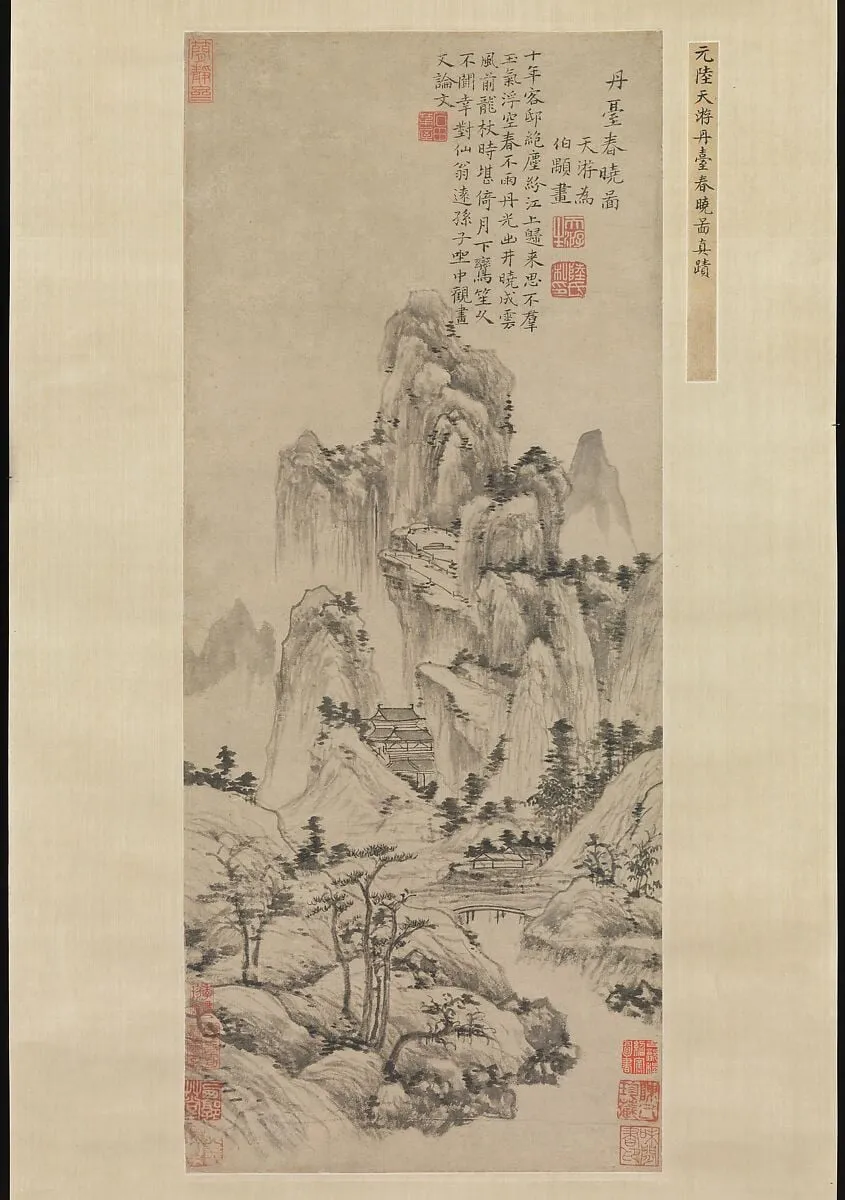
元 陸廣 丹臺春曉圖 軸|Spring Dawn Over the Elixir Terrace is an ink painting by the Ming dynasty painting artist Lu Guang. It dates from 1369 and is held in the collection of the Metropolitan Museum of Art.
About this work
A tall ink scroll of jagged mountains and misty valleys, with a tiny temple tucked near the top. One of the earliest surviving works by Lu Guang, painted in 1369 just after the Mongols fell, its brushwork is so light you can almost feel the morning chill. There is no color, yet the rocks look wet with dew.
Subject & Meaning
The painting is part of the Metropolitan Museum of Art’s collection and is classified as a landscape genre work.
The hanging scroll Spring Dawn Over the Elixir Terrace (1369) by Lu Guang portrays a solitary mountain rising above a mist‑filled valley, the eponymous Elixir Terrace rendered as a tranquil architectural platform amidst the peaks. In Chinese landscape tradition the mountain signifies permanence and the path to Daoist transcendence, while the mist and sunrise allude to the alchemical quest for the immortal elixir. The work’s iconography thus conveys a symbolic pursuit of spiritual immortality and harmony with nature, reflecting the cultural context of Yuan‑era literati painting.
The painting is part of the Metropolitan Museum of Art’s collection and is classified as a landscape genre work.
History & Provenance
The hanging scroll Spring Dawn Over the Elixir Terrace by the Yuan dynasty artist Lu Guang is held in the collection of the Metropolitan Museum of Art in New York. Created in 1369, this ink-on-paper landscape painting depicts mountains and is classified as a landscape work. While the provided sources confirm the institution housing the artwork and its creation date, they do not supply specific inventory or accession numbers, nor do they detail a history of exhibitions for this piece.
Consequently, the work's provenance is limited to its current location at the Metropolitan Museum of Art based on the available documentation.
Overview
Lu Guang's Spring Dawn Over the Elixir Terrace, created around 1369, is an ink on paper hanging scroll. This painting presents a serene mountainous landscape, characteristic of the artist's early surviving output. It captures a specific moment in nature, rendered with a subtle hand.
Technique & Style
Executed solely with ink on paper, the work demonstrates a refined command of monochrome painting. Lu Guang employed delicate brushstrokes to define the forms, creating an impression of morning chill and moisture. The absence of color allows the varying tones of ink to convey texture and light, making the rocks appear as if glistening with dew.
Legacy
This painting exemplifies a quiet, contemplative approach to landscape that proved influential for subsequent generations of Chinese artists. Its subtle rendering of natural forms and atmospheric effects contributed to the evolving tradition of ink landscape painting, providing a foundational example for artists who sought to express profound ideas through the depiction of nature.
Artist & collection


 明 沈周 夜雨泊舟圖 軸|Anchorage on a Rainy Night
 清 王原祁 倣吳鎮山水圖 軸|Landscape after Wu Zhen
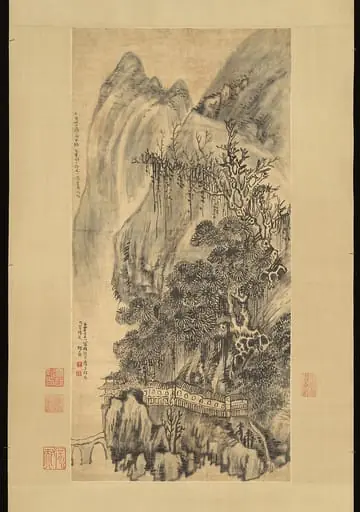 明/清 王鐸 山水圖 軸|Landscape
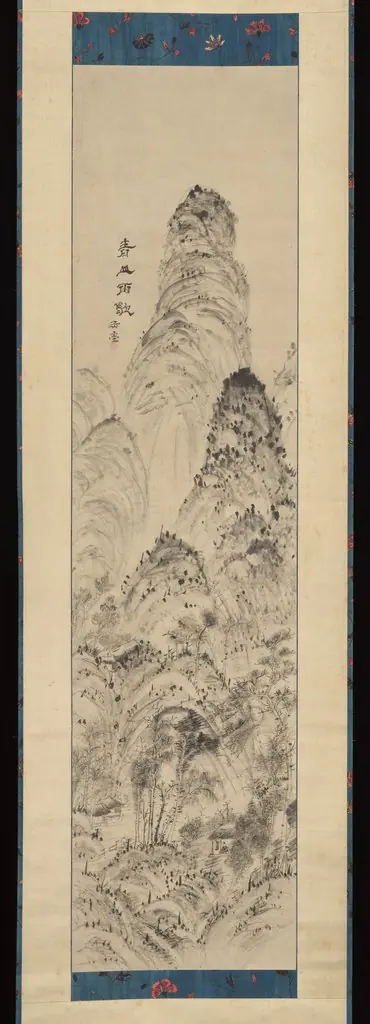 Green Mountains as the Rain Ceases
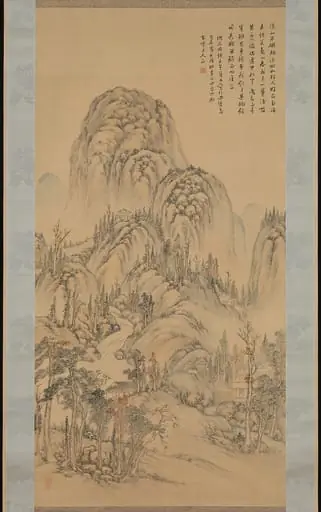 Untitled
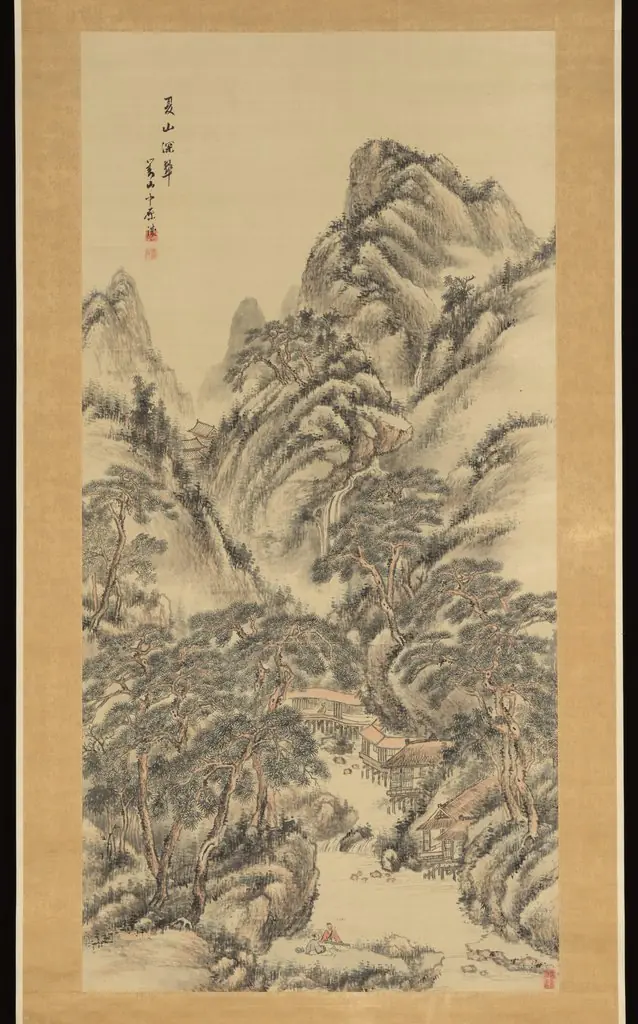 “The Deep Green of Summer Mountains”
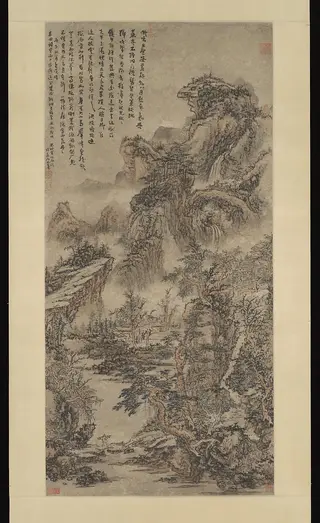 清 倣髡殘 蒸嵐昏巒圖 軸|Wooded Mountains at Dusk
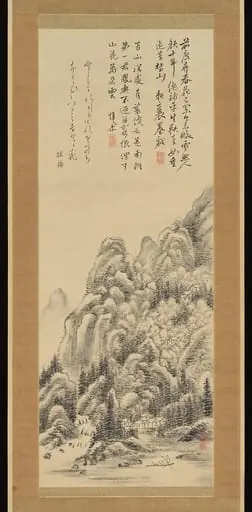 Untitled
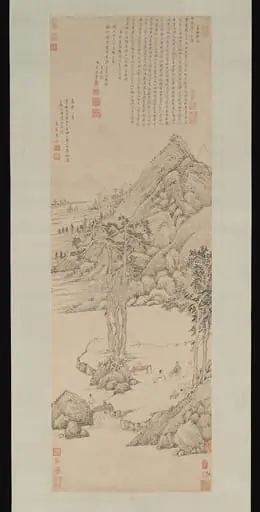 明 文嘉 為項元汴作山水圖 軸|Landscape dedicated to Xiang Yuanbian
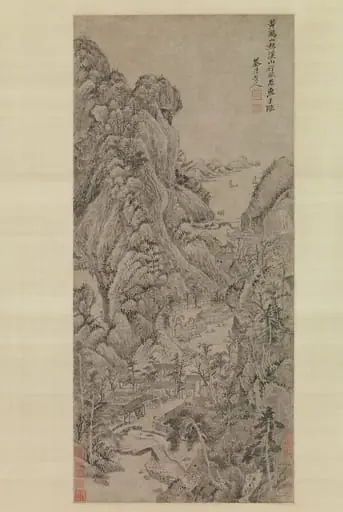 清 吳歷 倣王蒙溪山行旅圖 軸|Travelers among Streams and Mountains