Artwork
Untitled
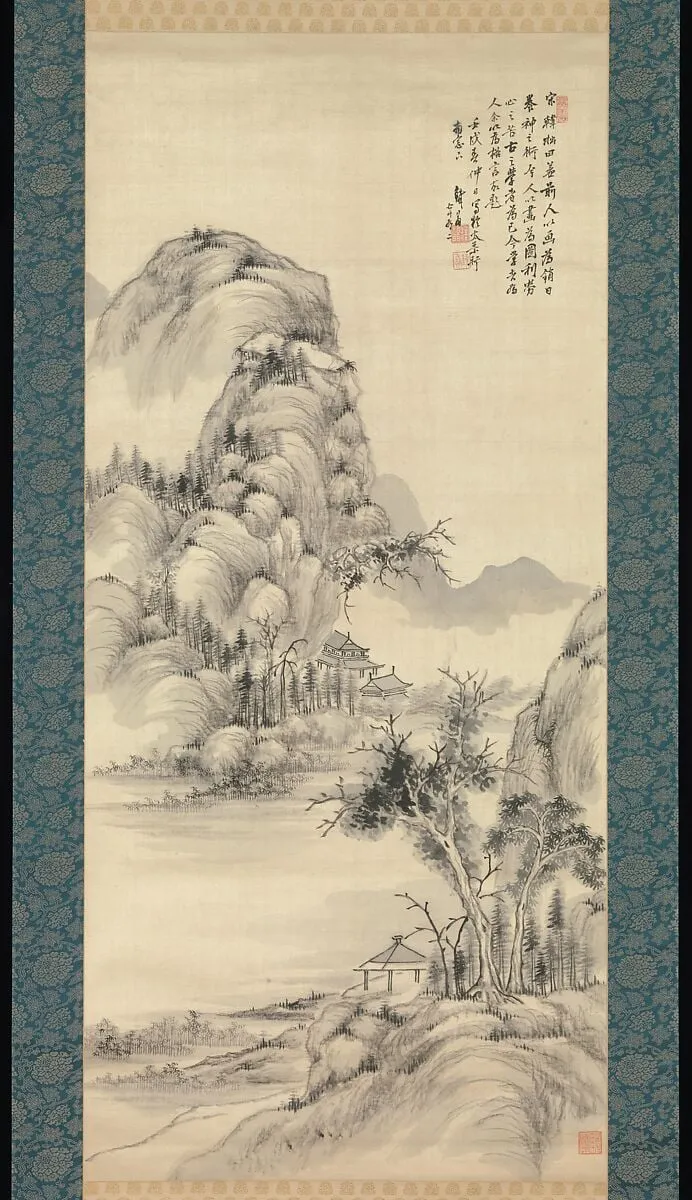
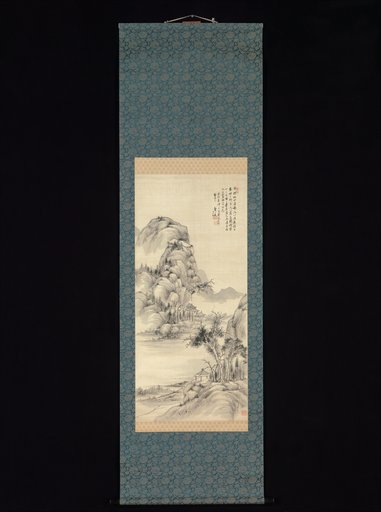
Untitled is an ink painting by the Impressionist artist Hidaka Tetsuo. It dates from 1862 and is held in the collection of the Metropolitan Museum of Art.
About this work
Technique & Style
The satin support provides a smooth, lustrous surface that affects the absorption and sheen of the ink, influencing the overall visual effect.
Untitled is executed in ink on satin, mounted as a hanging scroll. The work measures 115.5 cm in height and 52.4 cm in width. As a landscape painting rendered in ink, it belongs to the East Asian ink painting tradition, in which tonal gradations of black ink and calligraphic brushwork are used to depict natural scenery.
The satin support provides a smooth, lustrous surface that affects the absorption and sheen of the ink, influencing the overall visual effect.
History & Provenance
Untitled by Hidaka Tetsuo is dated 1862, a date established as its inception year and carried through the work's cataloguing. Executed in ink on satin as a hanging scroll, it was produced in Japan during the artist's career.
The painting is held in the collection of the Metropolitan Museum of Art, where it is recorded as part of the institution's holdings. No further details of an earlier ownership chain, commission, or intermediate provenance are documented in the available sources.
The hanging scroll is held in the collection of the Metropolitan Museum of Art, as recorded in its Wikidata entry. No specific inventory or accession number is provided in the available sources.
No exhibition history is documented in the materials supplied.
Overview
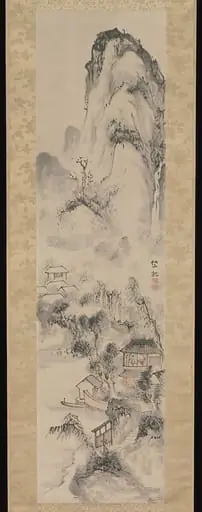
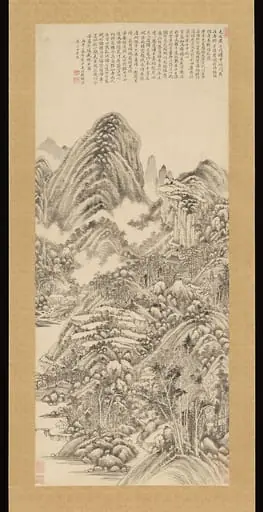
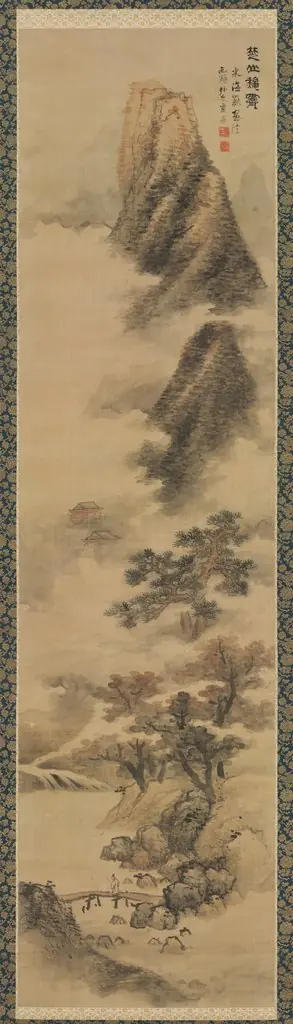
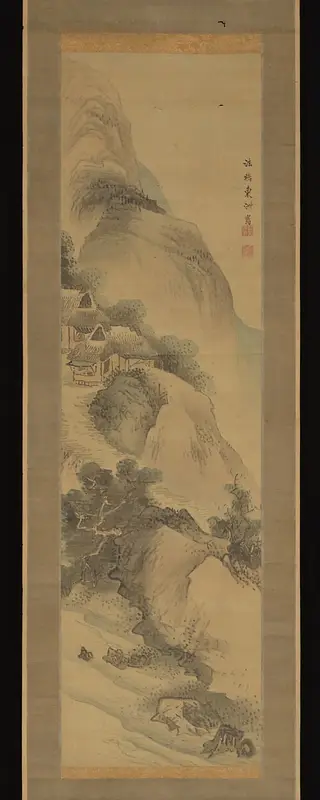
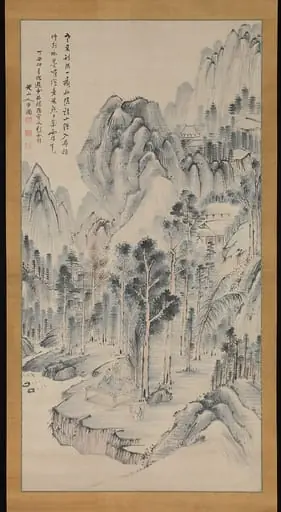
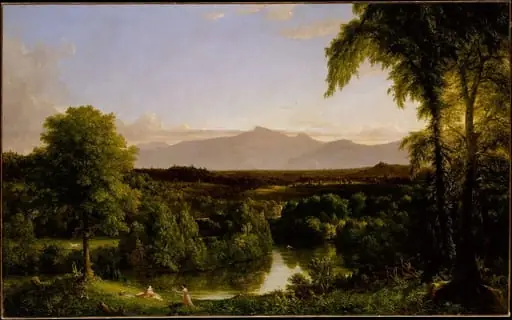
Hidaka Tetsuo's "Untitled," created in 1862, is a hanging scroll rendered in ink on satin. This painting portrays a tranquil landscape featuring towering mountains, lush trees, and a calm body of water. The composition includes architectural elements, with a temple nestled on a mountainside and a smaller edifice situated by the water's edge, contributing to the scene's serene atmosphere.
Subject & Meaning
The artwork presents a peaceful natural vista, characterized by its expansive mountains and verdant foliage. A prominent temple structure is visible on the slopes, while a smaller building rests near the water, suggesting human presence within the vast natural setting. The overall impression is one of harmony and contemplation, inviting viewers to engage with the serene environment depicted.
Context
Created in 1862, this work by Hidaka Tetsuo reflects an artistic approach that emphasizes faithful representation. The detailed rendering of natural forms and the balanced composition suggest an affinity with the Realism movement, which sought to depict subjects accurately and without idealization. This style often focused on observable reality, a characteristic evident in the painting's depiction of the landscape.
Artist & collection