Artwork
Negro Boys on the Quayside
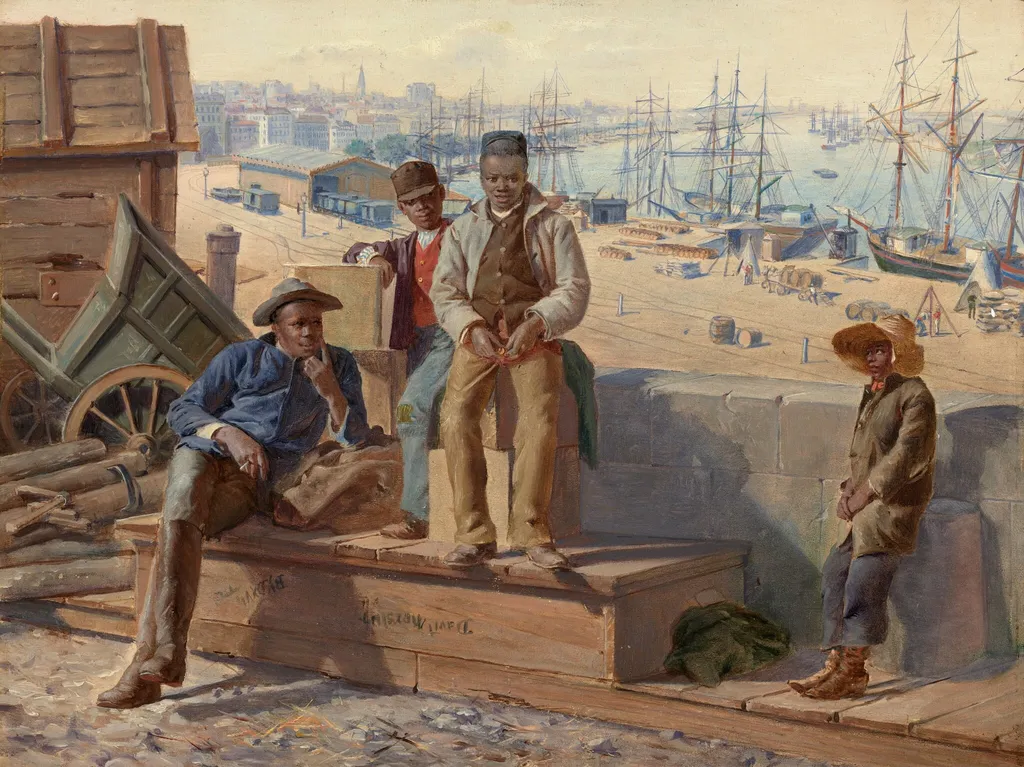
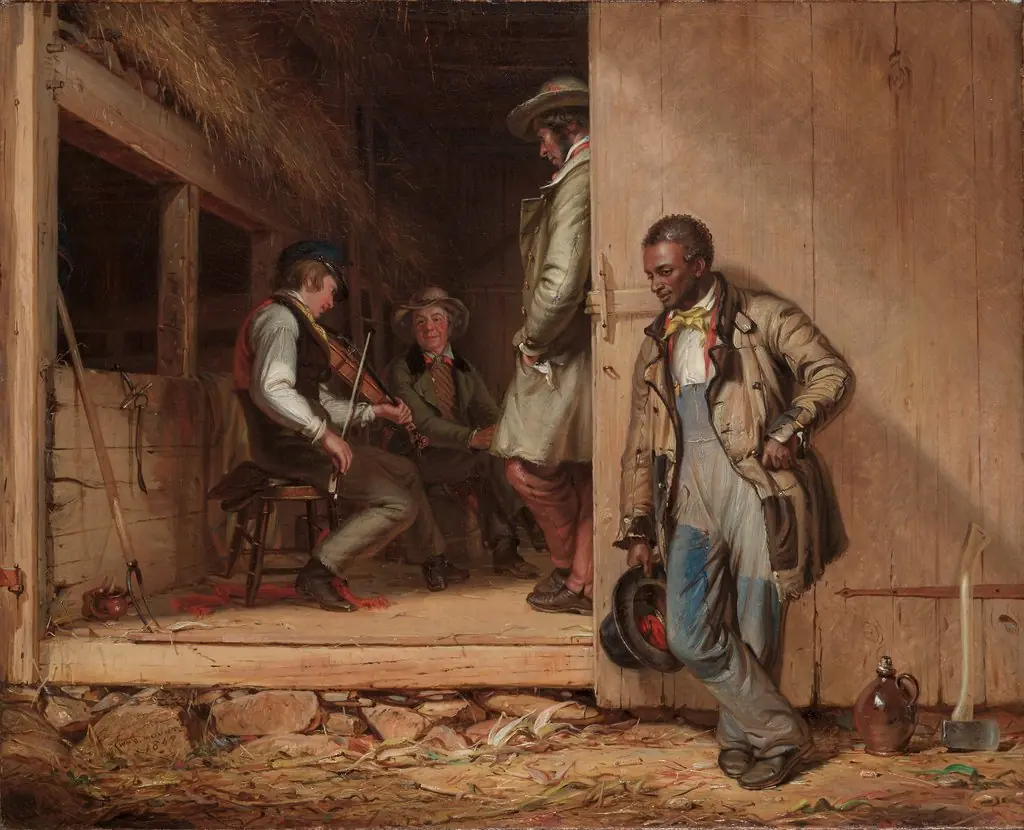
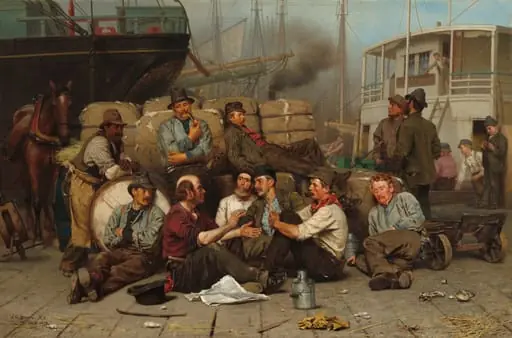
Negro Boys on the Quayside is an oil painting by the Impressionist artist David Norslup. It dates from 1865 and is held in the collection of the National Gallery of Art.
- Inscription
- Inscribed:on box in center left foreground, upside down: David Norslup BXDXVII
About this work
Technique & Style
The classification of the object remains consistent across records as a painting, distinguishing it from works on paper or canvas.
Executed in 1865, this work is an oil painting applied to a wood panel support. The artist, David Norslup, used oil paint as the primary medium to create the composition. Physical measurements indicate the panel stands 40.32 cm in height and 49.53 cm in width.
The classification of the object remains consistent across records as a painting, distinguishing it from works on paper or canvas. While the specific handling of the brushwork or the current condition of the surface is not detailed in available records, the material construction is firmly established as oil on wood.
History & Provenance
Negro Boys on the Quayside was painted by David Norslup in 1865 in oil on a wood panel measuring 40.32 cm in height by 49.53 cm in width. The work was held in a private collection before being purchased by the New York dealer Victor D. Spark. In 1960 the Corcoran Gallery of Art in Washington acquired the painting, and it subsequently entered the National Gallery of Art in 2014.
The provided sources do not contain specific inventory or accession numbers for the work, nor do they list any exhibition history.
Overview
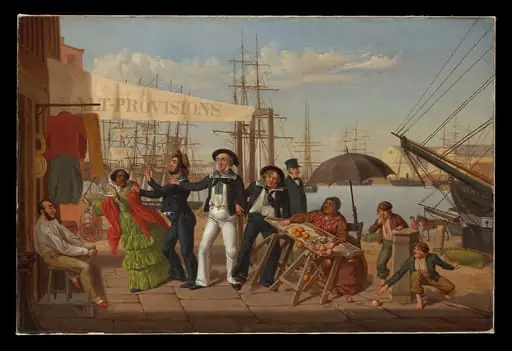
David Norslup’s oil on wood, dated around 1865, depicts a bustling quay scene. A group of four figures, two boys, a man and a girl, occupy a wooden dock beside a harbor filled with ships and shoreline buildings. The composition captures a moment of daily labor and leisure amid the activity of a mid‑nineteenth‑century port.
Subject & Meaning
The work presents ordinary laborers and children at rest on a dock, their worn attire and relaxed postures suggesting fatigue after a day’s work. The juxtaposition of the adult male, the seated girl, and the standing boys hints at the social fabric of port communities, where work, family, and play intersected along the waterfront.
Context
The mid‑1800s saw rapid growth of commercial harbors, and artists increasingly turned to such locales to document social change. Norslup’s depiction aligns with contemporary interest in portraying working‑class subjects, offering a visual record of the diverse individuals who sustained the economic engine of coastal towns.
Own this work as a print
Artist & collection