Artwork
Francesco Sforza
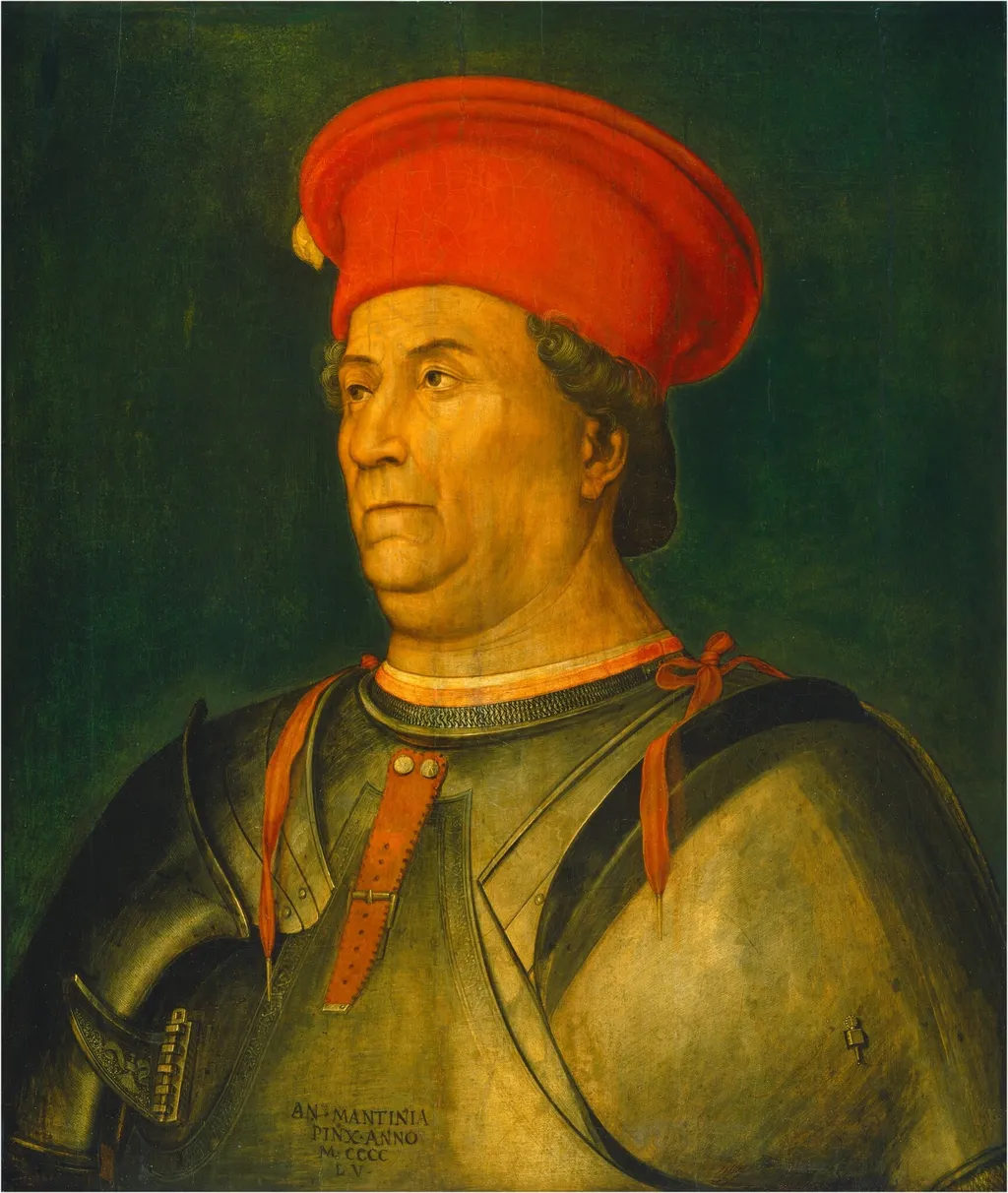
Francesco Sforza is an oil painting. It is held in the collection of the National Gallery of Art. The work presents a solitary figure in full armor, rendered in oil on a wooden panel.
- Inscription
- Inscribed:lower center on breastplate: AN . MANTINIA / PINX.ANNO / M.CCCC / LV.
About this work
Subject & Meaning
The portrait shows the condottiero Francesco Sforza, the 15th-century Milanese military leader who rose to become Duke of Milan. He is depicted wearing armor and a fur-lined cloak, symbols of his martial authority and noble status. The work represents both his personal prestige and the broader theme of heroic leadership in Renaissance portraiture.
Technique & Style
The artwork is executed in oil paint on a panel support. Created by a North Italian artist active in the 15th century, the piece dates to approximately 1480–1500. The medium and support are consistent with painting practices of that region and period.
The work has been held in the collection of the National Gallery of Art in Washington, D.C., since 1942.
History & Provenance
While the work is documented in seventeenth-century Barberini inventories, specific modern exhibition history is not detailed in the available records.
The painting, dated probably c. 1480/1500, was first documented in the collection of Cardinal Antonio Barberini in Rome. It passed by inheritance to Cardinal Carlo Barberini, and then through the Barberini family to Carlo's grandniece Cornelia Costanza, who brought it into the Colonna di Sciarra family through marriage. After the collection was divided in 1812, the panel entered the Carbognano branch and descended to Maffeo Barberini Colonna di Sciarra, Principe di Carbognano, who sold it c. 1895 in Paris.
It was subsequently acquired by Leo Nardus and resold in 1898 to Peter A.B. Widener of Lynnewood Hall in Elkins Park, Pennsylvania. From Widener's estate it passed by gift through the power of appointment of Joseph E. Widener, who gave it to the National Gallery of Art in 1942.
The painting's earlier presence in the Barberini household is confirmed by its inclusion in seventeenth-century Barberini inventories, including a 1671 inventory drawn up at the death of Cardinal Antonio Barberini.
The painting entered the collection of the National Gallery of Art in Washington, D.C., in 1942 as a gift from Joseph E. Widener, exercising the power of appointment within the estate of his father, Peter A.B. Widener. Prior to this acquisition, the work had been sold in Paris around 1895 and subsequently purchased by Widener in 1898 for his residence at Lynnewood Hall in Elkins Park, Pennsylvania. Its earlier provenance traces back through the Colonna di Sciarra and Barberini families in Rome before its late nineteenth-century dispersal.
While the work is documented in seventeenth-century Barberini inventories, specific modern exhibition history is not detailed in the available records.
Overview
The work presents a solitary figure in full armor, rendered in oil on a wooden panel. He is distinguished by a vivid red hat crowned with a gold tassel, a matching red ribbon encircling his neck, and a dark green backdrop that frames the composition. The portrait captures the sitter’s solemn expression, dark curly hair, and the intricate detailing of his black armor accented by a red strap.
Artist & collection

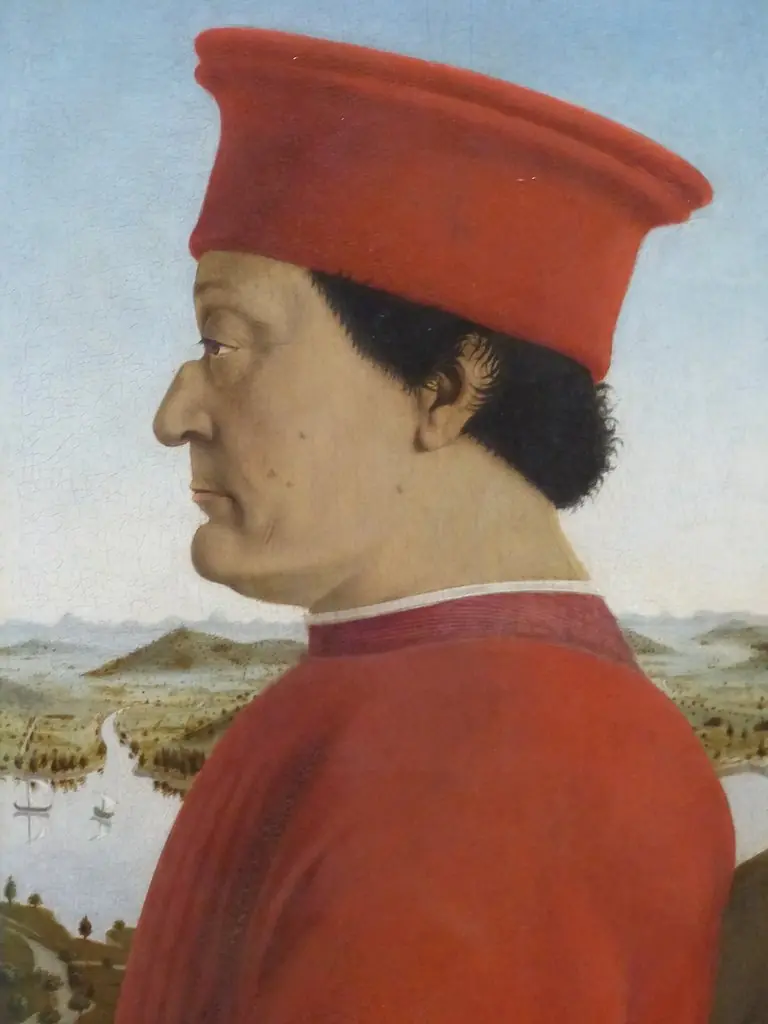
- Portrait of Federico da Montefeltro
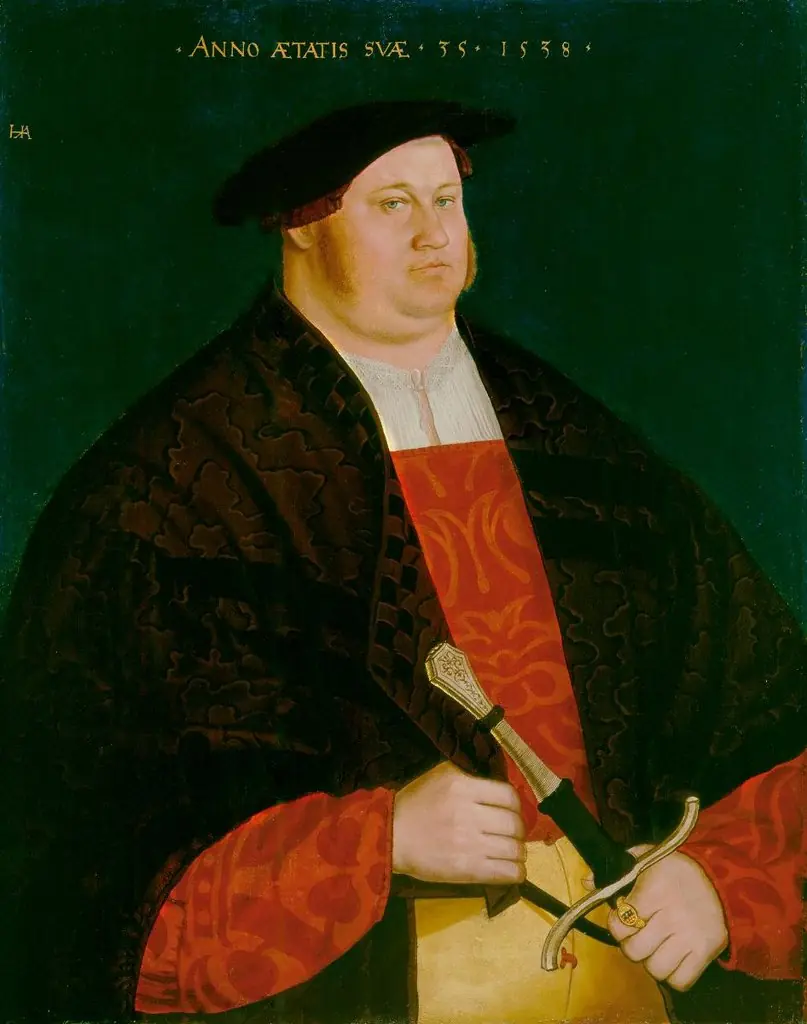 Portrait of Leonhard Holzhalb
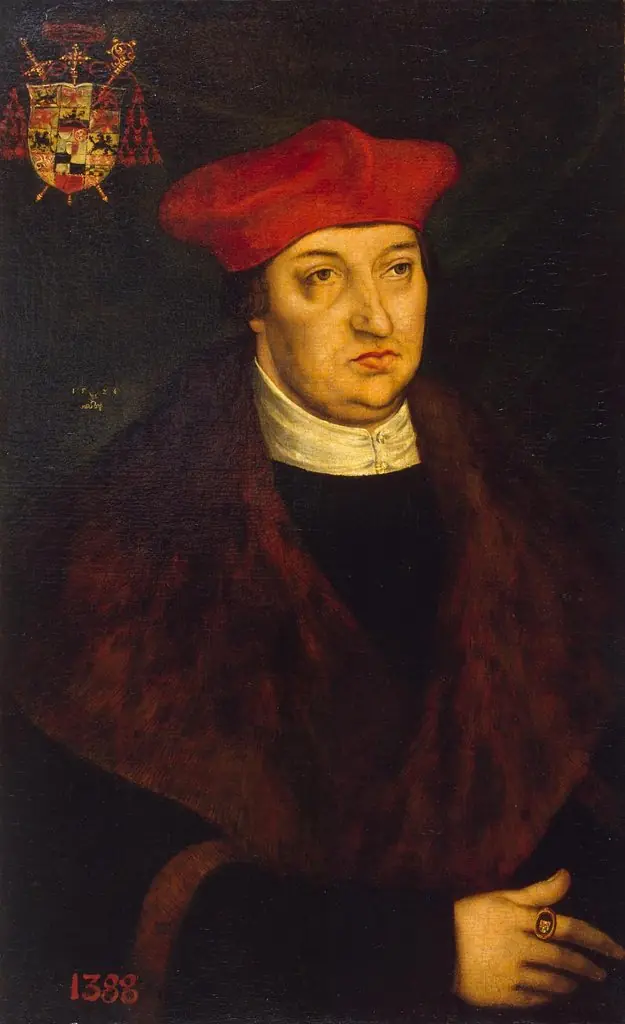 Portrait of Cardinal Albert of Brandenburg
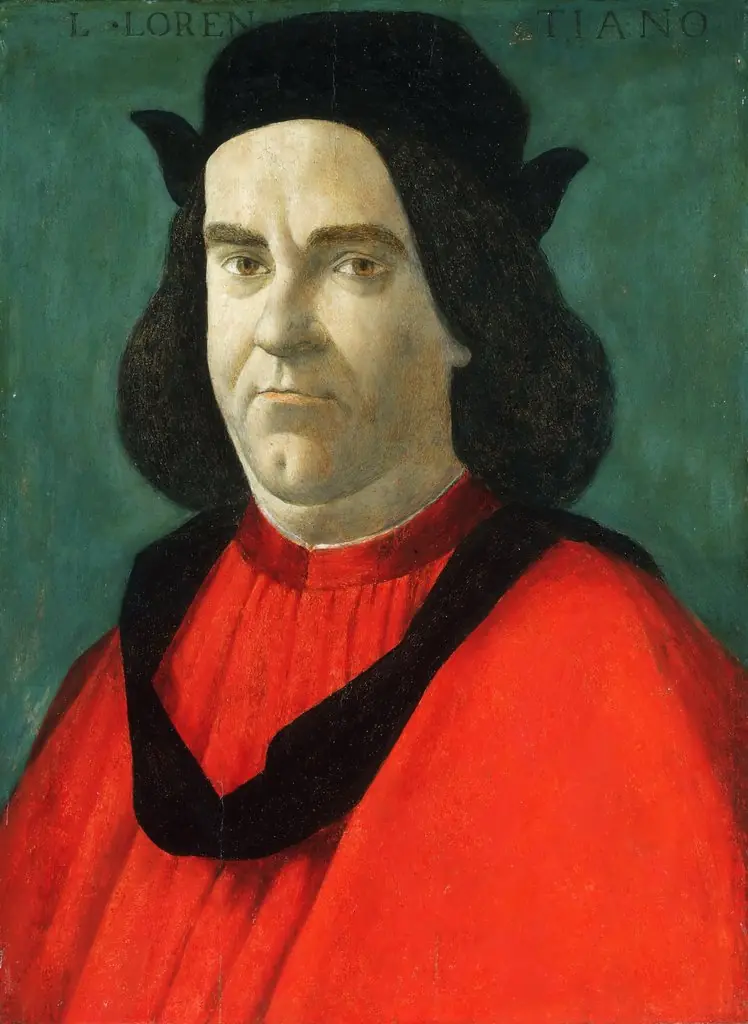 Portrait of Lorenzo de' Lorenzi
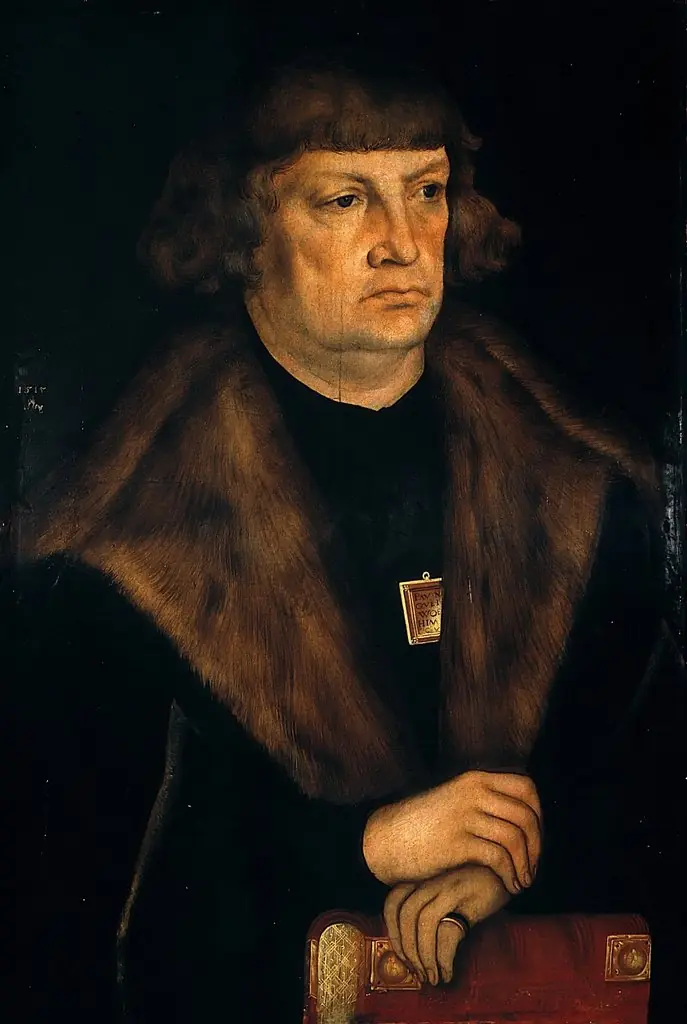 Portrait of the Mayor of Weißenfels
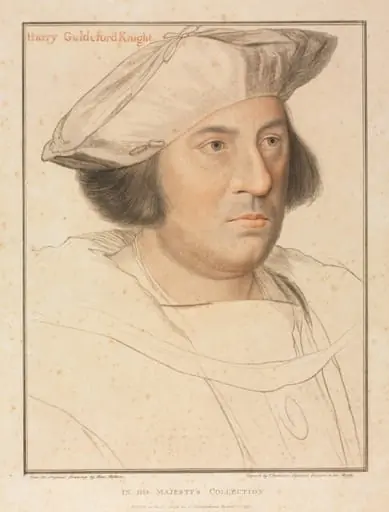 Sir Henhy Guldeford
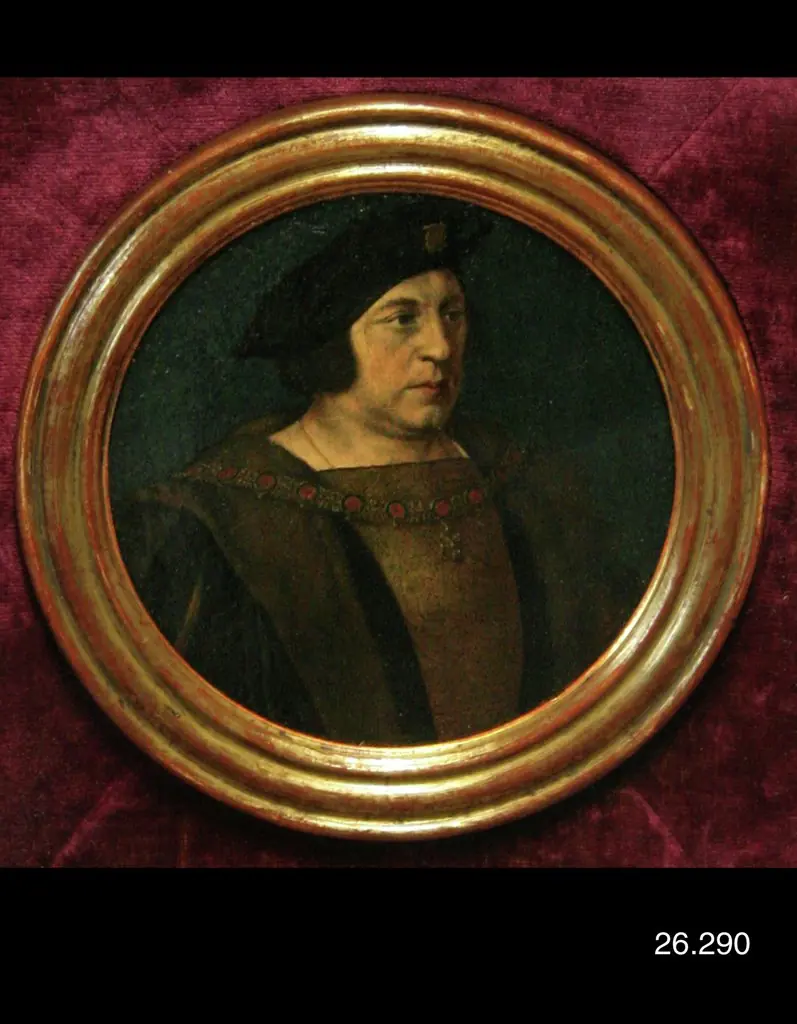 Sir Henry Guildford
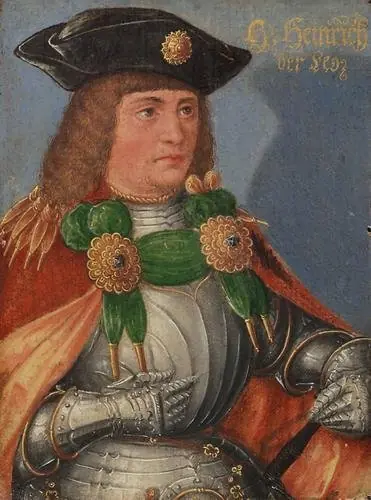 Heinrich the Lion, Duke, grandson of Heinrich the Black, died 1195
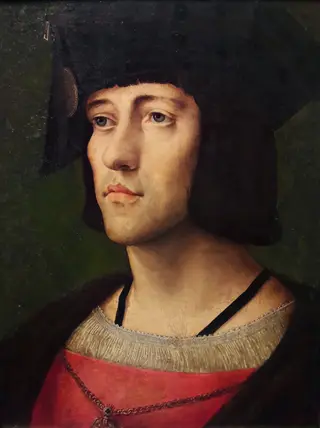 Portrait of John of Luxembourg, Lord of Ville (1475-1508).
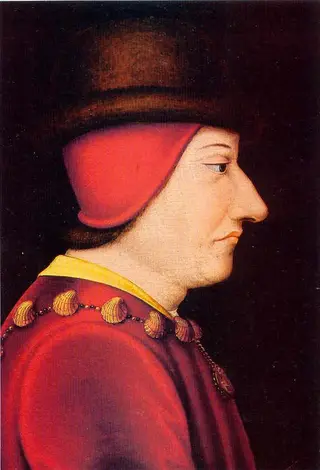 Portrait of Louis XI
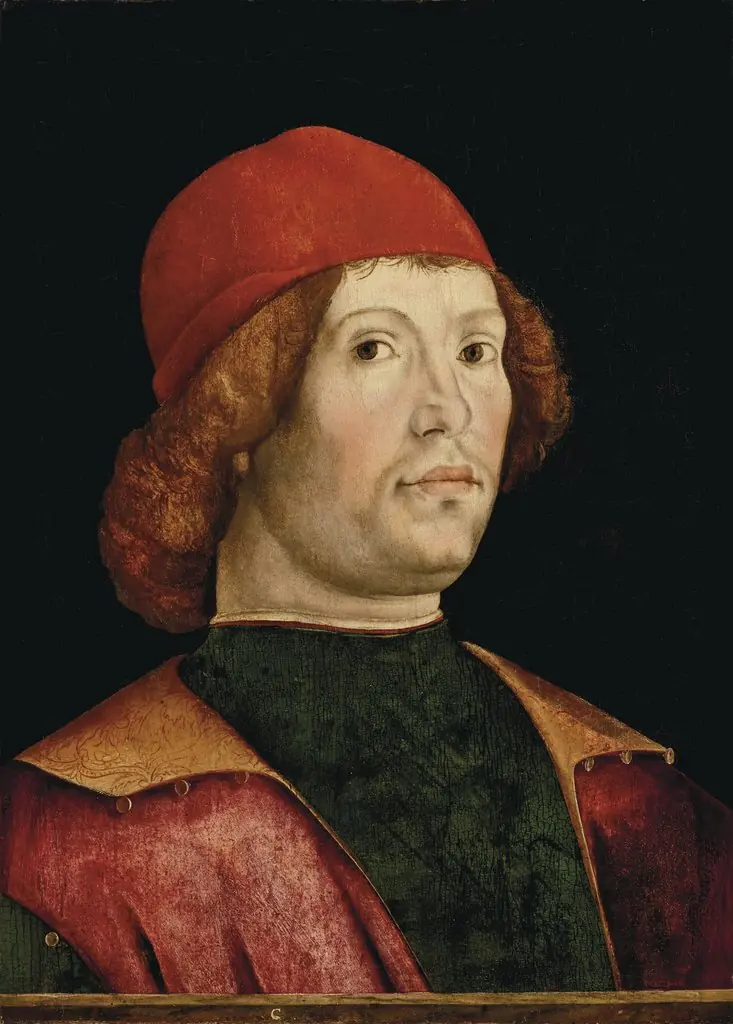 Portrait of a Man
 Portrait of a Man