Artwork
Untitled
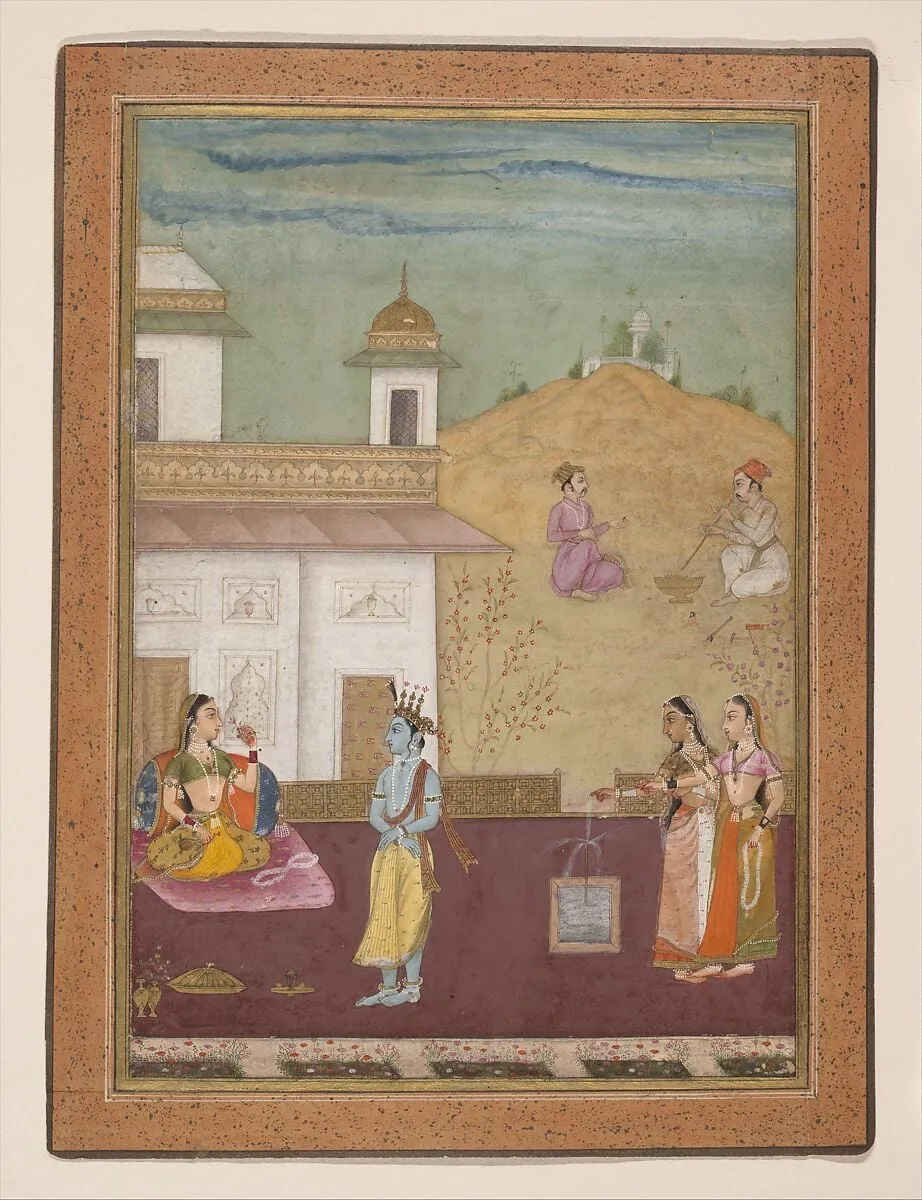
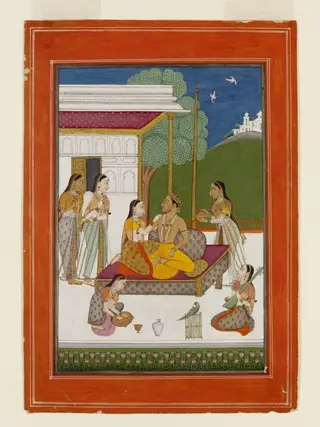
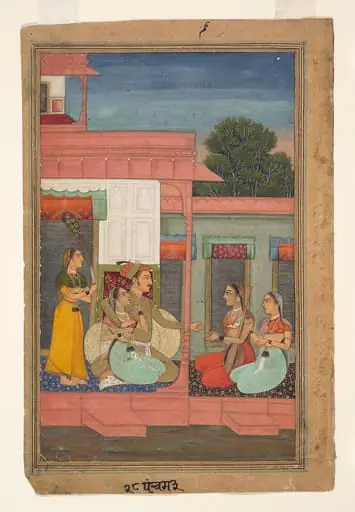
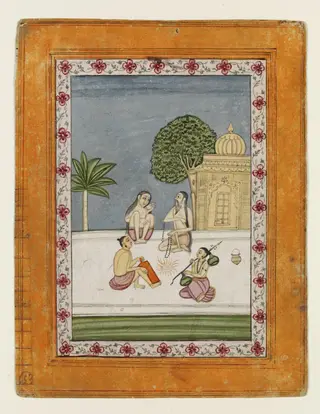
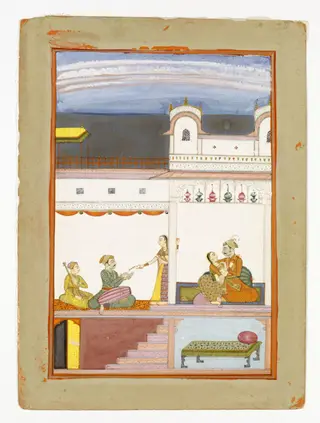
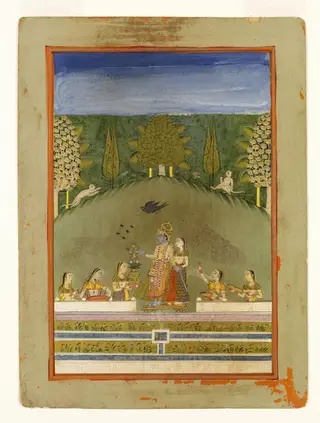
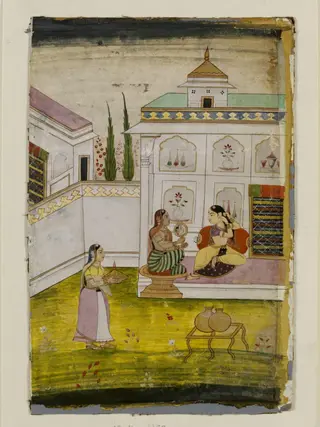
Untitled is a watercolor painting by the Baroque artist Nuruddin. It dates from 1685 and is held in the collection of the Metropolitan Museum of Art.
About this work
Subject & Meaning
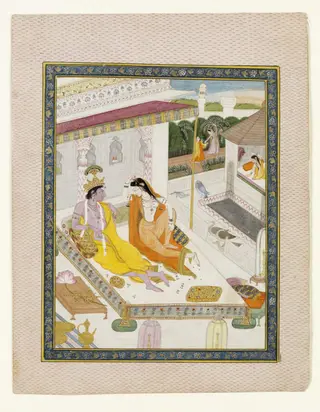
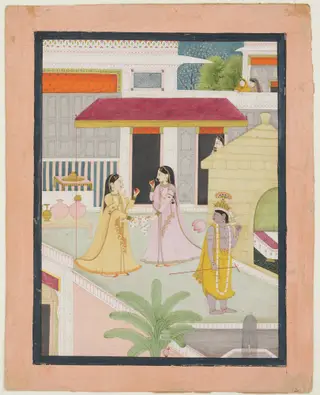
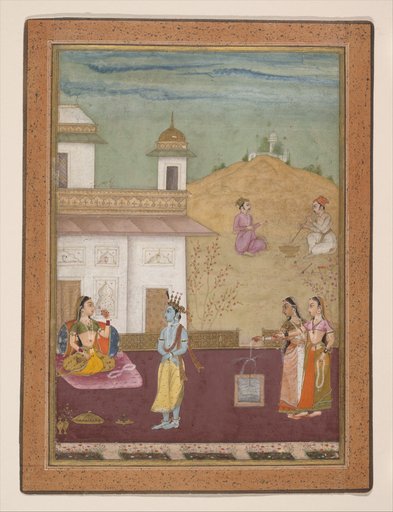
Its iconography draws on the well-known love story of Krishna and Rādhā, using the paired figures to symbolize the soul's yearning for the divine.
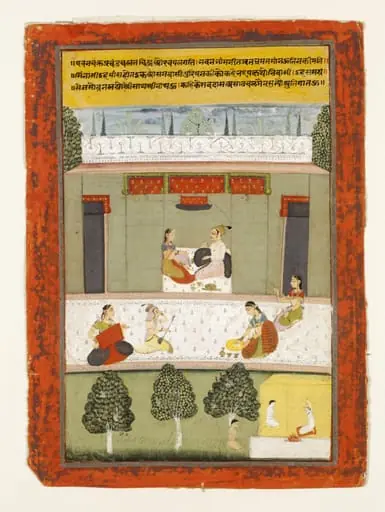
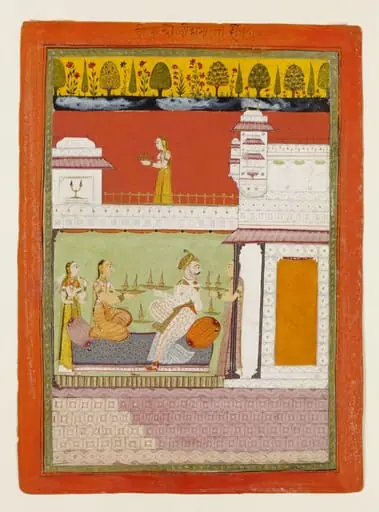
The work, titled Untitled and dated 1685, portrays the Hindu deities Krishna and Rādhā together with a woman, a composition that conveys the devotional theme of divine love and union. Rendered in ink, opaque watercolor, gold and silver on paper, the painting belongs to the religious genre, reflecting a spiritual narrative prevalent in Indian art of the period. Its iconography draws on the well-known love story of Krishna and Rādhā, using the paired figures to symbolize the soul's yearning for the divine.
Technique & Style
Created in 1685 in India, this work by Nuruddin is executed in ink, opaque watercolor, gold, and silver on paper. The painting functions as a religious genre piece, depicting Krishna, Rādhā, and a woman. The combination of metallic pigments such as gold and silver with opaque watercolor and ink suggests a formal approach intended to convey spiritual significance and visual richness typical of the period's devotional art.
The support material is paper, which serves as the foundation for these layered media. The work is held in the collection of the Metropolitan Museum of Art.
History & Provenance
Untitled is a painting by the artist Nuruddin, dated to 1685. Executed in ink, opaque watercolor, gold, and silver on paper, the work was produced in India and depicts Krishna, Rādhā, and a woman. It is now part of the collection of the Metropolitan Museum of Art in New York, where it is housed and displayed.
The painting belongs to the religious genre. No earlier ownership records or commission details are provided in the available sources.
Legacy
The painting, dated 1685 and depicting Krishna, Rādhā, and a woman, is housed in the Metropolitan Museum of Art. Its inclusion in a major museum collection contributes to the study of South Asian devotional painting and Krishna iconography, and reflects the work of the artist Nuruddin within the religious art of India.
Overview
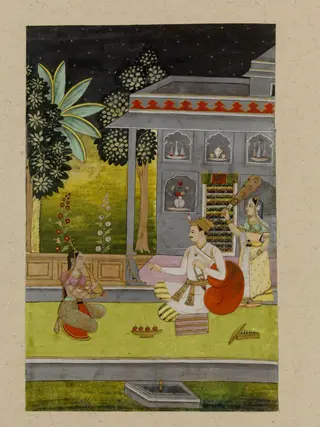
This untitled painting, rendered in ink, opaque watercolor, gold, and silver on paper, depicts a serene encounter between two figures under a tree. Originating from a royal court in Rajasthan, India, this small-scale work embodies a private and contemplative mood, characteristic of the region's artistic traditions.
Context
This painting belongs to a tradition of works created for the private enjoyment of royal courts in Rajasthan, India. Such pieces were typically small in scale, designed for intimate viewing rather than public display. They often conveyed a sense of quiet emotion and personal reflection, reflecting the refined tastes of their patrons, particularly those from Bikaner.
Artist & collection
Artist
Nuruddin worked between Delhi's workshops and the Mughal court, where artists were part doctor, part designer, part storyteller.