Artwork
八橋図屏風 |Irises at Yatsuhashi (Eight Bridges)
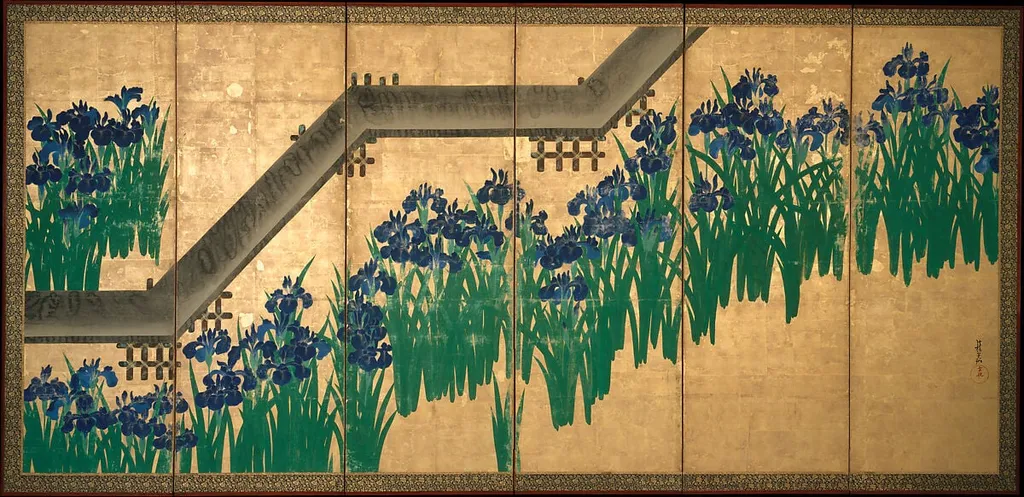
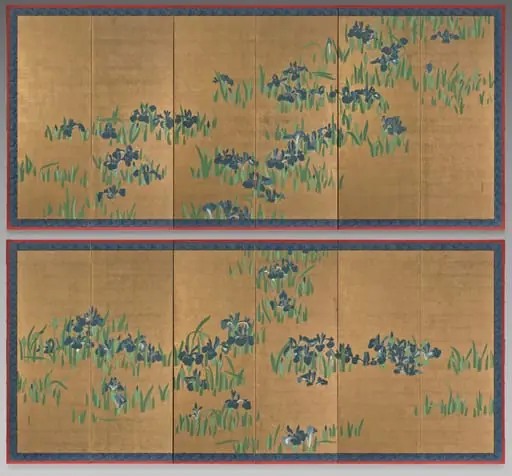
八橋図屏風 |Irises at Yatsuhashi (Eight Bridges) is an ink painting by the Baroque artist Ogata Kōrin. It dates from 1709 and is held in the collection of the Metropolitan Museum of Art.
- Accession no.
- 53.7.1, .2
- Credit line
- Purchase, Louisa Eldridge McBurney Gift, 1953
About this work
Subject & Meaning
The screens depict the Yatsuhashi (Eight Bridges) locality, a celebrated site associated with the Tales of Ise, where irises (Iris laevigata) bloom in seasonal clusters. The composition translates the literary resonance of the location into a decorative landscape, with the flowering plants serving as the principal motif across the gold-ground panels. By pairing the place-name Yatsuhashi with the iris, a flower long linked in Japanese poetry to late spring and to the mood of the Ise narratives, Kōrin fuses geography, literary allusion, and seasonal symbolism into a single visual theme.
Technique & Style
The pair of six-panel folding screens employs ink and mineral colors on a gold-leaf ground applied to paper supports, a format and ground typical of late seventeenth-century Rimpa works. Kōrin’s handling combines flat, silhouetted iris forms with delicate gradations of color and fine contour lines, while the gold leaf background unifies the composition across the multiple panels. Formal qualities include boldly stylized irises arranged in rhythmic diagonals that lead the eye across the screens, set against a minimal, abstracted landscape of the Yatsuhashi bridge.
The screens remain in stable condition, with the gold leaf intact and colors largely unfaded, reflecting careful preservation of the paper support and mineral pigments.
Overview
This specific arrangement references a famous scene from the classical tale 'The Tales of Ise,' where a poet pauses to admire the flowers.
Ogata Kōrin's 'Irises at Yatsuhashi' (1709) is a pair of six-panel folding screens executed in ink and color on gold leaf. The work depicts a stylized landscape centered on a marsh filled with blooming irises, through which a zigzagging wooden bridge, known as the Eight Bridges, extends across the composition. This specific arrangement references a famous scene from the classical tale 'The Tales of Ise,' where a poet pauses to admire the flowers.
Kōrin employs the Rinpa school's signature techniques, utilizing the shimmering gold leaf background to create a sense of timeless luxury and flat decorative space rather than deep perspective. The composition balances the organic, rhythmic curves of the iris leaves with the geometric lines of the bridge, demonstrating the artist's mastery of pattern and abstraction. Created during the height of the Edo period, this work represents a mature phase in Kōrin's career, synthesizing traditional literary themes with a bold, modern aesthetic that prioritized visual impact and material richness. It stands as a definitive example of the Rinpa style, influencing subsequent generations of Japanese decorative arts.
Artist & collection

Artist
Ogata Kōrin (Japanese: 尾形光琳; 1658 – June 2, 1716) was a Japanese landscape illustrator, lacquerer, painter, and textile designer of the Rinpa School.

 Irises
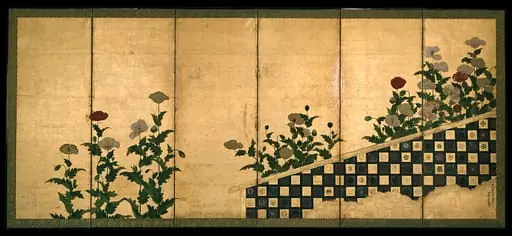 伝土佐光茂筆 芥子図屏風|Red and White Poppies
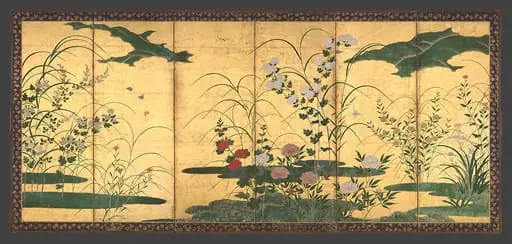 四季花草図屏風|Flowers and Grasses of the Four Seasons
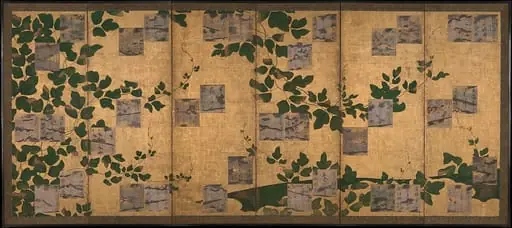 伝近衛信尋書・伝長谷川宗也絵 葛下絵色紙貼付 『和漢朗詠集』 屏風|Anthology of Japanese and Chinese Poems (Wakan rōeishū) with Underpainting of Arrowroot Vines
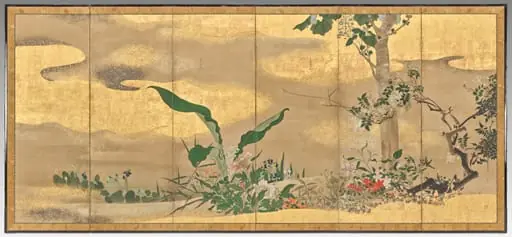 Flowers and Trees of the Four Seasons (right screen)
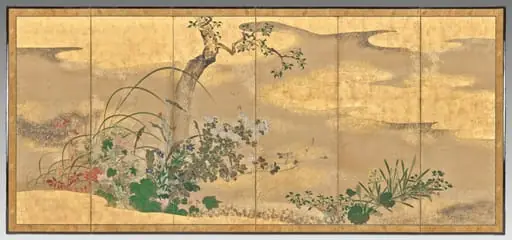 Flowers and Trees of the Four Seasons (left screen)
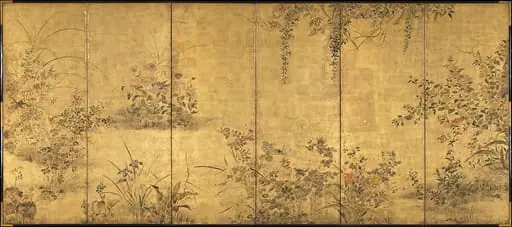 四季花野菜図屏風|Flowering Plants and Vegetables of the Four Seasons
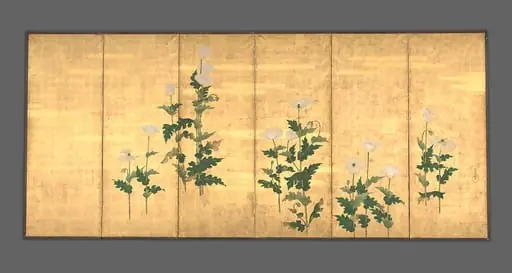 Untitled
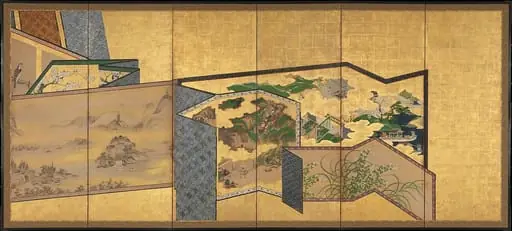 屏風尽図屏風|Screens within Screens
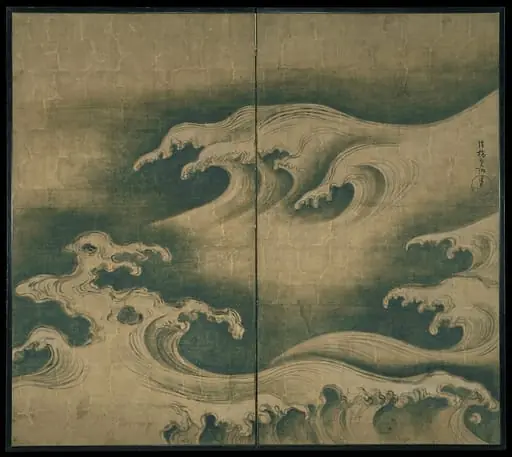
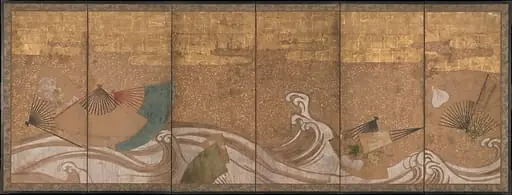 波に扇面流し図屏風|Fans upon Waves
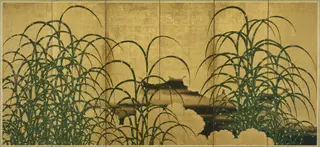 Pampas Grass
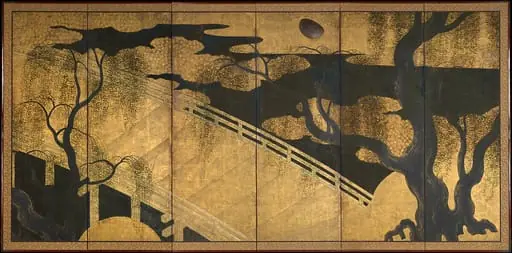
- 柳橋水車図屏風|Willows and Bridge