Artwork
波濤図屏風|Rough Waves
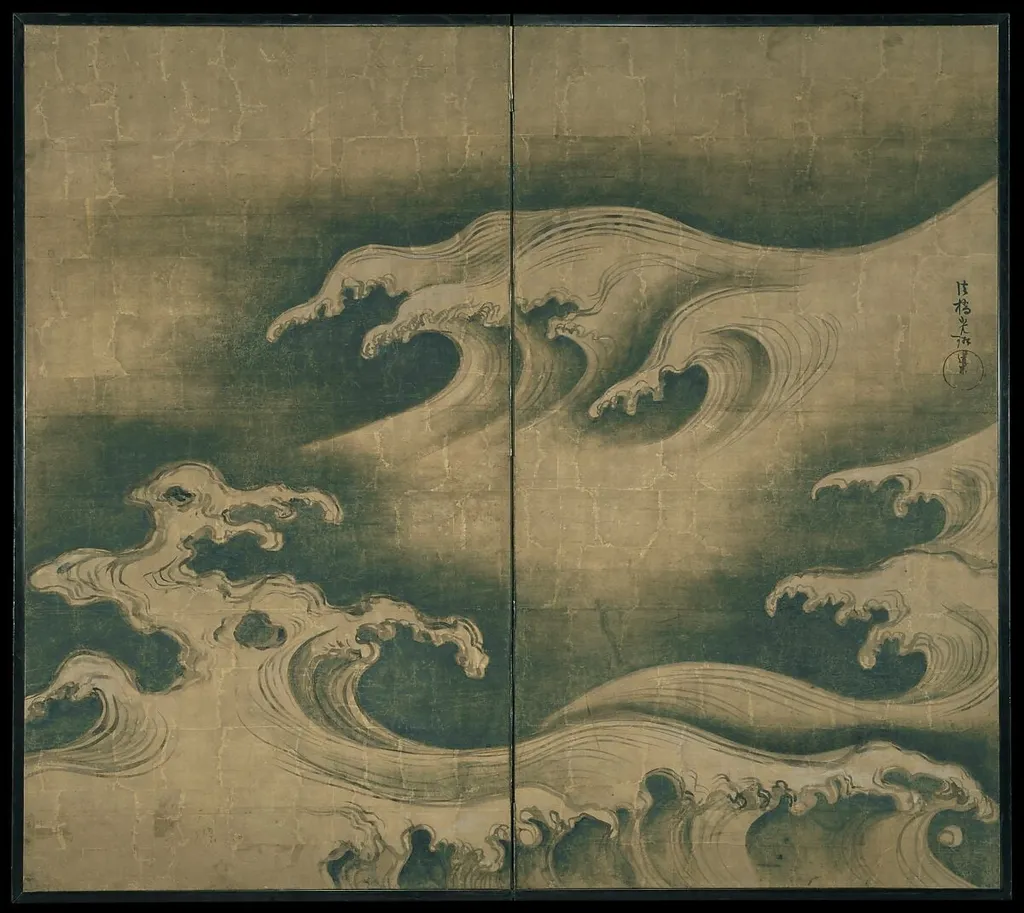
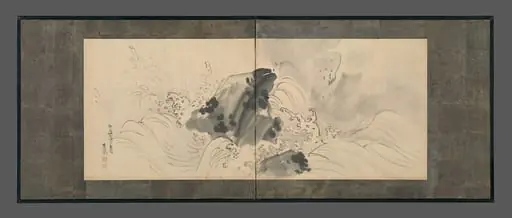
波濤図屏風|Rough Waves is an ink painting by the Baroque artist Ogata Kōrin. It dates from 1706 and is held in the collection of the Metropolitan Museum of Art.
About this work
Subject & Meaning
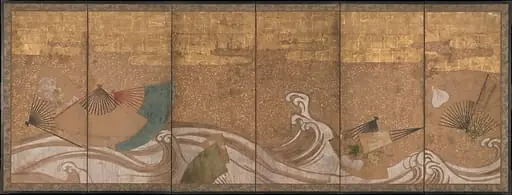
The folding screen Rough Waves presents a stylized wind wave, rendering a tumultuous sea surface in ink, color, and gold leaf.
The folding screen Rough Waves presents a stylized wind wave, rendering a tumultuous sea surface in ink, color, and gold leaf. As a byōbu‑e landscape, the work belongs to the genre of Japanese screen paintings and directly depicts a wind wave, a motif associated with the fleeting, powerful force of nature. The depiction emphasizes the dynamic crest and foam of the wave, conveying both danger and transience.
By employing an ancient Chinese brush technique and gilded paper, Ogata Kōrin elevates the subject to a symbolic representation of natural volatility within the Japanese aesthetic tradition.
Technique & Style
Rough Waves is a two‑panel folding screen (byōbu) painted in ink, color and gold leaf on paper. The work employs an ancient Chinese method in which the artist manipulates two brushes simultaneously with one hand to produce continuous, flowing strokes. Its surface combines inkstick, distemper, gold leaf and washi, creating a luminous background that enhances the dramatic, elongated wave crests rendered in finger‑like or dragon‑claw contours and punctuated by foam.
The composition conveys a threatening, storm‑tossed sea through stark contrast and dynamic line work, reflecting the influence of the Kanō school and the earlier master Sesson Shukei. The screen bears the artist’s seal “Dōsū” and has remained in the Metropolitan Museum of Art’s collection since 1926.
History & Provenance
Created by Ogata Kōrin, this two-panel folding screen dates to approximately 1704 through 1709. This timeframe corresponds to the artist's residence in Edo and his use of the pseudonym "Dōsū," which appears as a seal on the work. While one record specifies the year 1706, broader analysis places the creation during this transitional period marked by Kanō school influences.
The painting entered the collection of the Metropolitan Museum of Art in 1926. The acquisition was made possible through financial support from the Fletcher Fund. No specific original commissioner is identified in the available records, though the work later influenced artists such as Sakai Hōitsu, whose family had previously commissioned pieces from Kōrin.
Rough Waves is held in the collection of the Metropolitan Museum of Art in New York. The museum acquired the two-panel folding screen in 1926 with financial support from the Fletcher Fund. While specific inventory or accession numbers are not detailed in the available records, the work is classified within the museum's paintings department. The screen has been highlighted as a significant piece within the institution's collection of Japanese art.
Context
Ogata Kōrin's Rough Waves (c. 1704–1709) stands as a pivotal work in Japanese art history, often cited as the most significant depiction of the sea prior to Hokusai's The Great Wave off Kanagawa. Created during the artist's Edo period, the screen reflects a transitional phase marked by the influence of the Kanō school and the gloomy landscape traditions of Tawaraya Sōtatsu. While drawing inspiration from the dynamic wave imagery of Sesson Shukei, Kōrin employed a distinctive two-brush technique to render threatening, claw-like crests that convey a sense of violent natural force unusual for his typical style.
The work's critical legacy is evidenced by its profound impact on the later Rinpa master Sakai Hōitsu, who studied the screen closely and produced his own abstract yet demonic interpretation, Waves, in 1805.
Legacy
Rough Waves later exerted a formative influence on Rinpa successors, notably Sakai Hōitsu, whose 1805 screen Waves reinterprets Kōrin’s swirling wave motifs in an even more abstracted, ink-on-silver idiom while preserving the original’s ominous atmosphere. The work has been held in the Metropolitan Museum of Art’s collection since its 1926 acquisition, situating it within a major transpacific repository of Japanese screens and reinforcing its canonical status in surveys of Edo-period painting. Its dramatic composition and technical synthesis of ink, color, and gold leaf have continued to exemplify Rinpa ideals, influencing later modern and contemporary artists who revisit dynamic wave imagery in diverse media.
Overview
Ogata Kōrin's screen painting, titled Rough Waves (波濤図屏風), captures a powerful marine scene. Created between approximately 1704 and 1709, this two-panel folding screen utilizes ink, color, and gold leaf on paper. The work presents a dramatic portrayal of ocean swells, characteristic of the artist's distinctive approach to natural forms. It is a significant example of Japanese screen painting from the Edo period.
Artist & collection

Artist
Ogata Kōrin (Japanese: 尾形光琳; 1658 – June 2, 1716) was a Japanese landscape illustrator, lacquerer, painter, and textile designer of the Rinpa School.