Artwork
烏丸光広筆 十牛図歌賛図巻|Ten Oxherding Songs
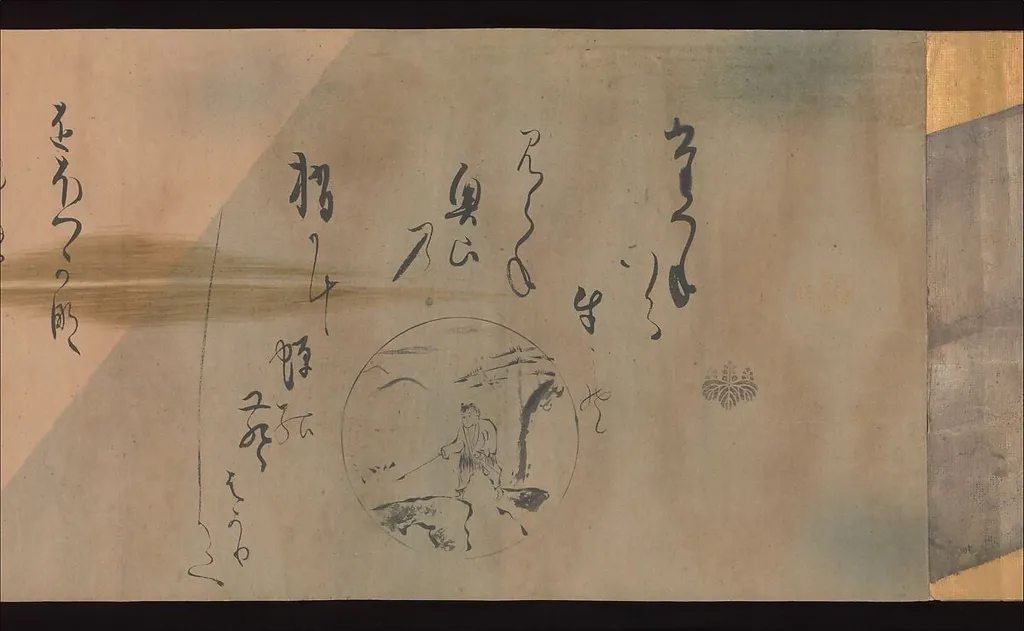
烏丸光広筆 十牛図歌賛図巻|Ten Oxherding Songs is an ink painting by the Baroque artist Karasumaru Mitsuhiro. It dates from 1634 and is held in the collection of the Metropolitan Museum of Art.
About this work
Subject & Meaning
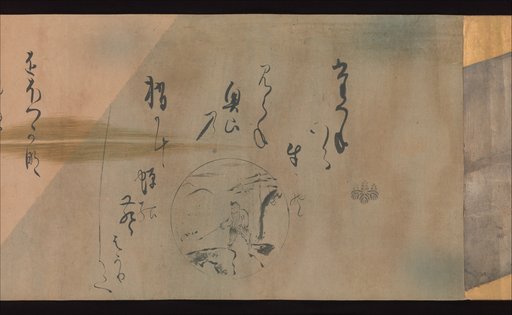
Created in 1634 by Karasumaru Mitsuhiro, this handscroll visually interprets the Ten Oxherding Songs, a classic Zen Buddhist allegory for spiritual awakening.
Created in 1634 by Karasumaru Mitsuhiro, this handscroll visually interprets the Ten Oxherding Songs, a classic Zen Buddhist allegory for spiritual awakening. The work depicts a man and oxen, utilizing these figures as central icons to represent the practitioner's journey toward enlightenment. In this religious genre, the ox symbolizes the mind or Buddha-nature, while the herder represents the seeker striving to tame and realize this inherent truth.
Executed in ink on dyed paper with gold and silver stenciled decoration, the scroll illustrates the progressive stages of mastering the self, moving from the confusion of searching to the ultimate unity of existence.
Technique & Style
Created in 1634, this handscroll by Karasumaru Mitsuhiro is executed in ink on dyed paper. The work features stenciled decoration applied in gold and silver, adding a luminous quality to the religious imagery of men and oxen. The support measures 29.9 cm in height and extends 271.8 cm in width, typical of the Japanese handscroll format.
The combination of ink wash with metallic stenciling on a colored ground defines the formal character of this Ten Oxherding Songs depiction.
History & Provenance
The work known as Ten Oxherding Songs was created in 1634 in Japan as a handscroll using ink on dyed paper with stenciled decoration in gold and silver. It portrays a man alongside oxen and belongs to the religious painting genre. The piece was produced by the artist Karasumaru Mitsuhiro, who worked within the tradition of Japanese ink painting.
Since its creation it has been part of the collection of the Metropolitan Museum of Art, where it remains on view. Its dimensions measure 29.9 cm in height and 271.8 cm in width.
The work is held by the Metropolitan Museum of Art, New York, where it is recorded as Ten Oxherding Songs Folding Album with Accession No. 2015.539.
It was included in the exhibition “Celebrating the Arts of Japan: Japanese Buddhist Paintings from American Collections” held at the Japan Society, New York, from 14 September to 14 December 2015.
Overview
Created in 1634 by the Japanese calligrapher and artist Karasumaru Mitsuhiro, this handscroll depicts the Ten Oxherding Songs, a seminal Zen Buddhist allegory illustrating the stages of spiritual enlightenment. The work is executed in ink on dyed paper, enhanced with stenciled gold and silver decoration, a technique characteristic of Mitsuhiro's refined aesthetic. The composition unfolds horizontally across the scroll, presenting ten distinct vignettes that narrate the seeker's journey from the initial search for the ox to the final state of emptiness and return to the world.
Each scene is paired with a short poem inscribed directly above the image, integrating calligraphy and painting into a unified visual and literary experience. Mitsuhiro, a prominent figure in the early Edo period known for his mastery of both Japanese and Chinese styles, produced this work during a time of renewed interest in Zen culture among the aristocracy. The scroll serves not only as a religious teaching tool but also as a high artistic achievement, demonstrating the artist's ability to convey complex philosophical concepts through minimal, expressive brushwork and elegant decorative elements.
Context
The "Ten Oxherding Pictures" originated in China and became a pivotal teaching narrative within Zen Buddhism, widely embraced in Japan. Karasumaru Mitsuhiro's interpretation around 1634 contributes to a rich tradition of artistic representations of this parable. Such scrolls functioned as meditative tools and instructional guides, offering a visual and poetic framework for understanding the stages of spiritual progress within the Zen tradition.
Artist & collection

 Untitled
 Untitled
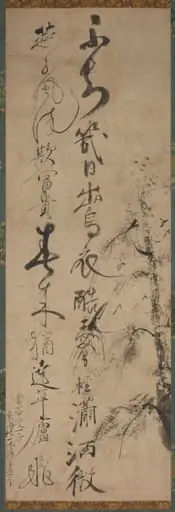 Calligraphy with Willow and Swallows
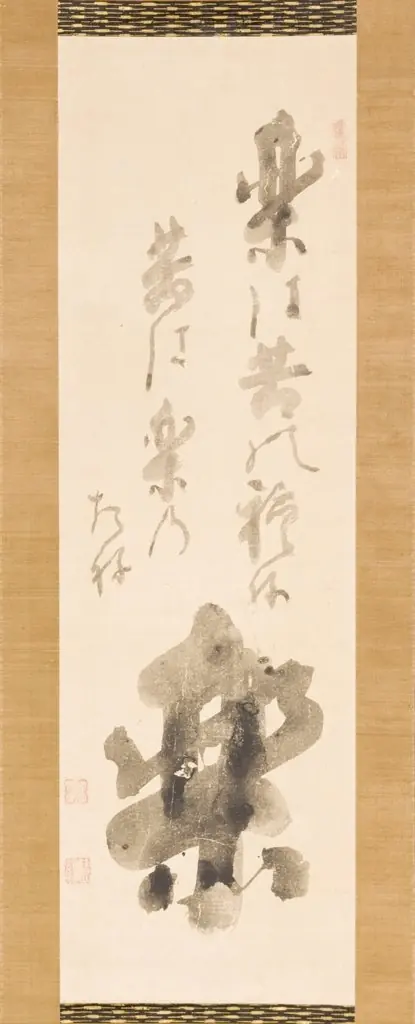 'JOY: In joy lie the seeds of sufferings; in sufferings lie the seeds of joy (RAKU: Raku wa kū no tane; Kū wa raku no tane)'
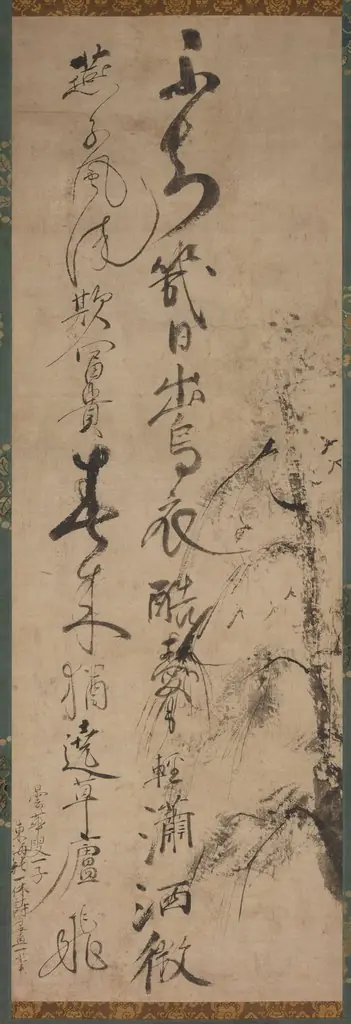 Calligraphy with Willow and Swallows
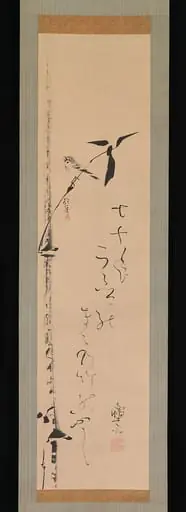 酒井抱一筆亀田鵬斎賛 竹雀図|Sparrow and Bamboo
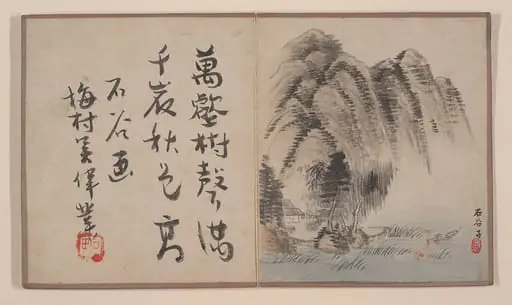 Untitled
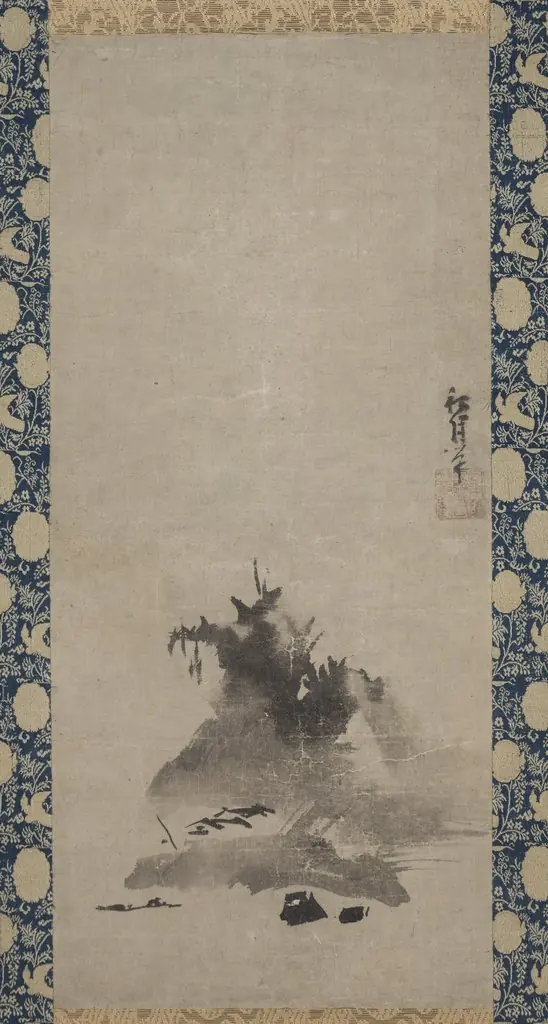 Haboku (Flung-ink) Landscape
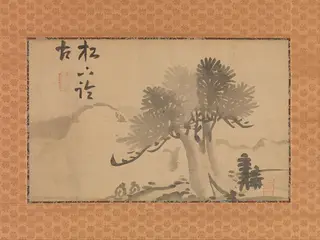 池大雅筆 「大雅堂画弁題詩」|Pine Tree and Calligraphy
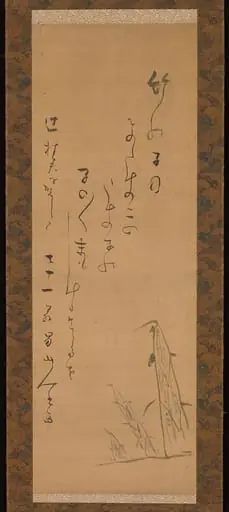 蜀山人(大田南畝)筆 筍図|Bamboo Shoots
- 尾形乾山筆 定家詠十二ヶ月和歌 花鳥図 『拾遺愚草』 より四月|“Fourth Month” from Fujiwara no Teika’s “Birds and Flowers of the Twelve Months”
 風外慧薫筆 指月布袋図|Hotei Pointing at the Moon