Artwork
Poem-card from the Shinkokin wakashu (New Collection of Japanese Poems from Ancient and Modern Times) with Design of Pine on a Beach
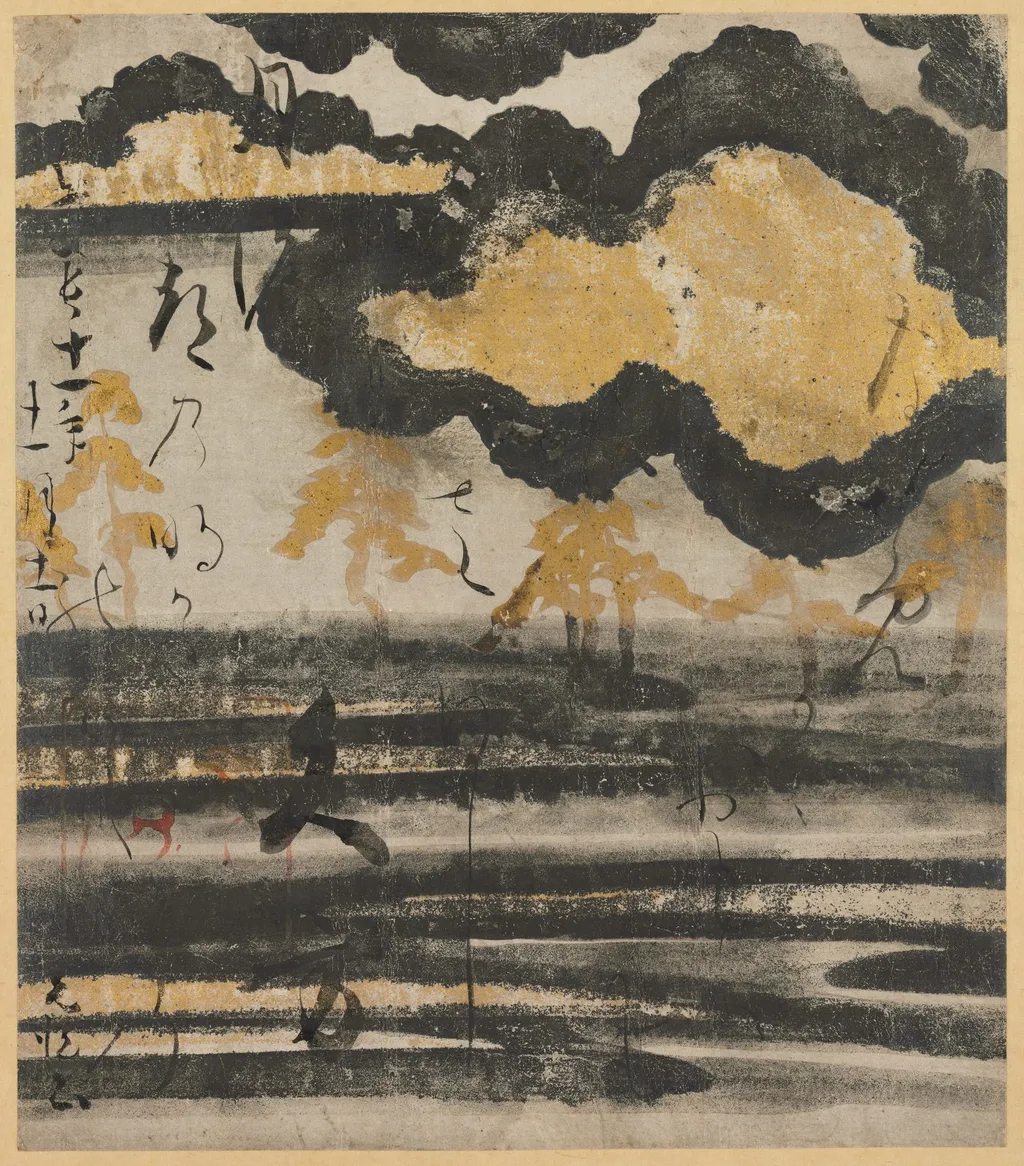
Poem-card from the Shinkokin wakashu (New Collection of Japanese Poems from Ancient and Modern Times) with Design of Pine on a Beach is an unspecified painting by the Ukiyo-e artist Honami Kōetsu. It dates from 1606 and is held in the collection of the Cleveland Museum of Art.
About this work
History & Provenance
The Poem-card from the Shinkokin wakashu with Design of Pine on a Beach is part of the Cleveland Museum of Art collection, listed under inventory number 1987.
Poem-card from the Shinkokin wakashu (New Collection of Japanese Poems from Ancient and Modern Times) with Design of Pine on a Beach was created in 1606. The work is a collaborative painting by Hon'ami Kōetsu and Tawaraya Sōtatsu. It is currently held in the collection of the Cleveland Museum of Art.
The Poem-card from the Shinkokin wakashu with Design of Pine on a Beach is part of the Cleveland Museum of Art collection, listed under inventory number 1987.60. The work was created in 1606 and is classified as a painting.
Context
The work is understood as a masterful synthesis of calligraphy, painting, and design within the early Edo decorative arts tradition. Hon'ami Kōetsu's involvement with the Shinkokin wakashu reflects his role in shaping aristocratic literary aesthetics, while his collaboration with Tawaraya Sōtatsu expanded the visual language of poetic albums. The piece exemplifies the integration of poetic content and pictorial motif characteristic of courtly culture in early 17th-century Japan, situating it within broader developments in collaborative painting and manuscript production.
Legacy
The Poem-card from the Shinkokin wakashu, designed by Hon'ami Kōetsu in 1606, exerted lasting influence on later Japanese painting through its refined composition and integration of poetic and visual elements. Its significance is underscored by inclusion in the Cleveland Museum of Art collection, reflecting enduring scholarly and curatorial recognition of its artistic merit.
The work's legacy is tied to its role in shaping aesthetic standards within the Rinpa school, particularly through its collaboration with Tawaraya Sōtatsu, cementing its reputation as a pivotal piece in the evolution of Japanese decorative arts.
Overview
Created in 1606 by Honami Kōetsu, this painted poem-card belongs to the Shinkokin wakashu collection. Executed in the early ukiyo-e style, the work depicts a solitary pine tree set against a beach scene. It is part of the Cleveland Museum of Art’s holdings and exemplifies Kōetsu’s integration of calligraphy, painting, and poetic inscription.
Subject & Meaning
The composition centers on a lone pine, a traditional symbol of endurance, positioned on a sparsely rendered shoreline. The minimal landscape suggests a contemplative space where the poem’s text and the visual element reinforce each other, inviting reflection on nature’s quiet resilience.
Technique & Style
Kōetsu employs bold, sweeping brushstrokes in black ink, accented with touches of gold leaf that outline the pine’s foliage. The background is a pale wash, while horizontal lines imply distant waves. The restrained palette, black, white, and gold, emphasizes contrast and the elegance of line over detailed coloration.
Own this work as a print
Artist & collection
Artist
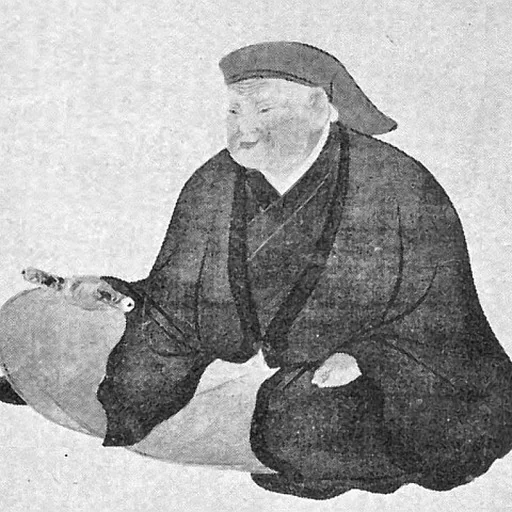
Hon'ami Kōetsu (Japanese: 本阿弥 光悦; 1558 – 27 February 1637) was a Japanese calligrapher, craftsman, lacquerer, potter, landscape gardener, connoisseur of swords and a devotee of the tea ceremony.

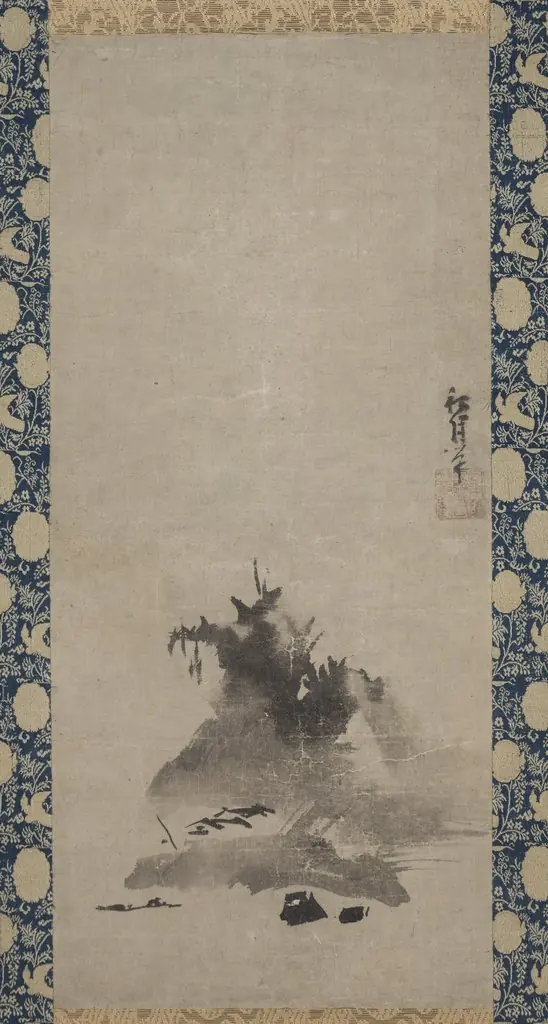
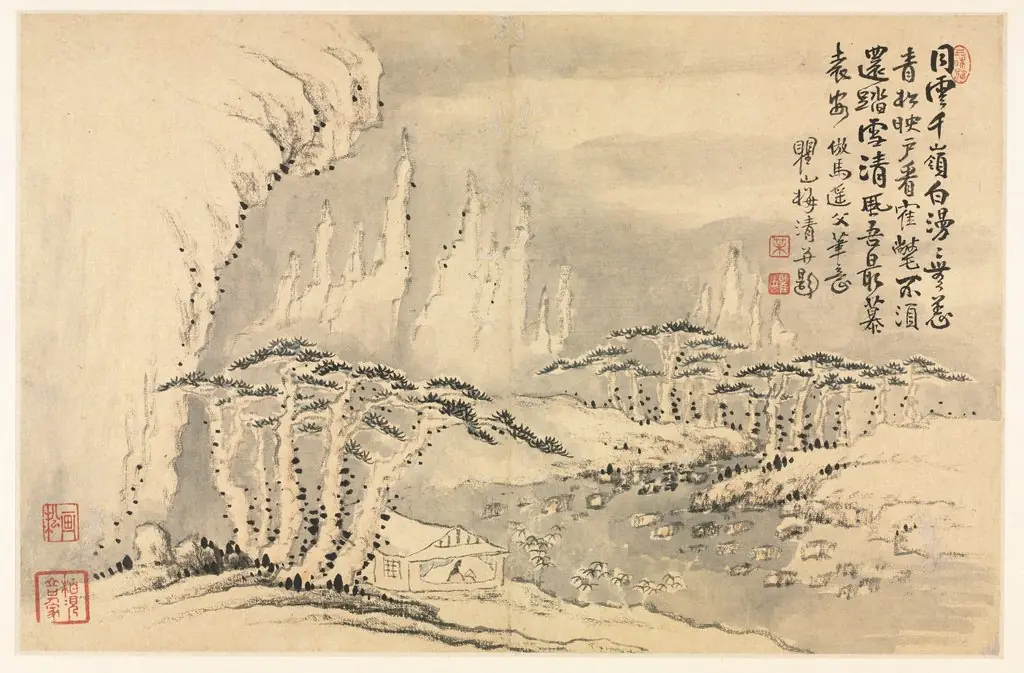
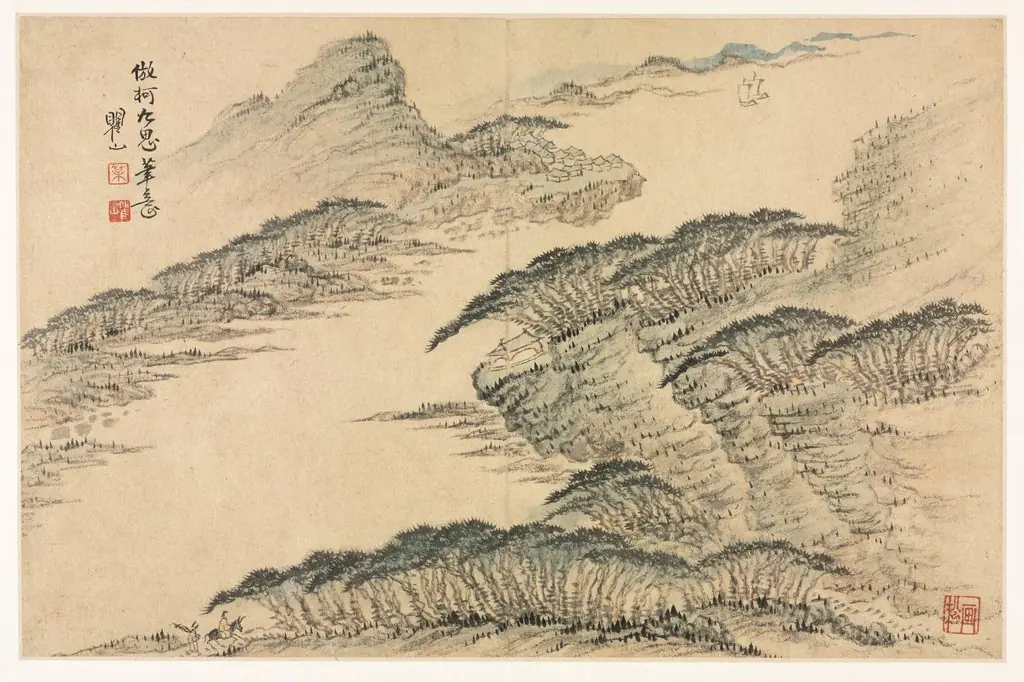
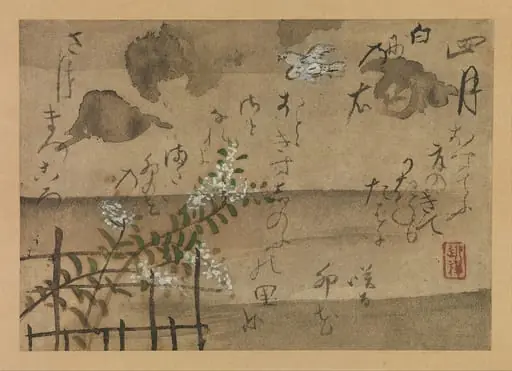
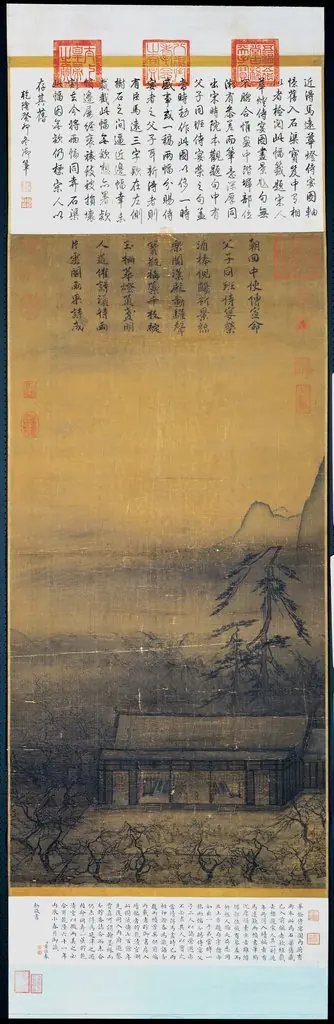
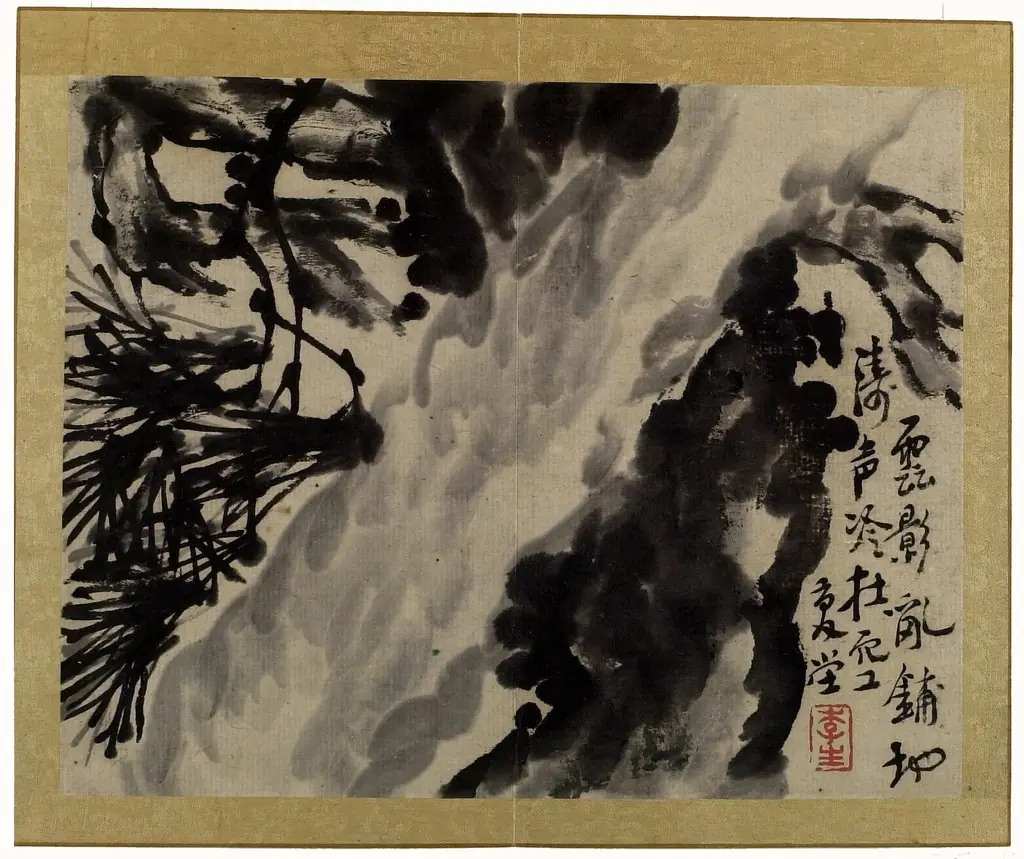
- Poem-card from the Shinkokin wakashu (New Collection of Japanese Poems from Ancient and Modern Times) with Design of Pine on a Beach
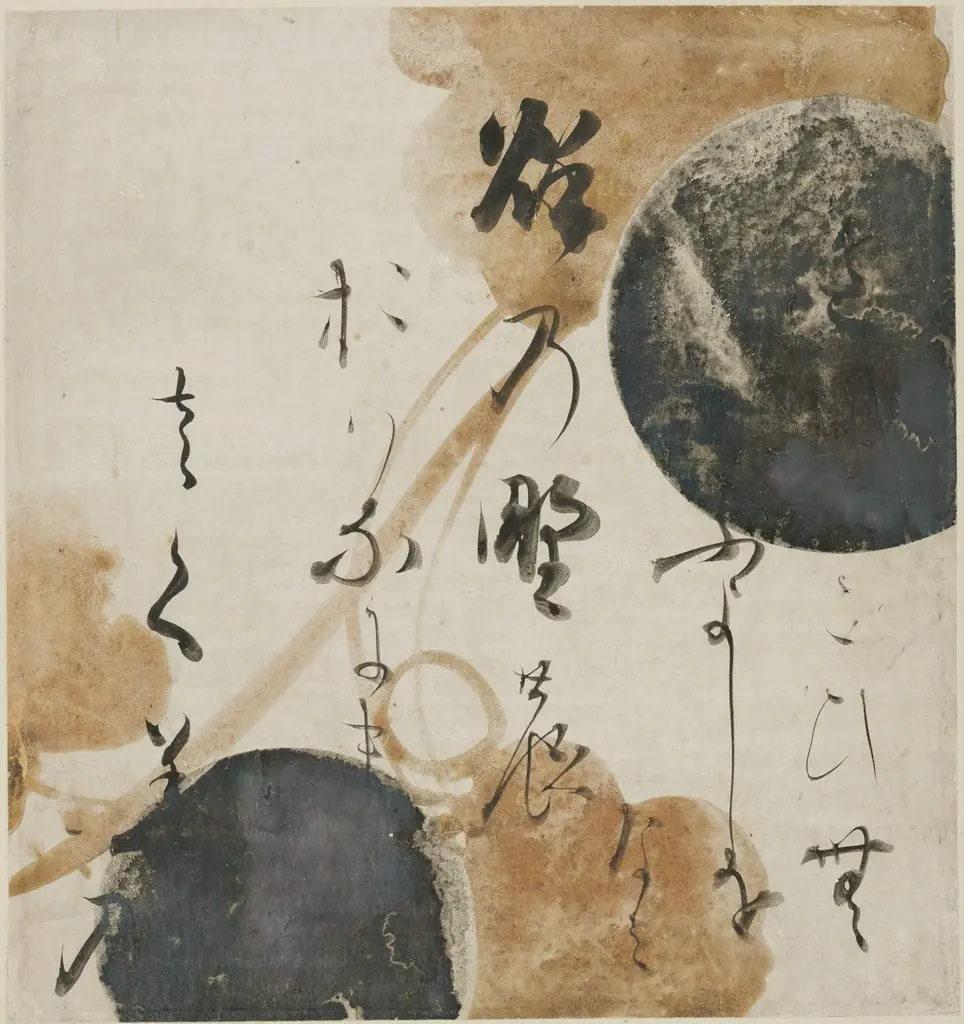 Poem from the Kokin Wakashu ("Collection of Japanese Poems of Ancient and Modern Times")
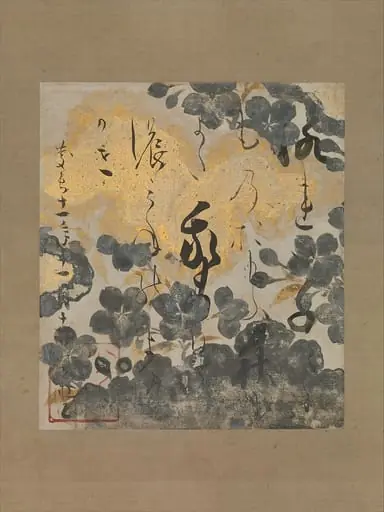 本阿見光悦書・俵屋宗達下絵 桜下絵和歌色紙 鴨長明|Poem by Kamo no Chōmei with Underpainting of Cherry Blossoms
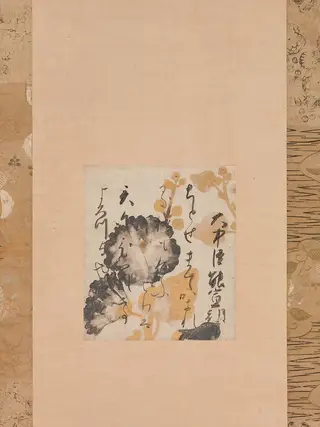 松花堂昭乗書・伝俵屋宗達下絵 和歌色紙 |Poem by Onakatomi Yoshinobu with Underpainting of Hollyhocks
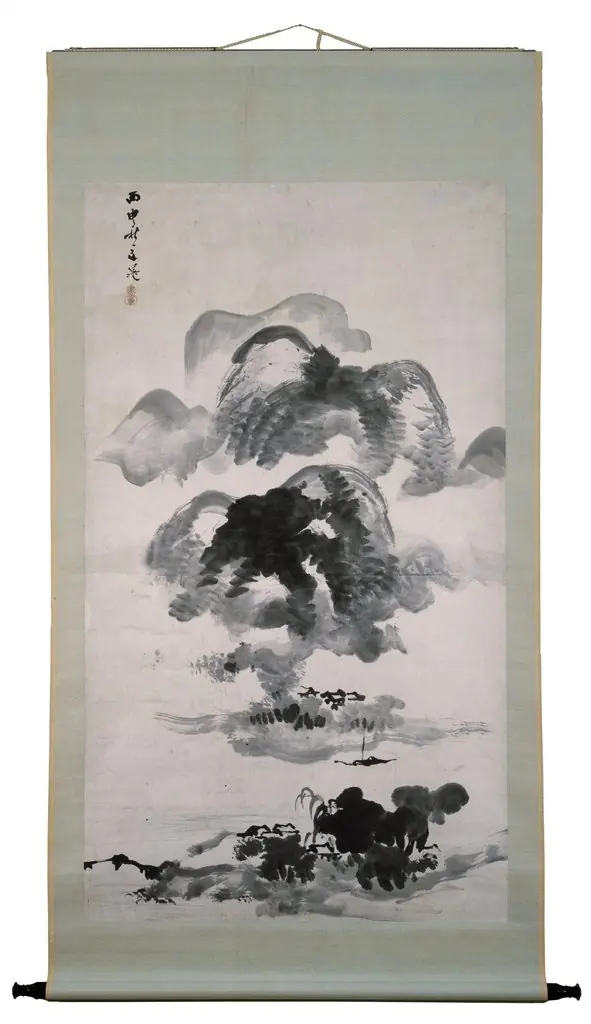
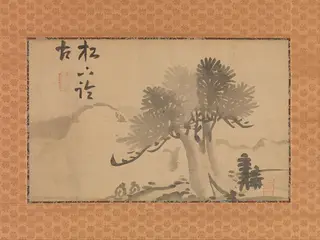 池大雅筆 「大雅堂画弁題詩」|Pine Tree and Calligraphy