Artwork
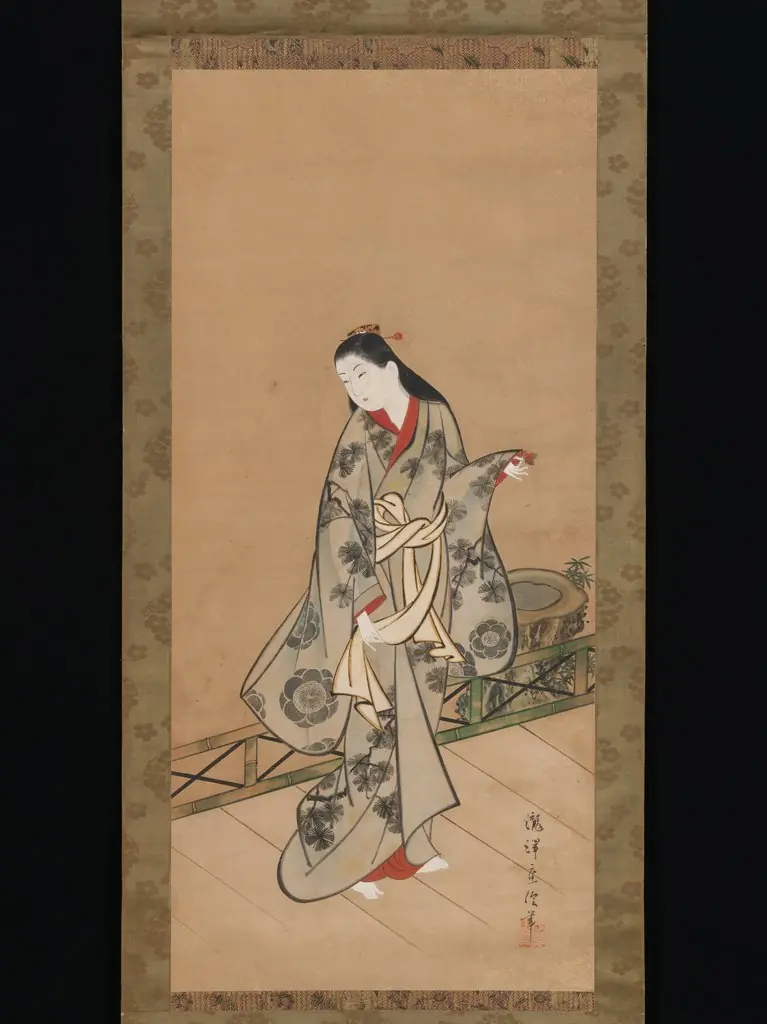
Courtesan Enjoying a Cool Summer Evening
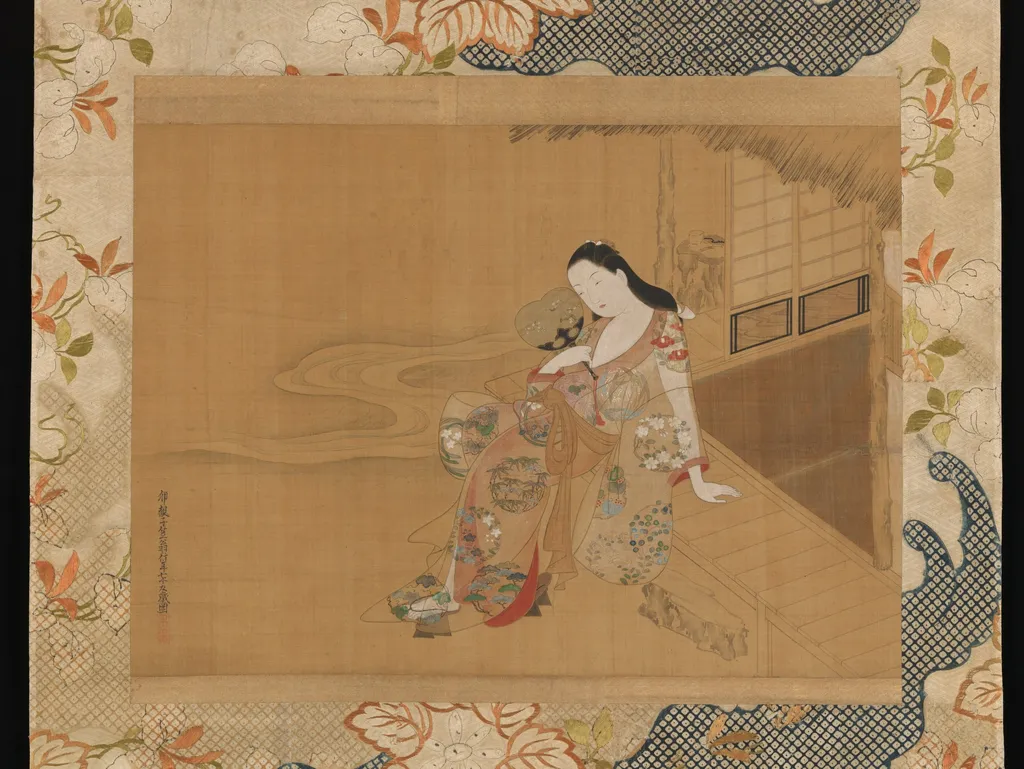
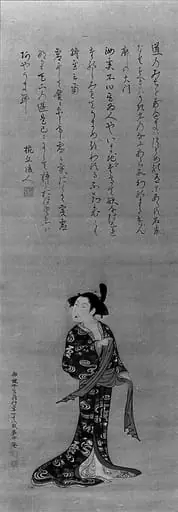
Courtesan Enjoying a Cool Summer Evening is an unspecified painting by Ogawa Haritsu. It dates from 1741 and is held in the collection of the Metropolitan Museum of Art.
About this work
Subject & Meaning
The imagery conveys a sense of seasonal comfort and the specific aesthetic pleasures associated with summer evenings in the cultural context of its creation.
The work depicts a woman, identified as a courtesan, enjoying a cool summer evening. She is shown holding a hand fan, an object central to the scene's atmosphere and the figure's activity. The subject matter focuses on the leisure and refinement of the courtesan class within an Edo-period Japanese setting.
The imagery conveys a sense of seasonal comfort and the specific aesthetic pleasures associated with summer evenings in the cultural context of its creation.
History & Provenance
Ogawa Haritsu painted Courtesan Enjoying a Cool Summer Evening in 1741, a work now held by the Metropolitan Museum of Art in New York. The painting entered the museum's collection through a documented acquisition, establishing its modern ownership chain. Its creation in Japan reflects early Edo-period artistic practice, and the work remains catalogued as part of the museum's permanent holdings.
Courtesan Enjoying a Cool Summer Evening, a painting by Ogawa Haritsu (Ritsuō) dated 1741, is held in the collection of the Metropolitan Museum of Art. The work is documented as part of that institution's holdings, with its location recorded as the Metropolitan Museum of Art.
No specific accession number is recorded in the available sources, and no exhibition history is documented for the painting.
Context
Ogawa Haritsu’s 1741 painting Courtesan Enjoying a Cool Summer Evening depicts a courtesan holding a hand fan, reflecting the leisurely pursuits of Japan’s Edo-period elite. The work is housed in the Metropolitan Museum of Art, where it is recognized as a representative example of early 18th-century ukiyo-e style painting. Scholarship highlights its delicate detail and subtle narrative, situating it within Haritsu’s broader exploration of feminine subjects amid the cultural milieu of merchant-class sophistication.
Its presence in a major Western institution underscores its significance as a bridge between Japanese artistic traditions and global art historical discourse.
The painting’s composition and iconography have been analyzed for insights into gender dynamics and seasonal symbolism in Edo-period visual culture, reinforcing its role in contextualizing the artist’s contribution to the evolution of Japanese painting beyond courtly themes.
Overview
Created in 1741 by the Japanese painter Ogawa Haritsu, this small-format work portrays a solitary woman seated on a wooden platform. She holds a hand‑fan that doubles as a reflective surface, a common device for cooling in the summer heat. The painting belongs to the collection of the Metropolitan Museum of Art in New York.
Technique & Style
Haritsu employs a restrained palette of muted earth tones for the interior, contrasted with the vivid hues of the robe. The polished wooden floor and simple, clean‑lined walls are rendered with precise brushwork, while the fan’s mirrored surface is suggested through subtle highlights. The overall effect balances realism with decorative elegance typical of mid‑Edo period genre painting.
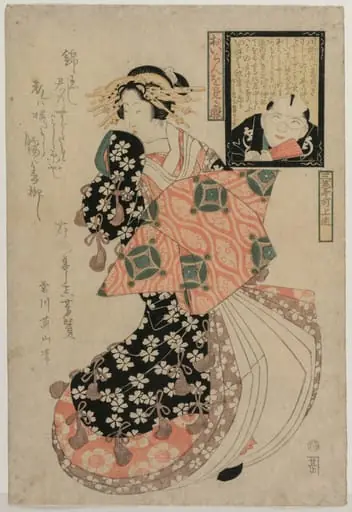
Own this work as a print
Artist & collection


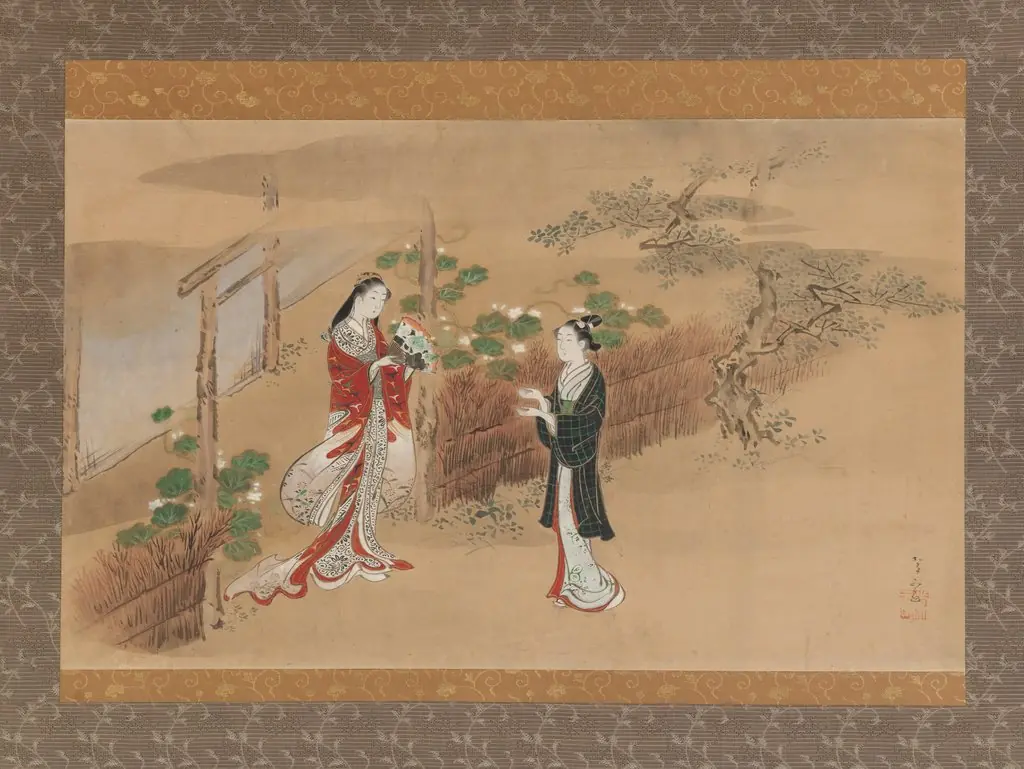 "Evening Faces" (Yūgao) chapter from The Tale of Genji (Genji monogatari)
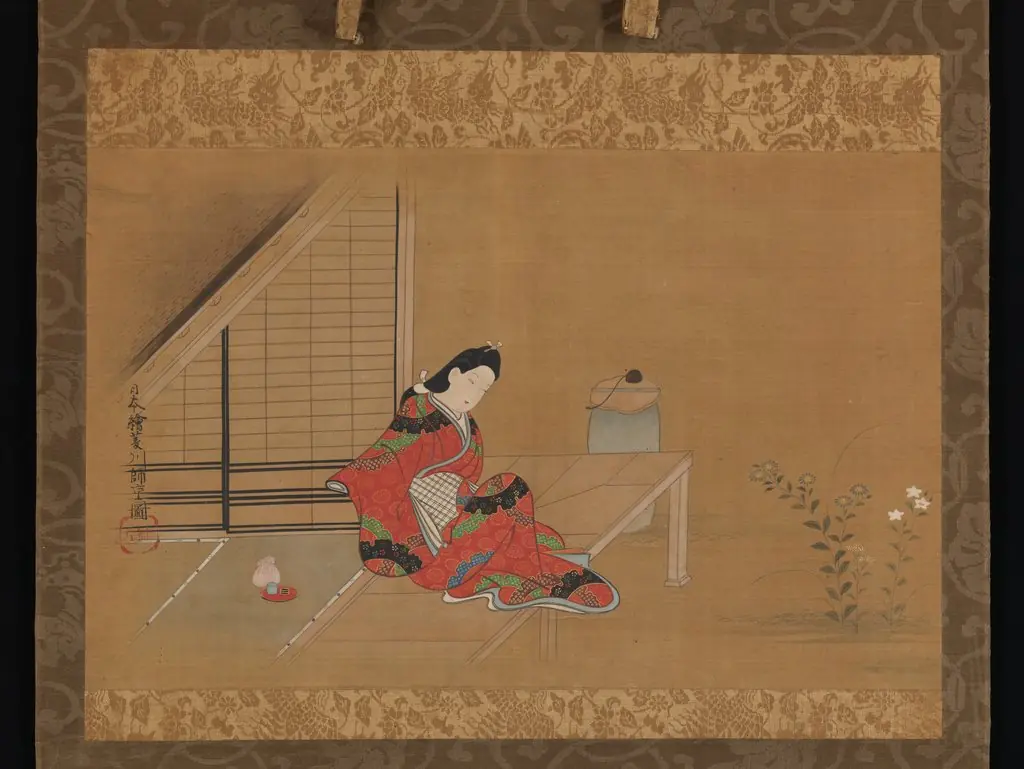 Young Woman on a Veranda
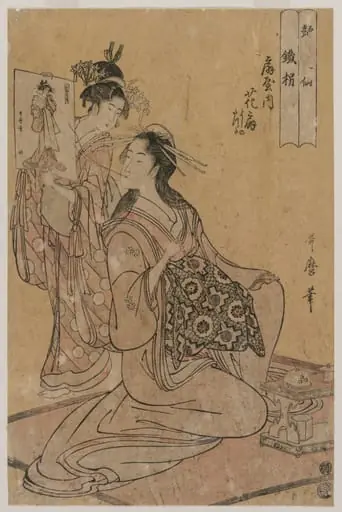 The Courtesan Hana-ogi of Ogiya as the Sennin Tekkai (from the series Eight Immortals of Sensuality)
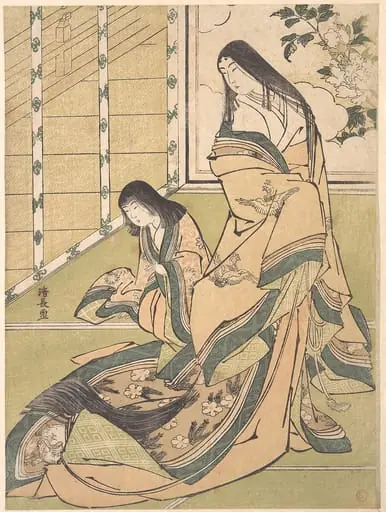 Untitled
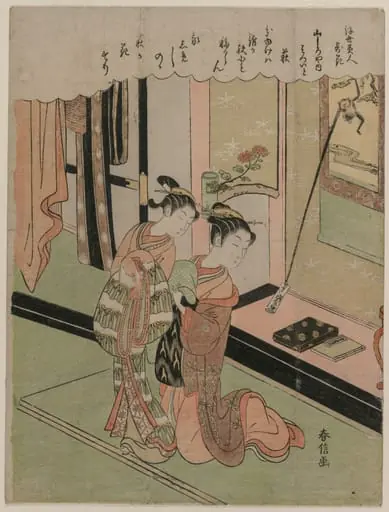 Hatsuito of the Yamashiroya Likened to Bush Clover, from Beauties of the Floating World Compared to Flowers
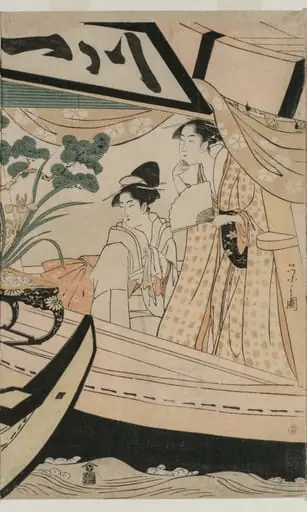 Party on the Pleasure Boat Kawaichimaru
 Woman on Veranda