Artwork
Woman on Veranda
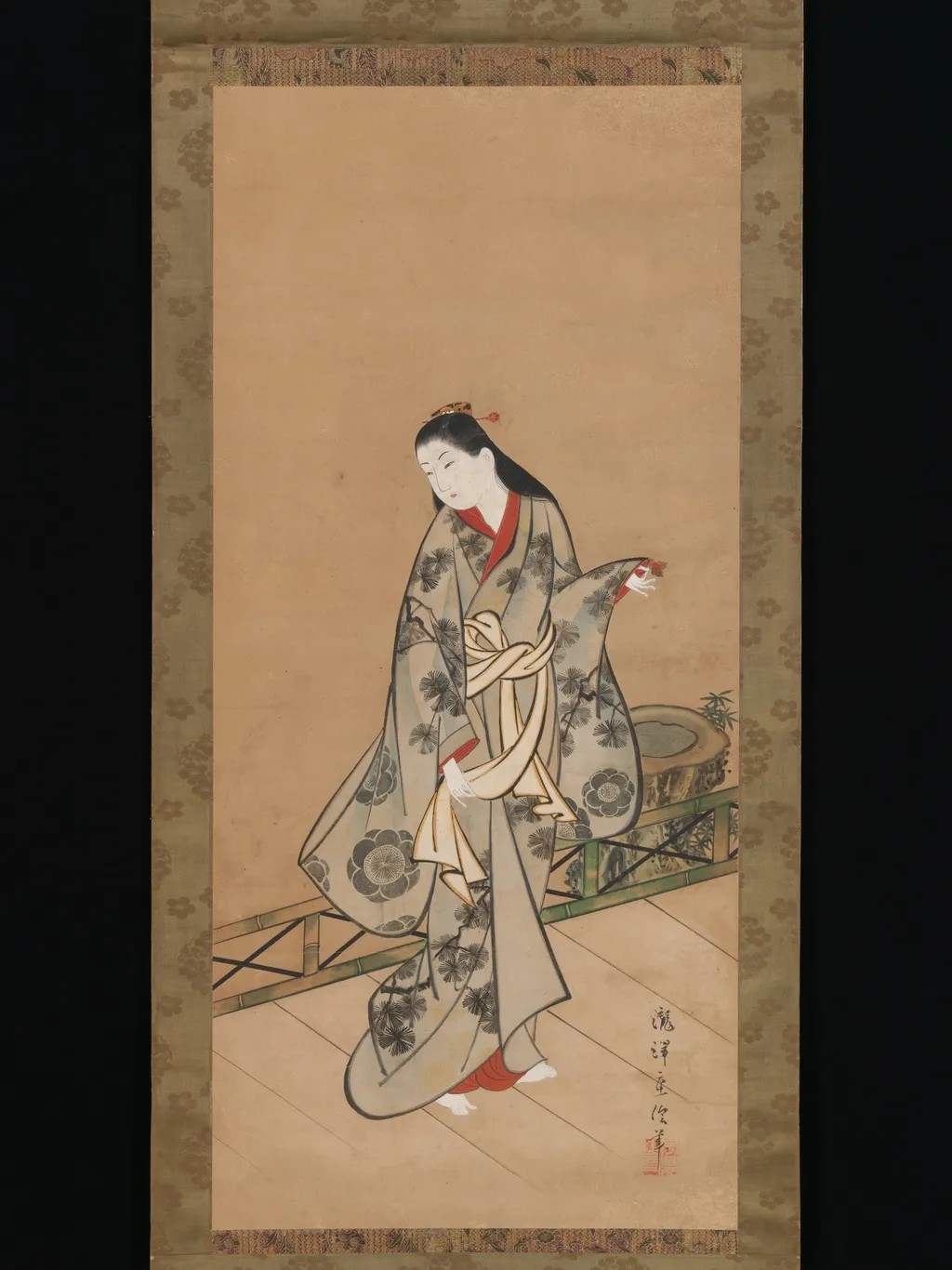
Woman on Veranda is an unspecified painting by the Ukiyo-e artist Takizawa Shigenobu. It dates from 1730 and is held in the collection of the Metropolitan Museum of Art.
About this work
Subject & Meaning
The artwork represents a specific moment of domestic or leisurely life, capturing the presence of the woman within her architectural environment.
The painting depicts a solitary woman situated on a veranda, a setting that establishes the work's primary visual focus. Created in 1730 by Takizawa Shigenobu in Japan, the composition centers on this female figure as the sole subject. The artwork represents a specific moment of domestic or leisurely life, capturing the presence of the woman within her architectural environment.
While the sources confirm the depiction of the woman and her location, they do not provide further details regarding specific symbolic meanings, iconographic programs, or deeper allegorical interpretations associated with the scene.
History & Provenance
The painting Woman on Veranda was created by Takizawa Shigenobu in Japan in 1730. This work is currently held in the collection of the Metropolitan Museum of Art. The sources provide the specific year of inception and the location of creation but do not contain details regarding the original commission, the specific chain of ownership prior to the museum, or the circumstances of its acquisition.
Woman on Veranda, a painting by Takizawa Shigenobu dated 1730, is held in the collection of the Metropolitan Museum of Art. Wikidata records its location as the Metropolitan Museum of Art and identifies it as part of that institution's holdings. No accession number or further inventory details are provided in the available sources, and no exhibition history is documented.
Context
Takizawa Shigenobu painted Woman on Veranda in 1730, a work reflecting his role in the Hōshō school of ukiyo-e and broader Edo-period painting traditions. The piece is housed in the Metropolitan Museum of Art, where it is recognized as part of the museum's collection of Japanese artworks. Critical reception and scholarly analysis highlight its significance within the artist's oeuvre and its contribution to the historical development of Japanese painting.
Overview
Woman on Veranda, painted by Takizawa Shigenobu in 1730, is an oil work that portrays a solitary female figure on a domestic platform. The composition is modest in scale and currently belongs to the collection of the Metropolitan Museum of Art in New York. The image captures a moment of quiet repose, inviting the viewer to contemplate everyday life in early eighteenth‑century Japan.
Technique & Style
Shigenobu employs strong, delineating lines and flat, unmodulated color fields, a hallmark of Edo‑period narrative painting. The limited palette and restrained background create a storybook atmosphere, while the bold outlines give the figure a graphic clarity. The overall effect is one of calm simplicity, emphasizing form over illusionistic depth.
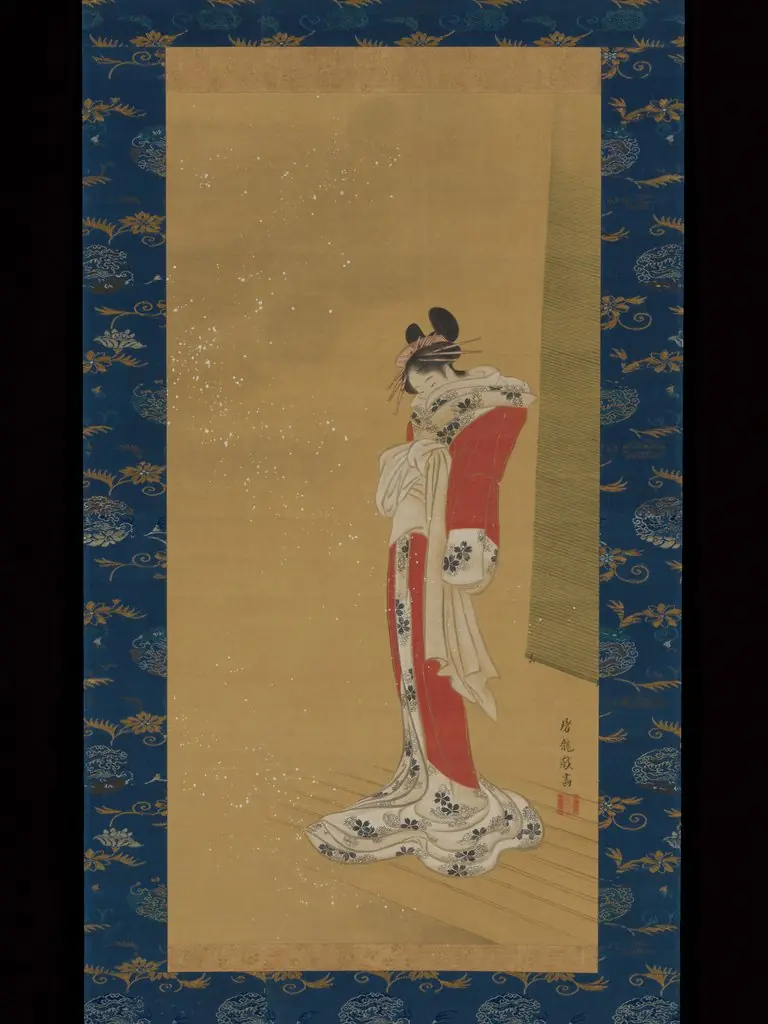
Own this work as a print
Artist & collection
Artist
Takizawa Shigenobu was a Japanese painter and ukiyo-e artist active in the Edo period, under the Tokugawa shogunate.

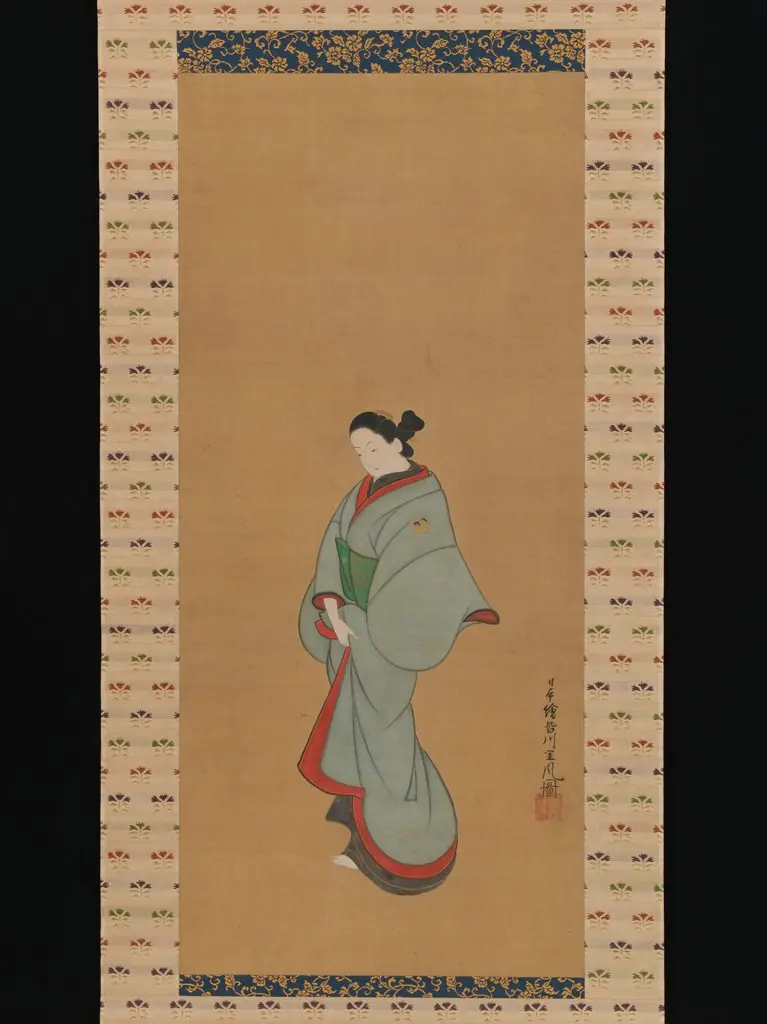 Standing Woman
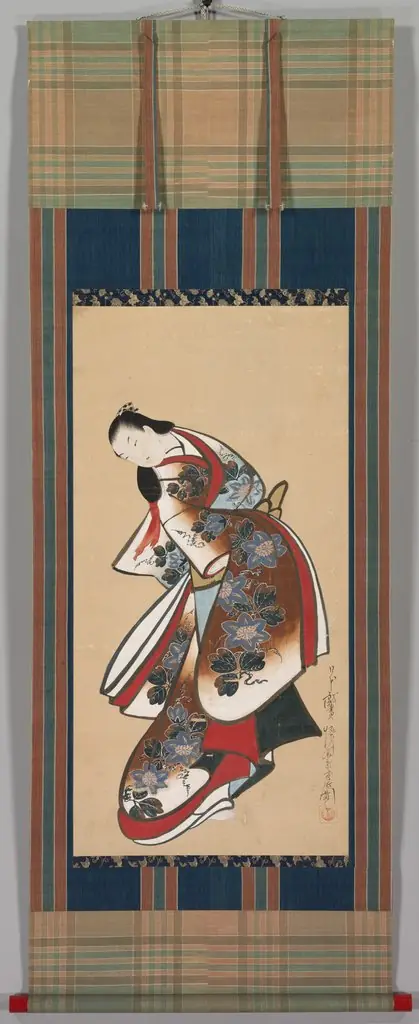 Courtesan
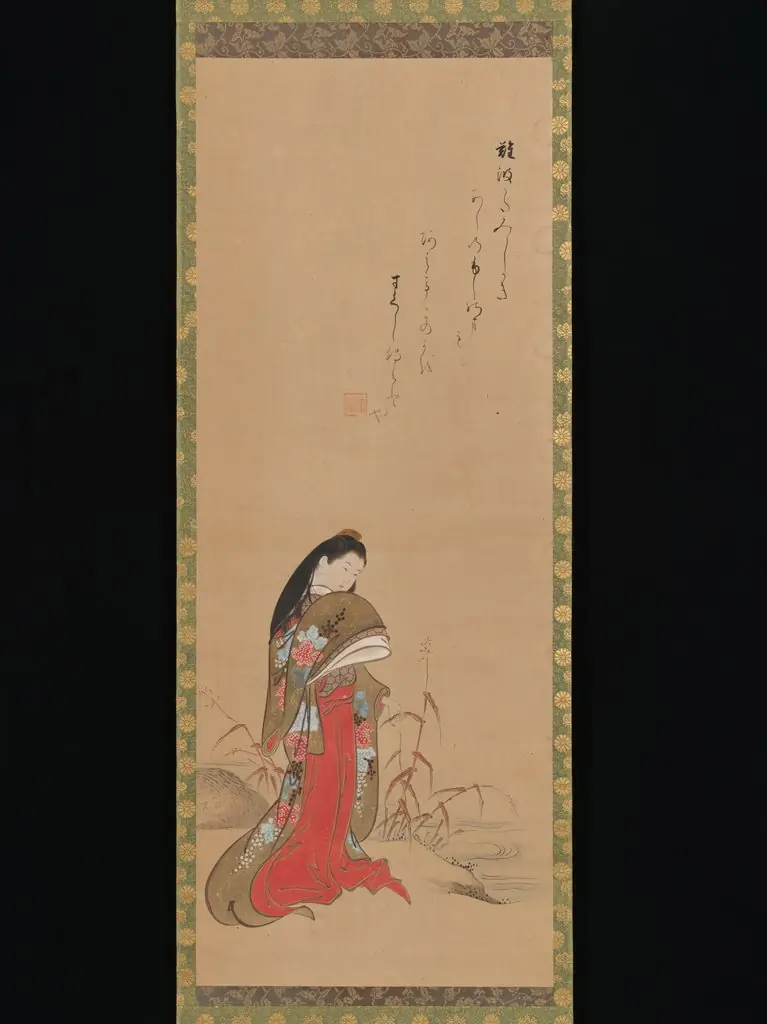 Lady Ise by the Riverbank
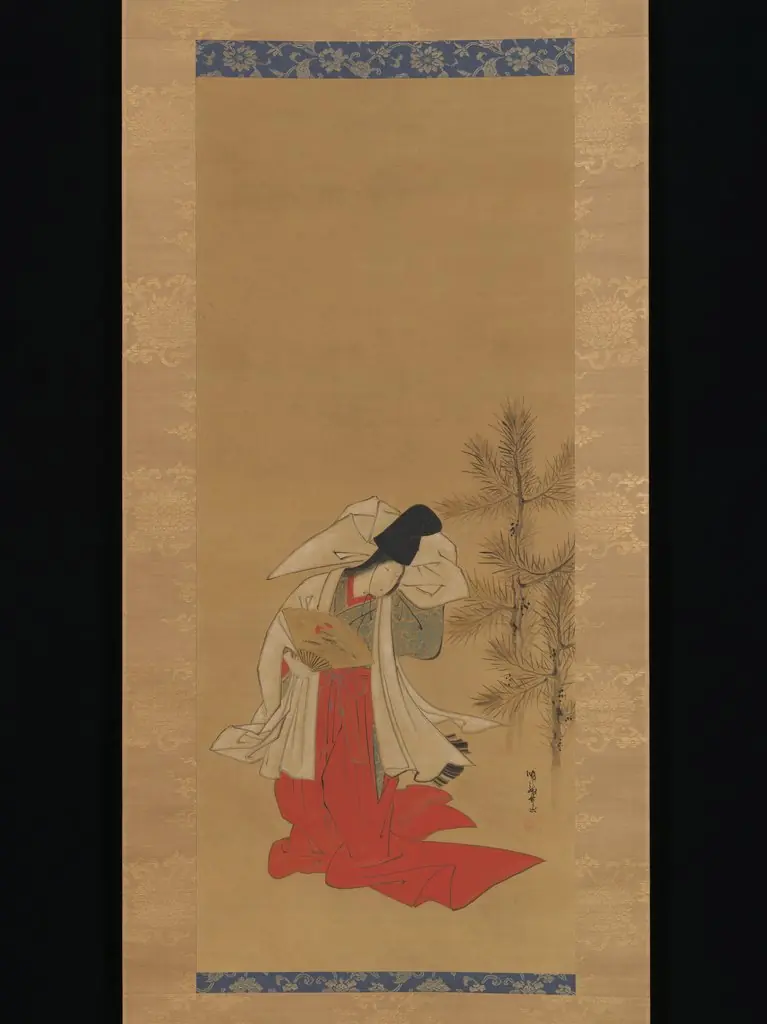 Courtesan-Dancer (Shirabyōshi) for the New Year
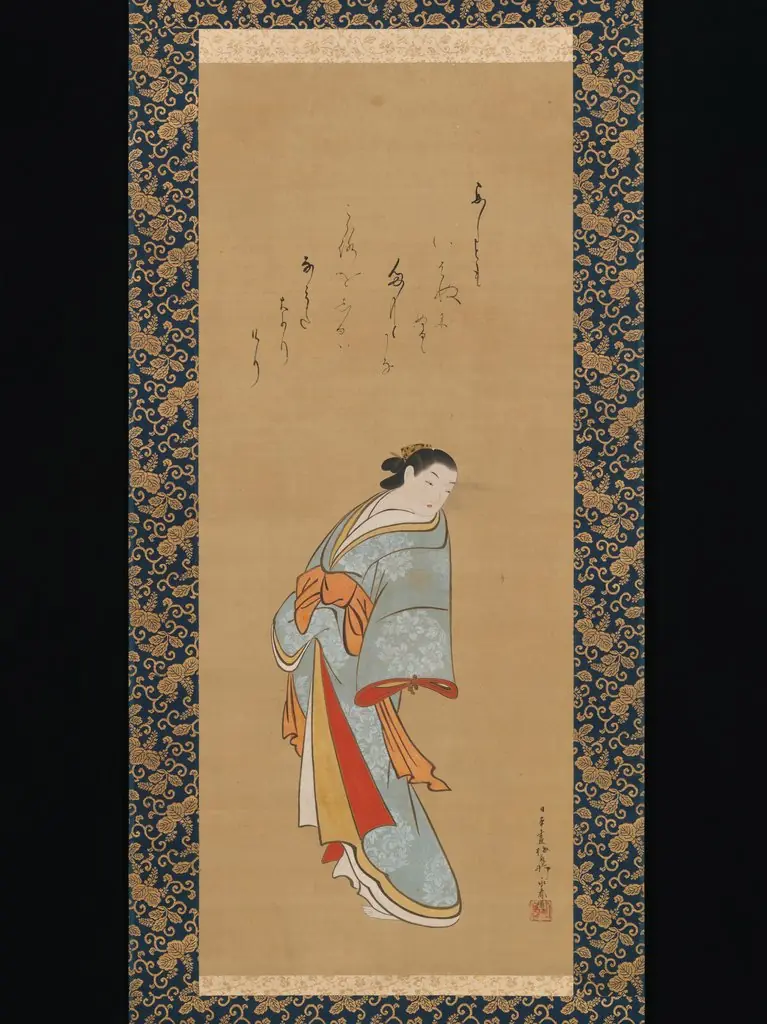 Standing Courtesan
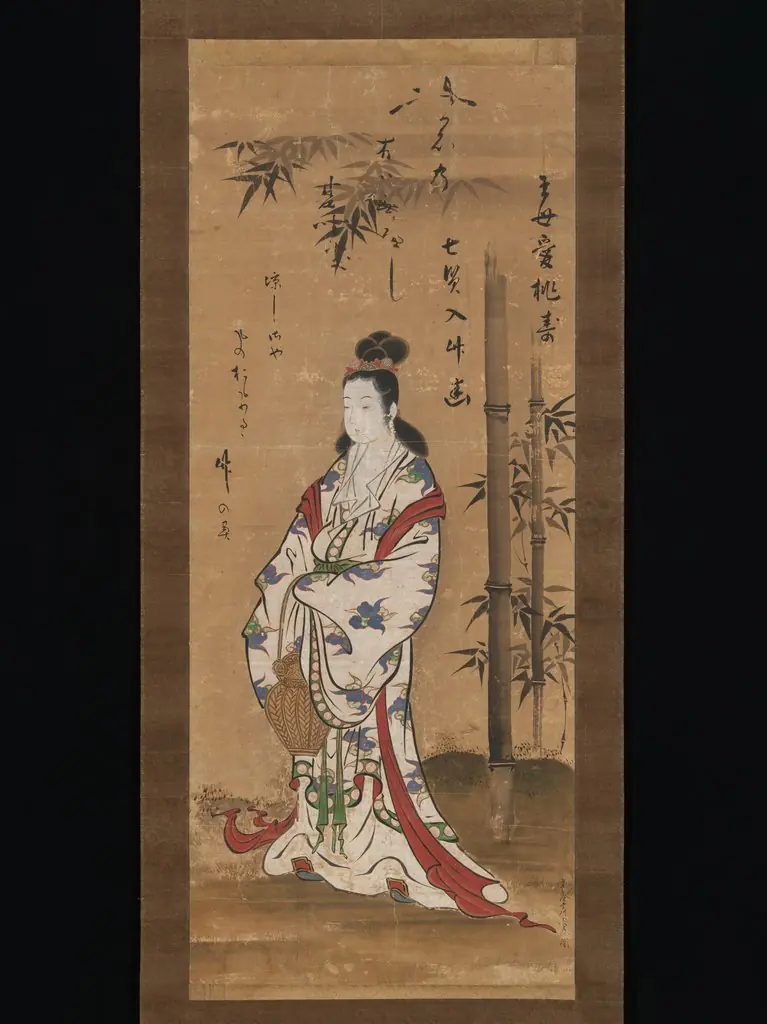 Gyoran Kannon
 勝川春章筆 立姿美人図|Woman in a Black Kimono
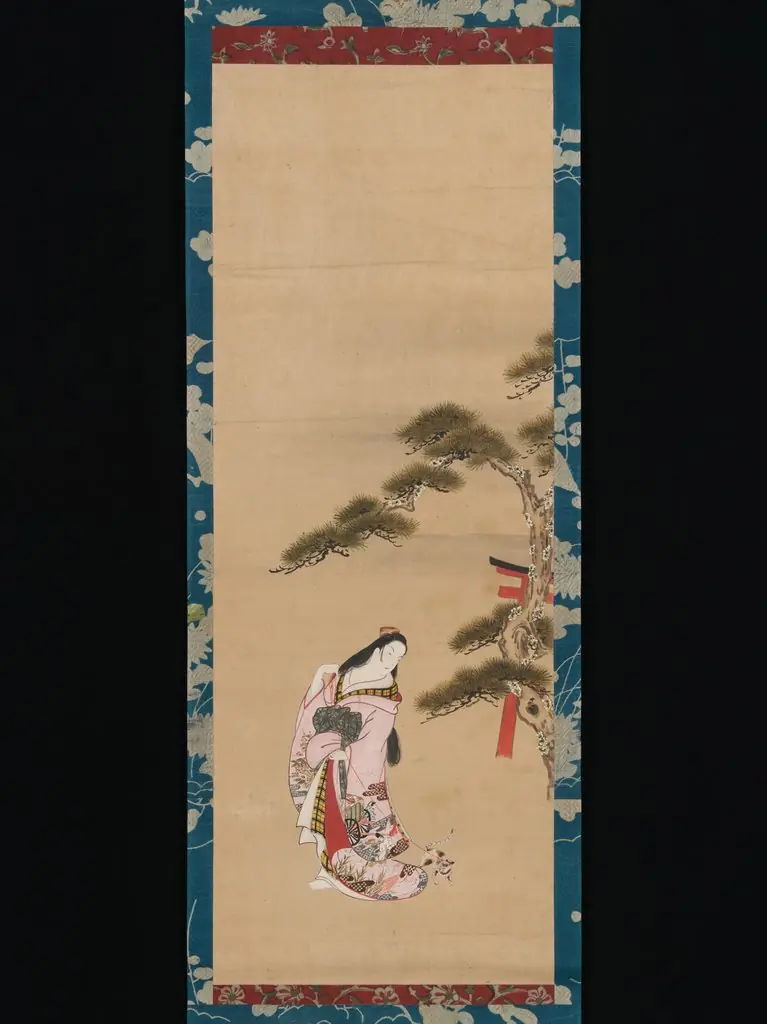 The Third Princess and a Cat, from the "New Herbs I" (Wakana I) chapter The Tale of Genji (Genji monogatari}
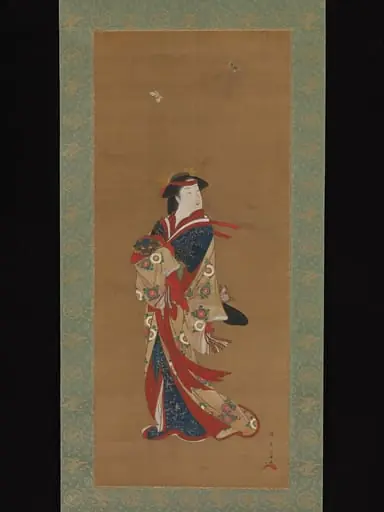 Untitled
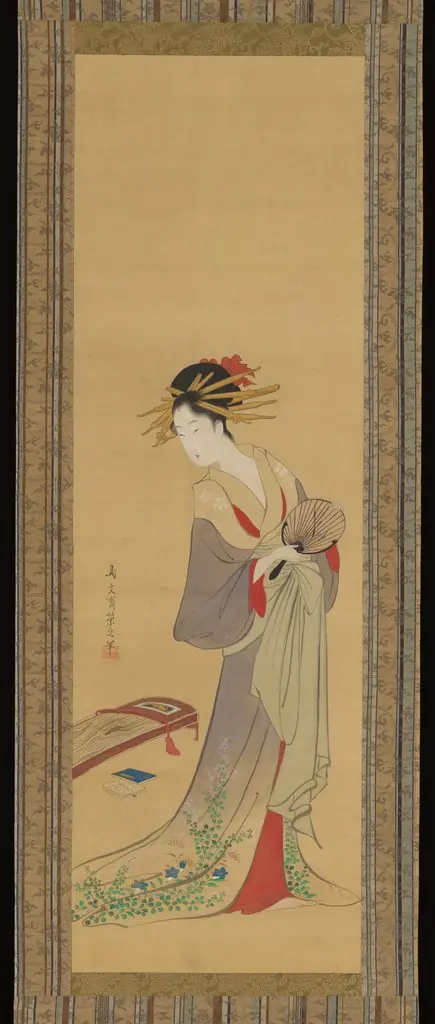 Courtesan with Fan and Koto
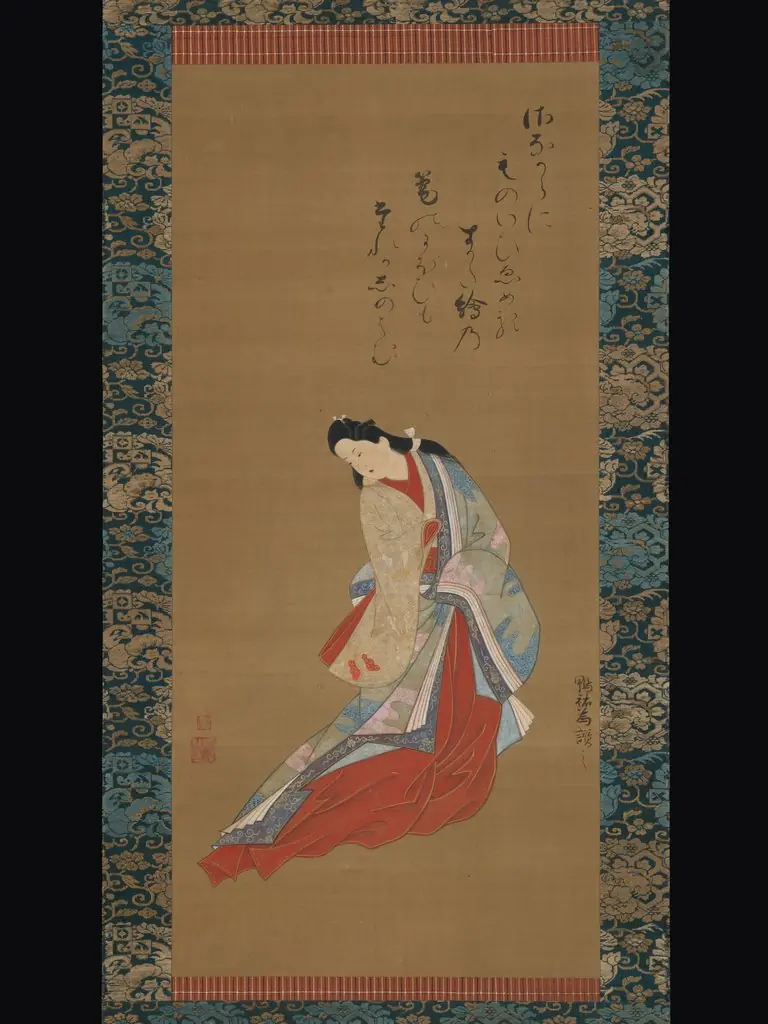 Standing Courtesan
- Beauty on a Veranda in Snow