Artwork
The Crucifixion
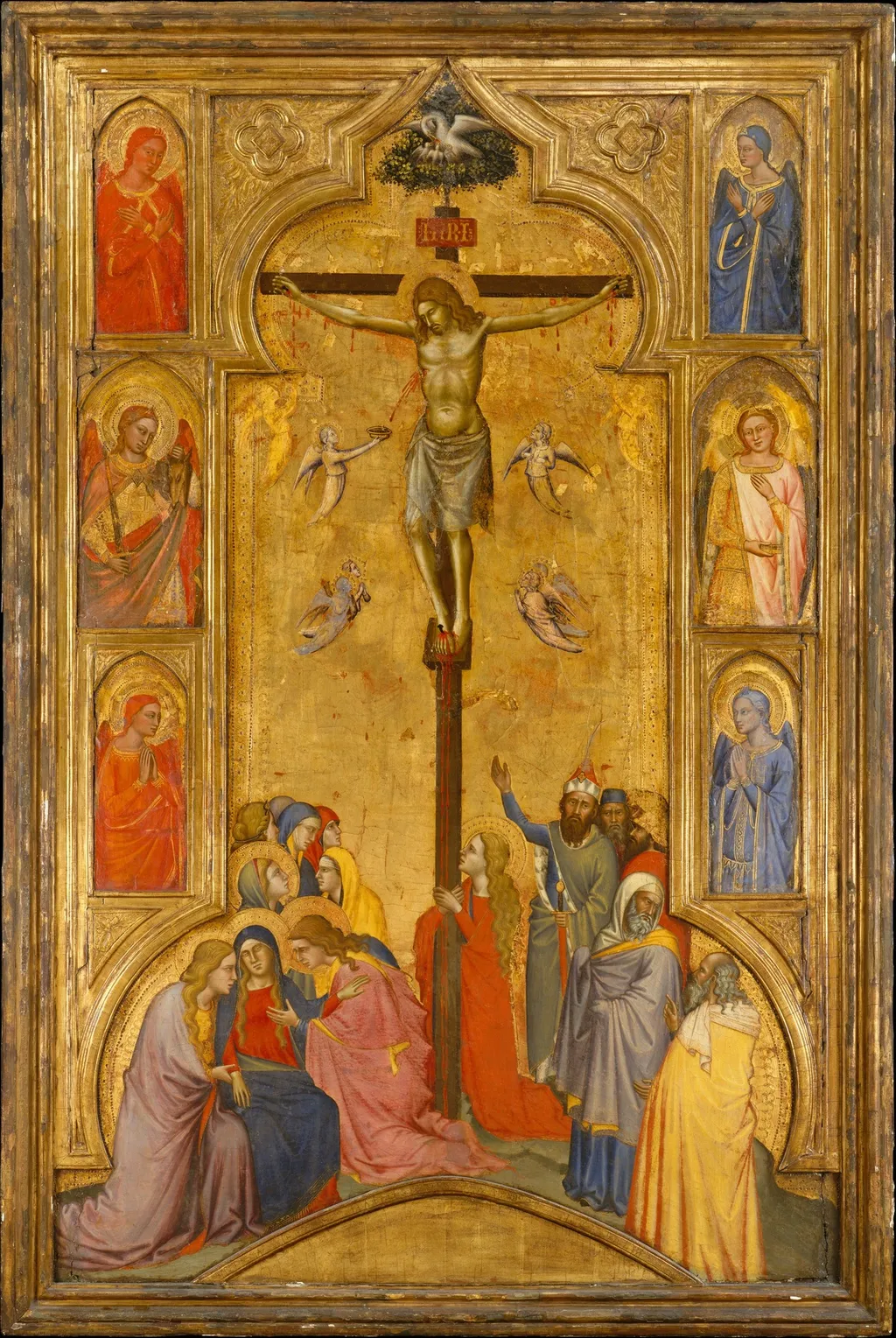
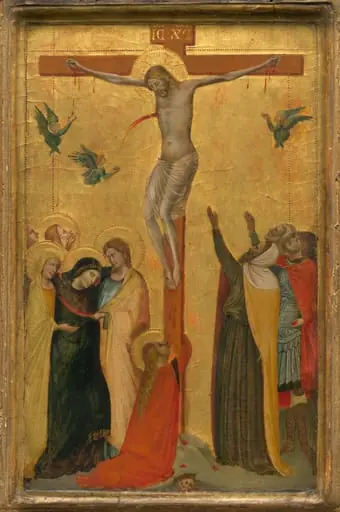
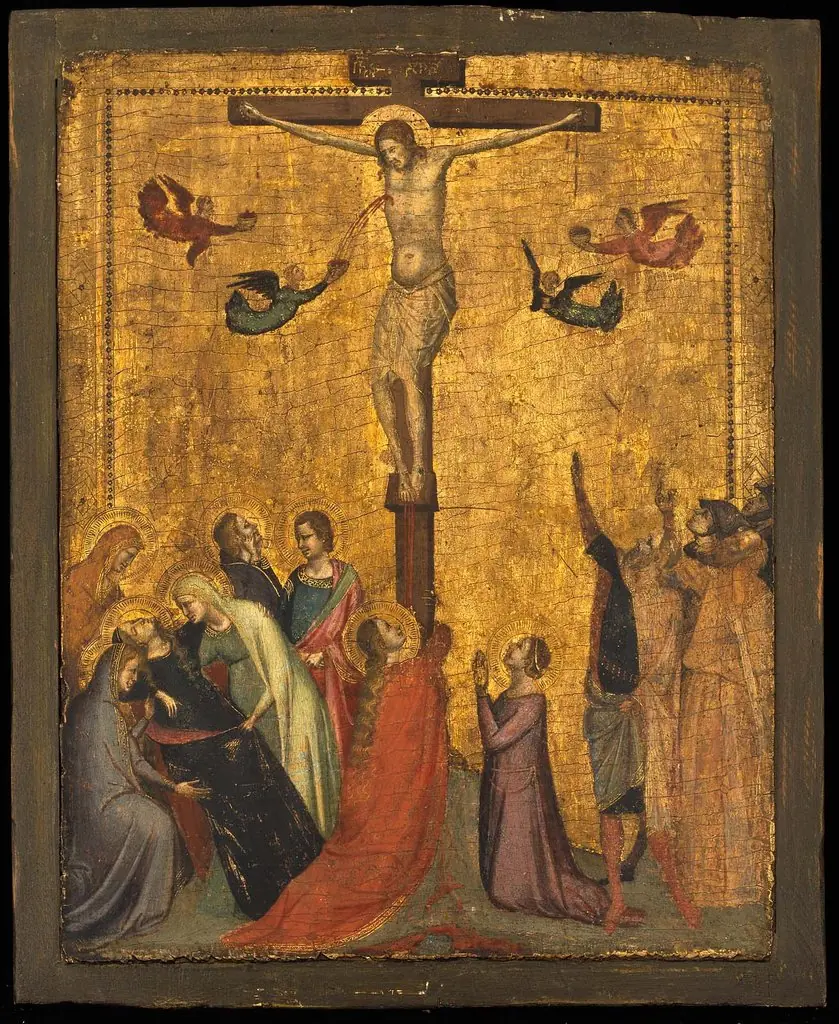
The Crucifixion is a tempera painting by the Italo Byzantine artist Orcagna. It dates from 1365 and is held in the collection of the Metropolitan Museum of Art.
About this work
Subject & Meaning
The work's religious genre and iconography align with traditional representations of the Crucifixion, underscoring its devotional purpose.
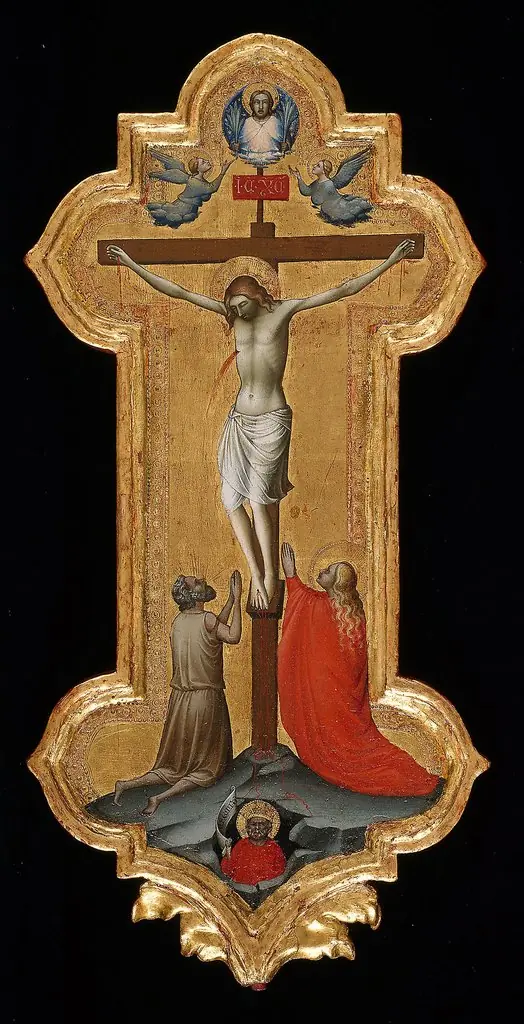
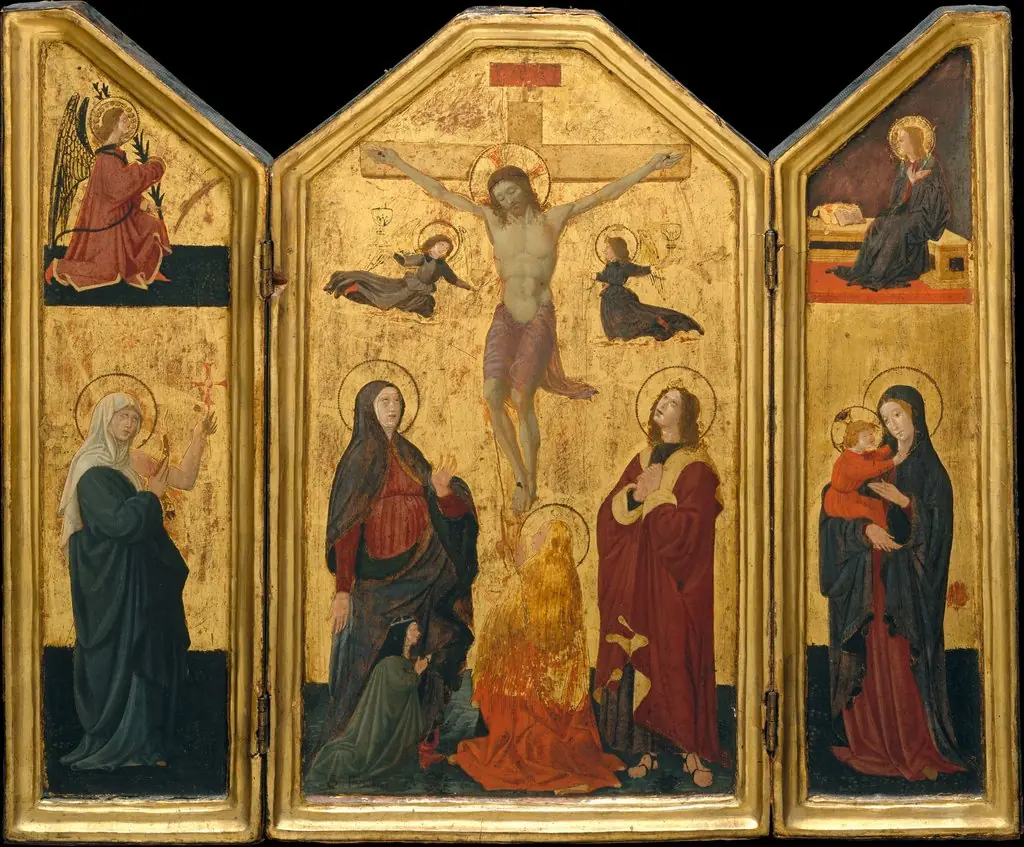
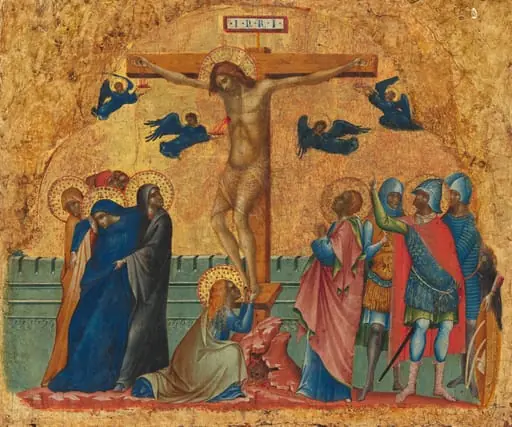
The painting depicts the Crucifixion of Jesus, a central subject in Christian iconography, featuring key figures such as Jesus Christ on the cross, the Virgin Mary in mourning, and an angel positioned nearby. The composition emphasizes the moment of Christ's sacrifice, evoking themes of suffering, redemption, and divine intervention. The presence of Mary and the angel underscores the emotional and theological weight of the event, reinforcing the narrative of Christ's death as a pivotal moment in Christian salvation history. The work's religious genre and iconography align with traditional representations of the Crucifixion, underscoring its devotional purpose.
Technique & Style
Created in 1365 by Andrea di Cione, known as Orcagna, The Crucifixion is executed in tempera on a wooden panel support. The work measures 137 centimeters in height and 82 centimeters in width. Stylistically, the painting adheres to the conventions of religious altarpiece production, depicting the crucifixion of Jesus Christ accompanied by figures such as an angel and the Virgin Mary.
The handling of the medium reflects the period's standard practices, using tempera to achieve durability and luminosity for devotional imagery. The composition centers on the crucifixion, rendered with the emotional gravity characteristic of the artist's approach to scenes of grief and sacrifice. The panel remains the primary physical support for this religious painting, now held in the Metropolitan Museum of Art.
History & Provenance
The Crucifixion is a tempera painting on panel executed by Orcagna in 1365. The composition depicts the crucifixion of Jesus with attendant figures, reflecting contemporary religious art conventions. The painting measures 137 × 82 cm and was owned by collector Robert Lehman, who bequeathed it to the Metropolitan Museum of Art, where it remains.
Its creation is dated to the mid-14th century, aligning with Orcagna's active period, and the work is classified as a religious painting within the museum's collection.
Overview
This tempera painting, titled The Crucifixion, presents the central figure of Jesus Christ on the cross, surrounded by celestial beings and earthly mourners. The composition evokes a profound sense of sorrow and devotion, characteristic of its sacred subject matter. A luminous gold background emphasizes the spiritual nature of the event, while an elaborate arched frame further enhances the artwork's devotional purpose.
Own this work as a print
Artist & collection
Artist
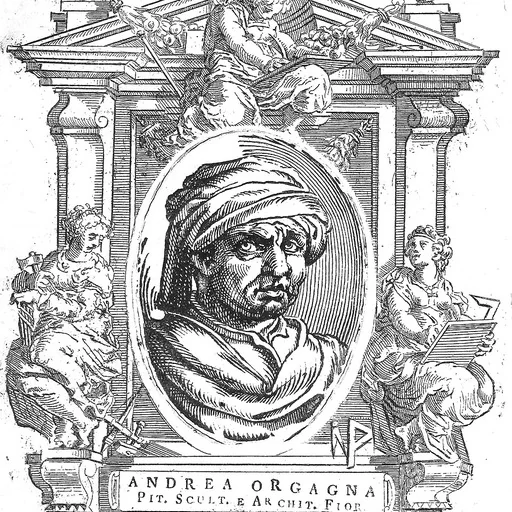
Andrea di Cione di Arcangelo (c. 1308 – 25 August 1368), better known as Orcagna, was an Italian painter, sculptor, and architect active in Florence. He worked as a consultant at the Florence Cathedral and supervised…