Artwork
Charles de Bucquoy
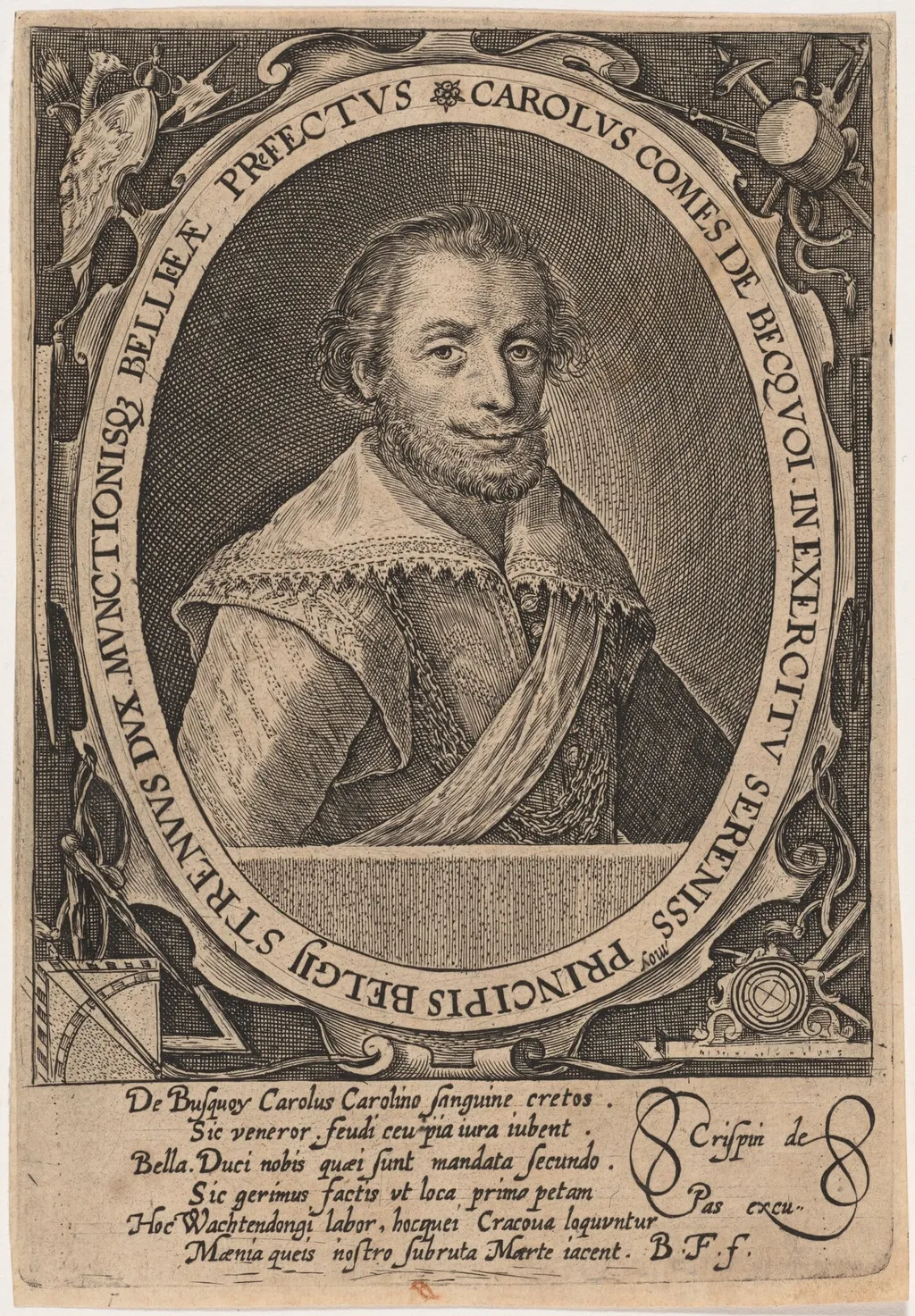
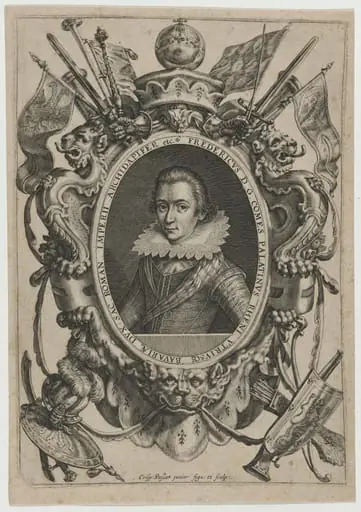
Charles de Bucquoy is an ink print by the Renaissance artist Crispijn van de Passe I. It dates from 1601 and is held in the collection of the National Gallery of Art.
About this work
Overview
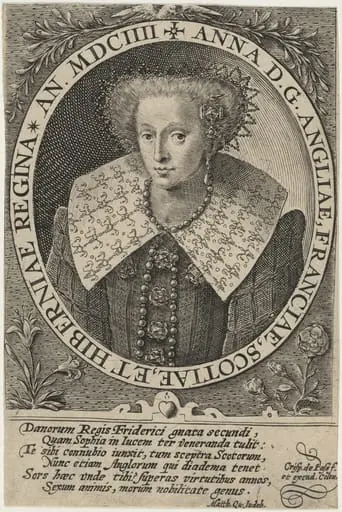
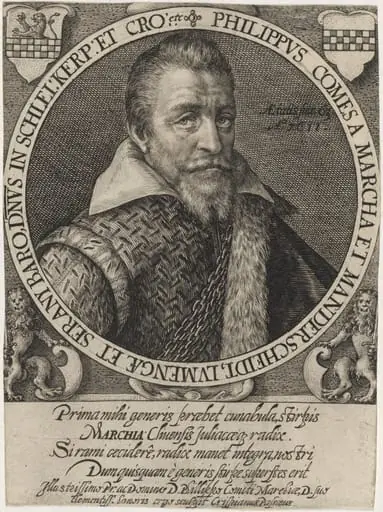
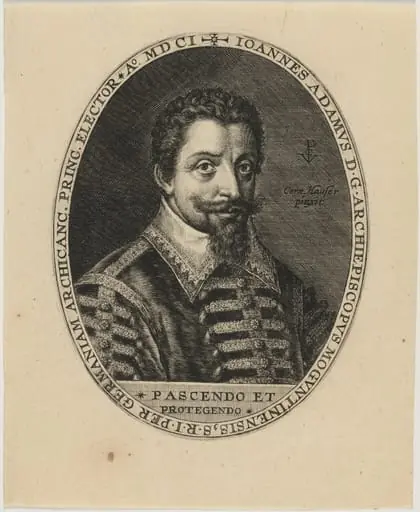
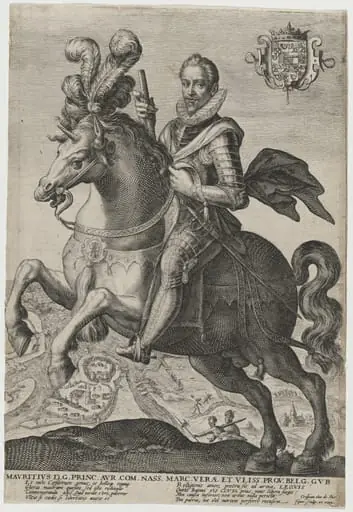
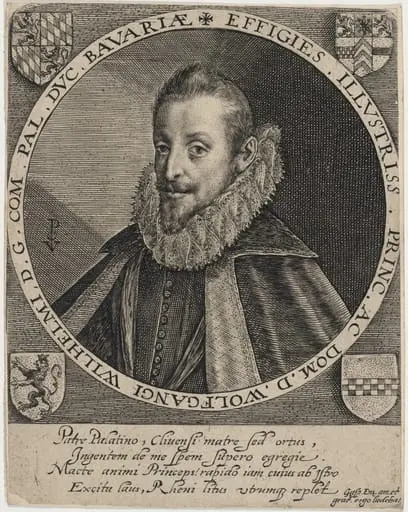
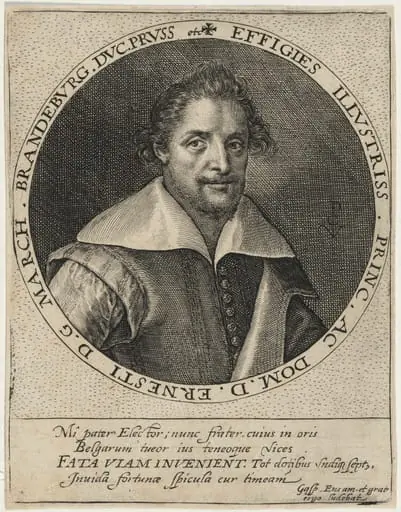
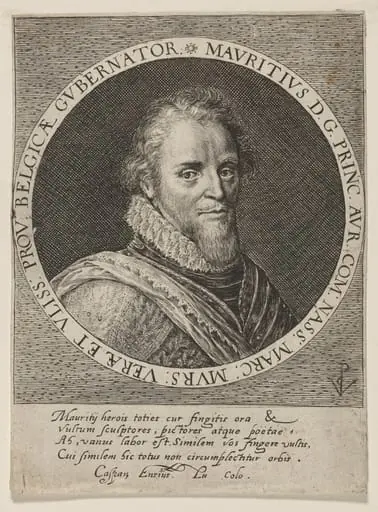
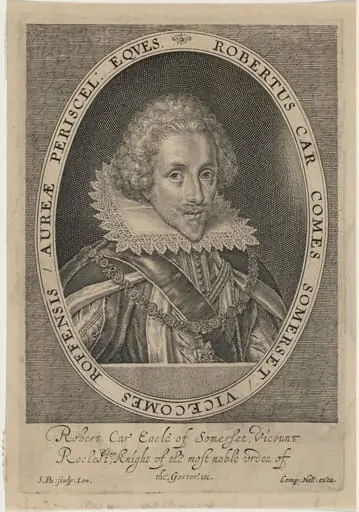
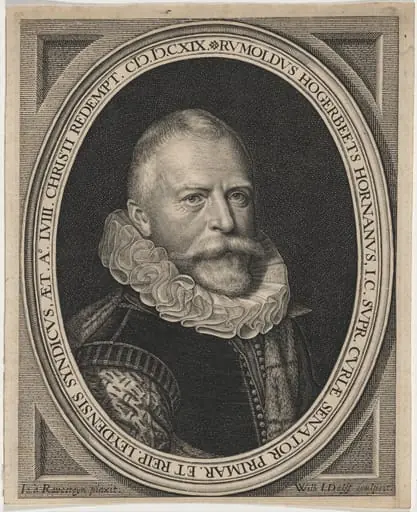
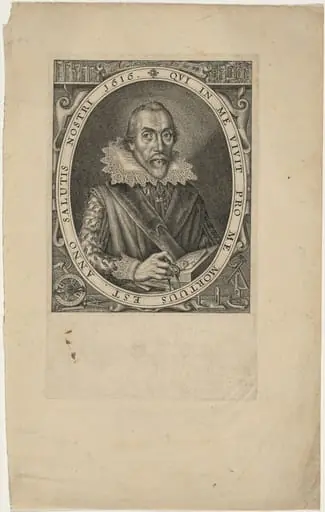
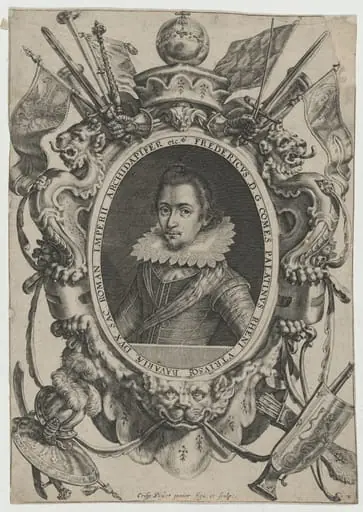
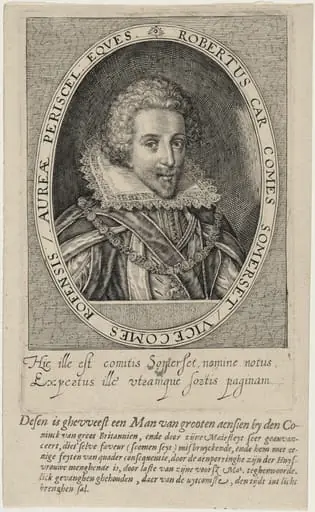
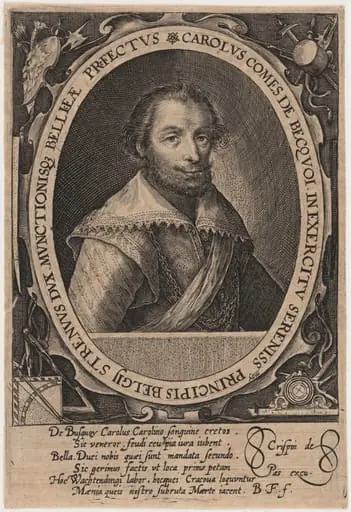
Crispijn van de Passe I’s 1601 engraving presents Charles de Bucquoy, a bearded gentleman in early‑seventeenth‑century dress. He is shown within an oval frame that is richly ornamented with a coat of arms and a patterned border, set against a dark ground that isolates the figure.
Subject & Meaning
The portrait captures de Bucquoy with a composed expression, his beard and moustache framing a subtle smile. His attire, a cloak with a lace‑trimmed collar and a chest‑crossed sash, signals his status, while the solemn demeanor reflects the dignified portrait conventions of the period.
Technique & Style
Van de Passe employed fine line work and dense cross‑hatching to model the facial features and fabric textures, creating a sense of depth on a flat surface. The meticulous rendering of the lace collar and ornamental frame demonstrates the engraver’s command of line and his adherence to the detailed realism typical of Northern Renaissance prints.
History & Provenance
Created in 1601, the print belongs to the early output of the van de Passe workshop, a prolific family of Dutch engravers active in the Dutch Republic and England. The work likely circulated among patrons and collectors interested in contemporary portraits of European nobility.
Context
The engraving reflects the broader trend of portraiture in print form that allowed the likenesses of aristocrats to be reproduced beyond the original painted portrait. Such images served both commemorative and propagandistic purposes, reinforcing the social standing of figures like de Bucquoy within a rapidly expanding print market.
Own this work as a print
Artist & collection

Artist
Crispijn van de Passe I (1564–1637) was an artist, born in Arnemuiden.