Artwork
James I, King of England
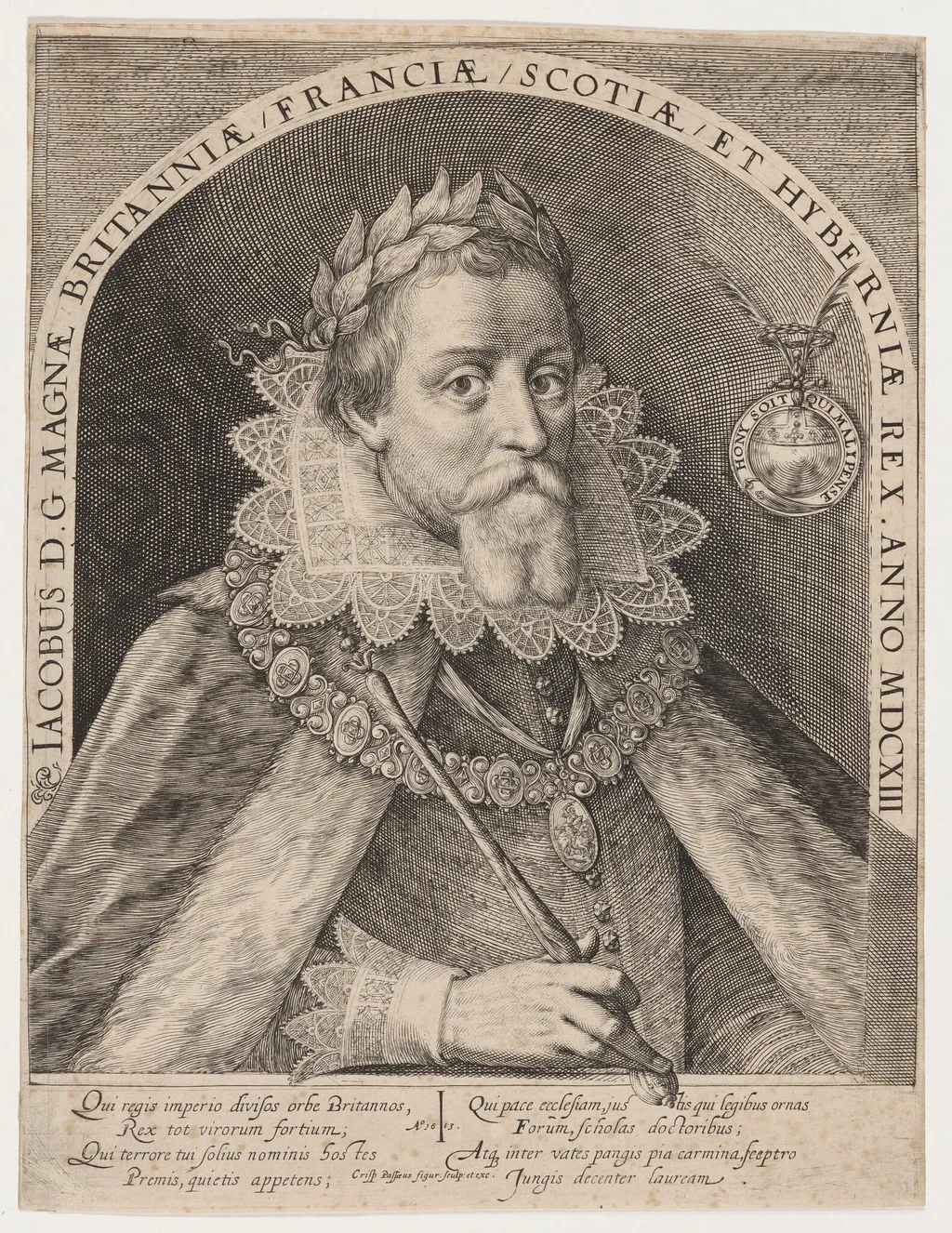
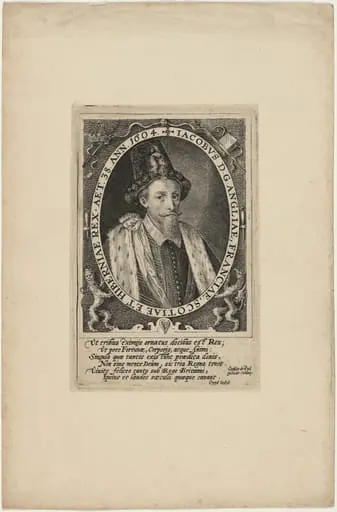
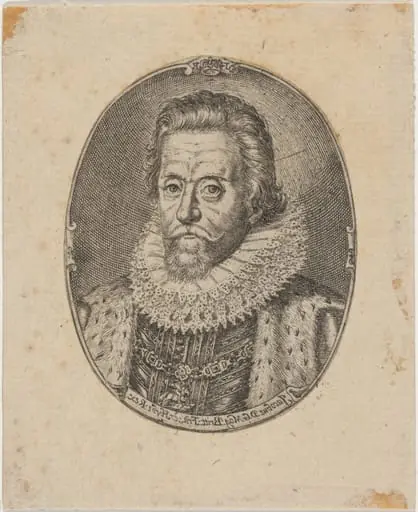
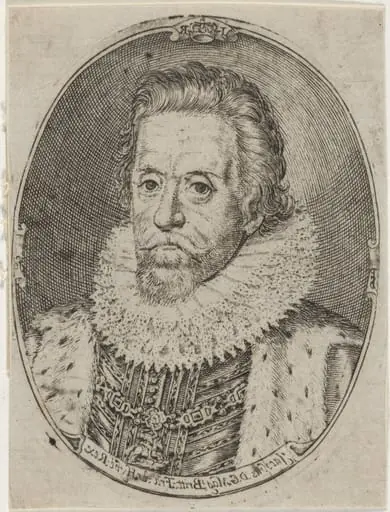
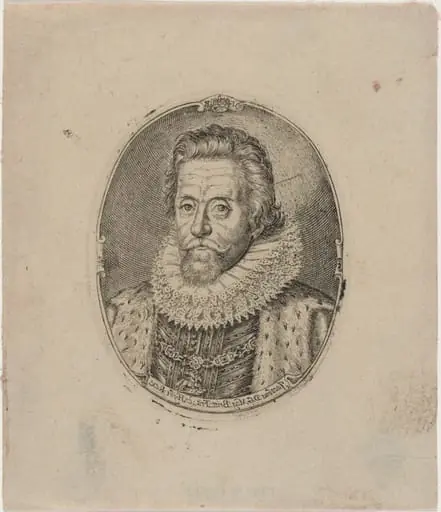
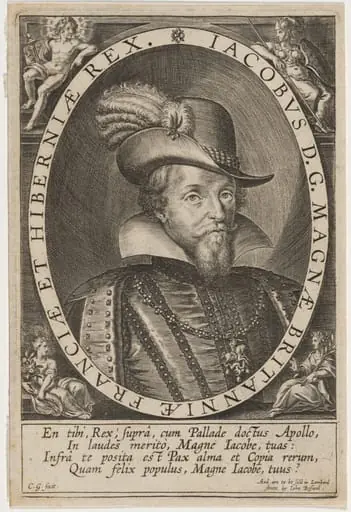
James I, King of England is an ink print by the Baroque artist Crispijn van de Passe I. It dates from 1613 and is held in the collection of the National Gallery of Art.
About this work
Overview
The work presents the monarch facing slightly left, characterized by a serious expression, a prominent mustache, and a full beard typical of the era.
Created in 1613 by the Dutch engraver Crispijn van de Passe I, this portrait depicts James I, King of England, in a formal half-length composition. The work presents the monarch facing slightly left, characterized by a serious expression, a prominent mustache, and a full beard typical of the era. He is dressed in dark attire accented by an elaborate, wide lace collar and a heavy chain of office resting on his chest.
His right hand holds a small, indistinct object, likely a glove or a piece of fabric, while his left hand rests near his waist. The image is framed by a decorative border containing Latin inscriptions that identify the sitter and his royal titles. As an engraving, the piece relies on precise linear hatching and cross-hatching to render texture and volume, particularly in the rendering of the lace and facial hair.
Produced during the early years of James's reign, this print served as a primary vehicle for disseminating the king's official image across Europe. It reflects van de Passe's reputation for producing high-quality, standardized royal portraits that balanced individual likeness with the dignified conventions of early 17th-century court portraiture.
Subject & Meaning
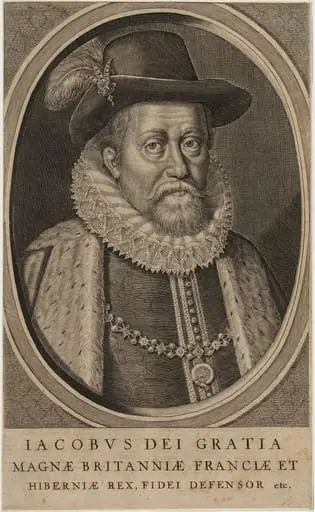
The figure is depicted with a solemn expression, full beard, and elaborate lace collar, holding a small object in his right hand. Inscribed titles around the border proclaim him king of Great Britain, France, and Ireland, underscoring his claimed sovereignty and political stature.
Technique & Style
Created by hand‑cutting fine lines into a metal plate, the engraving achieves tonal variation through dense cross‑hatching and delicate stippling. This method allows subtle shading that renders the textures of fabric, metal chain, and facial features, typical of early‑17th‑century portrait prints.
History & Provenance
The work dates to 1613, during James I’s reign, and reflects the period’s demand for disseminating royal imagery across Europe. Van de Passe, a prominent Dutch engraver active in the Low Countries, produced the plate for distribution to patrons and collectors interested in contemporary monarchs.
Context
In the early Stuart era, printed portraits served both political propaganda and personal commemoration. The inclusion of Latin inscriptions and regal titles aligns with the era’s emphasis on dynastic legitimacy and the monarch’s claim to multiple thrones.
Own this work as a print
Artist & collection

Artist
Crispijn van de Passe I (1564–1637) was an artist, born in Arnemuiden.