Artwork
Richard Sackville, Third Earl of Dorset
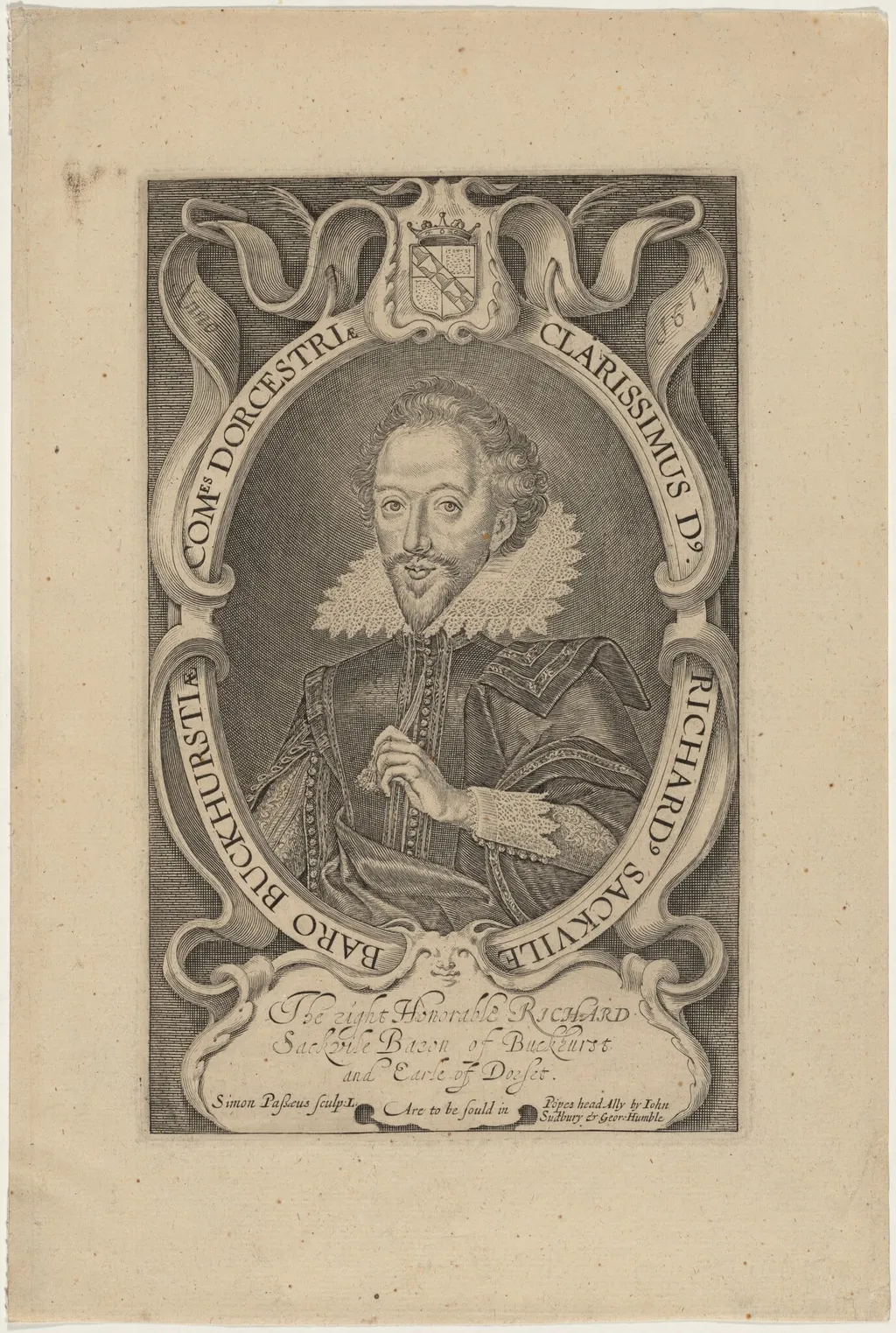
Richard Sackville, Third Earl of Dorset is an ink print by the Renaissance artist Simon van de Passe. It dates from 1621 and is held in the collection of the National Gallery of Art.
About this work
Overview
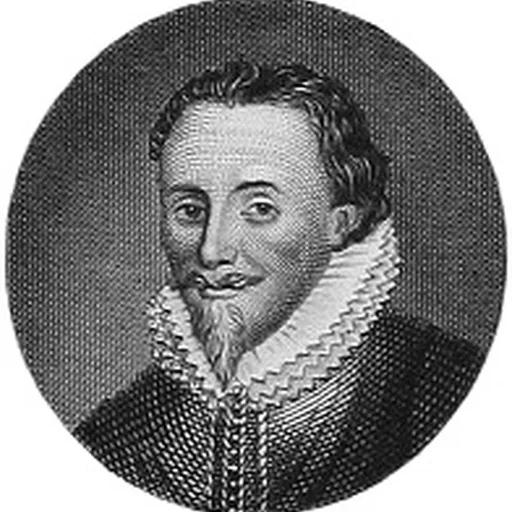
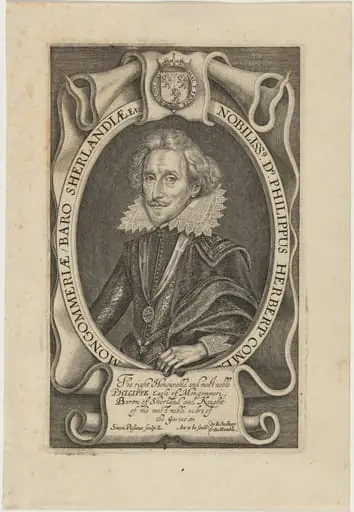
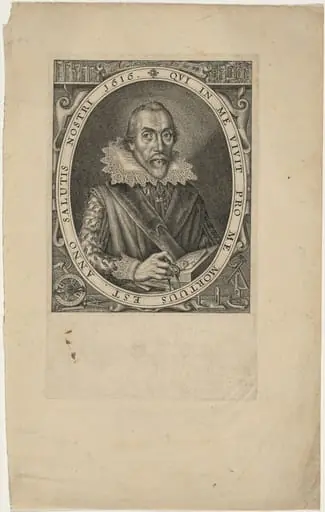
Created in 1621 by the Dutch engraver Simon van de Passe, this portrait depicts Richard Sackville, the Third Earl of Dorset.
Created in 1621 by the Dutch engraver Simon van de Passe, this portrait depicts Richard Sackville, the Third Earl of Dorset. The work presents a half-length view of the aristocrat facing forward, his gaze directed squarely at the viewer. Sackville is characterized by his curly hair and beard, dressed in the height of early seventeenth-century fashion, including a voluminous ruff collar and a doublet detailed with lace at the cuffs.
His hands are clasped together in a formal, composed gesture before him. The figure is enclosed within an ornate cartouche border containing an inscription that identifies the sitter. Produced during a period when van de Passe was active in England and the Netherlands, this engraving serves as a primary visual record of the Earl, capturing the specific sartorial elegance and dignified posture expected of the English nobility in the Jacobean era.
The print reflects the artist's skill in rendering texture and detail through line work, contributing to the broader tradition of engraved portraiture used to disseminate the likenesses of prominent figures across Europe.
Subject & Meaning
The sitter is shown in contemporary aristocratic dress: a high, ruffled collar, a richly trimmed doublet with lace‑edged cuffs, and a neatly curled beard. The composed pose and direct stare convey the dignity and authority expected of a peer of the realm, while the elaborate attire signals his social rank and the fashion of early‑17th‑century English nobility.
Technique & Style
Van de Passe employed fine cross‑hatching to render the textures of fabric, hair, and facial features, achieving a high level of detail and tonal variation. The use of dense parallel lines creates depth and a subtle modelling of light, characteristic of the Northern Renaissance print tradition that emphasized precision and intricate surface treatment.
History & Provenance
The engraving entered the collection of the National Gallery of Art in Washington, where it is currently conserved. Its provenance traces back to early modern England, where such portrait prints served both as commemorative objects and as means of disseminating the likenesses of prominent figures among the aristocracy and their circles.
Own this work as a print
Artist & collection