Artwork
Affliches Illustrées
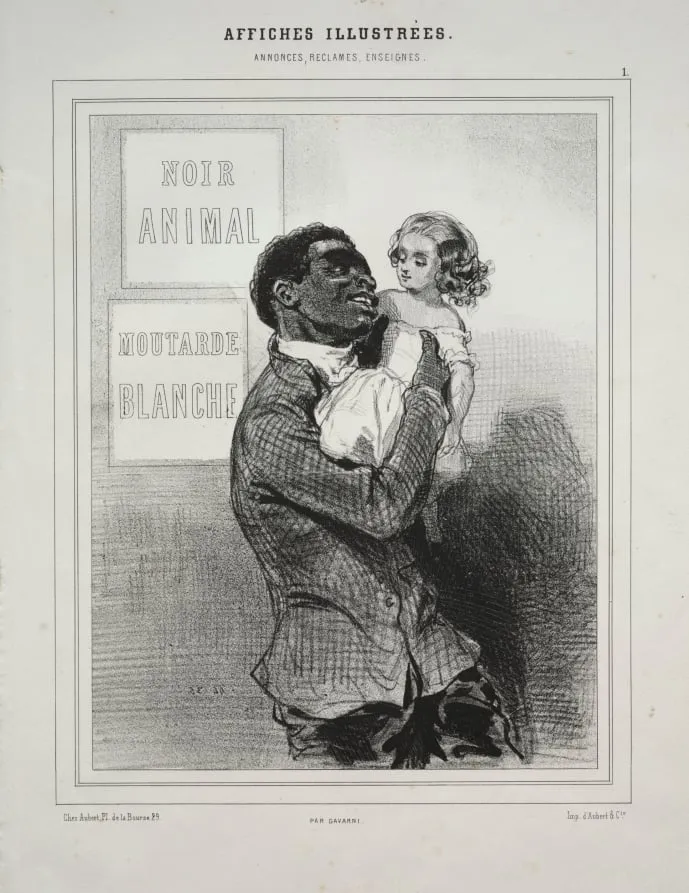
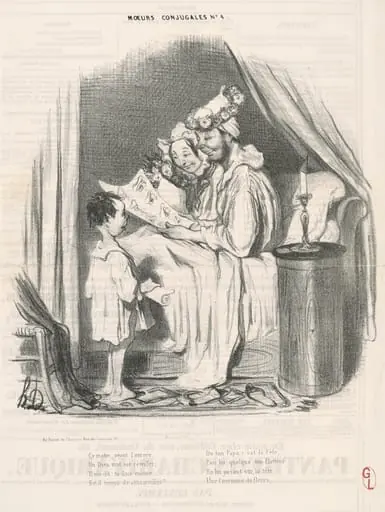
Affliches Illustrées is a print by the Romanticist artist Paul Gavarni. It dates from 1845 and is held in the collection of the Cleveland Museum of Art.
- Accession no.
- 1925.1060
- Credit line
- Dudley P. Allen Fund
About this work
Overview
Created around 1845 by French artist Paul Gavarni, this black-and-white lithograph is part of a series of satirical prints that capture everyday Parisian life. It is currently held in the collection of The Cleveland Museum of Art. The image presents a quiet, almost absurd moment in public space, blending observation with subtle irony through its composition and textual elements.
Subject & Meaning
The scene may mock the proliferation of commercial signage or the absurdity of consumer culture, using understated humor to critique urban life.
A man in formal attire holds a young child while standing before a shop sign that reads 'NOIR ANIMAL' and 'MOUTARDE BLANCHE.' The juxtaposition of these phrases, literal translations of unrelated commercial labels, suggests wordplay or a nonsensical advertisement. The scene may mock the proliferation of commercial signage or the absurdity of consumer culture, using understated humor to critique urban life.
Technique & Style
Executed in fine ink lines typical of 19th-century lithography, the drawing employs minimal shading and precise contours to define figures and text. The stark contrast between the man’s tailored clothing and the child’s plain dress enhances the visual simplicity. The inclusion of handwritten-style lettering on the sign mimics real-world advertising, reinforcing the work’s documentary tone and satirical intent.
History & Provenance
The print originates from Gavarni’s prolific output during the 1840s, when he contributed regularly to French periodicals. It was likely produced as a standalone sheet or part of a thematic collection. The Cleveland Museum of Art acquired it as part of its broader collection of European graphic art, preserving it as an example of early social commentary in print media.
Context
Gavarni’s work emerged during a period of rapid urbanization in Paris, when commercial signage and public advertising became ubiquitous. His illustrations often targeted bourgeois manners and the quirks of daily commerce. While Romanticism emphasized emotion and grandeur, Gavarni’s approach was grounded in the mundane, using wit rather than drama to reflect societal shifts.
Legacy
Gavarni’s prints influenced later satirists and cartoonists, including Daumier, by demonstrating how everyday scenes could carry layered social critique. His use of text as visual punctuation and his focus on the absurdities of modern life helped shape the evolution of editorial illustration in France. This work remains a quiet but enduring example of visual wit in the age of mass communication.
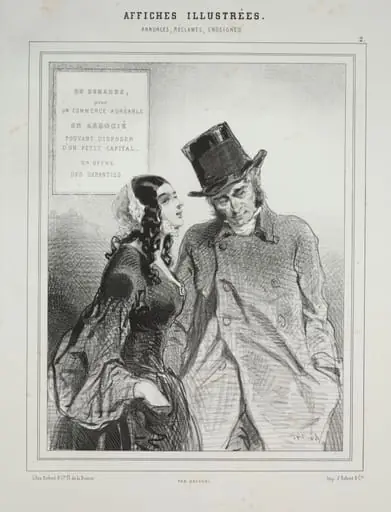
Artist & collection
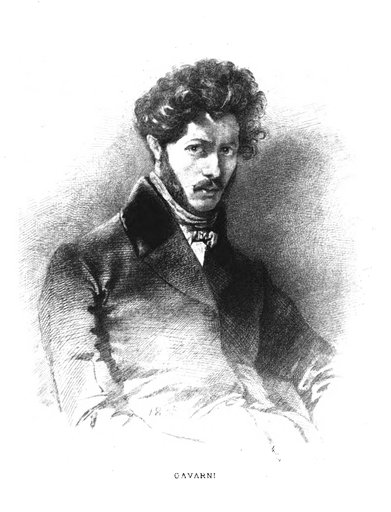
Artist
Paul Gavarni was the pen name of Sulpice Guillaume Chevalier, a French illustrator, born in Paris.

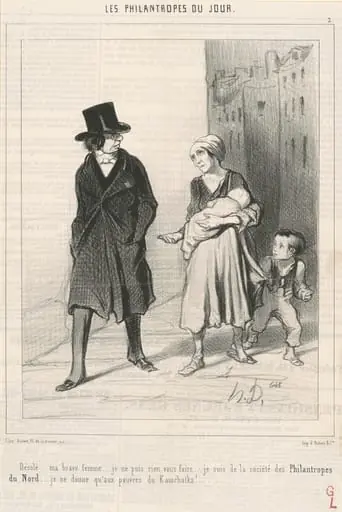 Désolé ... Je suis de la société des philantropes du nord ...
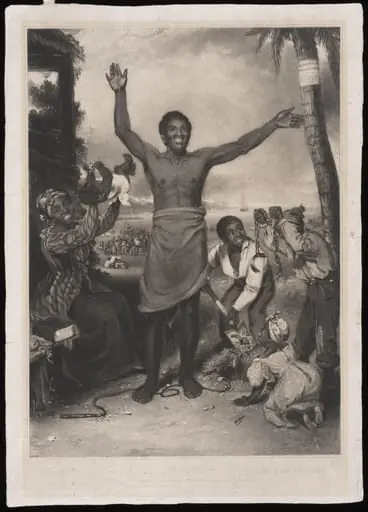 To the Friends of Negro Emancipation
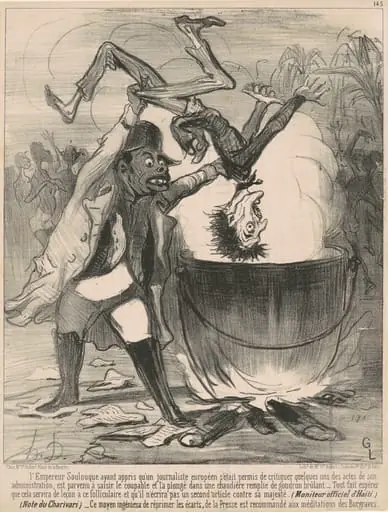 L'empereur soulouque ...
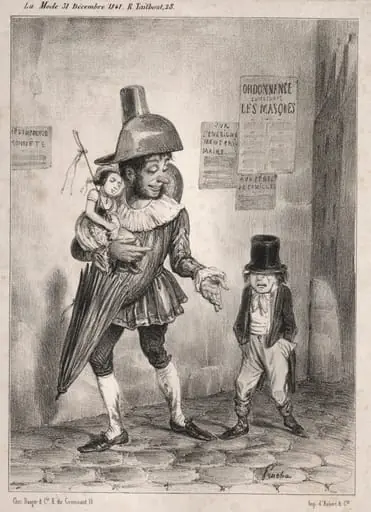 Pochades de carnaval: Vois-tu, si ton maître est bien content de toi et si tu as le prix de sagesse cette année! je te laisserai deguiser en paillasse! ...l'année prochaine!!
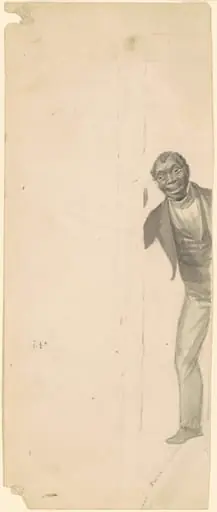 Man at a Doorway
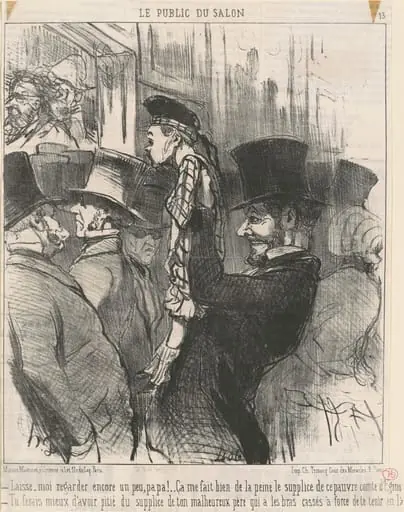 Laisse-moi regarder encore ... papa!
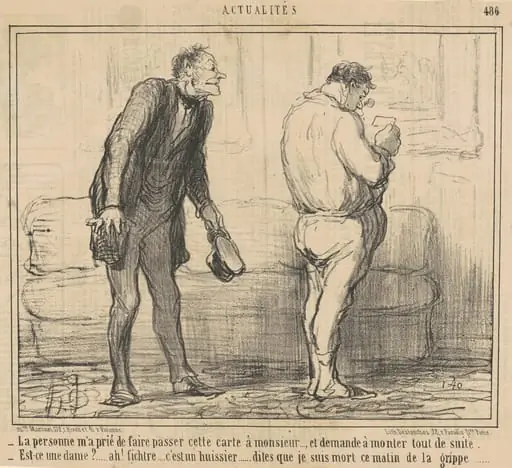 La personne ... demande a monter tout de suite ...
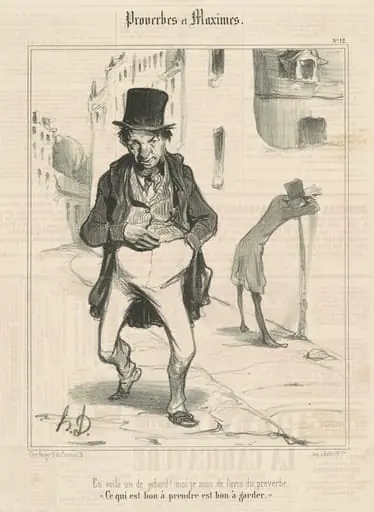 En voila un de jobard! ...
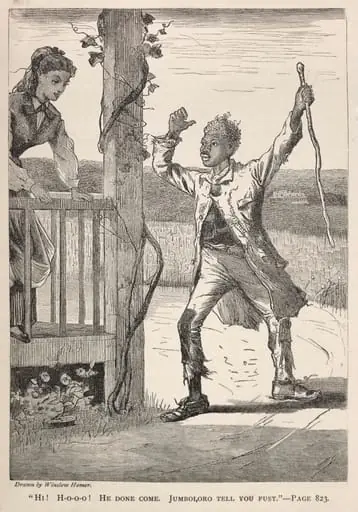 "Hi! H-O-O-O! He Done Come. Jumboloro Tell You First."
 Ce matin avant l'aurore...