Artwork
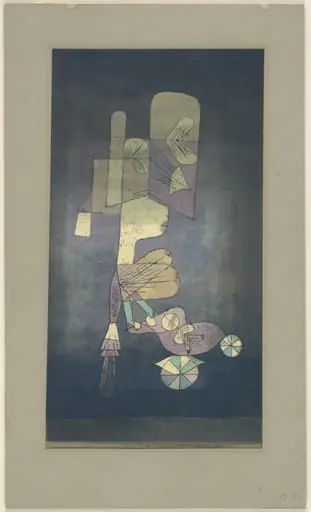
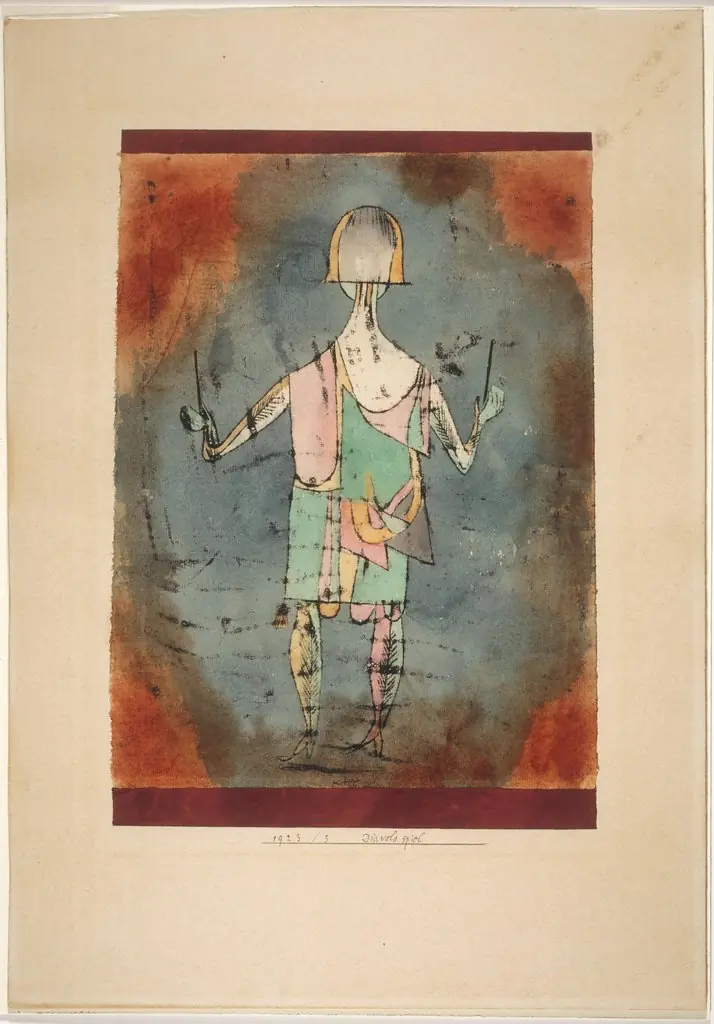
Ventriloquist and Crier in the Moor
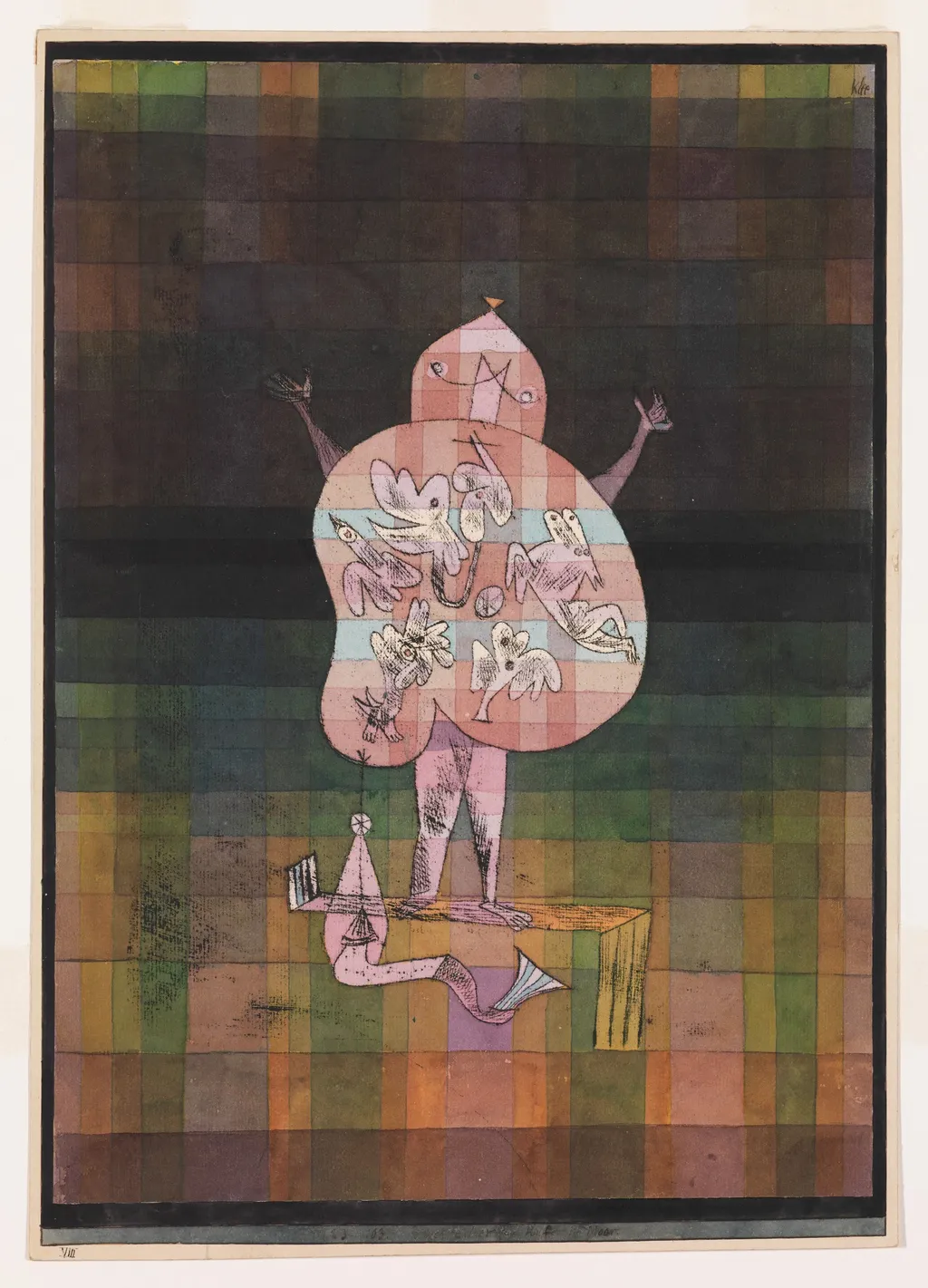
Ventriloquist and Crier in the Moor is an unspecified painting by the Bauhaus artist Paul Klee. It dates from 1923 and is held in the collection of the Metropolitan Museum of Art.
About this work
History & Provenance
The painting Ventriloquist and Crier in the Moor is held in the collection of the Metropolitan Museum of Art.
Paul Klee created the painting Ventriloquist and Crier in the Moor in 1923. The work was originally owned by Rudolf Probst. It subsequently entered the collection of the Metropolitan Museum of Art, where it is currently held. The painting measures 41.9 cm in height and 29.5 cm in width.
The painting Ventriloquist and Crier in the Moor is held in the collection of the Metropolitan Museum of Art. The work was previously owned by Rudolf Probst before entering the museum's holdings. While the artwork dates to 1923, the provided sources do not list a specific accession number or detail any public exhibitions in which the piece has been displayed.
Overview
Created in 1923, Ventriloquist and Crier in the Moor is a painting by Paul Klee, the Swiss‑born artist who worked in Germany. The work is associated with the Bauhaus school, which sought to unite artistic practice with craft and emerging technologies. Its composition is built from abstracted, whimsical figures arranged in a rhythmic, almost musical pattern.
Subject & Meaning
The canvas presents a tall, oddly proportioned figure with an oversized head, a pointed hat, and a simple line for a mouth. Its torso is filled with a swarm of tiny, floating shapes that suggest birds, people, or animals. A diminutive figure perched on a block near the feet also wears a hat, adding a narrative layer that feels like a surreal, dream‑like anecdote.
Technique & Style
Klee employs his characteristic blend of expressionist line work and cubist fragmentation, set against a background of flat, brightly colored squares in reds, greens and blues. The colors are non‑representational, emphasizing mood over realism. The painting’s surface combines precise geometric patches with loose, gestural marks, illustrating Klee’s ongoing exploration of visual language and color theory.
Own this work as a print
Artist & collection
Artist
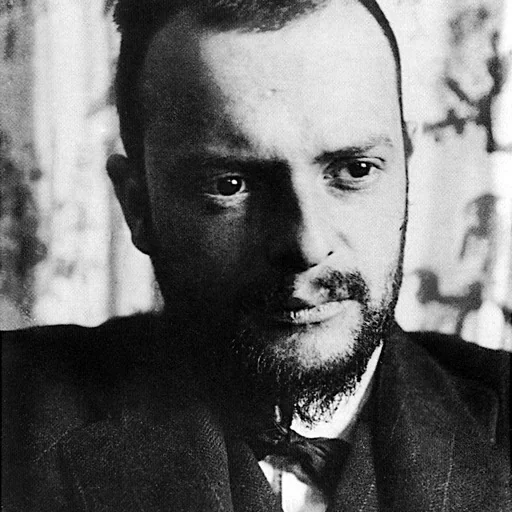
Paul Klee (German:; 18 December 1879 – 29 June 1940) was a Swiss-born German artist.