Movement
Les XX
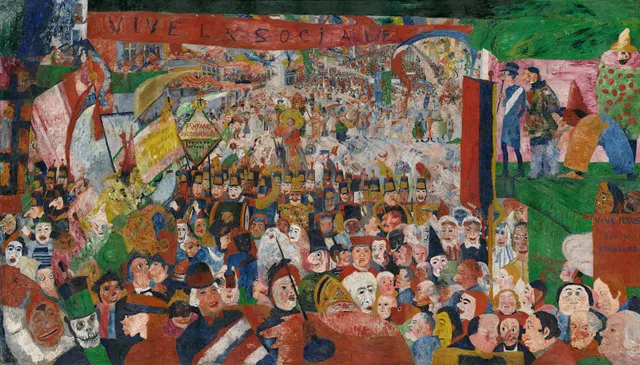
Les XX is an art movement of the 1880–1900 period. The gallery holds 1 work in this movement. Browse Les XX paintings, portraits, pictures and artworks from the world's public-domain museum collections.
Les XX ("The Twenty," or Les Vingt) was a circle of twenty avant-garde Belgian painters, designers, and sculptors founded in Brussels on 28 October 1883. It grew out of frustration with the conservative official Salon and the bureaucracy of the older society L'Essor: eleven dissenting artists broke away and invited nine more to reach twenty. The group had no president, instead delegating its affairs to a rotating committee of three, with the Brussels lawyer and publisher Octave Maus serving as secretary and tireless impresario. Through his journal L'Art Moderne, Maus turned the group's annual exhibitions, held each year from 1884 to 1893, into the most important showcase of modern art on the Continent outside Paris.
Les XX was a forum rather than a single style, and that catholicity defines it. Across its decade the exhibitions tracked the era's most radical currents in turn—Impressionism, then Georges Seurat's Neo-Impressionist pointillism, Symbolism, and the decorative ambitions that would soon flower into Belgian Art Nouveau. Each year the members invited roughly twenty foreign guests, and the roster reads like a survey of the avant-garde: Claude Monet, Camille Pissarro, Paul Cézanne, Paul Gauguin, Vincent van Gogh, and James McNeill Whistler all showed in Brussels. Seurat exhibited A Sunday Afternoon on the Island of La Grande Jatte there in 1887; Van Gogh's The Red Vineyard sold during the 1890 exhibition, often cited as the only painting he sold in his lifetime.
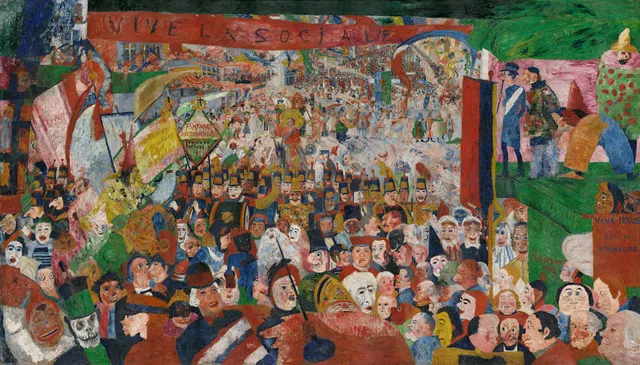
The Belgian membership was itself formidable. James Ensor, whose vast, caustic Christ's Entry Into Brussels in 1889 ranks among the boldest paintings of the century, was a founder, as were the Symbolist Fernand Khnopff, the pointillist Théo van Rysselberghe, and Alfred William "Willy" Finch; Félicien Rops and Guillaume Vogels also figured among the circle. Tensions ran high—Ensor's most provocative canvases scandalized even his peers—but the group's openness to applied arts and design proved historically decisive.
In 1893 Les XX dissolved and reconstituted itself, again under Maus, as La Libre Esthétique, which carried the same internationalism into the Art Nouveau years. By importing French Post-Impressionism and Symbolism wholesale and exhibiting them beside furniture and decorative objects, Les XX made Brussels a crucible of European modernism and a direct seedbed for Art Nouveau.
Works
Frequently asked questions
What is Les XX?
Les XX is an art movement. A circle of twenty avant-garde Belgian artists active 1883-1893.
When did Les XX take place?
Les XX dates from 1880–1900.
Where can I see Les XX works?
Les XX works in the collection are held by J. Paul Getty Museum.