Artwork
The Lion Hunt
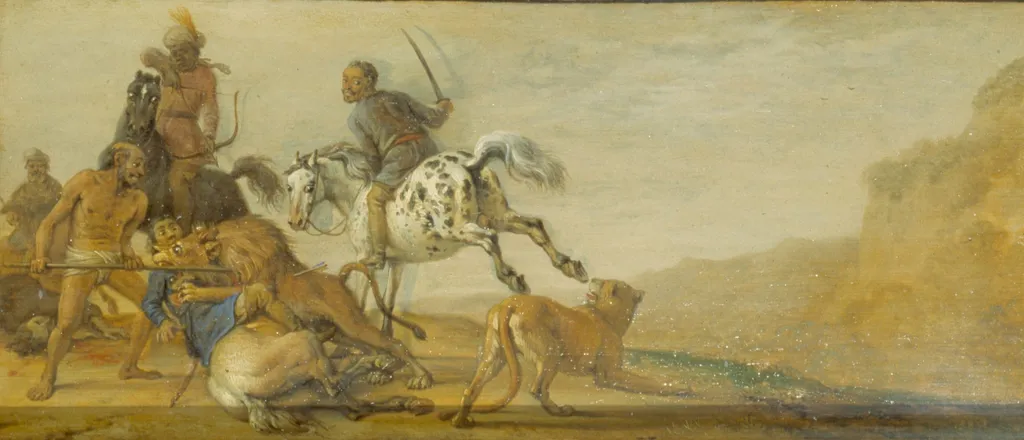
The Lion Hunt is an oil painting by the Dutch Golden Age artist Paulus Potter. It dates from 1650 and is held in the collection of the Hermitage Museum.
About this work
Subject & Meaning
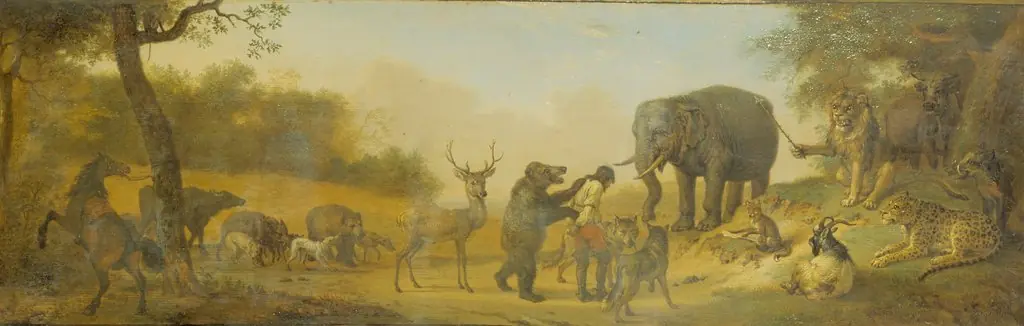
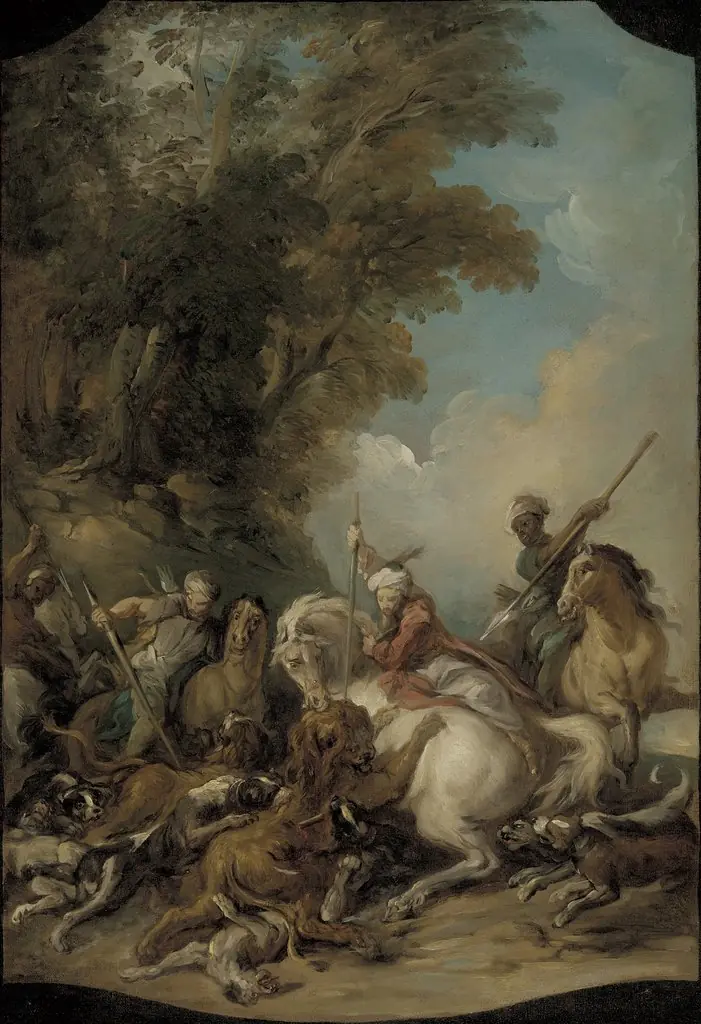
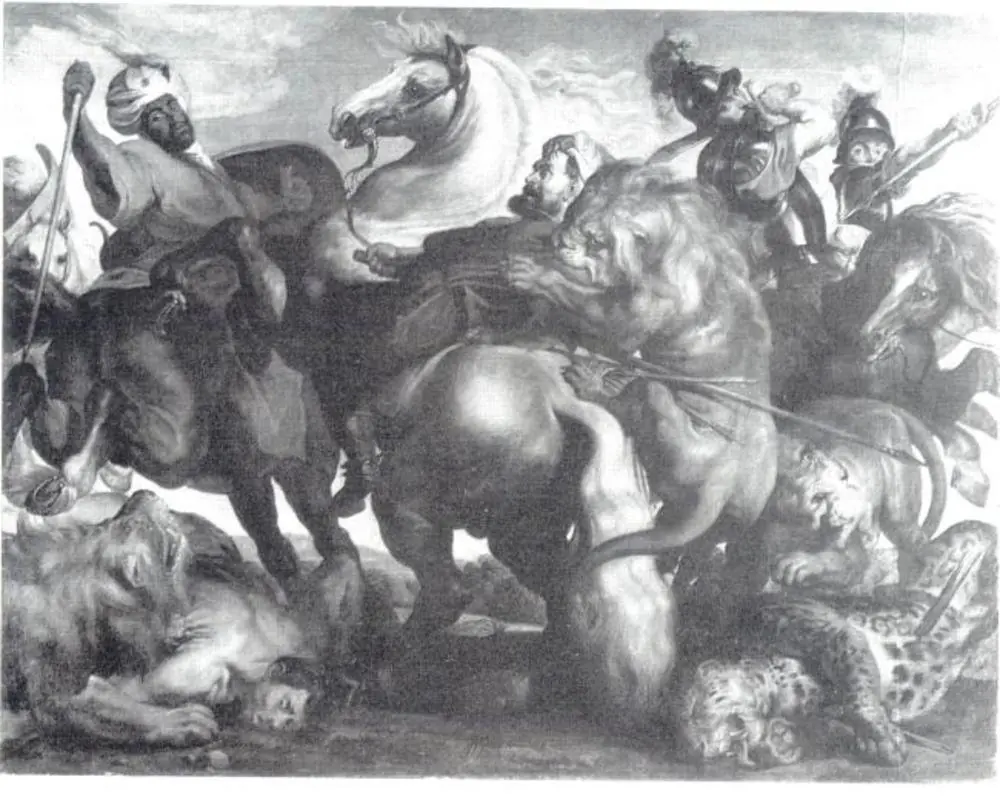
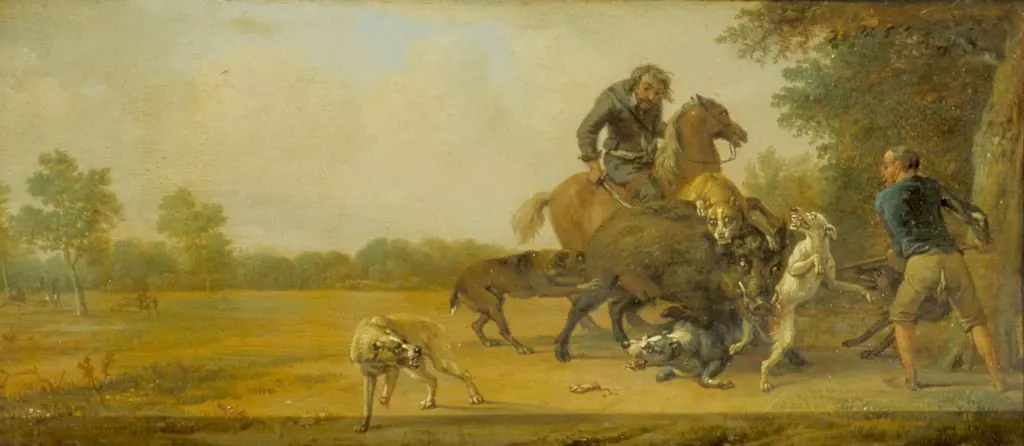
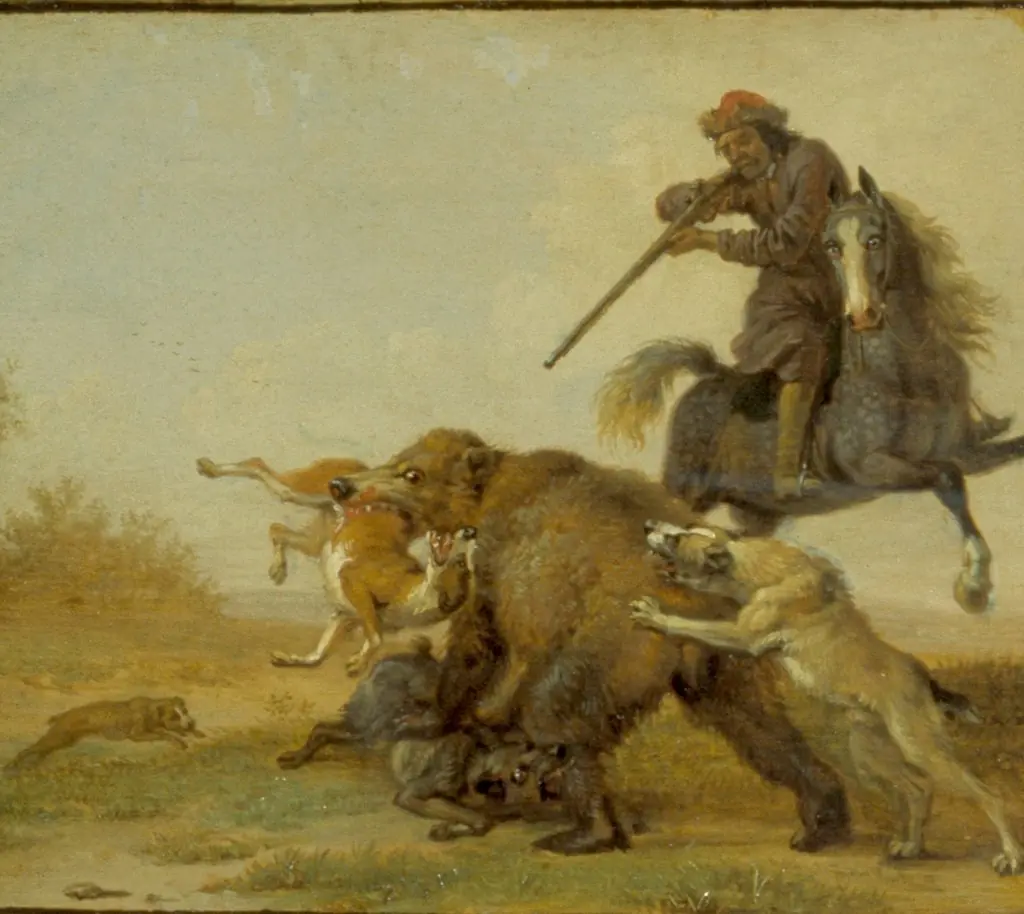
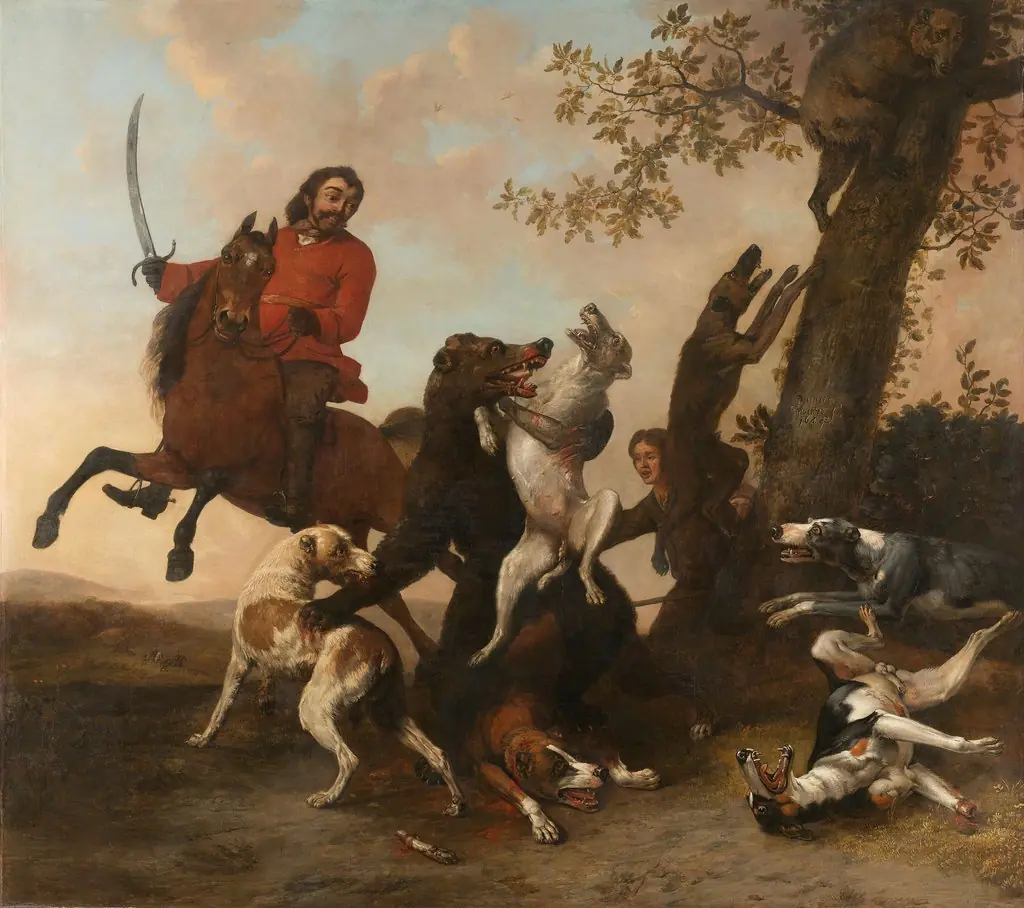
The painting depicts a staged lion hunt in which a turbaned rider on horseback raises a lance toward a crouching lioness while a lion rears in the background.
The painting depicts a staged lion hunt in which a turbaned rider on horseback raises a lance toward a crouching lioness while a lion rears in the background. The scene belongs to the Dutch Italianate tradition of animal painting, where exotic locales and dramatic animal combat signify human mastery over nature.
Potter’s composition juxtaposes the calm poise of the rider with the ferocity of the felines, using the lion’s crouch and the horse’s alert stance to convey tension and control. The turban signals an imagined North African or Near Eastern setting, a common trope in seventeenth-century Dutch art that framed foreign lands as theaters for virtuosic display of skill and courage.
Technique & Style
Paulus Potter executed The Lion Hunt in 1650 using oil paint applied to a panel support. The work measures 17.3 cm in height and 39.5 cm in width, classifying it as a small-scale genre painting. The composition depicts a dynamic hunting scene featuring men, horses, lions, and lionesses, rendered with the detailed precision characteristic of Potter's animal subjects. The piece is currently held in the collection of the Hermitage Museum.
History & Provenance
The Lion Hunt is an oil painting on panel created by Paulus Potter in 1650. The work depicts a hunting scene featuring men, horses, and lions, executed in the genre art style. It is currently held in the collection of the Hermitage Museum.
The painting measures 17.3 cm in height and 39.5 cm in width. No specific details regarding the original commission, the identity of the first owner, or the precise chain of ownership prior to its arrival at the Hermitage are provided in the available records.
Context
The Lion Hunt (1650) is an oil painting on panel measuring 39.5 cm by 17.3 cm, catalogued as a genre scene by the artist Paulus Potter. Its inclusion in the Hermitage Museum collection underscores its significance within Potter’s oeuvre, which focused on animal subjects rendered with naturalistic detail and dynamic composition. Scholars have highlighted the work as emblematic of the Dutch Golden Age’s fascination with hunting imagery and have examined Potter’s technique of combining precise observation with dramatic spatial arrangement.
Legacy
The Lion Hunt is an oil painting on panel executed by Paulus Potter in 1650, depicting a turbaned man on horseback confronting a lion and lioness during a hunt; the composition measures 17.3 cm by 39.5 cm and is categorized as a genre scene. Its inclusion in the Hermitage Museum’s collection reflects its lasting reputation as an important Dutch Golden Age work, frequently referenced in studies of 17th-century animal genre painting.
Overview
Paulus Potter, a Dutch painter active during the Golden Age, created The Lion Hunt around 1650. This oil painting exemplifies his focus on animal subjects within dynamic landscapes. The work captures a violent encounter, showcasing the artist's ability to render both the power of nature and the drama of human interaction with it. It is a notable example of his contributions to the genre of animalier painting.
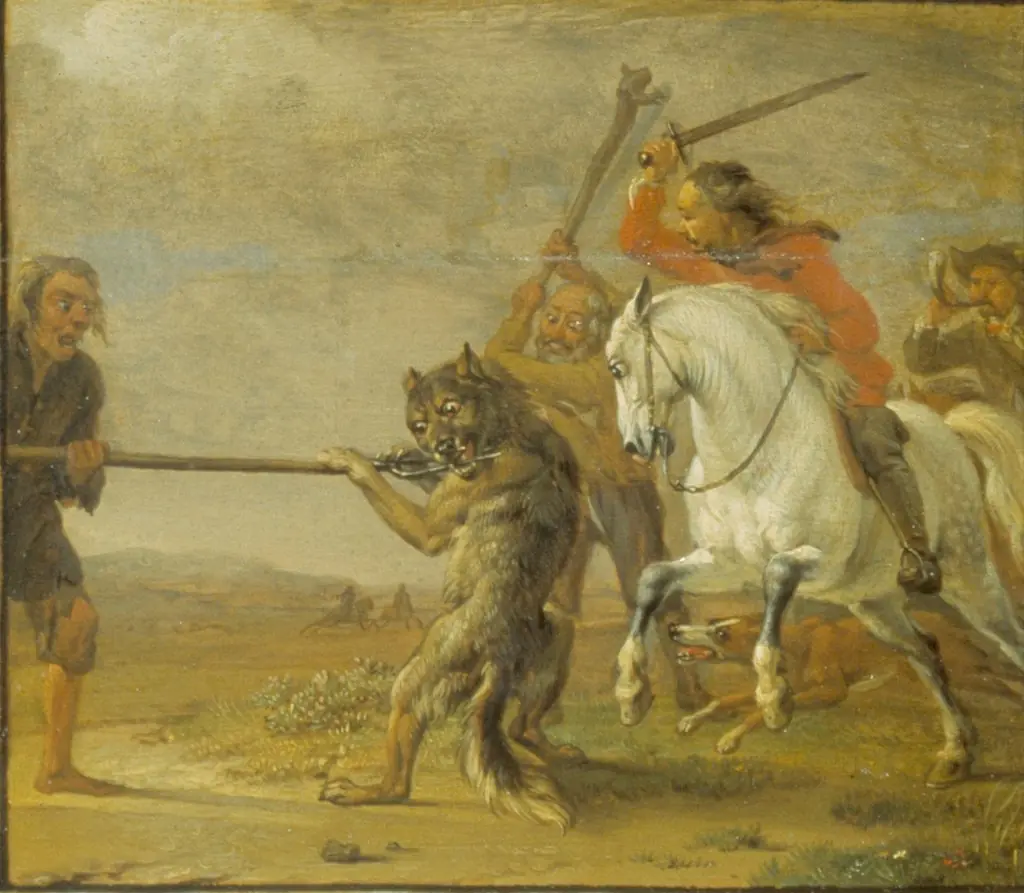
Artist & collection
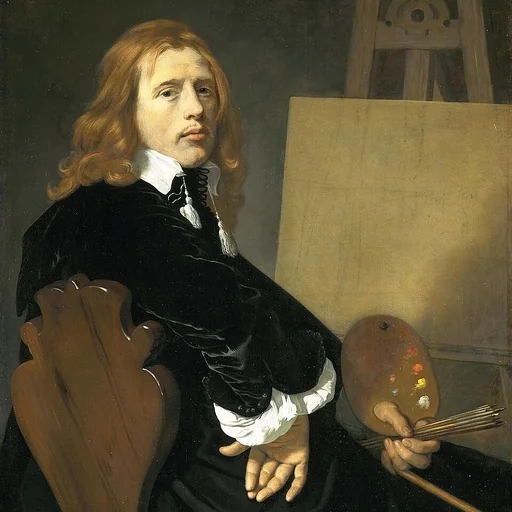
Artist
Paulus Potter (Dutch pronunciation:; 20 November 1625 (baptised) – 17 January 1654 (buried)) was a Dutch painter who specialized in landscapes featuring animals, often from a low vantage point.