Artwork
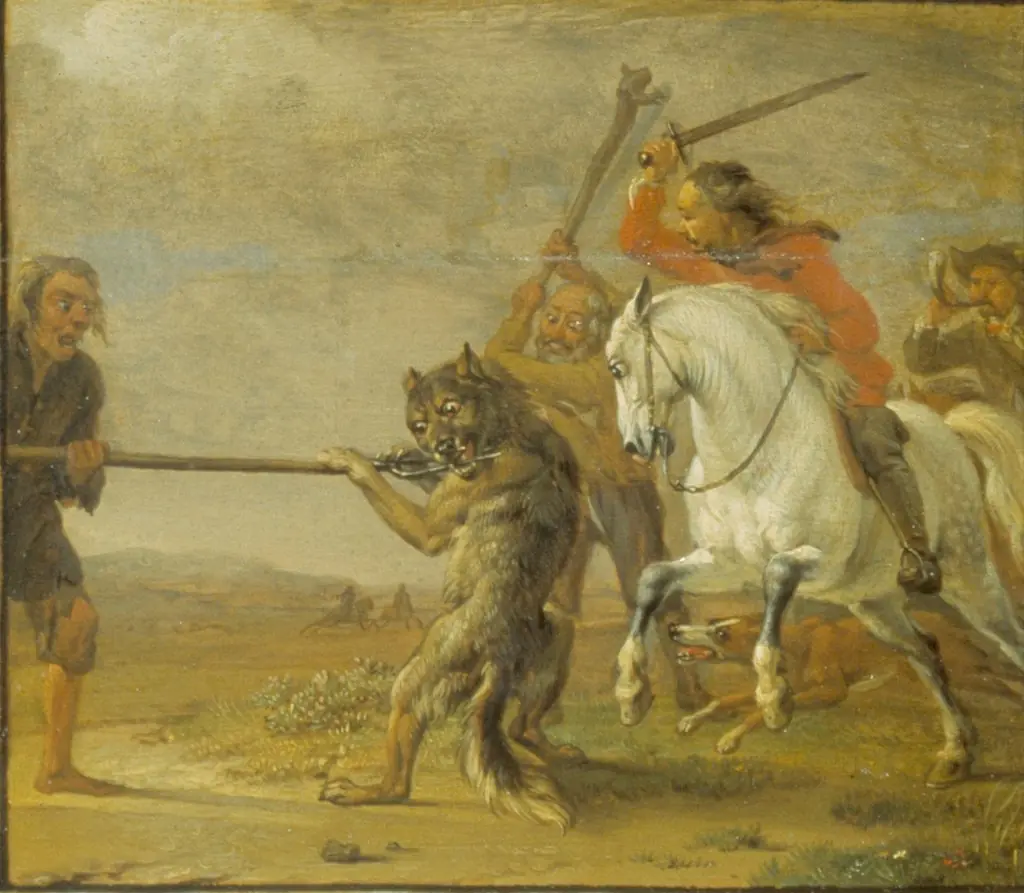
Execution of Hunter and Hounds
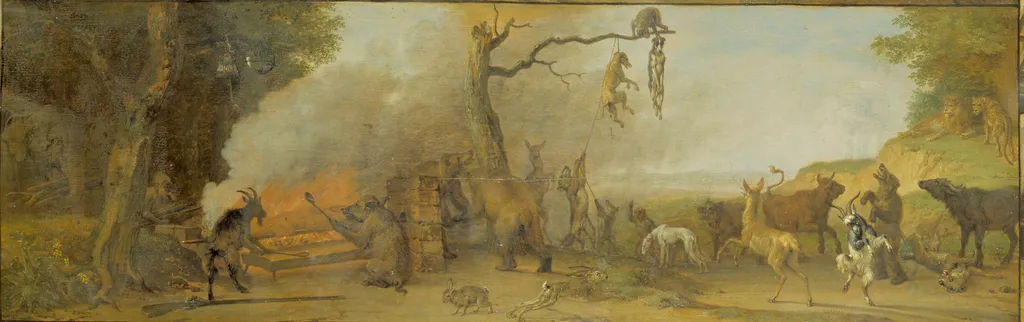
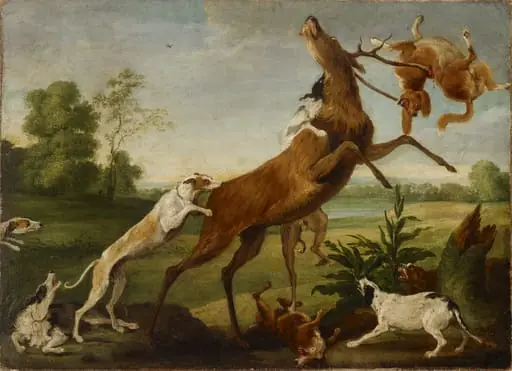
Execution of Hunter and Hounds is an oil painting by the Dutch Golden Age artist Paulus Potter. It dates from 1650 and is held in the collection of the Hermitage Museum.
About this work
Subject & Meaning
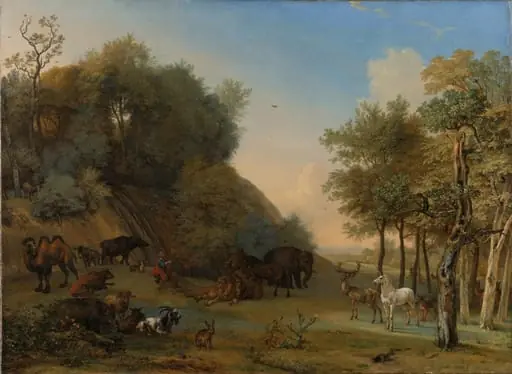
Paulus Potter's 1650 oil painting presents a complex genre scene characterized by a surreal assembly of animals and violent human punishment.
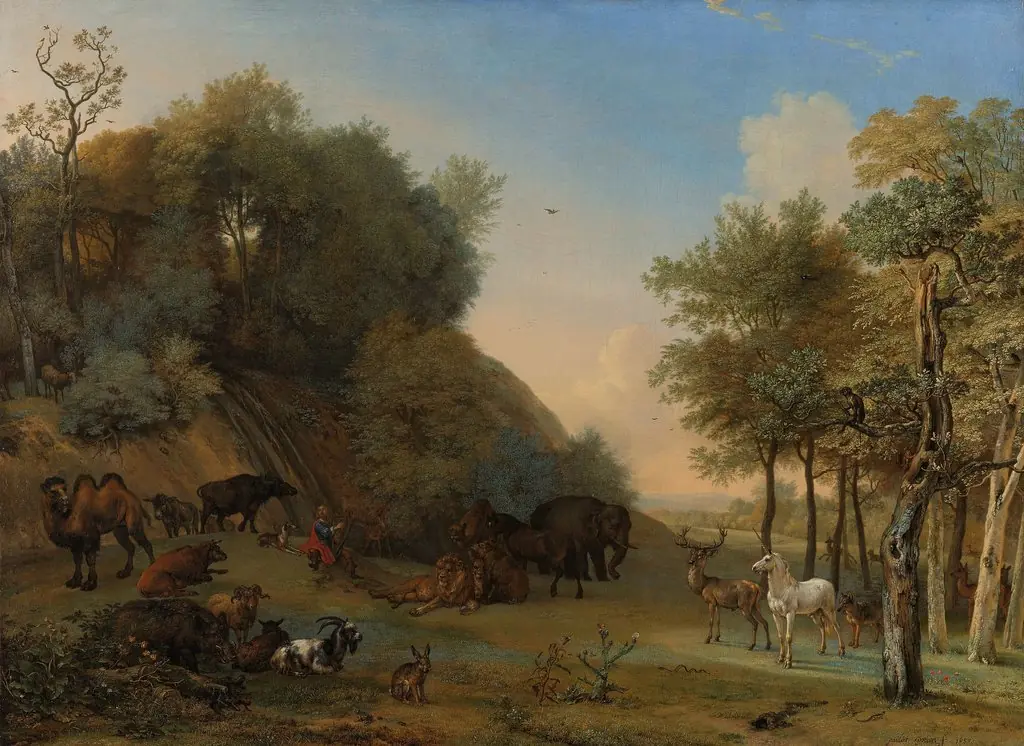
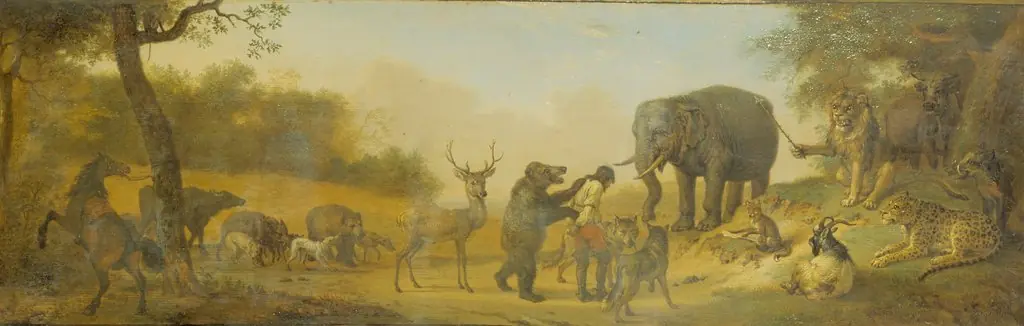
Paulus Potter's 1650 oil painting presents a complex genre scene characterized by a surreal assembly of animals and violent human punishment. The iconography features a diverse menagerie including a lion, lioness, elephant, bull, goat, pig, and hare gathered within the composition. Central to the depicted action are scenes of execution, specifically showing a figure being hanged to death alongside imagery of combustion.
The juxtaposition of these wild and domestic creatures with grim methods of capital punishment creates a chaotic narrative tableau. While the specific allegorical meaning is not explicitly detailed in the available records, the work visually represents a convergence of natural history and brutal justice, distinguishing itself through this unusual combination of subjects.
Technique & Style
The work is an oil painting, classified as a painting and placed within the genre_scene category. Potter renders the scene in oil pigments, employing the conventional techniques of 17th‑century Dutch art to achieve rich coloration and fine detail. The composition portrays a dramatic moment of execution, showing combustion and a hanging to death, while the figures include a lion, lioness, goat, pig, hare, elephant, and bull. The arrangement of these animals creates a chaotic narrative that emphasizes the violent theme.
History & Provenance
Execution of Hunter and Hounds, painted by Paulus Potter in 1650, is held in the Hermitage Museum, according to Wikidata records. The work is part of the museum's permanent collection, with its institutional association documented in structured data referencing the Hermitage as both the collection and the location of the painting.
No specific inventory or accession number is recorded in the available sources, and no exhibition history beyond its current placement in the Hermitage collection is documented.
Overview
Paulus Potter's Execution of Hunter and Hounds, an oil painting created around 1650, presents a dramatic and unusual animal-focused scene. This work, held by the State Hermitage Museum, departs from his typical tranquil depictions of livestock. It instead portrays a chaotic forest environment where humans and various creatures are caught in a moment of intense conflict and natural disaster, reflecting the artist's unique approach to animal subjects during the Dutch Golden Age.
Context
Paulus Potter was a prominent figure in Dutch Golden Age painting, distinguishing himself through his dedication to animal portraiture and landscape. Unlike many contemporaries who focused on human subjects or grand historical narratives, Potter specialized in rendering livestock and wildlife with remarkable realism. Execution of Hunter and Hounds exemplifies his unique contribution, albeit with a more dramatic and allegorical twist than his more common pastoral scenes, showcasing the versatility within his specialized genre.
Artist & collection
Artist
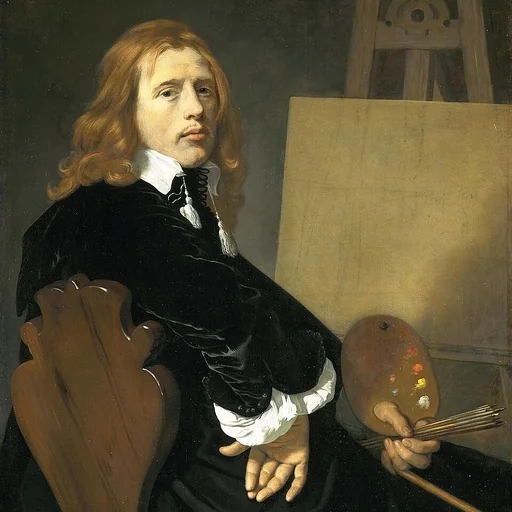
Paulus Potter (Dutch pronunciation:; 20 November 1625 (baptised) – 17 January 1654 (buried)) was a Dutch painter who specialized in landscapes featuring animals, often from a low vantage point.

- A Witches' Sabbath
 Ansichten aus den vier Weltteilen mit Szenen von Tieren: Santiago
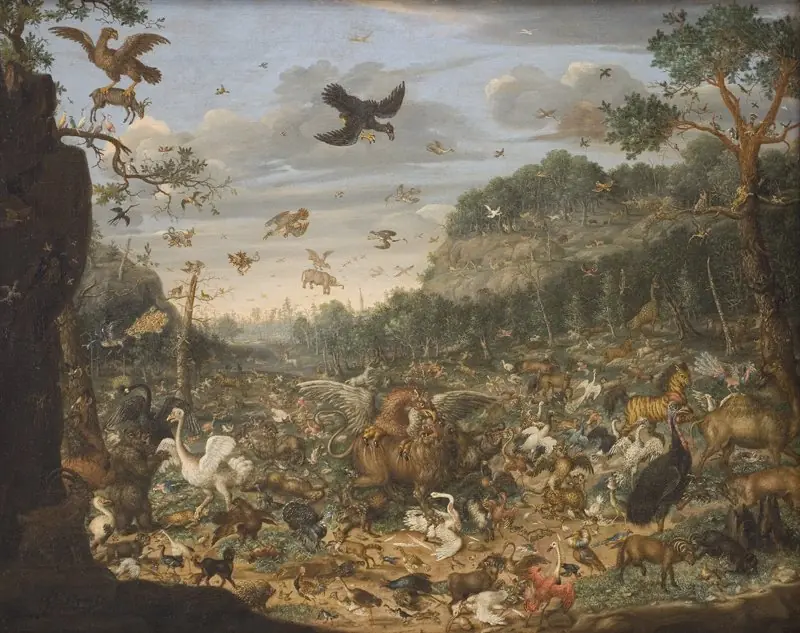 The Earth after the Fall of Man
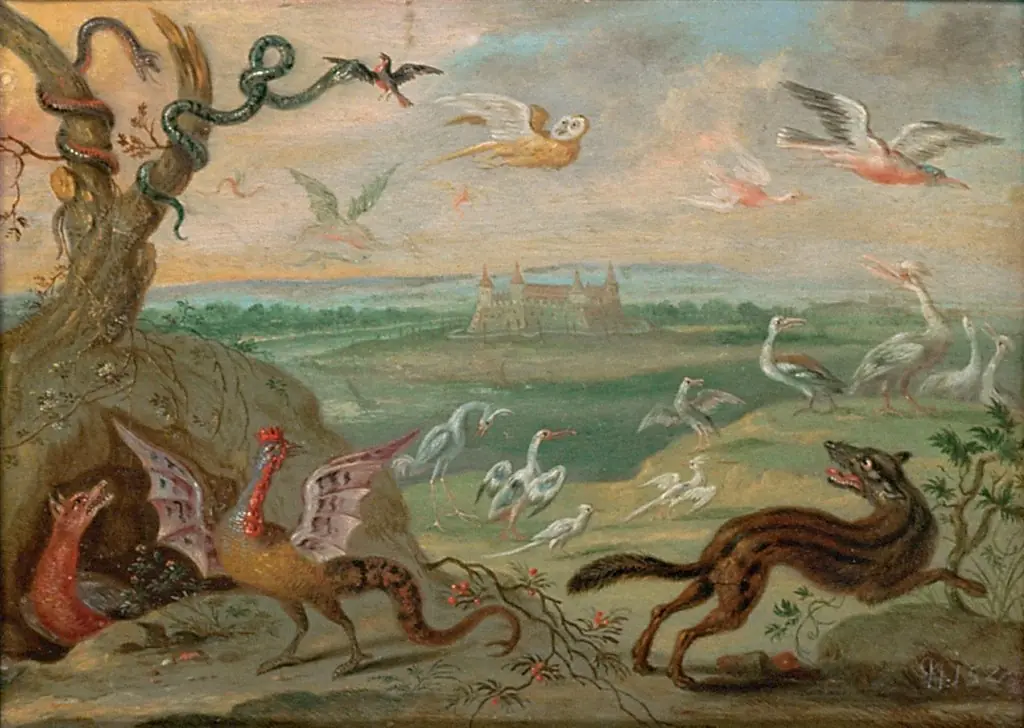 Ansichten aus den vier Weltteilen mit Szenen von Tieren: Salvador (Brasilien)
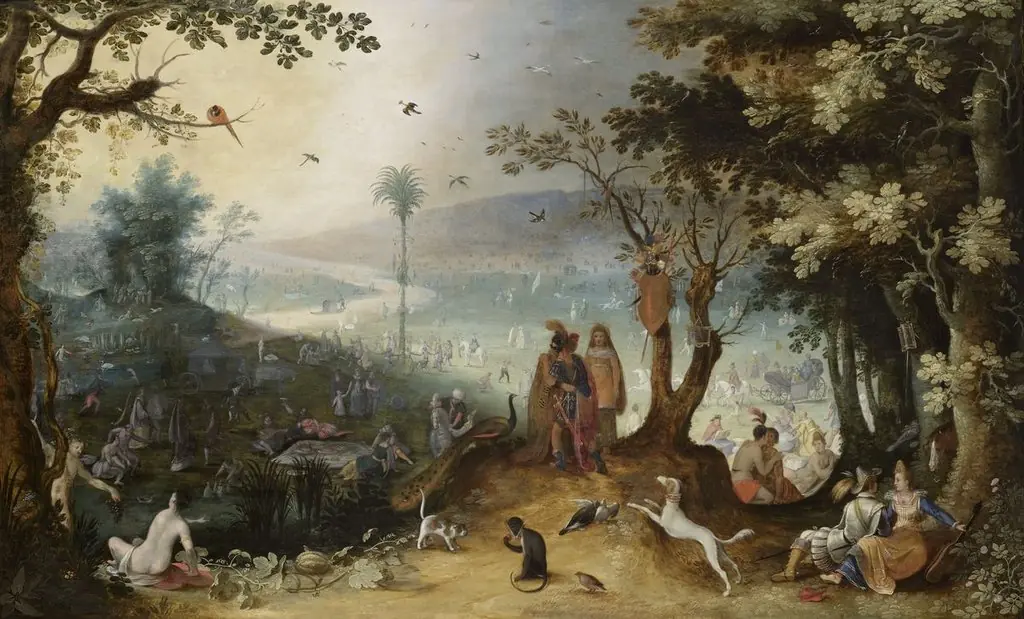 Aeneas meeting with his father in the Elysium
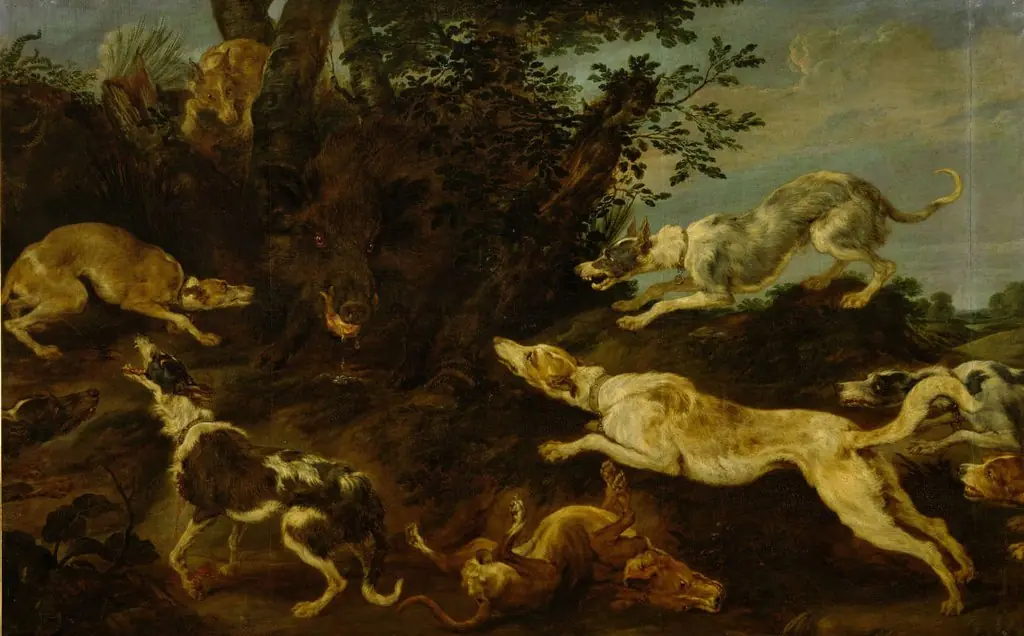 Boar hunt
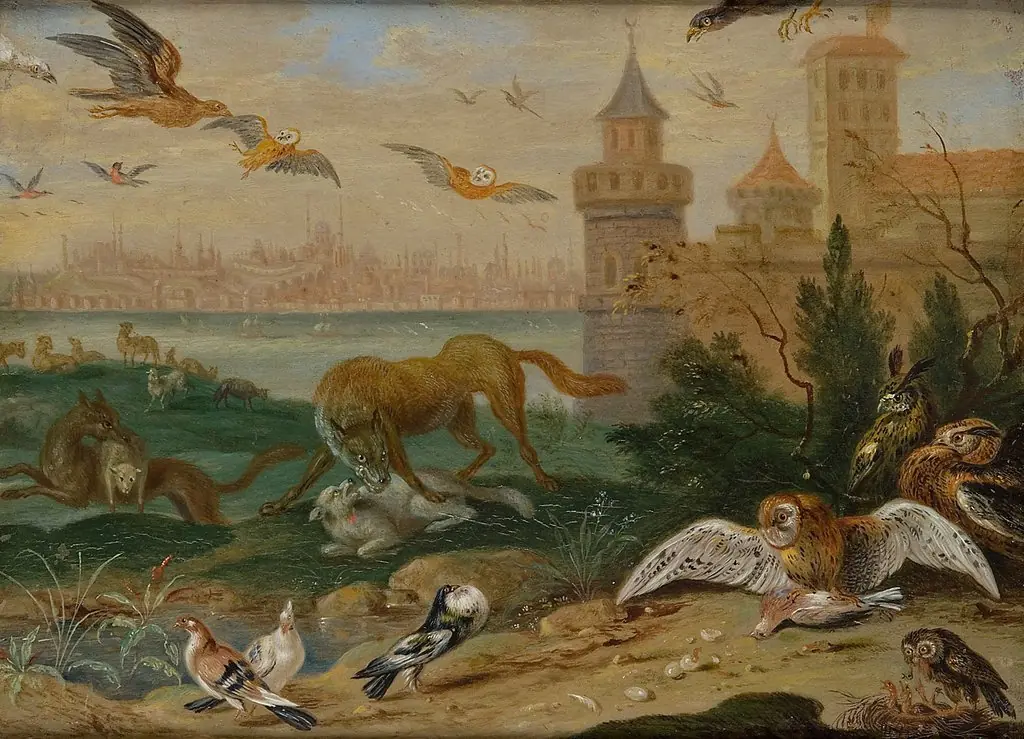 Ansichten aus den vier Weltteilen mit Szenen von Tieren: Konstantinopel
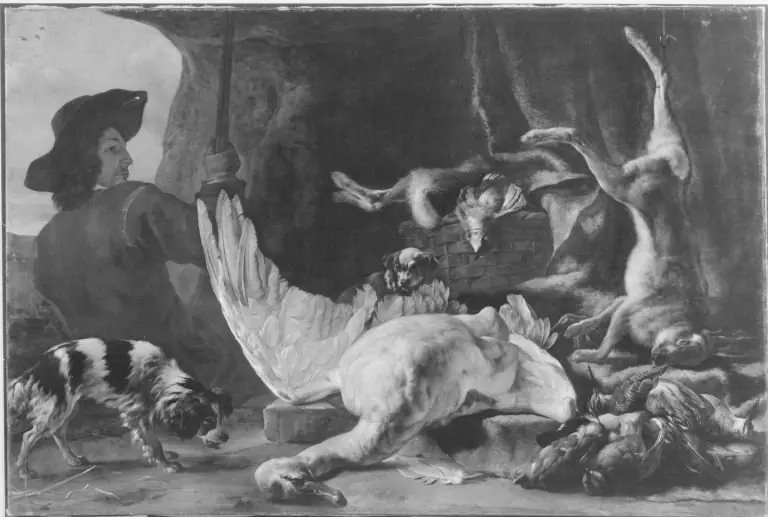 Jagdbeutestillleben mit Jäger und zwei Hunden
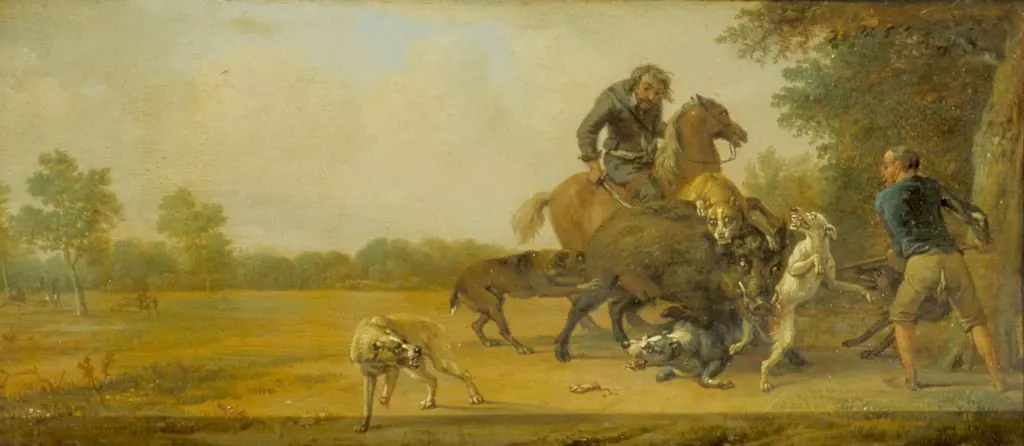 The Boar Hunt
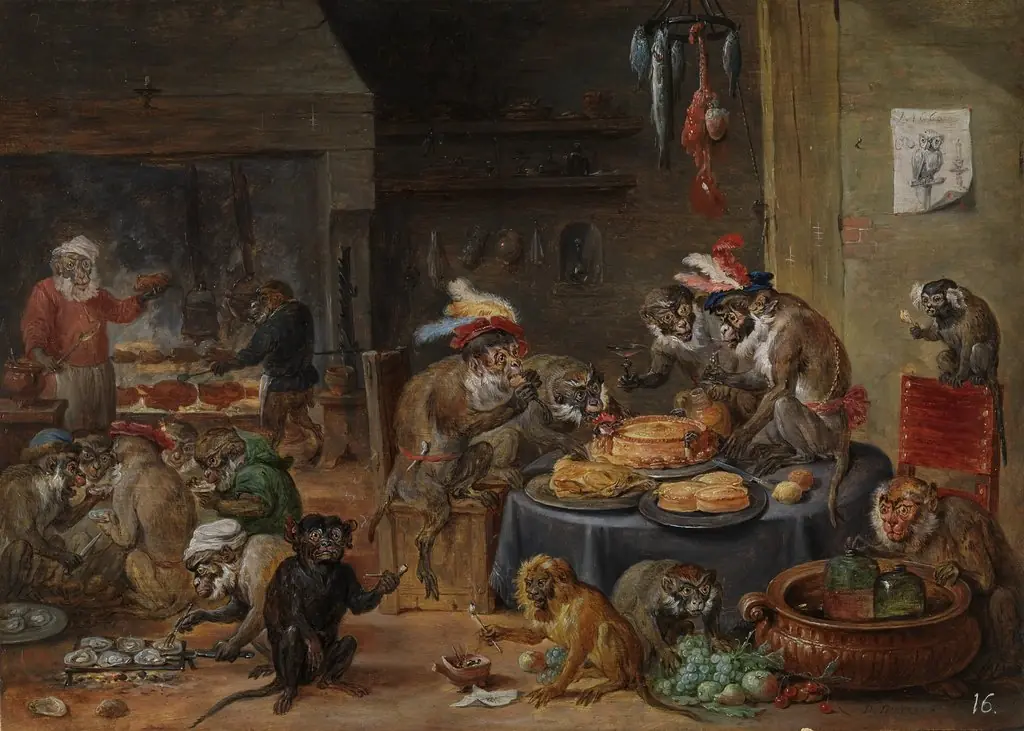 The Monkeys’ Banquet
 Kauriinmetsästys
 Still Life with Dead Game