Artwork
A Farrier's Shop
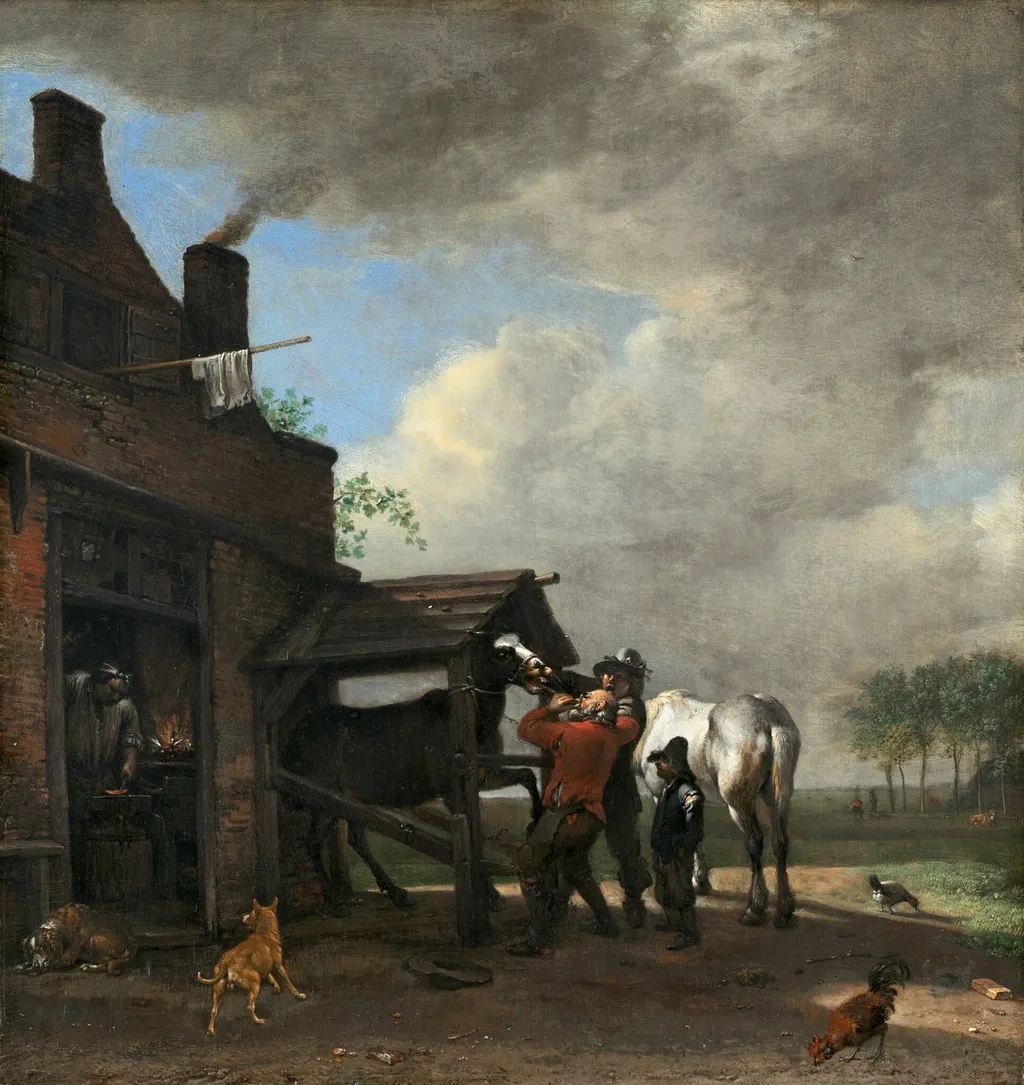
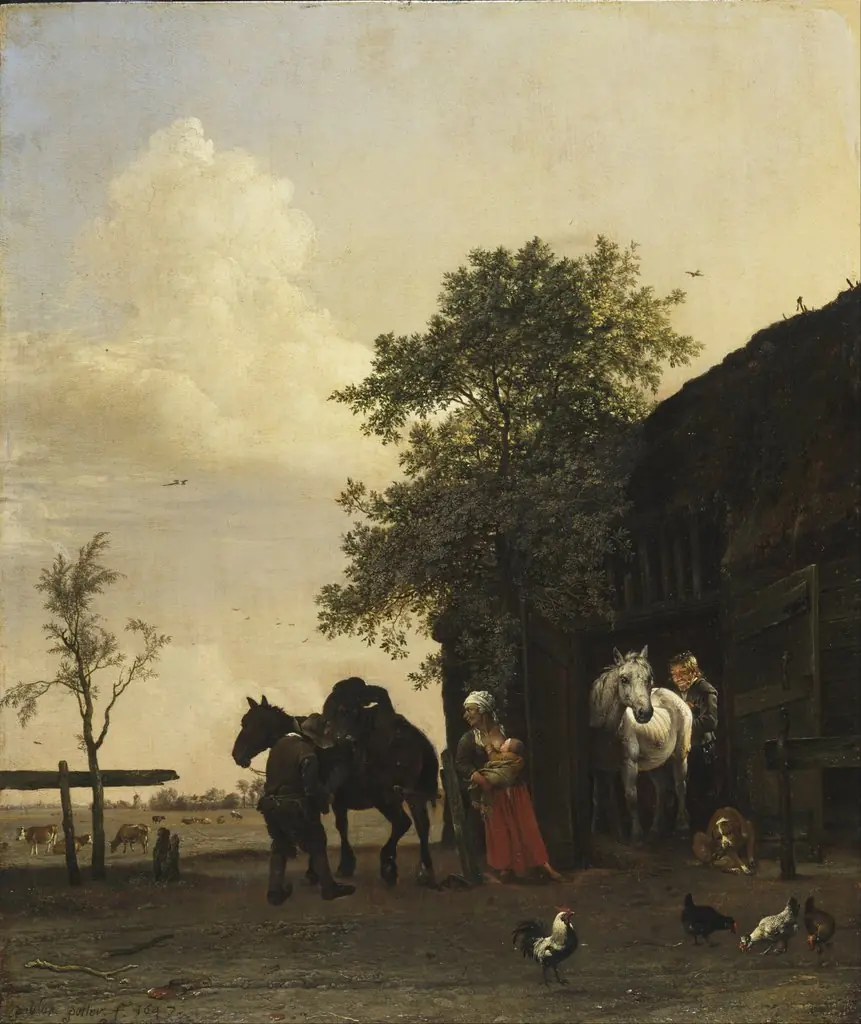
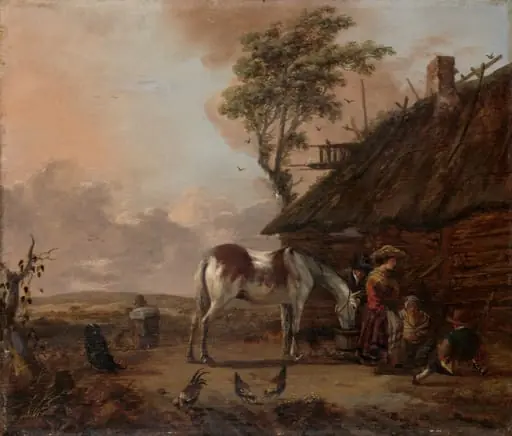
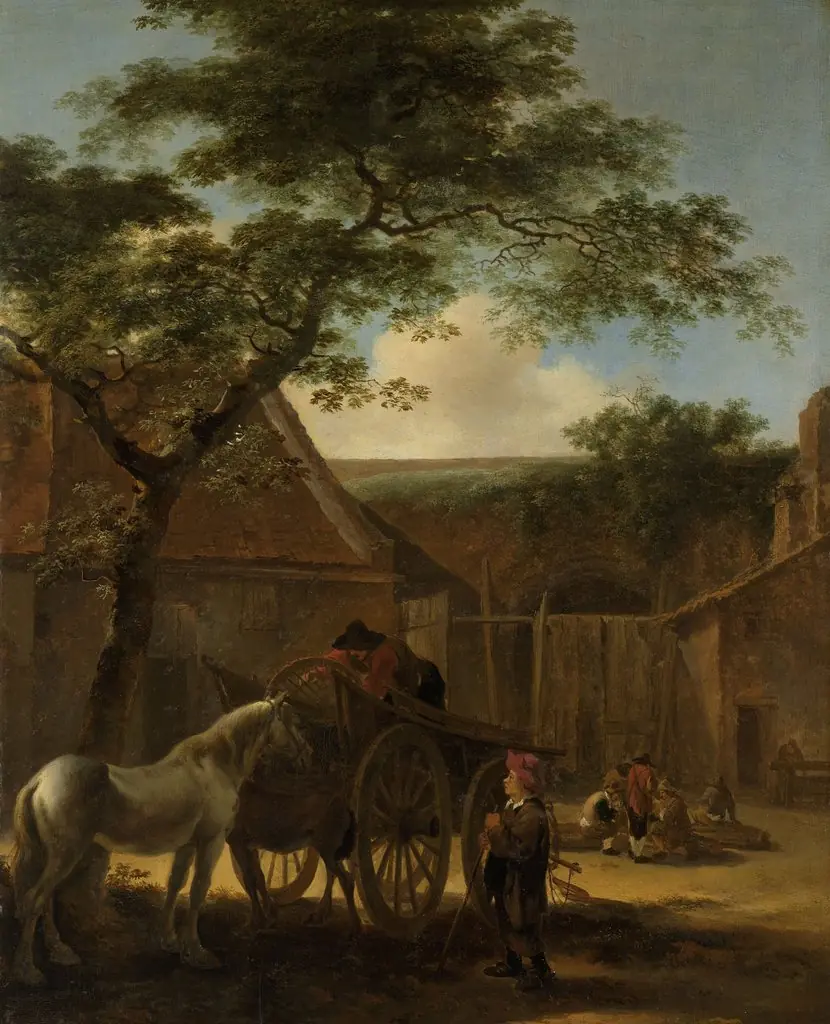
A Farrier's Shop is an oil painting by the Baroque artist Paulus Potter. It dates from 1648 and is held in the collection of the National Gallery of Art.
- Inscription
- Inscribed:center left in transom frame above doorway: paulus potter f. 1648
About this work
Subject & Meaning
The composition centers on the interaction between the artisan and his craft, highlighting the physical demands and technical processes involved in farriery.
Created in 1648, Paulus Potter's A Farrier's Shop is a genre scene that depicts a blacksmith at work within his workshop. The painting focuses on the daily labor of a farrier, a specialist who shoes horses, capturing a specific moment of manual industry rather than a mythological or historical narrative. As a work of genre art, the piece represents the 17th-century Dutch interest in documenting ordinary life and skilled trades with realistic detail.
The composition centers on the interaction between the artisan and his craft, highlighting the physical demands and technical processes involved in farriery.
History & Provenance
Painted by Paulus Potter in 1648, the work is an oil-on-panel genre scene. Its documented ownership begins with Dominique Bertrand Clemens of Ghent, who held it until his sale in September 1777. The painting subsequently passed to his brother, Jacques Clemens, before entering the Amsterdam market via Neijman.
By July 1825, it was acquired by Lambert Jean Nieuwenhuys for 7,100 guilders at the sale of Johan Philip de Monté's widow. The work later belonged to Comte Perregaux in Paris and Madame Autran in Marseille by 1867. In the early 20th century, it was owned by Rodolphe Kann, from whose collection Duveen Brothers purchased it in 1907.
Duveen sold the piece to Peter A.B. Widener in 1909. It remained in the Widener estate until Joseph E. Widener gifted it to the National Gallery of Art in 1942.
A Farrier's Shop is held by the National Gallery of Art in Washington, D.C., where it entered the collection as a gift in 1942 from the estate of Peter A. B. Widener through Joseph E. Widener. The painting's provenance traces from Dominique Bertrand Clemens in Ghent, through successive sales in 1777–1779, 1779, 1825, and 1841, to owners including Comte François‑Alexandre‑Charles Perregaux, Madame Autran, the Kann collection, Duveen Brothers, and finally Peter Widener before its 1942 donation.
No exhibition history is documented in the supplied sources.
Context
Paulus Potter, a Dutch Golden Age painter known for meticulous genre and animal scenes, created A Farrier's Shop in 1648, an oil on panel that exemplifies his interest in everyday labor and realistic detail. The work entered the National Gallery of Art collection through a chain of sales that began with a 1777 auction in Ghent and culminated in its acquisition by the museum in 1942. Contemporary critics highlighted its technical vigor, a point underscored by J. Ph. de Monté’s purchase record and later commentary in Nieuwenhuys’s review.
Modern scholarship regards the painting as a representative example of Dutch realism and as a key piece within Potter’s oeuvre, illustrating the period’s focus on humble trades.
Legacy
The painting’s later reputation is reflected in its high early‑nineteenth‑century market value and scholarly attention. In 1825 L. J. Nieuwenhuys acquired it for 7,100 guilders, a price noted in an annotated De Monté sale catalogue, and the work was discussed in Charles J. Nieuwenhuys’ 1834 review of eminent painters. It subsequently passed through distinguished hands, Rodolphe Kann, Charles Sedelmeyer, the Duveen brothers, and Peter A. B. Widener, before Joseph E. Widener gave it to the National Gallery of Art in 1942.
Today it remains in the NGA’s collection, affirming Paulus Potter’s enduring legacy as a master of Dutch genre painting.
Overview
Paulus Potter completed A Farrier's Shop in 1648, an oil on panel painting characteristic of the Dutch Golden Age. This work exemplifies the genre scenes that gained popularity during this period, depicting everyday life. Potter, recognized for his detailed animal portrayals within landscape settings, here focuses on a common rural occupation, showcasing his skill in rendering both human and animal forms in a naturalistic manner.
Own this work as a print
Artist & collection
Artist
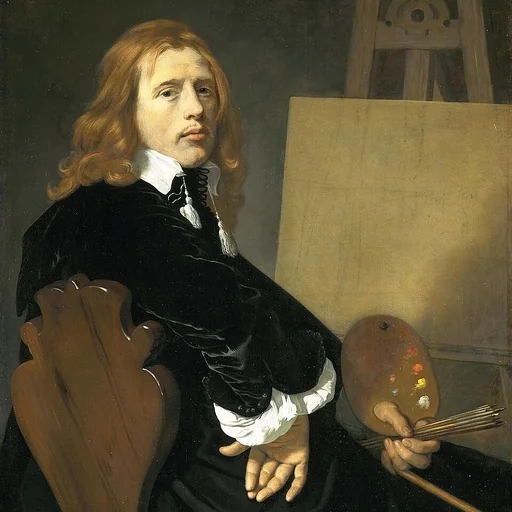
Paulus Potter (Dutch pronunciation:; 20 November 1625 (baptised) – 17 January 1654 (buried)) was a Dutch painter who specialized in landscapes featuring animals, often from a low vantage point.