Artwork
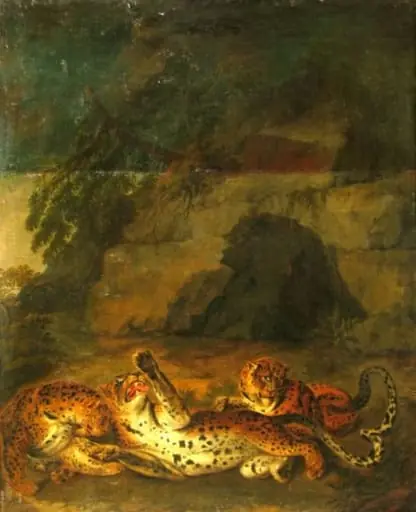
Trapping a Leopard
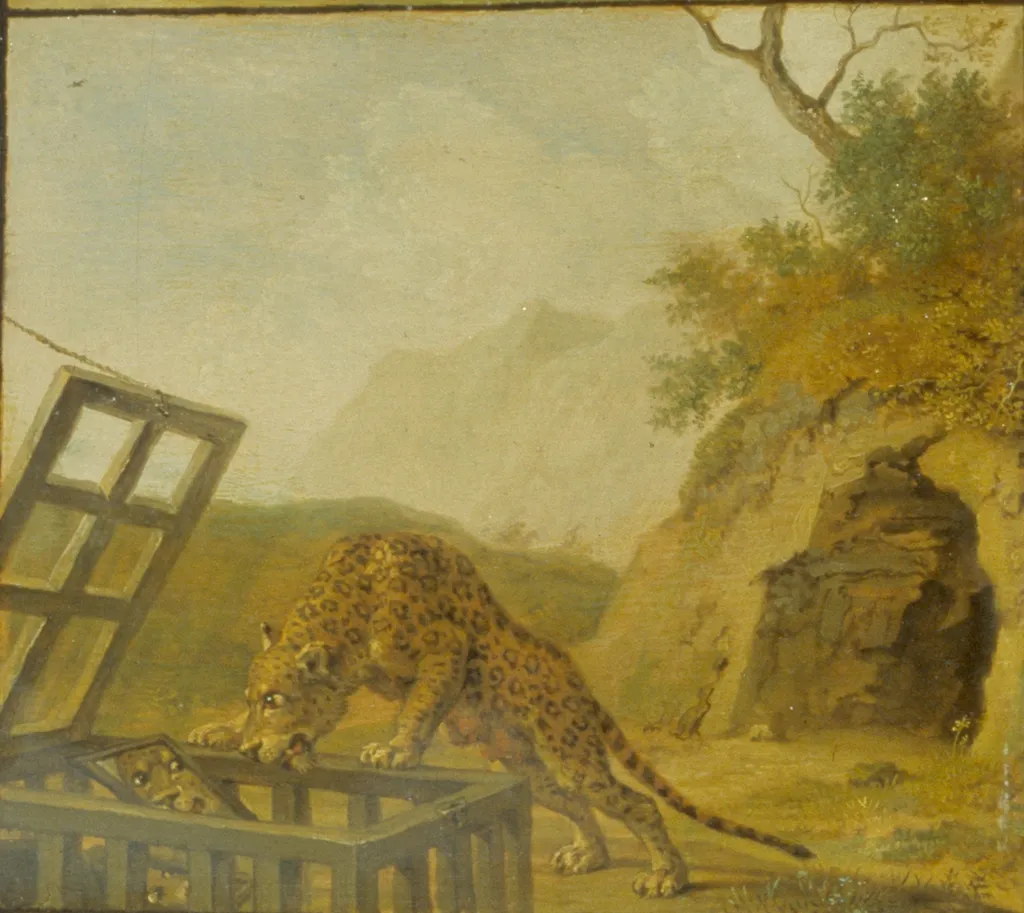
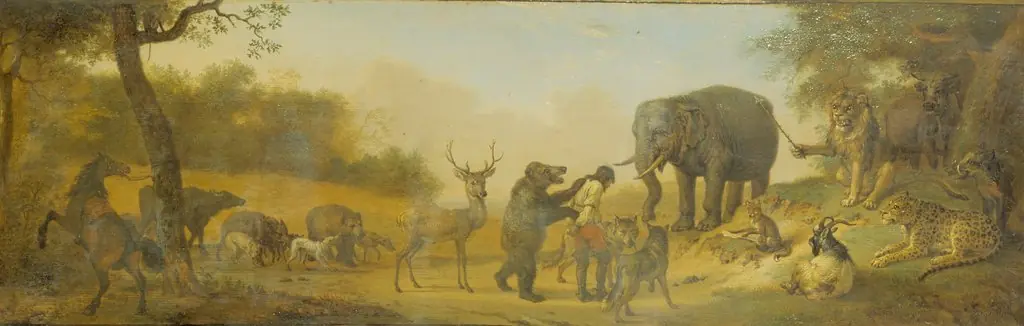
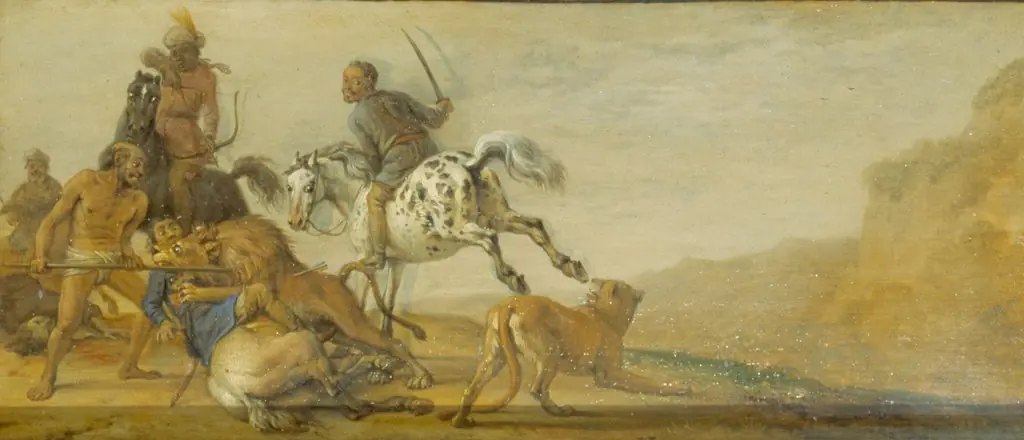
Trapping a Leopard is an oil painting by the Dutch Golden Age artist Paulus Potter. It dates from 1650 and is held in the collection of the Hermitage Museum.
About this work
Subject & Meaning
Symbolically, the work juxtaposes wilderness with human intervention, emphasizing themes of vulnerability and the fleeting nature of freedom.
The painting portrays a leopard caught in a hunter's trap, set within a rocky cave that includes a reflective surface, suggesting both the animal's peril and a moment of contemplation. Symbolically, the work juxtaposes wilderness with human intervention, emphasizing themes of vulnerability and the fleeting nature of freedom. The mirror-like element may evoke self‑awareness or the transient quality of life, while the scene underscores the delicate balance between predator and prey in the natural world.
History & Provenance
The painting Trapping a Leopard was executed by Paulus Potter in 1650 in oil paint. According to the work’s current record, it belongs to the collection of the Hermitage Museum in Saint Petersburg, where it is housed today. No earlier owners, commissions, or exhibition history are documented in the available sources, so the provenance beyond its modern institutional holding remains unspecified.
The work’s creation is thus dated to the mid‑seventeenth century based on the artist’s inscription and the museum’s accession data.
Paulus Potter's oil painting Trapping a Leopard, created in 1650, is held in the collection of the Hermitage Museum. The work remains part of the museum's permanent holdings, where it is located alongside other genre scenes. Specific inventory or accession numbers for this piece are not provided in the available sources. The provided documentation does not record any exhibition history for the painting.
Overview
Created circa 1650 by Dutch artist Paulus Potter, Trapping a Leopard is an oil on canvas that exemplifies the genre‑scene tradition of the Dutch Golden Age. The composition centers on a leopard perched on a wooden balustrade, its fur rendered in warm, earthy tones, while a distant, misty landscape is visible through an open window behind it. The work is part of the State Hermitage Museum’s collection.
Technique & Style
Potter employs a delicate handling of paint to differentiate textures: the leopard’s spotted coat is depicted with fine, layered strokes that give a tactile sense of fur, while the background recedes in softer, atmospheric washes. This contrast heightens the animal’s three‑dimensional presence against the blurred, almost impressionistic landscape beyond the window.
Context
The mid‑17th century Dutch art market favored detailed, naturalistic depictions of fauna, reflecting both scientific curiosity and a taste for domestic scenes. Potter’s work aligns with this trend, offering a realistic study of an exotic creature that would have appealed to collectors interested in the burgeoning interest in zoological illustration and the novelty of foreign wildlife.
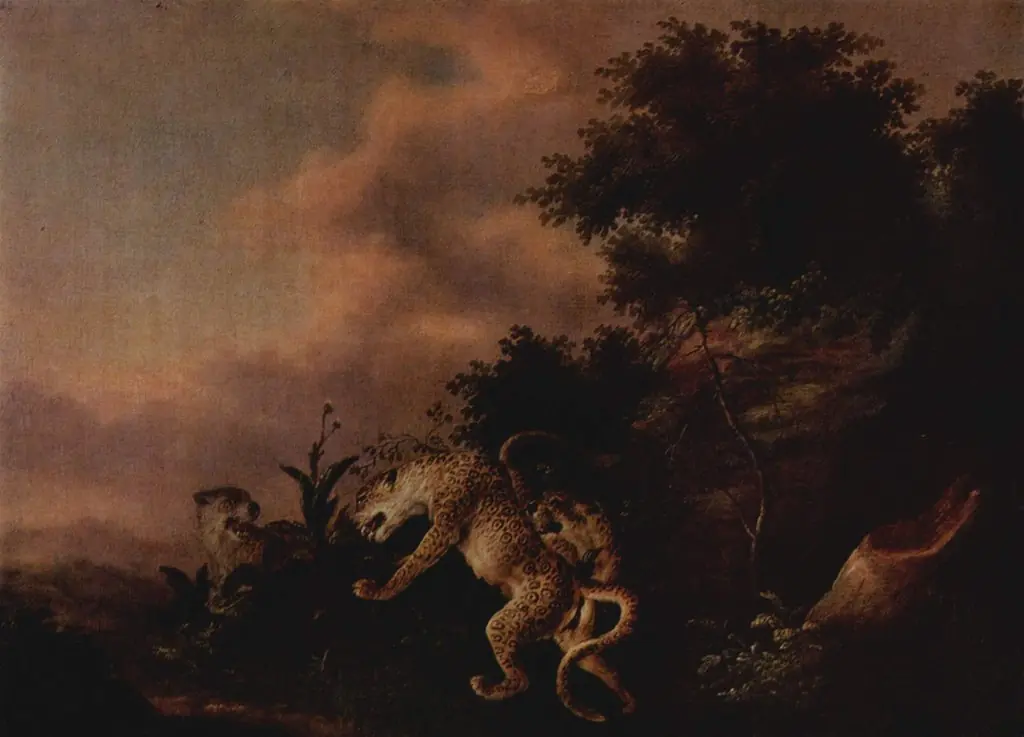
Own this work as a print
Artist & collection
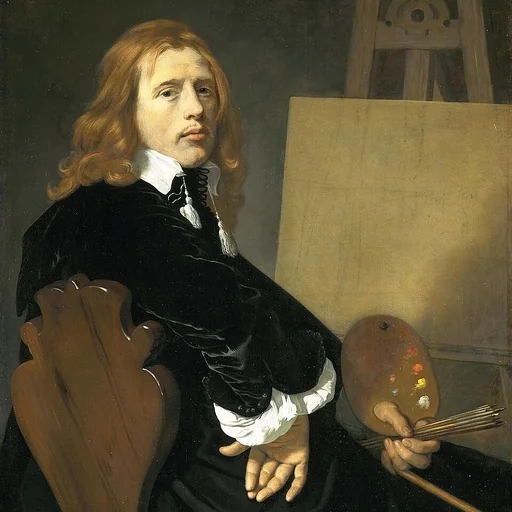
Artist
Paulus Potter (Dutch pronunciation:; 20 November 1625 (baptised) – 17 January 1654 (buried)) was a Dutch painter who specialized in landscapes featuring animals, often from a low vantage point.