Artwork
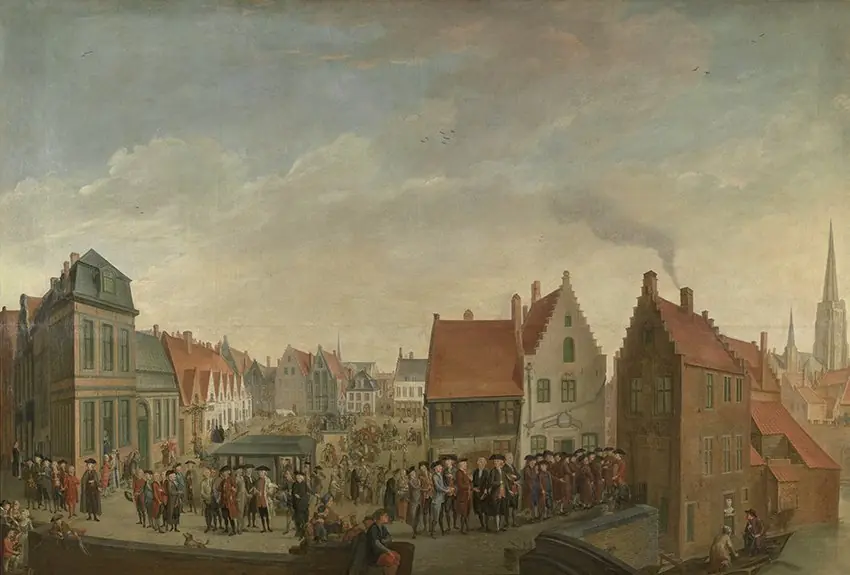
The disbanding of the 'waardgelders' (mercenaries in the pay of the town government) by Prince Maurits on the Neude, Utrecht, 31 July 1618
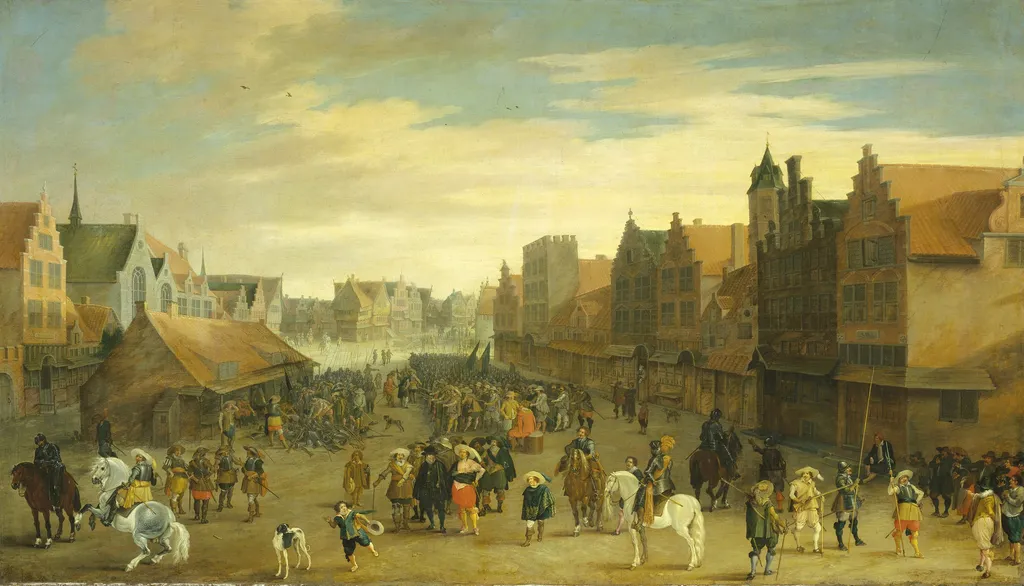
The disbanding of the 'waardgelders' (mercenaries in the pay of the town government) by Prince Maurits on the Neude, Utrecht, 31 July 1618 is an oil painting by the Dutch Golden Age artist Paulus van Hillegaert. It dates from 1627 and is held in the collection of the Rijksmuseum.
About this work
Context
The painting captures the dramatic moment of Prince Maurits ordering the disbandment of the 'waardgelders' mercenaries on Utrecht's Neude, an event commemorating a politically charged episode on 31 July 1618. Executed by Paulus van Hillegaert I in 1627, the work exemplifies the Dutch Golden Age fascination with historical narrative interwoven with landscape, blending topographical precision with emotive storytelling. Its creation shortly after the depicted incident underscores the artist's role in visualizing contemporary political upheavals, situating it within the broader tradition of civic commemoration in early modern Netherlands.
The composition, characterized by meticulous detail and dynamic spatial arrangement, reflects the influence of contemporary print culture while anticipating later developments in Dutch historical painting. As part of the Rijksmuseum's collection, the artwork remains a key reference for understanding the intersection of art, propaganda, and civic identity in the Republic's visual culture.
Overview
Paulus van Hillegaert’s 1627 oil painting records the formal dismissal of Utrecht’s municipal mercenaries by Prince Maurits on 31 July 1618.
Paulus van Hillegaert’s 1627 oil painting records the formal dismissal of Utrecht’s municipal mercenaries by Prince Maurits on 31 July 1618. Executed on canvas, the work captures a crowded urban square, with figures in period dress clustered before a backdrop of low‑rise buildings and a church steeple. It is part of the Rijksmuseum’s collection and exemplifies the narrative vigor of Dutch Golden Age art.
Subject & Meaning
The composition portrays the moment Prince Maurits, mounted and flanked by officers, orders the release of the ‘waardgelders’, soldiers hired by the city council. The assembled townspeople react with a mixture of curiosity and tension, their gestures suggesting both relief and uncertainty about the political shift. The scene underscores the transition from private militia control to centralized authority in early‑17th‑century Utrecht.
Technique & Style
Van Hillegaert employs a strong chiaroscuro that models the figures against the sun‑lit square, creating depth and emphasizing the central authority figure. The brushwork is brisk in the bustling crowd, while architectural elements are rendered with tighter detail. A muted palette of earth tones interspersed with brighter reds on uniforms highlights the military presence without overwhelming the overall balance.
History & Provenance
Painted a decade after the event it depicts, the work reflects contemporary interest in civic milestones. It entered the Rijksmuseum’s holdings in the early 20th century, having previously been part of a private Dutch collection. Documentation traces its attribution to van Hillegaert through stylistic comparison with his known military and equestrian subjects.
Artist & collection
Artist
Paulus van Hillegaert (I) or Pauwels van Hillegaert (I) (1596–1640) was a Dutch painter and draughtsman, known mainly for his landscapes, military scenes and equestrian portraits.

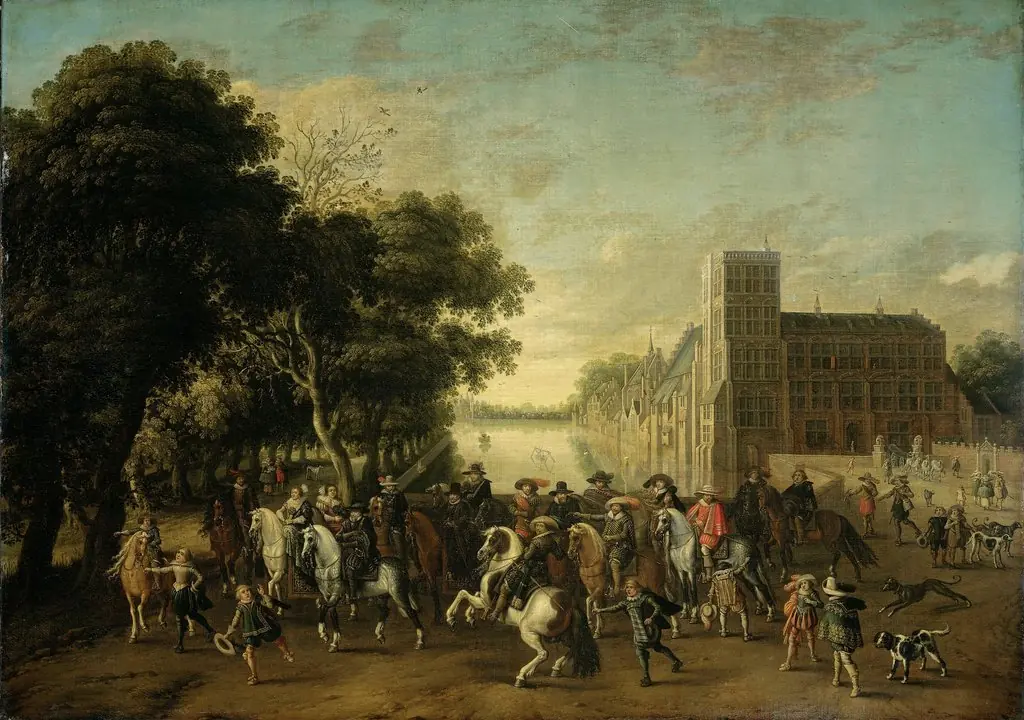 Prince Maurits, accompanied by Prince Frederik Hendrik, Frederick V of Bohemia and his wife Elizabeth Stuart, and others, on the Buitenhof, The Hague
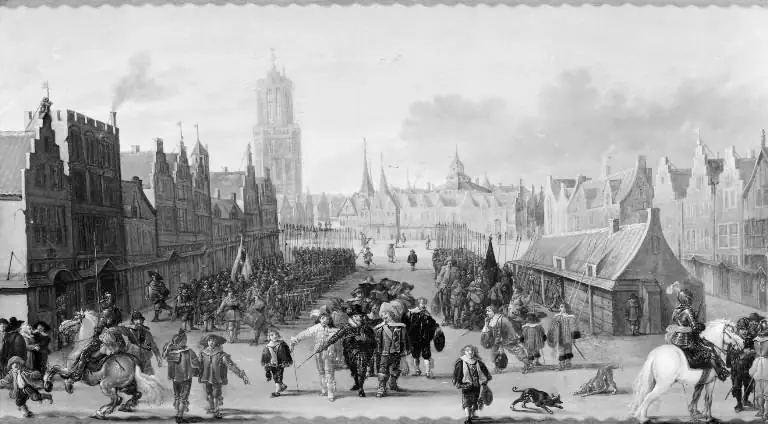 Disbanding of the Mercenary Troops on the Neude, Utrecht, July 31st, 1618
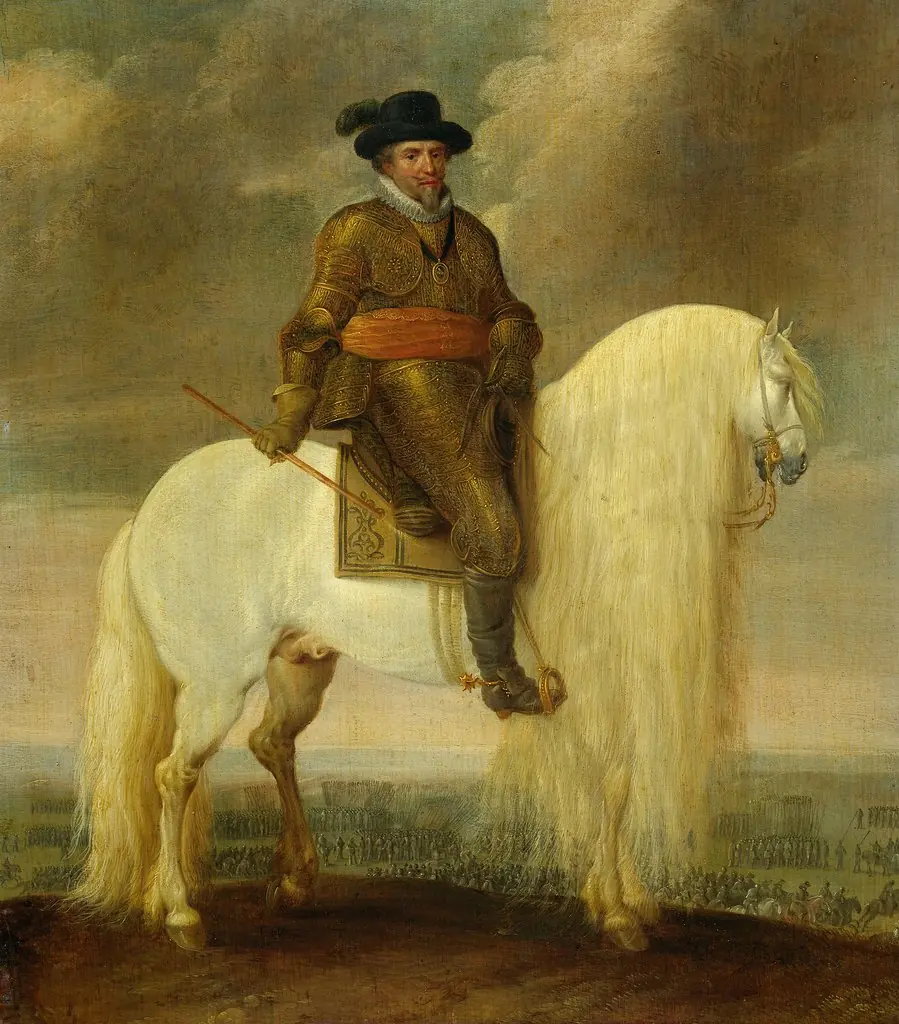 Prince Maurits astride the white warhorse presented to him after his victory at Nieuwpoort
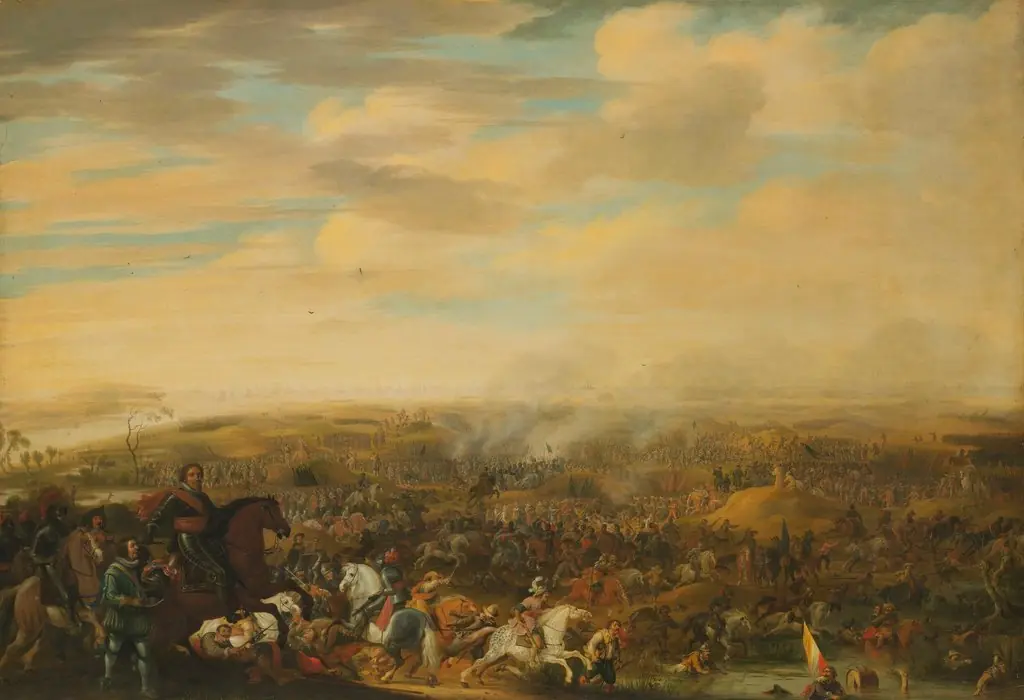 Prince Maurits at the Battle of Nieuwpoort, 2 July 1600
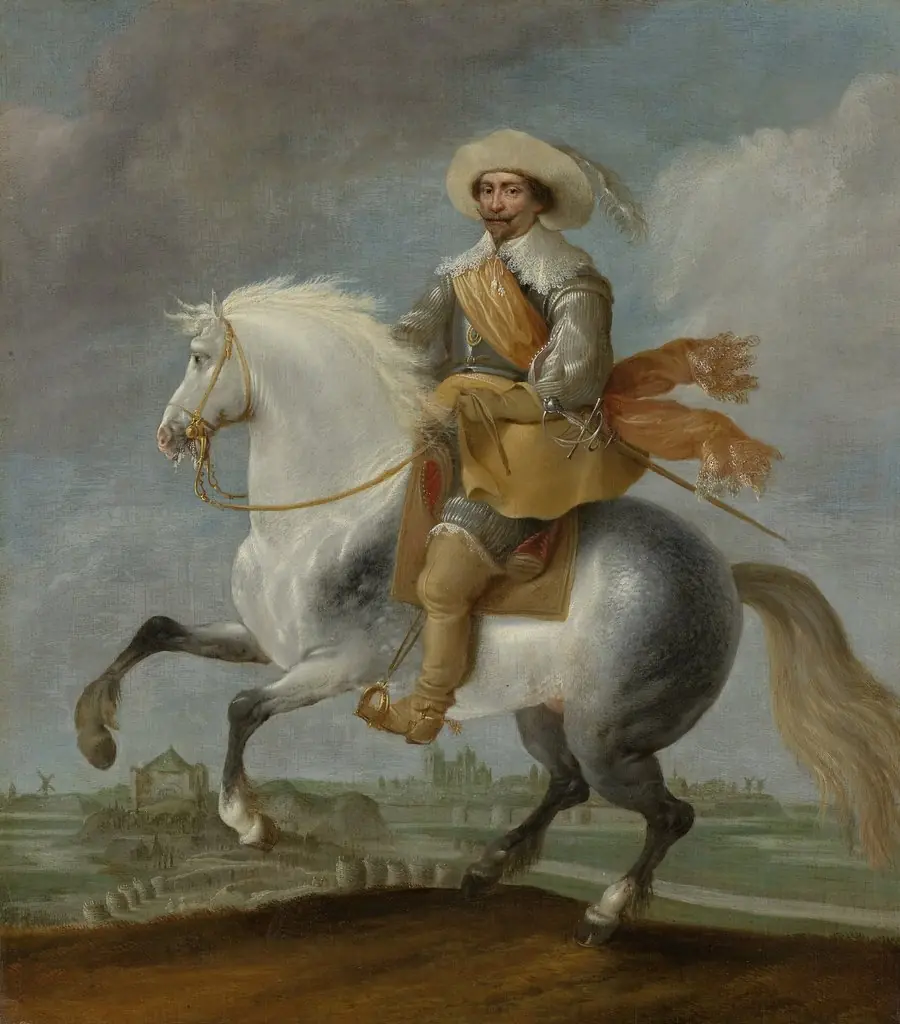 Prince Frederik Hendrik on horseback outside the fortifications of 's-Hertogenbosch, 1629
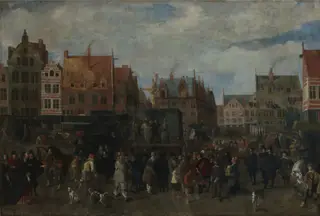 Fair on the Antwerp Meir
 A View of the Meir
 The Fish Market of Antwerp
 The Dam Square in Amsterdam with the Weigh House
 Dutch Troops passing through the Fortress of Dendermonde
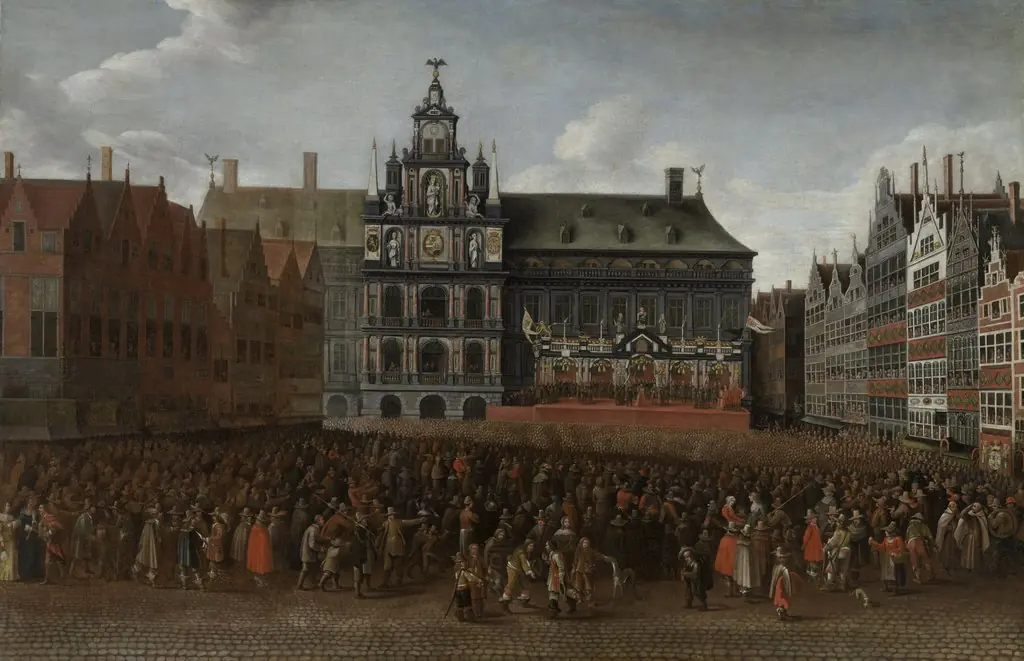 The Proclamation of the Peace of Münster at the Grote Markt in Antwerp
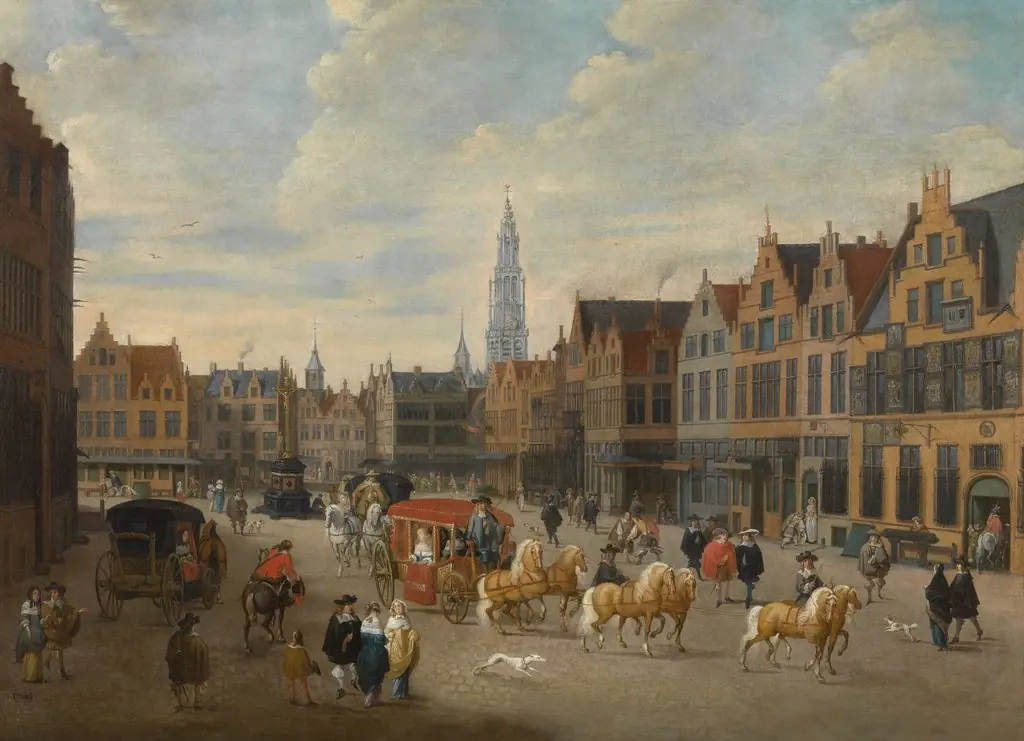 Meirplaats in Antwerp
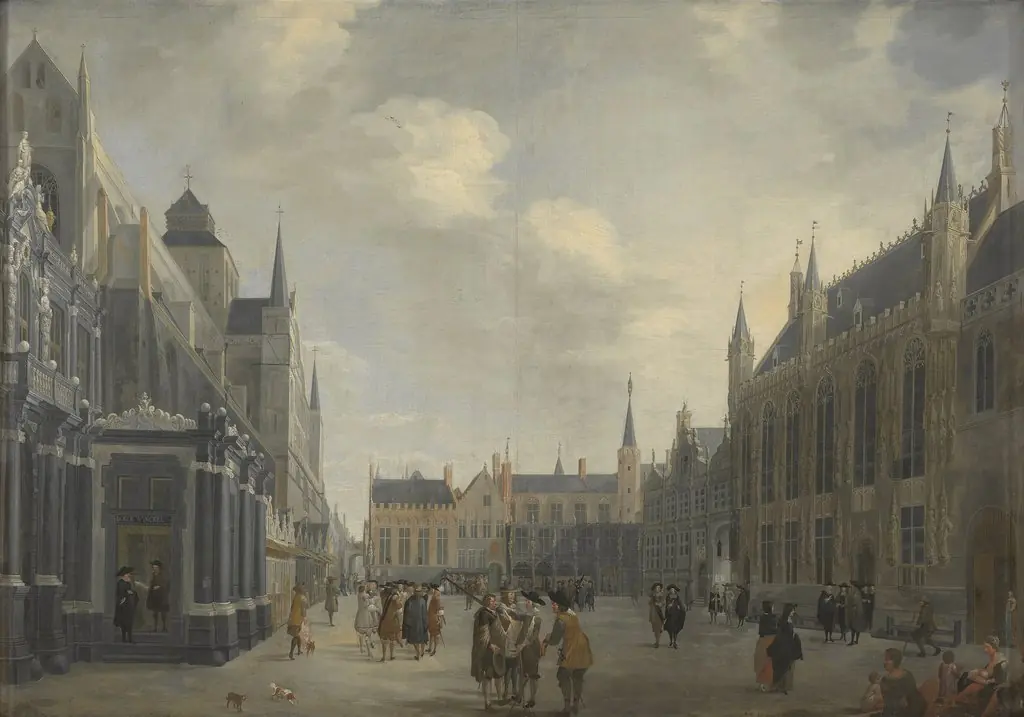 The Burg in Bruges
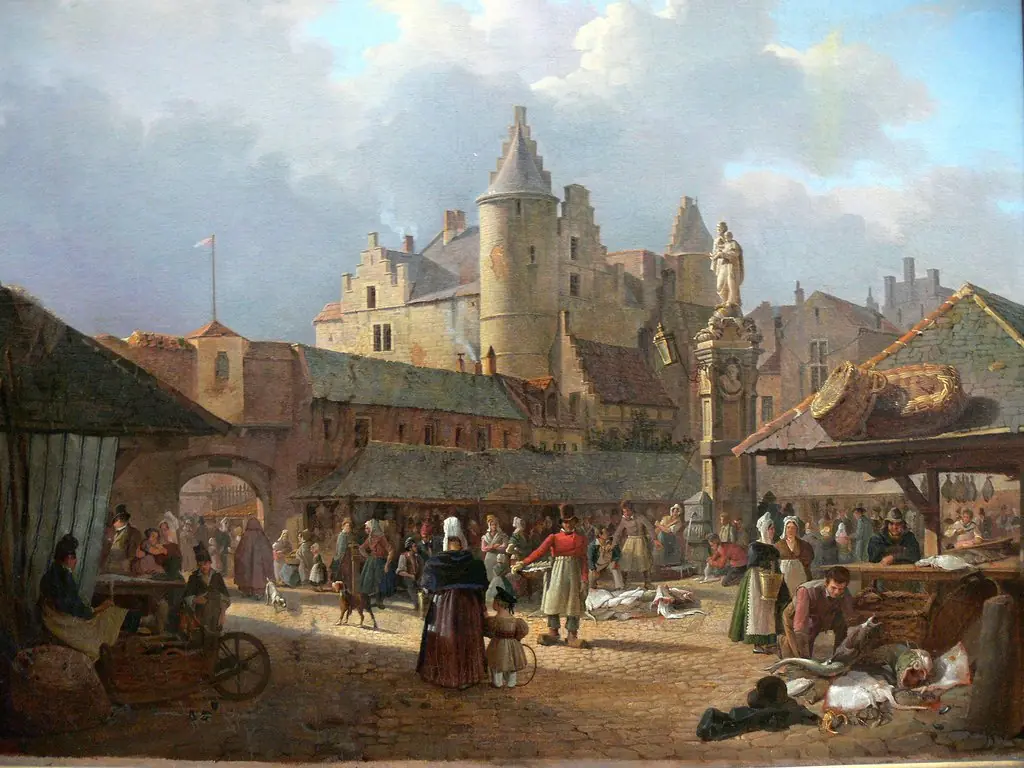 The Old Fish Market in Antwerp
 De Braamberg in Brugge
- Disbanding of the Mercenary Troops on the Neude, Utrecht, July 31st, 1618