Artwork
The Packet "Mohawk of Albany" Passing the Palisades
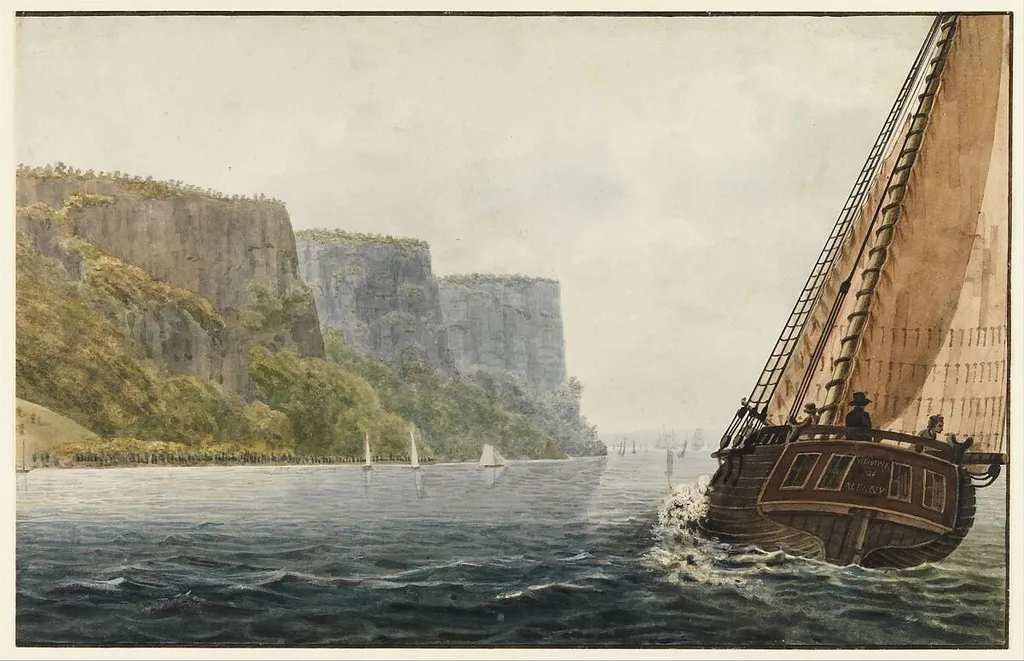
The Packet "Mohawk of Albany" Passing the Palisades is a watercolor work on paper by the American Folk Art artist Pavel Petrovich Svinin. It dates from 1811 and is held in the collection of the Metropolitan Museum of Art.
About this work
Svinin sketched it while traveling the Hudson River in 1811, just a few years after the first steamboats appeared.
A steamboat with tall smokestacks cuts through a wide river, hills rising on both sides. The boat’s paddle wheel churns white water, and tiny figures wave from the deck.
This is one of the earliest pictures of an American steamboat by a Russian visitor. Svinin sketched it while traveling the Hudson River in 1811, just a few years after the first steamboats appeared. The quick, bright watercolor feels like a snapshot of a new technology.
To see how other artists painted early steam travel, look up the subject ships, rivers, american, ship.
Subject & Meaning
The painting shows a steam-powered side-wheel vessel identified as the "Mohawk of Albany" navigating the Hudson River's Palisades cliffs. The work functions as a topographical record of early American river commerce, emphasizing the technological transition from sail to steam propulsion that shaped 19th-century transportation networks. Svinin's precise rendering of the ship against the dramatic riverine landscape serves both documentary and symbolic purposes, portraying the vessel as a conduit of progress through the natural environment.
The depiction reflects contemporary American expansionist narratives that framed such technological achievements as integral to manifest destiny and national development.
Technique & Style
Created in 1811, this landscape employs watercolor and gouache applied to off-white wove paper. The work measures 24.8 cm in height and 38.9 cm in width, presenting a scene of a ship navigating past the Palisades. Executed by Pavel Petrovich Svinin, the piece is classified within the American Wing genre as a landscape depicting a vessel.
History & Provenance
The work titled The Packet "Mohawk of Albany" Passing the Palisades was painted in 1811 by Pavel Petrovich Svinin. Executed in watercolor and gouache on off-white wove paper, it measures 24.8 cm in height and 38.9 cm in width. The painting entered the collection of the Metropolitan Museum of Art, where it has been displayed as part of The American Wing, and is catalogued under the genre of landscape depicting a ship.
The watercolor and gouache painting The Packet "Mohawk of Albany" Passing the Palisades (1811) by Pavel Petrovich Svinin is held in the collection of the Metropolitan Museum of Art, New York.
It is recorded in the museum’s holdings with the accession number 59.646.
Legacy
The work's reputation grew through its inclusion in The American Wing at the Metropolitan Museum of Art, where it is catalogued as a landscape genre piece. Scholars reference its distinctive depiction of a ship to discuss early 19th‑century American maritime imagery and its influence on later landscape compositions. The painting's legacy is anchored in its continued presence in major exhibitions and its role in shaping interpretations of early American coastal scenes.
Overview
Created circa 1811 by Pavel Petrovich Svinin, this work portrays a river steamboat navigating the Hudson. Executed in watercolor and gouache on a light‑colored wove paper, the composition captures a vessel with prominent smokestacks and a paddle wheel amid a broad waterway flanked by rising hills. The scene includes diminutive figures on deck, suggesting a lively passage.
Context
At the time of its creation, steamboats had been operating on the Hudson for only a few years, following Robert Fulton's pioneering voyages. Svinin’s depiction therefore offers a contemporary glimpse of a technology still in its infancy, paralleling other early 19th‑century European travelers who documented the rapid industrial changes in the young republic.
Artist & collection

Artist
Pavel Petrovich Svinyin or Svinin (Russian: Па́вел Петро́вич Свиньи́н; 19 June 1787 – 21 April 1839) was a Russian writer, painter, and editor, known as a "Russian Munchausen" for many exaggerated accounts of his travels.

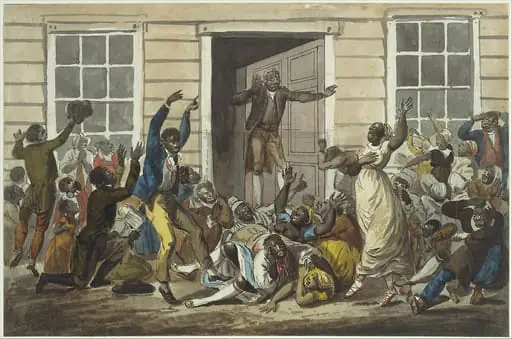 Black Methodists Holding a Prayer Meeting
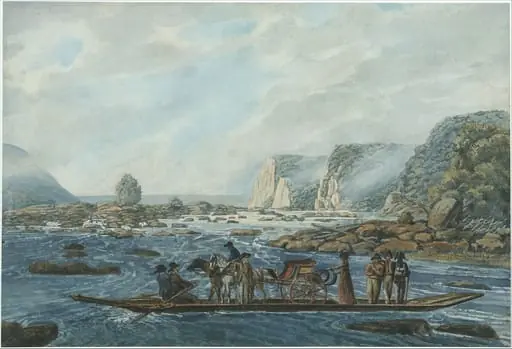 A Ferry Scene on the Susquehanna at Wright's Ferry, near Havre de Grace
 Moravian Sisters
 View on the Hudson River (Copy after Engraving by Weld and S. Springsguth in Weld, Travels Through the States of North America, 1807)
 A View of the Potomac at Harpers Ferry
 The Falls of the Schuylkill and Chain Bridge
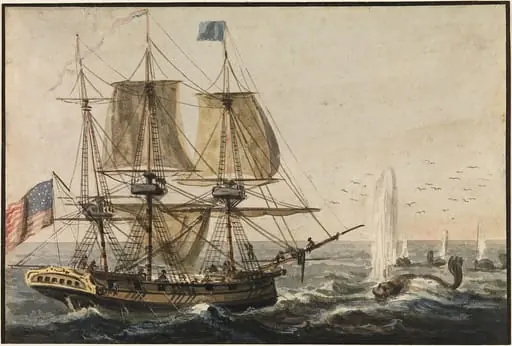 Replenishing the Ship's Larder with Codfish off the Newfoundland Coast
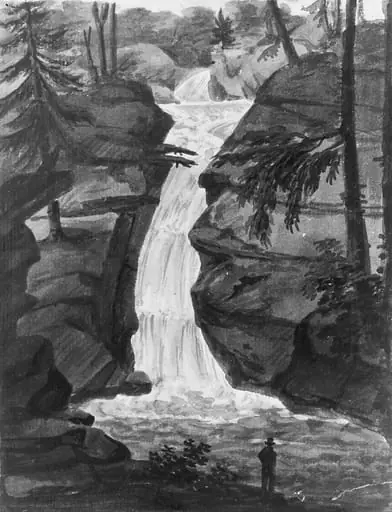 Upper Falls of Solomon's Creek (after an Engraving in The Port Folio Magazine, December 1809)
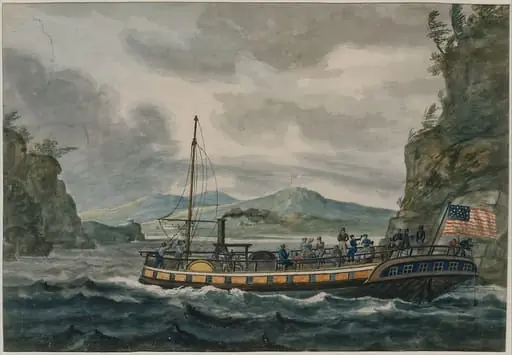
- Steamboat Travel on the Hudson River
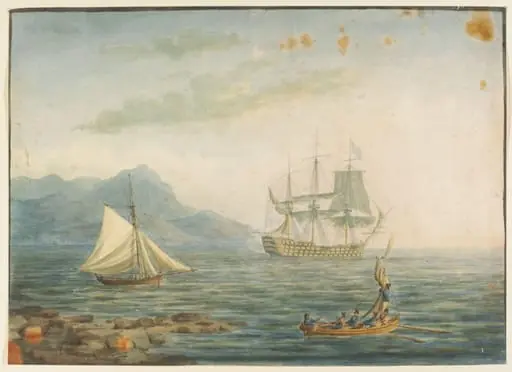 H.M.S. Victory off N. Africa
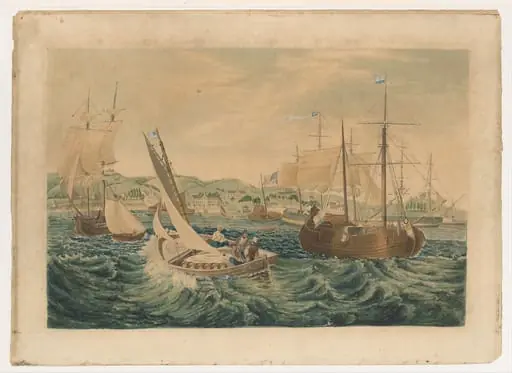 Quarantine, Staten Island
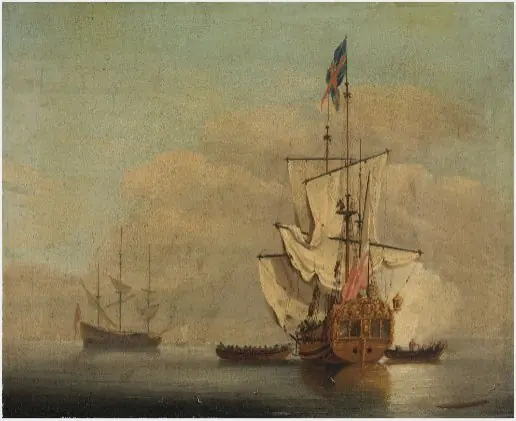 Calm: an English Sixth-rate Ship Firing a Salute
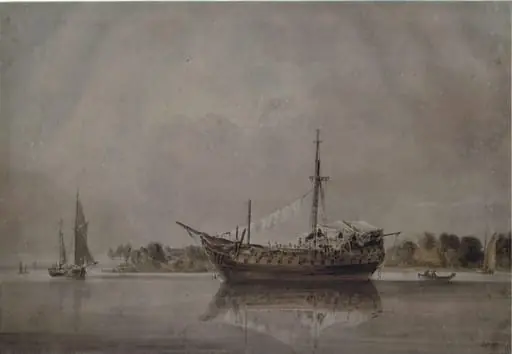 Dismantled vessel lying at anchor off a low point of land
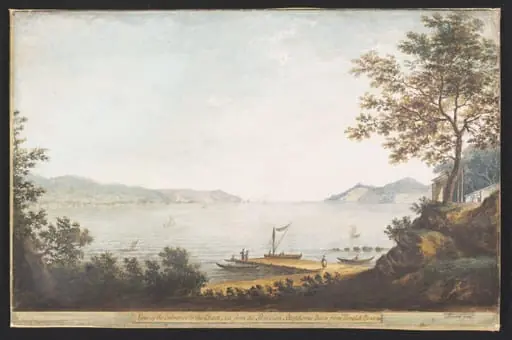 View of the Entrance to the Black Sea from the Thracian Bosphorus taken from Keretch Bournu
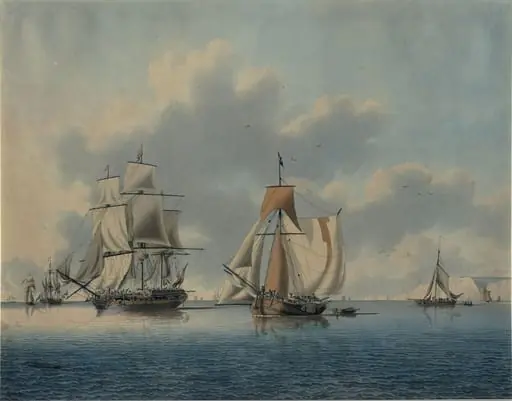 A frigate and Dutch fishing boats off the Isle of Wight
 Marine View, with boats and figures on shore
 Shipping in a Calm
 The British Fleet Forming a Line off Algiers
 Gibraltar