Artwork
Steamboat Travel on the Hudson River
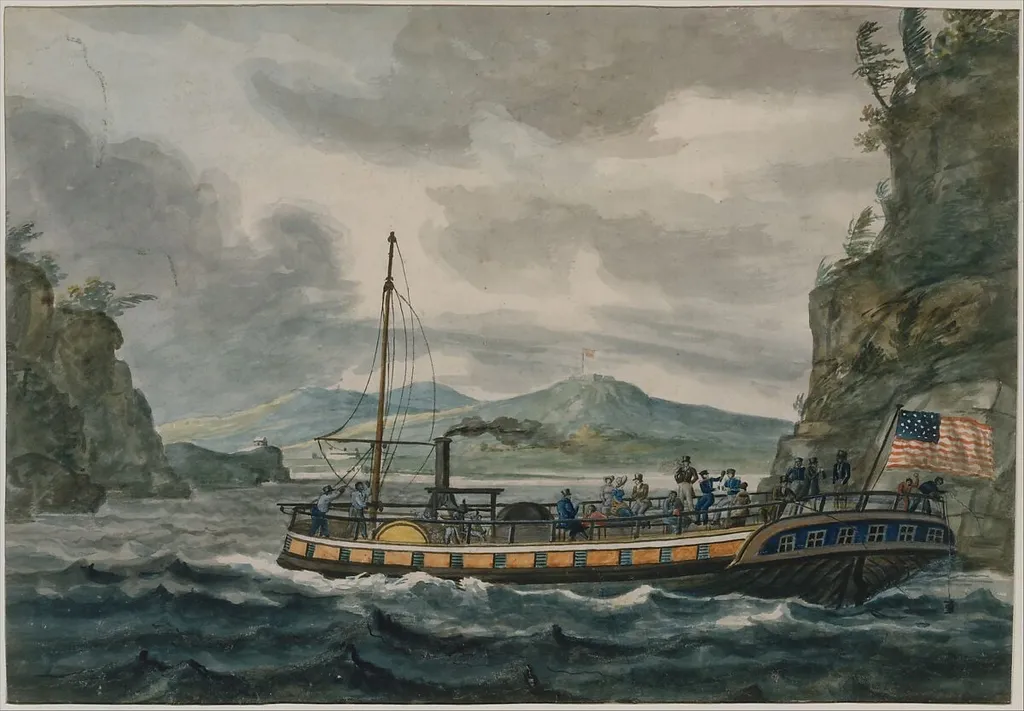
Steamboat Travel on the Hudson River is a watercolor work on paper by the Romanticist artist Pavel Petrovich Svinin. It dates from 1811 and is held in the collection of the Metropolitan Museum of Art. Created circa 1811, this watercolor and gouache on white wove paper portrays a paddle‑wheel steamboat navigating the Hudson River.
About this work
Overview
Steamboat Travel on the Hudson River is a watercolor and gouache painting by the Russian diplomat and amateur artist Pavel Petrovich Svinin, created between 1811 and approximately 1813. Measuring 9 13/16 x 14 1/4 inches (24.9 x 36.2 cm) on white wove paper, the work is held in the American Wing of the Metropolitan Museum of Art in New York, acquired through the Rogers Fund in 1942 with the object number 42.95.7. The painting is significant as an early visual document of steamboat travel in the United States, capturing a pivotal moment of technological and social transformation in the early American republic. Svinin, who lived from 1787/88 to 1839, produced this work during or shortly after his diplomatic service in the United States, offering a foreign observer's perspective on American progress and landscape.
Subject & Meaning
The steamboat serves as a potent signifier of technological progress and national ambition, set against the timeless grandeur of the Hudson River Valley.
The painting depicts a steamboat as the central subject, navigating choppy waters between two rocky cliffs of the Hudson River. The vessel features a single mast, a smokestack emitting dark smoke, and a paddlewheel at the stern, with an American flag hanging from the rear. Numerous figures populate the deck, standing, sitting, or gesturing toward the landscape, suggesting the social experience of travel and the novelty of this mode of transportation. The composition contrasts the verticality of the mast and rock formations with the horizontal expanse of the river and steamboat, while billowing clouds add dynamism to the scene. The American flag functions both as a patriotic symbol and as a compositional element that balances the darker cliff on the left. The steamboat serves as a potent signifier of technological progress and national ambition, set against the timeless grandeur of the Hudson River Valley. In the background, distant mountains under an overcast sky and a small flagged structure atop a distant hill complete the scene, emphasizing the convergence of human engineering and natural sublimity. The work encapsulates a moment of transition, where technology and nature converge to shape a new cultural landscape.
Technique & Style
Svinin executed the work in watercolor and gouache on white wove paper, employing a muted palette of blues, grays, and browns with touches of orange and red in the flag and the boat's hull. The medium allows for fluid, transparent washes in the sky, creating soft atmospheric effects in the distant elements, while more defined brushwork characterizes the boat and figures. The water appears dark and turbulent with white-capped waves, rendered through varied handling that distinguishes the foreground activity from the hazy background. The overall finish is relatively smooth, with careful attention to the alternating bands of orange and dark color with blue accents on the hull. The artist's technique reflects a documentary impulse combined with picturesque sensibility, balancing topographical accuracy with aesthetic composition. The use of gouache alongside watercolor permits both transparency and opacity, enabling Svinin to layer detail upon atmospheric effect. The horizontal format suits the expansive river scene, allowing the viewer to traverse the composition as if following the steamboat's journey.
History & Provenance
The painting is dated 1811 to approximately 1813, a period when Svinin was in the United States as secretary to the Russian consul in Philadelphia and later as consul general. The Metropolitan Museum of Art acquired the work in 1942 through the Rogers Fund, giving it the accession number 42.95.7. The work is now part of the museum's American Wing collection, where it is classified as a landscape. The Internet Archive record associates the work with broader categories including drawings, paper, paintings, watercolors, and gouaches, and notes its connection to both Asia and Russia in addition to its American cultural designation. The painting is available through The Met's Open Access program, with public domain images available for unrestricted commercial and noncommercial use. No extensive exhibition history is documented in the available sources beyond its permanent collection status at the Metropolitan Museum.
Context
Pavel Petrovich Svinin was a Russian diplomat, writer, and amateur artist who served in the United States from 1811 to 1813, a brief but significant period in his career. His work on American subjects represents a unique transnational perspective on the early republic, combining European artistic training with firsthand observation of American life. The painting belongs to a moment when steamboat travel was transforming the Hudson River into a vital commercial and cultural corridor, following Robert Fulton's successful steamboat service that began in 1807. Svinin's depiction participates in the broader early nineteenth-century interest in documenting American scenery and technological achievement, a genre that would flourish in the decades to come with the Hudson River School. The work's classification in the American Wing of the Metropolitan Museum, despite the artist's Russian nationality, reflects its importance as a document of American culture and landscape. Critical attention to the work has emphasized its value as an interpretation of progress, where the artist uses the steamboat as a lens through which to understand an evolving world.
Legacy
Steamboat Travel on the Hudson River has entered the public domain and circulates widely through digital platforms and reproduction services, testament to its continued accessibility and relevance. The work is offered as a high-resolution print by commercial vendors, who emphasize its Neoclassical style and landscape subject matter as suitable for contemporary interiors. Its presence in the Metropolitan Museum's Open Access collection ensures ongoing visibility for researchers, educators, and the general public. The painting's afterlife is shaped by its utility as a historical document of early American transportation and as an example of cross-cultural artistic production in the early nineteenth century. While Svinin is not among the most widely studied artists of his era, this work secures his place in histories of American art as a perceptive foreign observer of the young nation's technological ambition and natural splendor. The image continues to serve as a visual resource for understanding the cultural landscape of the early American republic and the international perspectives that helped define it.
Artist & collection

Artist
Pavel Petrovich Svinyin or Svinin (Russian: Па́вел Петро́вич Свиньи́н; 19 June 1787 – 21 April 1839) was a Russian writer, painter, and editor, known as a "Russian Munchausen" for many exaggerated accounts of his travels.

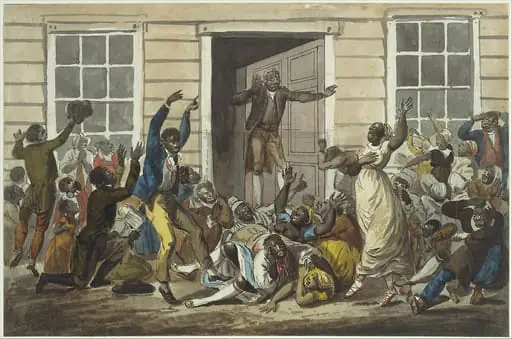 Black Methodists Holding a Prayer Meeting
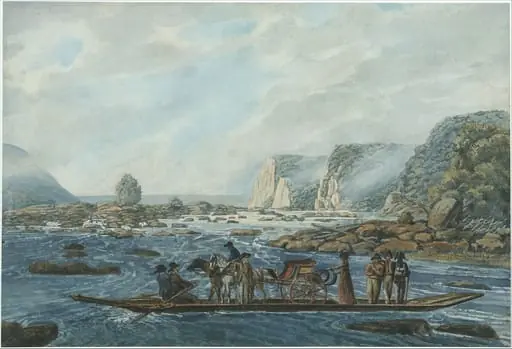 A Ferry Scene on the Susquehanna at Wright's Ferry, near Havre de Grace
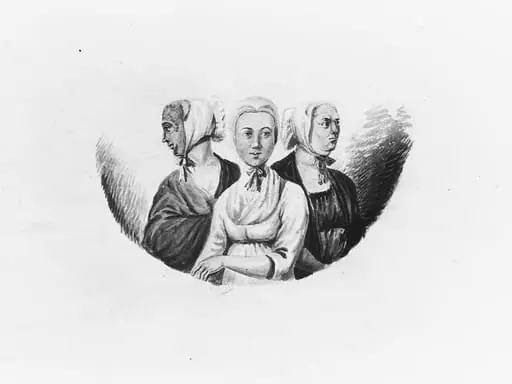 Moravian Sisters
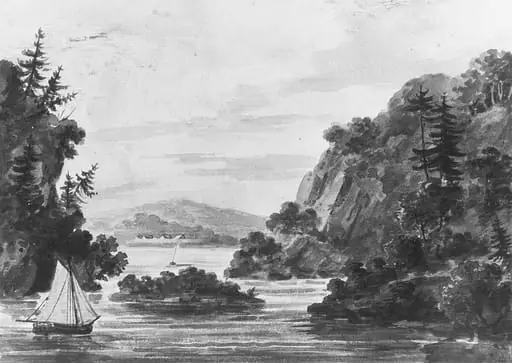 View on the Hudson River (Copy after Engraving by Weld and S. Springsguth in Weld, Travels Through the States of North America, 1807)
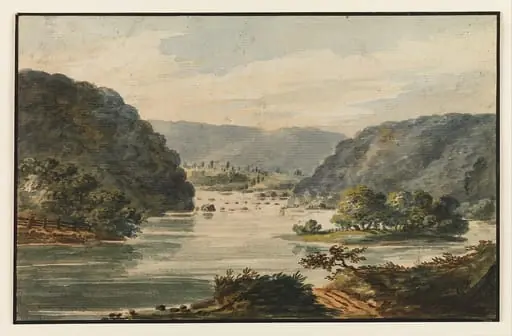 A View of the Potomac at Harpers Ferry
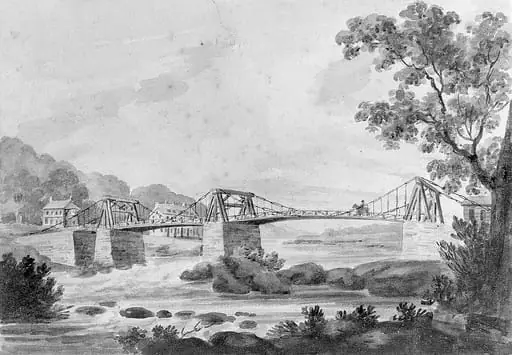 The Falls of the Schuylkill and Chain Bridge
 Replenishing the Ship's Larder with Codfish off the Newfoundland Coast
 Upper Falls of Solomon's Creek (after an Engraving in The Port Folio Magazine, December 1809)
- H.M.S. Victory off N. Africa
 View of the Cliffs of Møn and a Corvette
 Seascape with a Frigate
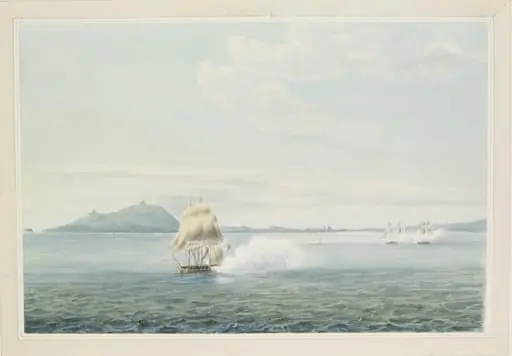 Gibraltar
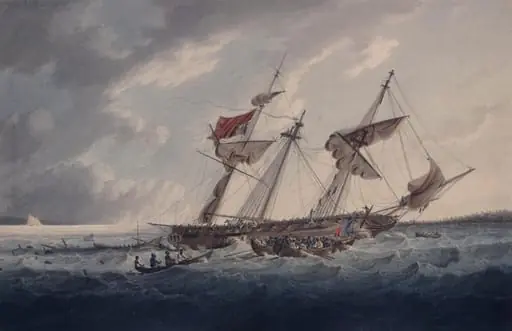 A Vessel in the Surf off the African Coast
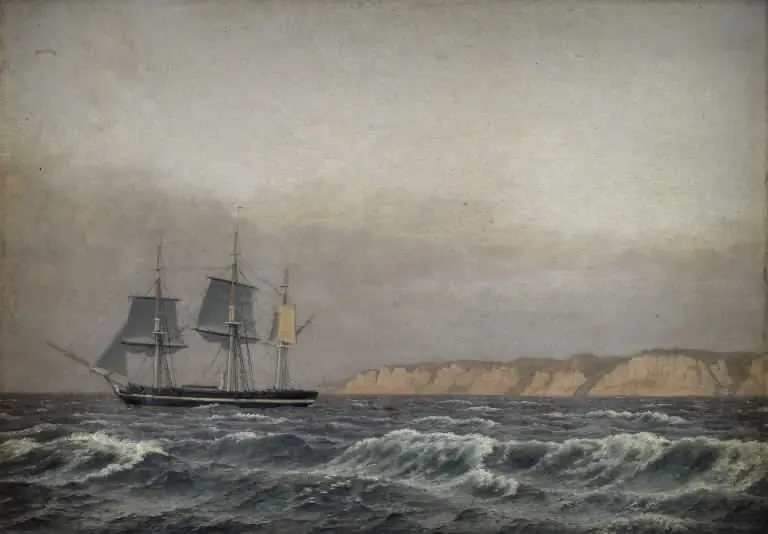 View of the Cliffs of Møn and a Corvette
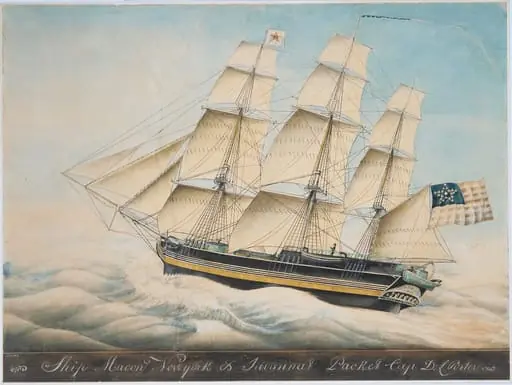 The Ship "Macon"
 Ships off the Coast of Iceland
 The Ship "Favorite" Maneuvering Off Greenock
 Entrance to a Harbour
 Marine View, with boats and figures on shore
 Shipping