Artwork
Barracks
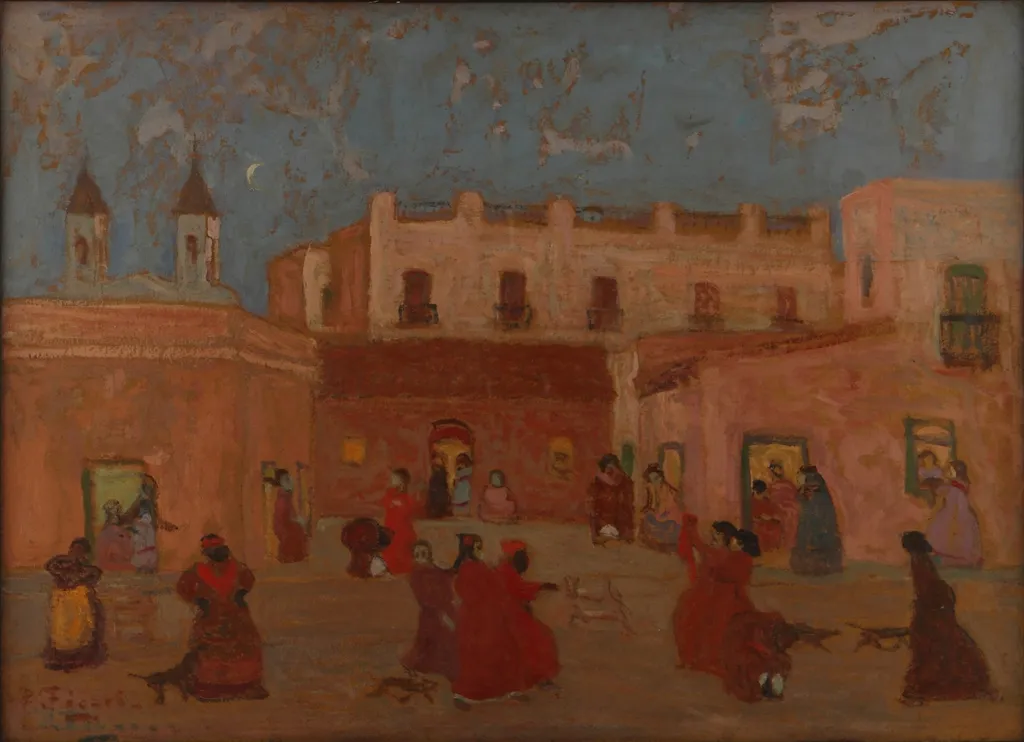
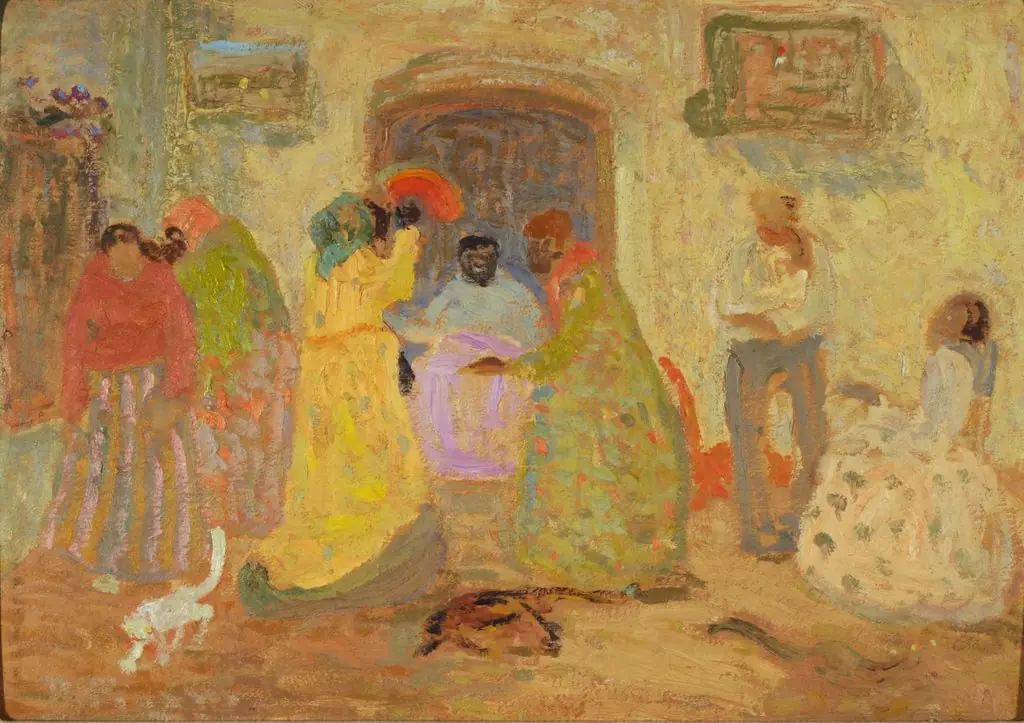
Barracks is an unspecified painting by the Naïve art artist Pedro Figari. It dates from 1923 and is held in the collection of the National Museum of Fine Arts, Argentina.
About this work
Overview
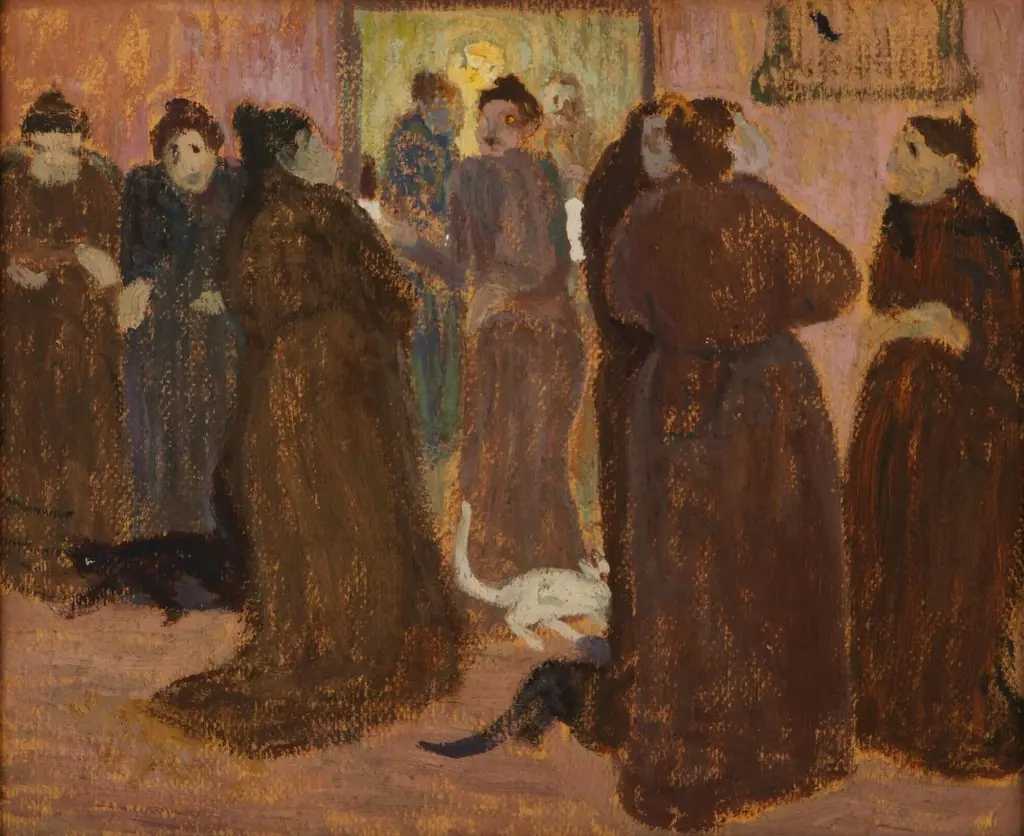
The painting captures a moment of communal life with deliberate informality, reflecting his belief that art should convey cultural truth over visual accuracy.
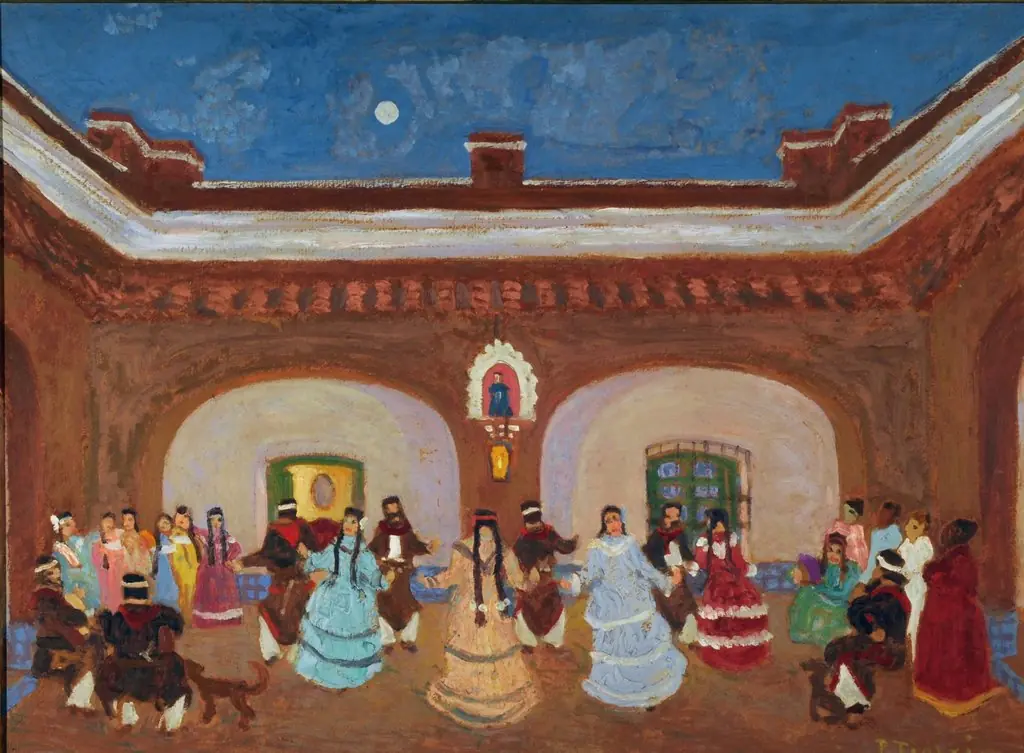
Painted in 1923 by Pedro Figari, Barracks is one of many works in which the Uruguayan artist turned to visual expression after a career in law and public service. Rather than pursuing academic realism, Figari favored a simplified, expressive style rooted in memory and personal experience. The painting captures a moment of communal life with deliberate informality, reflecting his belief that art should convey cultural truth over visual accuracy.
Subject & Meaning
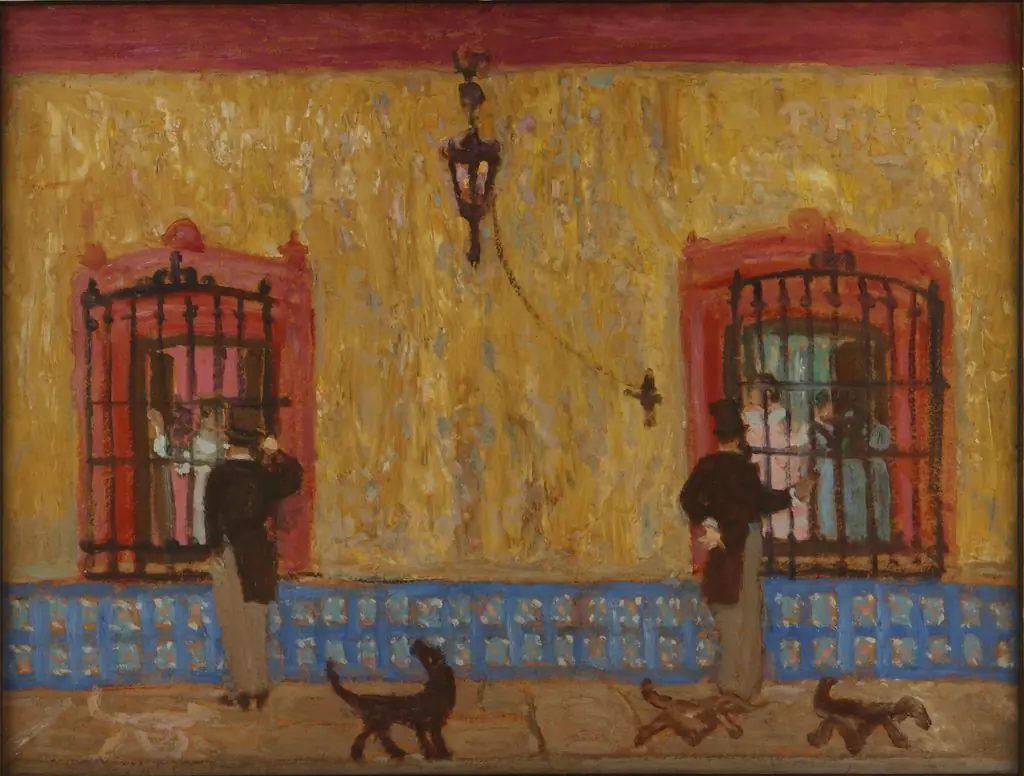
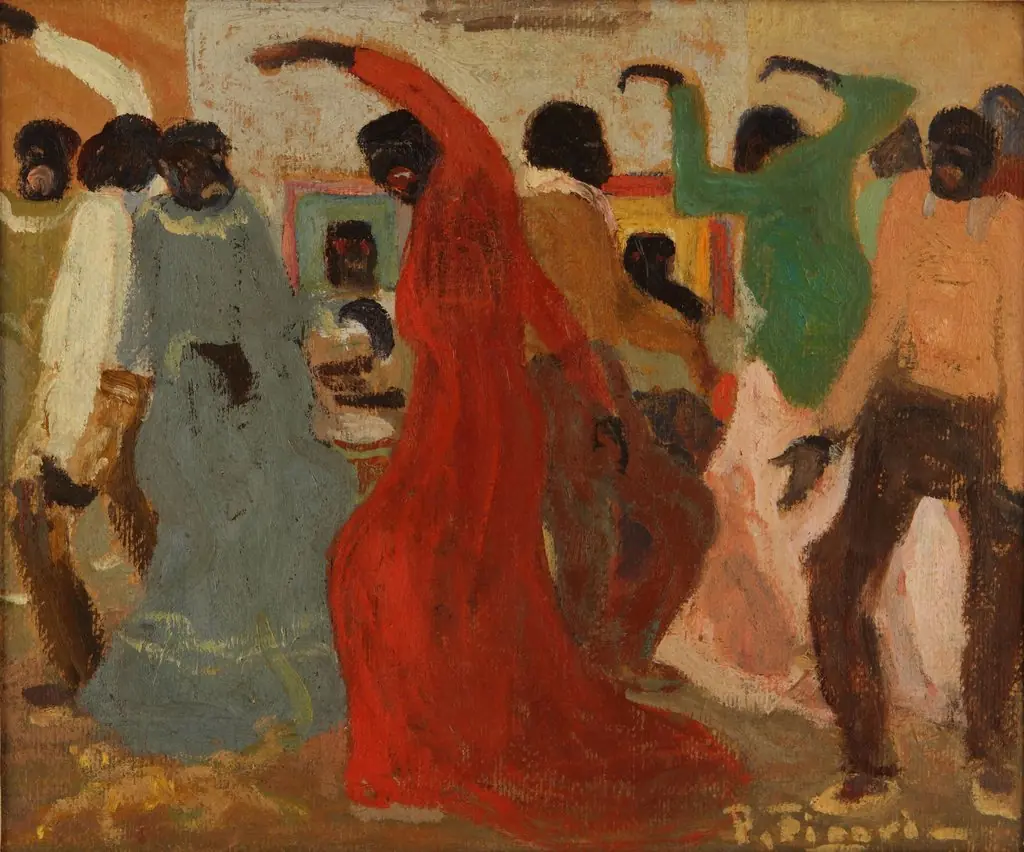
The scene depicts soldiers and civilians gathered around a military barracks, likely recalling Figari’s childhood observations in Uruguay. Figures engage in daily activities, talking, standing, resting, suggesting the rhythm of routine life within a structured institution. The absence of dramatic tension or narrative climax emphasizes the quiet dignity of ordinary moments, framing the barracks not as a site of power but as a social space shaped by human presence.
Technique & Style
Figari employed loose, energetic brushwork and flat planes of color to construct form, avoiding perspective and shading typical of academic painting. The red walls and deep blue sky create strong contrasts, while figures are rendered with minimal detail, their identities suggested rather than defined. This approach prioritizes emotional resonance and movement over anatomical precision, aligning with the broader tendencies of Latin American modernist primitivism.
History & Provenance
Created during Figari’s most active period as a painter, Barracks entered the collection of the National Museum of Fine Arts in Buenos Aires in the mid-20th century. The work was part of a broader effort by Latin American institutions to recognize regional artists who drew from local traditions rather than European models. Its inclusion reflects its significance in documenting national identity through personal memory.
Context
In the early 20th century, Latin American artists increasingly sought to define cultural identities distinct from European norms. Figari’s focus on Uruguayan customs, military life, and Afro-Uruguayan communities aligned with this movement. His paintings, including Barracks, emerged alongside literary and political efforts to valorize indigenous and creole heritage, offering visual counterpoints to colonial aesthetics.
Legacy
Figari’s work, including Barracks, influenced later generations of Latin American painters who valued expressive simplicity and cultural specificity. Though not widely known outside the region during his lifetime, his approach helped legitimize non-academic styles in national art canons. Today, his paintings are studied as documents of social life and as early examples of modernist self-expression rooted in personal and collective memory.
Own this work as a print
Artist & collection
Artist
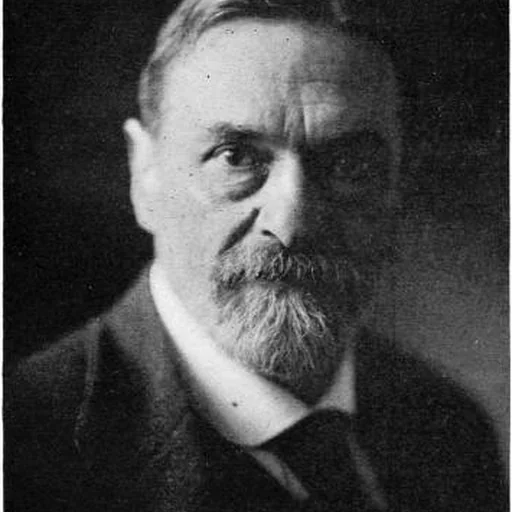
Pedro Figari (June 29, 1861 – July 24, 1938) was a Uruguayan painter, lawyer, writer, and politician.

Museum
National Museum of Fine Arts, Argentina
Continue through works from the same source collection.