Artwork
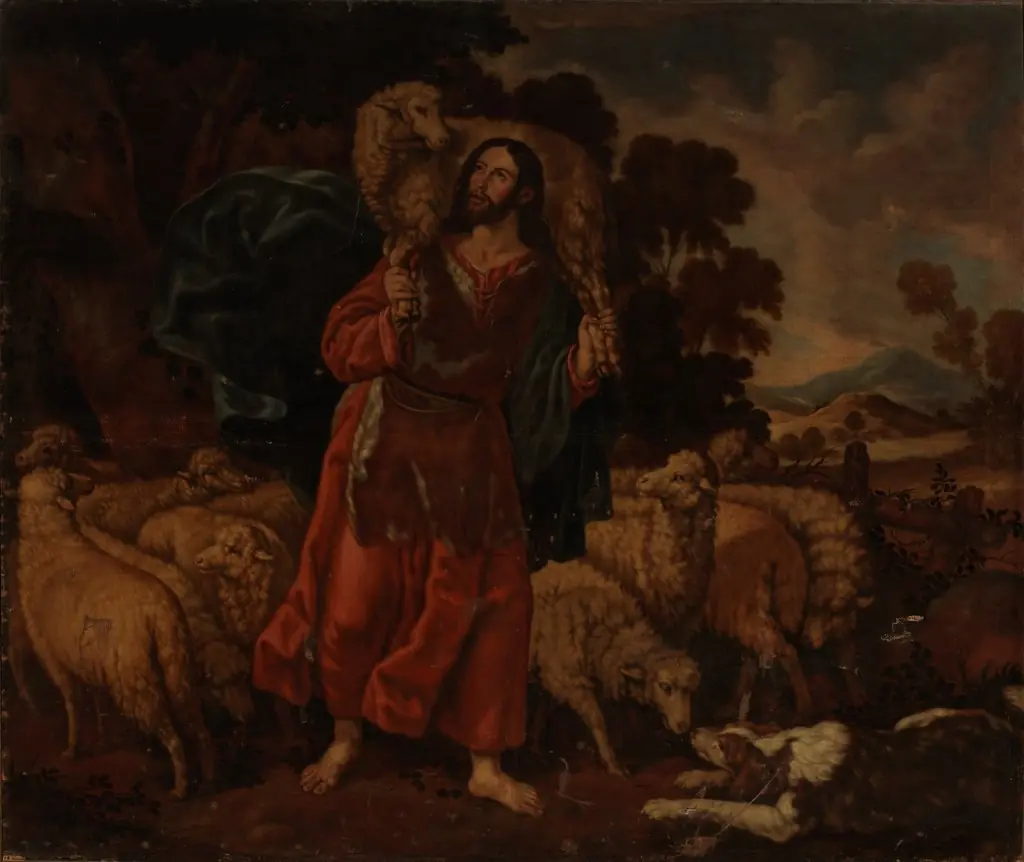
The Good Shepherd
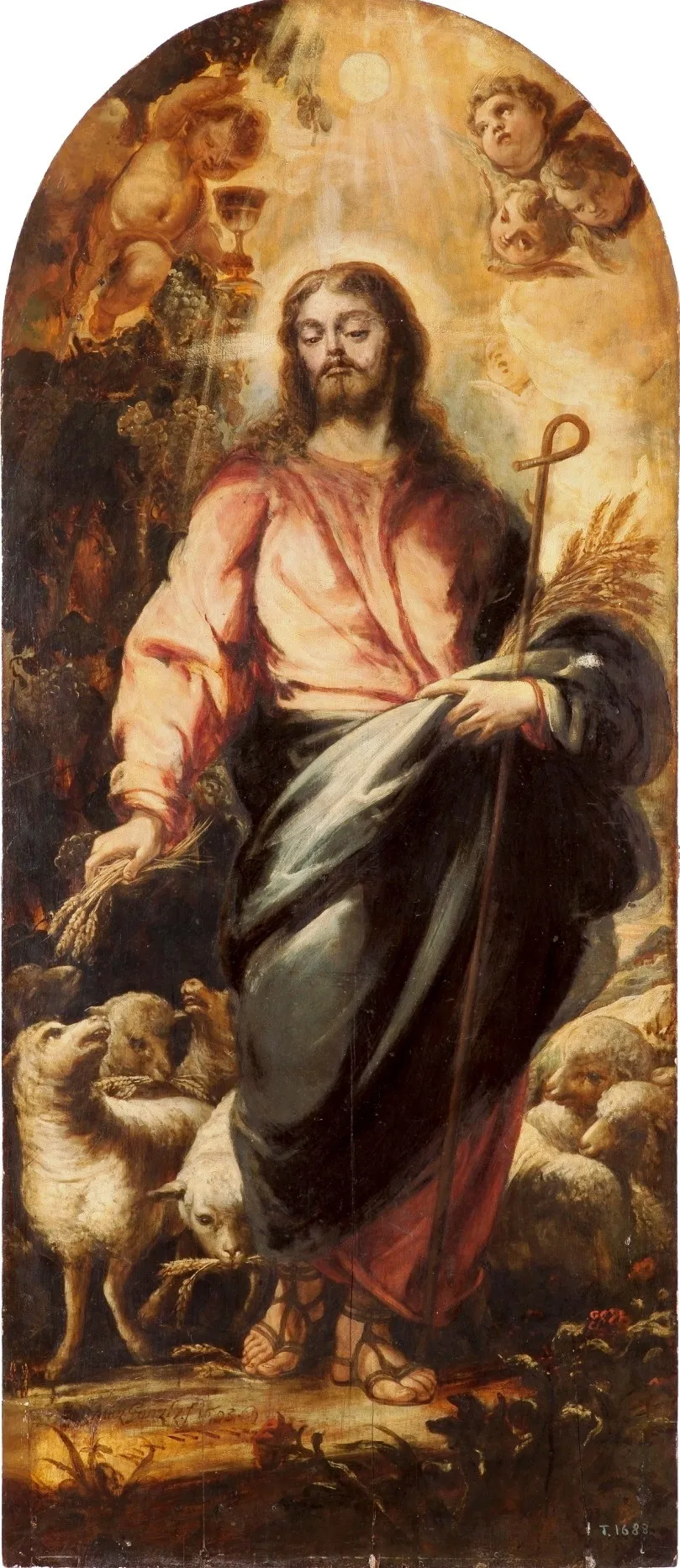
The Good Shepherd is an oil painting by the Spanish Baroque Tenebrist artist Pedro Ruiz González. It dates from 1697 and is held in the collection of the Museo del Prado.
About this work
Overview
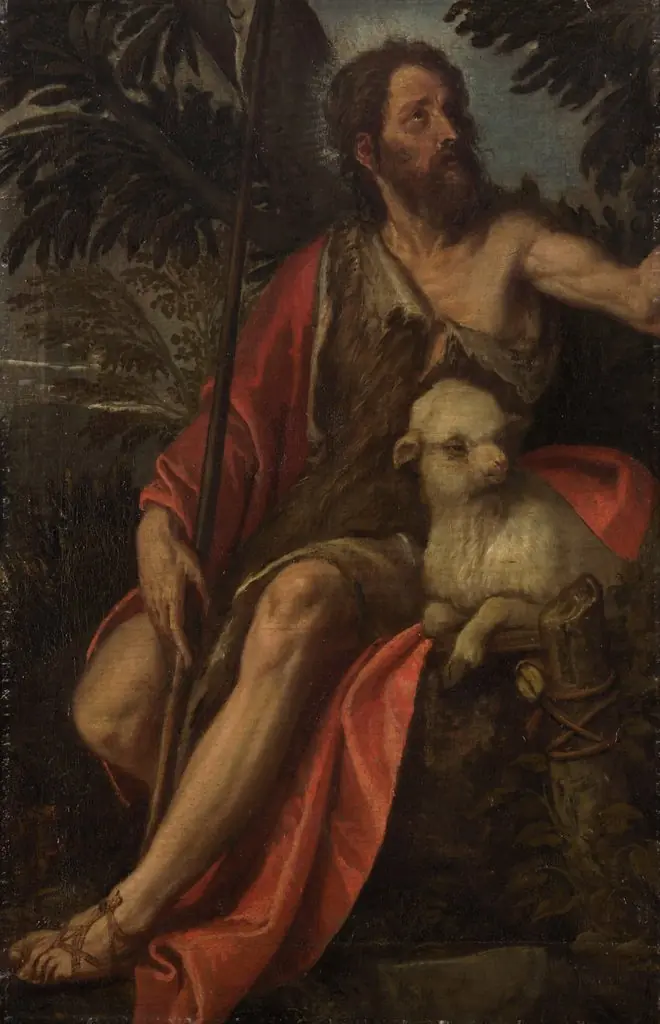
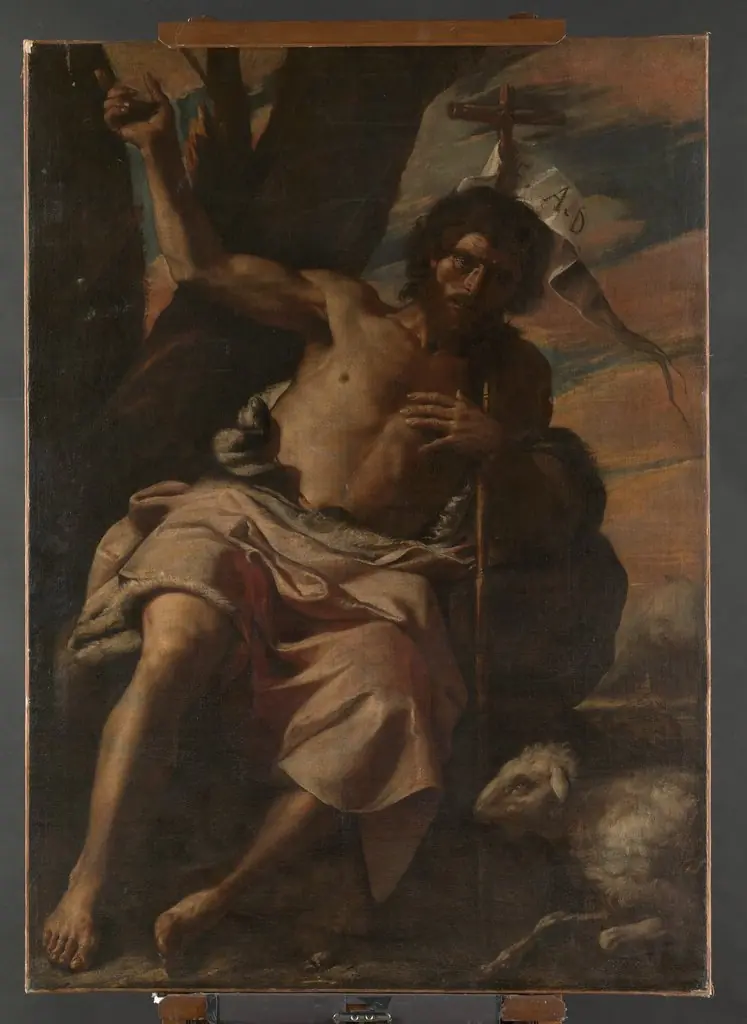
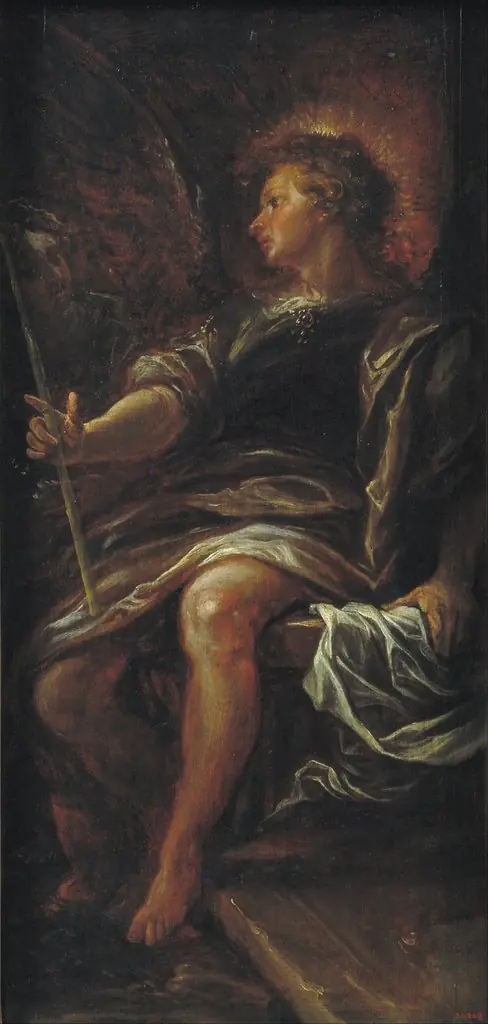
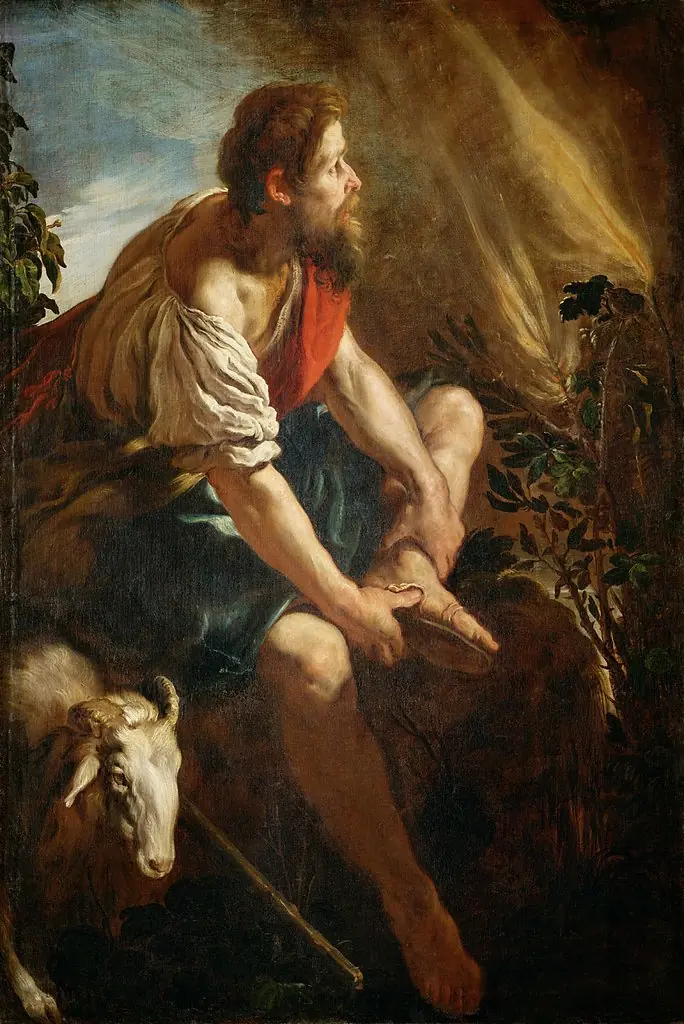
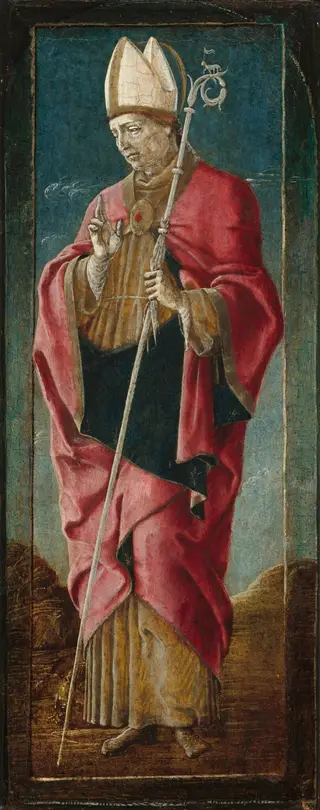
Pedro Ruiz González’s 1697 oil on canvas, titled The Good Shepherd, is part of the collection at Madrid’s Museo del Prado. The composition presents a bearded figure in a red robe, holding a shepherd’s staff and a sheaf of grain, surrounded by a small flock of sheep. Above the scene, winged angels hover against a luminous, golden sky, while soft clouds diffuse a gentle light.
Subject & Meaning
The central figure embodies the biblical archetype of the Good Shepherd, a symbol of Christ’s guidance and sacrifice. The grain bundle and the calm sheep reinforce themes of nourishment and protection, while the angels suggest divine endorsement. The serene yet solemn expression on the shepherd’s face conveys both pastoral care and the weight of spiritual responsibility.
Technique & Style
The overall palette balances earthy reds with golden celestial hues.
Ruiz González employs a chiaroscuro effect, illuminating the left side of the shepherd and casting the opposite half into shadow, thereby modeling form through contrast. The red robe is rendered with smooth, flowing folds that catch the light, while the angels and sky are treated with warm, glowing tones that create a sense of ethereal atmosphere. The overall palette balances earthy reds with golden celestial hues.
History & Provenance
Completed in the late seventeenth century, the work reflects the Counter‑Reformation’s emphasis on clear religious imagery. It entered the Prado’s holdings as part of the museum’s early acquisitions of Spanish Baroque paintings, where it remains on display as an example of devotional art from the period.
Artist & collection
Artist
Pedro Ruiz González (1640–1706) was an artist, born in Arandilla del Arroyo.