Artwork
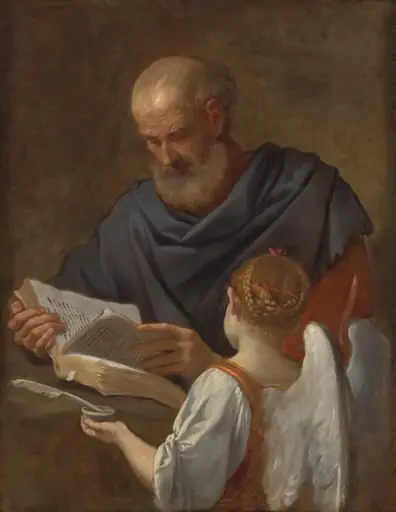
Matthew the Evangelist with Benefactor
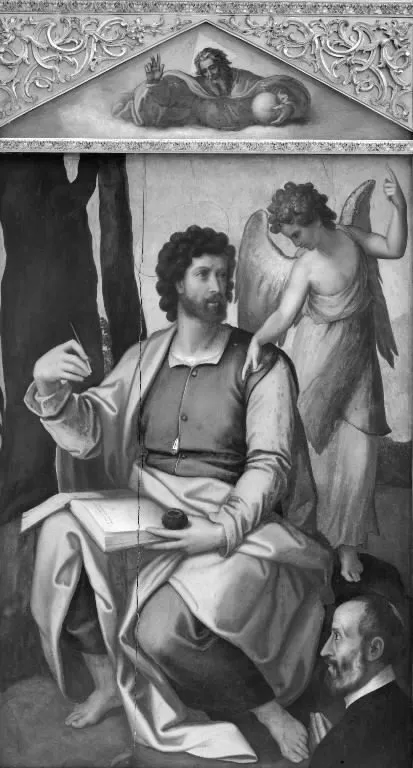
Matthew the Evangelist with Benefactor is an oil painting by the Mannerist artist Perino del Vaga. It dates from 1531 and is held in the collection of the Statens Museum for Kunst.
About this work
Subject & Meaning
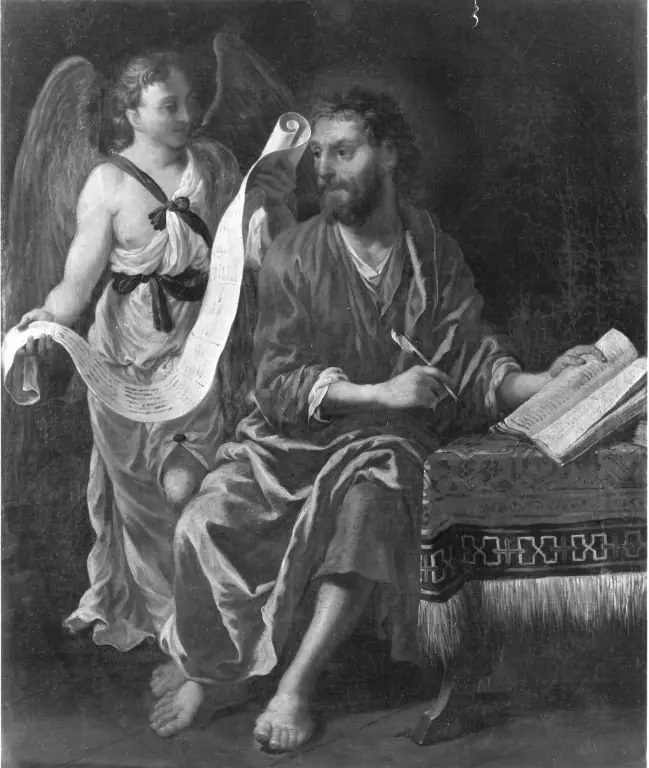
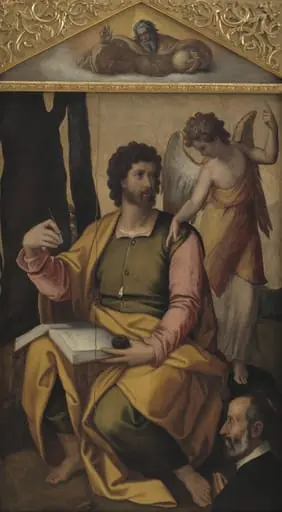
The composition shows Matthew the Apostle seated, holding a manuscript that identifies him as the evangelist, while a benefactor figure presents a sum of money, symbolizing patronage and the connection between spiritual calling and material support. The work conveys themes of divine inspiration and the role of earthly generosity in sustaining religious mission.
Technique & Style
Matthew the Evangelist with Benefactor is executed in oil paint on panel, a standard support for Italian devotional works of the early sixteenth century.
Matthew the Evangelist with Benefactor is executed in oil paint on panel, a standard support for Italian devotional works of the early sixteenth century. The vertical panel measures 171.5 cm in height by 96 cm in width, yielding an elongated format well suited to a standing evangelist figure paired with a kneeling donor.
Stylistically, the work belongs to the religious genre and is consistent with Perino del Vaga's Mannerist practice of the early 1530s, characterized by elegant, elongated figures and refined surface handling. The painting is held in the collection of the Statens Museum for Kunst.
History & Provenance
Matthew the Evangelist with Benefactor is an oil painting on panel created in 1531 by Perino del Vaga. It was commissioned as a religious work and originally entered the collection of the Statens Museum for Kunst, where it remains on display. The work measures 171.5 cm in height and 96 cm in width, reflecting its large-scale devotional format.
The painting's provenance is closely tied to its institutional home, having been acquired directly by the museum shortly after its creation. Its dating is securely anchored to the year 1531, consistent with the artist's activity in Rome during that period.
Legacy
The painting has been part of the collection of the Statens Museum for Kunst since its acquisition, influencing scholarly discussion of Perino del Vaga's role in the diffusion of Raphaelist motifs in Northern Italy. Its status as a clear example of early Mannerist religious composition contributed to later assessments of the artist's development and the spread of his workshop practices.
Overview
Created in 1531 by the Italian painter Perino del Vaga, this oil on canvas presents a devotional scene typical of the Late Renaissance and Mannerist period. The work is part of the permanent collection of the Statens Museum for Kunst, where it is displayed as an example of religious genre painting from the early sixteenth century.
Context
Perino del Vaga, a pupil of Raphael, often blended classical elegance with the expressive gestures of Mannerism. This work reflects the period’s interest in portraying saints and evangelists as learned men, emphasizing the intellectual and spiritual authority of the Gospel writers within a visually elaborate framework.
Artist & collection

Artist
Piero Bonaccorsi (1501 – October 19, 1547), known as Perino (or Perin) del Vaga, was an Italian painter and draughtsman of the Late Renaissance/Mannerism.